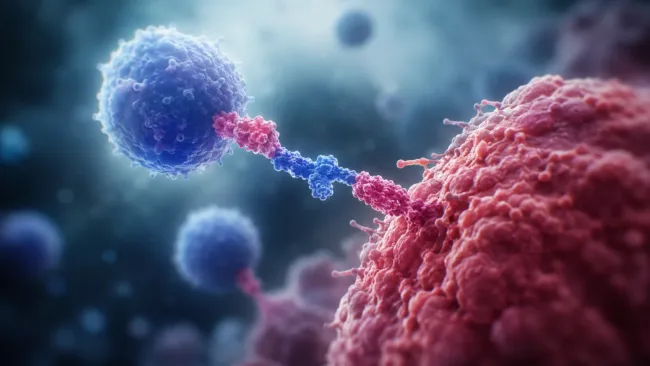
Propanc Biopharma, Inc. disclosed new positioning and development plans for its lead proenzyme therapy PRP, an intravenous formulation targeting solid tumors including pancreatic cancer, as the company prepares for a first-in-human Phase 1b study in 2026 following prior orphan drug designation in the United States.
Why PRP’s proenzyme mechanism represents a fundamentally different therapeutic hypothesis rather than an incremental oncology advance
PRP is being positioned not as another cytotoxic or pathway-specific therapy, but as a mechanistically distinct approach built around pancreatic proenzymes that are inactive until they interact with the tumor environment. The combination of trypsinogen and chymotrypsinogen is intended to exploit biological differences between malignant tissue and healthy cells, particularly in how cancer stem cells regulate proteolytic activity and microenvironment signaling. Industry observers note that this approach departs sharply from both small-molecule chemotherapy and contemporary immuno-oncology, placing PRP closer to a biological systems intervention than a single-target drug.
What makes this strategy notable is not novelty alone, but the explicit focus on cancer stem cells, epithelial-mesenchymal transition, angiogenesis, and tumor migration as interconnected drivers of recurrence and metastasis. Most approved therapies in pancreatic ductal adenocarcinoma are judged primarily on tumor shrinkage or progression-free survival, while long-term control of metastatic spread remains elusive. PRP’s premise is that addressing the biological processes that enable tumors to regenerate and disseminate may be more clinically meaningful than incremental improvements in cytotoxic intensity.
However, clinicians tracking the field also caution that such broad mechanistic claims carry heightened translational risk. The history of oncology includes multiple therapies that demonstrated impressive preclinical modulation of stemness or tumor microenvironment features, only to fail in human trials due to insufficient potency, poor exposure, or unexpected biology. PRP’s differentiation therefore raises expectations for robust mechanistic validation in early clinical settings.
How PRP compares with existing pancreatic cancer treatments in terms of durability, toxicity, and clinical relevance
Pancreatic cancer remains dominated by combination chemotherapy regimens such as gemcitabine-based therapies and multi-agent protocols like FOLFIRINOX, which offer modest survival benefits at the cost of substantial toxicity. Targeted therapies and immunotherapies have so far produced limited impact in unselected pancreatic cancer populations, largely due to the immunosuppressive tumor microenvironment and genetic heterogeneity of the disease.
Against this backdrop, PRP’s non-cytotoxic positioning is strategically attractive. By potentially sparing healthy tissue and avoiding direct DNA damage, PRP could theoretically be used earlier, longer, or in combination with existing regimens without compounding toxicity. Industry analysts note that this could matter as much commercially as clinically, particularly if PRP is positioned as an adjunct that enhances chemosensitivity or reduces recurrence rather than replacing standard-of-care outright.
Yet the comparison also highlights an important limitation. Current therapies, despite their shortcomings, have well-characterized dose-response relationships, established endpoints, and regulatory precedent. PRP enters a space where regulators and clinicians will demand clear evidence that modulation of cancer stem cells and microenvironmental pathways translates into measurable clinical benefit such as improved survival or delayed metastasis. Without such evidence, PRP risks being perceived as biologically interesting but clinically ambiguous.
What the planned Phase 1b study will need to demonstrate to move PRP beyond scientific curiosity
Propanc Biopharma has indicated that its upcoming Phase 1b first-in-human study will enroll approximately 30 to 40 patients with advanced solid tumors, with pancreatic and ovarian cancers expected to feature prominently in later development. For a therapy with such a differentiated mechanism, this early trial carries unusually high strategic importance.
Regulatory watchers suggest that beyond safety and dose-finding, the study will need to generate convincing pharmacodynamic signals. Evidence of target engagement, changes in tumor biology consistent with the proposed mechanism, or biomarker shifts linked to cancer stem cell activity could be critical in shaping investor and partner confidence. In the absence of early efficacy signals, even strong tolerability may not be sufficient to sustain momentum.
The choice of advanced solid tumor patients also presents a double-edged sword. While this population allows for rapid enrollment and addresses high unmet need, it may obscure PRP’s true potential if heavily pretreated tumors are less responsive to microenvironment modulation. Clinicians note that demonstrating benefit in late-stage disease does not always predict performance earlier in the treatment pathway, where recurrence prevention may be more achievable.
Why orphan drug designation helps but does not resolve PRP’s regulatory and development uncertainties
PRP’s orphan drug designation for pancreatic cancer provides regulatory incentives such as market exclusivity and potential development support, but it does not lower the evidentiary bar for approval. Pancreatic cancer regulators have historically been cautious, given the disease’s aggressiveness and the limited success of past experimental therapies.
Regulatory experts emphasize that PRP’s unconventional mechanism could complicate trial design. Endpoints traditionally accepted in pancreatic cancer, such as overall survival, may be difficult to attribute directly to a therapy aimed at long-term recurrence suppression. Alternative endpoints, including biomarkers or metastasis-related outcomes, may face skepticism unless tightly correlated with clinical benefit.
Manufacturing consistency also looms as a potential issue. Proenzyme formulations require precise control to ensure stability, predictable activation, and reproducible dosing. Any variability could undermine both safety and efficacy, particularly in a therapy that relies on differential activation in tumor versus healthy tissue.
What PRP reveals about broader shifts in oncology toward recurrence and metastasis prevention
Beyond Propanc Biopharma’s specific program, PRP reflects a broader industry frustration with therapies that extend survival by weeks or months without altering disease trajectory. There is growing interest in interventions that address why cancers return and spread, particularly in solid tumors where metastatic disease drives mortality.
Industry observers see PRP as part of a small but notable cohort of programs attempting to reframe oncology around disease control rather than tumor eradication. This shift aligns with payer and clinician interest in therapies that can be administered chronically with manageable toxicity, potentially transforming cancer into a long-term condition rather than an acute terminal illness.
At the same time, this strategic reframing raises reimbursement questions. Therapies that do not produce dramatic short-term tumor shrinkage may struggle to justify pricing without clear survival or quality-of-life benefits. PRP’s commercial viability may therefore depend as much on health economics data as on biological efficacy.
What clinicians, regulators, and industry observers will watch next as PRP moves toward human trials
As PRP enters its first-in-human phase, attention will focus on whether its mechanistic promises translate into observable biological effects in patients. Clinicians will scrutinize safety, particularly given historical concerns around protease-based therapies, while regulators will look for clear rationale linking observed effects to meaningful outcomes.
Industry analysts will also assess Propanc Biopharma’s ability to fund and execute its development plan. Early-stage oncology programs with unconventional mechanisms often face extended timelines and capital requirements, especially if initial trials necessitate redesign or additional biomarker work.
PRP’s significance may lie less in its immediate commercial prospects and more in what it tests about alternative oncology strategies. If successful, it could validate renewed interest in enzyme-based and microenvironment-focused therapies. If it fails, it will reinforce the formidable barriers facing any approach that seeks to disrupt entrenched paradigms in solid tumor treatment.