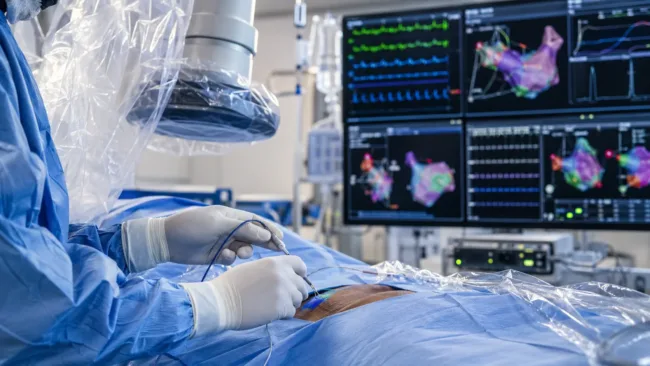
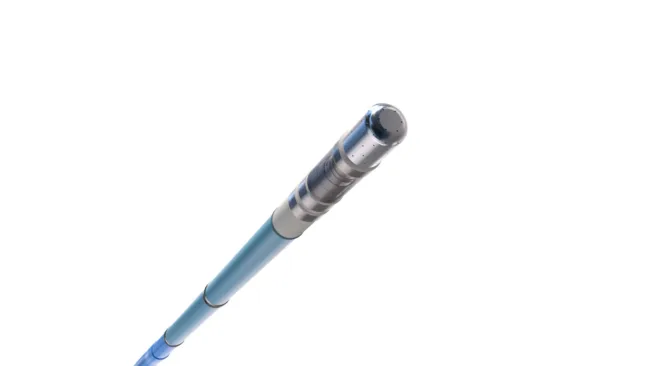
Catheter ablation for atrial fibrillation is built around a surprisingly physical idea: destroy carefully selected areas of heart tissue so the electrical signals initiating or sustaining an abnormal rhythm can no longer travel through them. For decades, electrophysiologists have created those lesions primarily with heat from radiofrequency energy or intense cold from cryoballoon systems. Pulsed field ablation changes the energy source entirely, applying extremely short high-voltage electrical fields that create irreversible pores in cell membranes through electroporation rather than cooking or freezing the tissue. FDA approved Medtronic’s PulseSelect system in December 2023 and Boston Scientific’s FARAPULSE system in January 2024, moving PFA rapidly from experimental electrophysiology into routine commercial practice.
The attraction is not that thermal ablation stopped working. Radiofrequency and cryoballoon technologies have extensive randomized evidence and can provide durable symptom control for appropriate AF patients. PFA is gaining ground because cardiac muscle appears particularly susceptible to carefully designed electric-field exposure, creating the possibility of destroying myocardium while reducing injury to neighboring structures such as the esophagus, phrenic nerve or pulmonary veins. The large randomized ADVENT trial showed that this theoretical selectivity did not require sacrificing one-year efficacy: PFA achieved 73.3% primary treatment success compared with 71.3% using conventional radiofrequency or cryoballoon treatment and met the prespecified criterion for noninferiority.
What are electrophysiologists actually trying to destroy during atrial fibrillation ablation?
In many patients with paroxysmal atrial fibrillation, abnormal electrical triggers originate around the pulmonary veins where they enter the left atrium. The central procedural objective is therefore pulmonary vein isolation, creating a circumferential barrier of nonconducting tissue that prevents those signals from propagating into the atrium.
The lesion does not need to remove a large amount of heart muscle. It needs to be continuous and durable enough that electrical conduction cannot recover through small viable gaps. This creates one of ablation’s fundamental engineering tensions: apply enough energy to produce permanent lesions while avoiding unnecessary damage to tissue beyond the intended target.
Persistent AF can require a more complex approach because arrhythmia may depend on a broader remodeled atrial substrate rather than isolated pulmonary-vein triggers alone. Some contemporary PFA indications and clinical programmes therefore extend treatment beyond simple pulmonary-vein isolation, but the optimal lesion set in persistent AF remains an evolving field rather than a question solved merely by switching energy sources.
How does radiofrequency ablation create a cardiac lesion?
Radiofrequency ablation delivers alternating electrical current through the catheter tip, creating resistive heating in tissue immediately adjacent to the electrode and conductive heating somewhat deeper within the myocardium. Once tissue reaches sufficient temperature for sufficient duration, proteins denature and cells die, leaving scar tissue incapable of conducting the unwanted electrical signal normally.
Modern RF technology has become highly sophisticated. Force-sensing catheters can measure how strongly the electrode contacts the heart wall, mapping systems guide lesion placement and algorithms integrate power, contact force and treatment duration to improve consistency.
Heat nevertheless travels. If energy extends beyond the atrial wall, adjacent structures can be injured, and insufficient contact or inadequate heating can create shallow lesions that later reconnect. Operators therefore spend considerable attention balancing lesion depth against collateral damage.
The flexibility of point-by-point RF remains one of its advantages. Physicians can choose exactly where to create additional lesions and adapt geometry to complex anatomy rather than relying exclusively on a single-shot device.
How does cryoballoon ablation isolate a pulmonary vein?
Cryoballoon ablation approaches the same biological target using cold rather than heat. A balloon catheter is positioned at the pulmonary-vein opening and cooled rapidly, freezing surrounding tissue and producing cellular injury across a circumferential region.
Its procedural appeal is reproducibility. Instead of drawing an entire pulmonary-vein circle point by point, a balloon can create much of the lesion set from one position, helping standardize pulmonary-vein isolation.
Cold remains a form of thermal injury, however, and surrounding structures can still be affected. The phrenic nerve is a particular concern during treatment near the right-sided pulmonary veins, which is why clinicians monitor diaphragmatic function carefully during freezing.
Cryoballoon has consequently provided PFA with an important benchmark. Both technologies can deliver “single-shot” pulmonary-vein treatment, so comparisons can focus on whether PFA maintains the procedural simplicity while reducing some thermal-energy-specific risks.
What exactly does a pulsed electric field do to a heart cell?
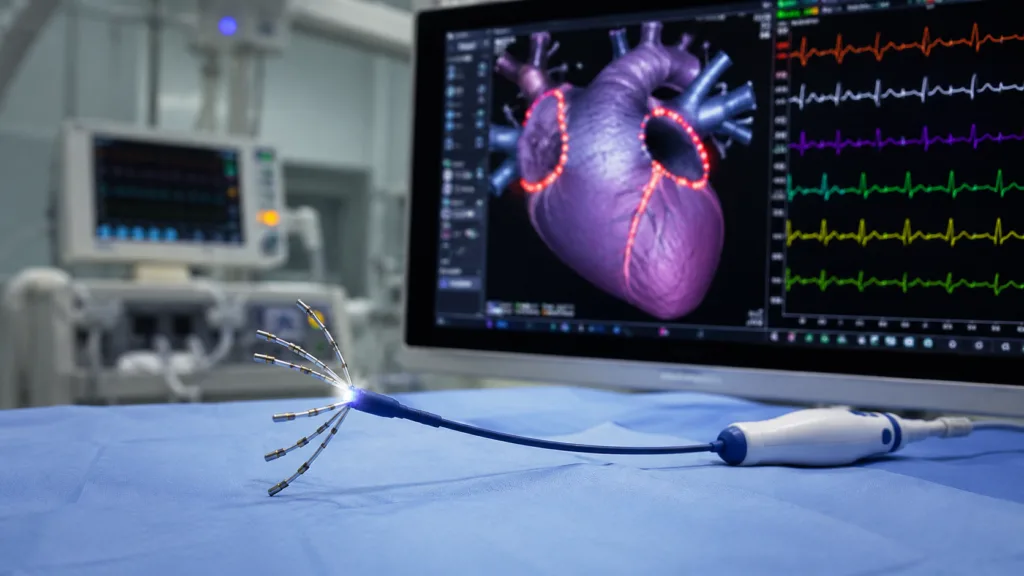
PFA delivers high-voltage electrical pulses over microsecond-scale intervals. The resulting electric field changes the voltage across cell membranes and creates nanoscale pores. Above a sufficient threshold, membrane disruption becomes irreversible and the targeted cell dies.
Different tissues have different electroporation thresholds, which creates the possibility of tissue selectivity. Myocardial cells can be damaged at field strengths that may spare certain neighboring structures more effectively than indiscriminate heating or freezing.
That does not mean PFA can distinguish heart cells perfectly. Catheters still sit inside a beating heart, vascular access can cause bleeding, transseptal puncture can create complications and excessive or poorly positioned energy can affect unintended tissue. Every PFA platform also has its own catheter geometry, pulse waveform, field strength and treatment sequence, so findings from one system should not automatically be generalized to every device using the words “pulsed field.”
This platform specificity becomes especially important as manufacturers develop focal PFA, large single-shot arrays and systems combining radiofrequency with pulsed-field capability.
Does randomized evidence show PFA is more effective than heat or freezing?
The landmark ADVENT study did not establish broad superiority. Among 607 randomized patients with drug-refractory symptomatic paroxysmal AF, the primary efficacy endpoint was achieved at one year in an estimated 73.3% of PFA patients compared with 71.3% receiving conventional thermal ablation. The trial was designed for noninferiority, and PFA successfully met that standard. Primary serious safety events occurred in 2.1% versus 1.5%, also satisfying noninferiority.
This is an important antidote to simplistic claims that PFA “works better.” The randomized evidence initially established that a new nonthermal system could achieve rhythm-control outcomes comparable with mature thermal technologies while offering other potential advantages in workflow and tissue effects.
Longer follow-up has made the comparison more interesting without producing a simple verdict. In the ADVENT-LTO extension published in Nature Medicine in February 2026, 364 original participants were followed for roughly four years. Primary treatment success was estimated at 72.8% with PFA versus 64.3% with thermal ablation, but the difference did not reach statistical significance. Repeat ablation occurred in 10.4% of PFA patients compared with 17.7% after thermal treatment, a statistically significant difference in that follow-up cohort.
Only about 60% of the original trial cohort participated in the long-term extension, creating the possibility of selection bias. The four-year data therefore strengthen confidence in durability but do not convert the original noninferiority trial into definitive evidence that PFA is universally superior.
Why has safety generated so much enthusiasm around PFA?
Thermal AF ablation has rare but serious collateral-tissue complications, including pulmonary-vein stenosis, phrenic nerve injury and atrio-esophageal fistula. Because PFA is nonthermal and appears to have preferential effects on myocardium, researchers hoped those particular complications might become much less frequent.
The MANIFEST-17K registry provided an unusually large real-world view. Across 17,642 patients treated at 106 centers with one pentaspline PFA system, investigators reported no esophageal complications, symptomatic pulmonary-vein stenosis or persistent phrenic palsy. Transient phrenic injury occurred in 0.06%. The overall major complication rate was 0.98%, including pericardial tamponade in 0.36%, vascular complications in 0.30%, stroke in 0.12% and death in 0.03%.
Those numbers are encouraging but require two qualifications. The registry was observational rather than randomized, and it studied one particular commercial catheter architecture. The absence of a complication in 17,642 patients is a powerful safety signal but does not prove the complication can never occur, nor should the exact rates be assigned automatically to every PFA platform.
Does PFA create any complications of its own?
Yes. MANIFEST-17K identified coronary arterial spasm in 0.14% of patients and hemolysis-associated acute renal failure requiring temporary hemodialysis in 0.03%. All five patients with the reported dialysis-requiring renal complication recovered, but the finding illustrated an important principle: changing the energy source can remove some risks while introducing others that were not prominent with older technologies.
Hemolysis has attracted particular attention because strong electric fields can affect red blood cells under certain exposure conditions, especially when numerous applications are delivered. Manufacturers and electrophysiologists have consequently refined pulse protocols and procedural strategies as post-market experience grows.
Mechanical complications also remain. PFA does not eliminate vascular injury from femoral access, cardiac perforation from catheters, tamponade from transseptal procedures or thromboembolic stroke. These risks arise partly from performing an invasive left-atrial catheter procedure rather than from the lesion energy itself.
The most accurate safety description is therefore not that PFA makes AF ablation safe, but that it may substantially reduce several collateral injuries specifically associated with thermal tissue destruction while leaving the general risks of catheter ablation and introducing a smaller set of energy-specific concerns.
Is PFA actually faster?
Often, yes, particularly in the energy-delivery portion of the procedure. In ADVENT, mean ablation time was approximately 29.2 minutes with FARAPULSE compared with 50.0 minutes using thermal techniques, while overall procedural duration was also shorter in published analyses.
PFA lesions can be delivered in seconds rather than requiring prolonged heating or freezing at each position. Multi-electrode catheters can also treat large regions around pulmonary veins rapidly, giving electrophysiologists a potentially more standardized workflow.
Procedure duration should not be confused with total laboratory efficiency. Mapping, anesthesia, vascular access, transseptal puncture, catheter positioning and post-procedure checks still take time. Early PFA studies also sometimes involved more fluoroscopy because operators relied on X-ray guidance while learning the new catheter workflow.
As mapping integration improves, the commercially meaningful advantage may become not merely minutes saved in energy delivery but predictability. An electrophysiology laboratory capable of performing more consistent cases in a working day can translate procedural speed into capacity.
Why is PFA particularly attractive as atrial fibrillation prevalence grows?
AF becomes increasingly common with age, and healthcare systems are encountering larger populations requiring rhythm-control strategies. Catheter ablation has also moved earlier in treatment for selected patients as evidence has accumulated that waiting through multiple ineffective antiarrhythmic drugs is not always necessary.
Expanding procedural volume creates pressure on electrophysiology laboratories. A technique that simplifies pulmonary-vein isolation, shortens energy delivery and reduces certain rare catastrophic complications can be attractive even if its one-year rhythm-control efficacy is only comparable with existing treatment.
That helps explain the unusually rapid commercial adoption of PFA. The technology did not have to prove thermal ablation ineffective. It had to demonstrate that operators could obtain similar results with a different risk and workflow profile.
FDA’s approvals of PulseSelect and FARAPULSE within weeks of one another in late 2023 and early 2024 effectively created a new US ablation-energy category, after which several additional platforms began competing around catheter design, mapping integration and expanded indications.
Will radiofrequency and cryoballoon ablation disappear?
That is unlikely in the near term. RF remains extraordinarily versatile and allows physicians to construct individualized lesion sets across complex atrial anatomy. Electrophysiologists have decades of experience with it, hospitals own established mapping infrastructure and numerous clinical scenarios extend beyond straightforward pulmonary-vein isolation.
Cryoballoon also has a large evidence base and standardized workflow, particularly for paroxysmal AF. Hospitals do not discard mature capital equipment and clinical expertise immediately because another technology becomes available.
PFA is more likely to change the energy mix progressively. Straightforward pulmonary-vein isolation may increasingly favor efficient single-shot PFA systems, while focal RF or hybrid systems remain valuable when physicians require fine anatomical control. Persistent AF and redo procedures may produce especially interesting combinations because operators sometimes need both broad lesion creation and precise focal treatment.
Manufacturers are already blurring those boundaries with catheters capable of delivering more than one energy type. The future question may therefore become less “PFA or RF?” and more “which energy should be used for which lesion?”
What does the evidence say after the first commercial wave?
The strongest current interpretation is simultaneously more impressive and more restrained than the early hype. PFA has crossed the essential efficacy threshold: randomized evidence shows it can perform at least as well as conventional thermal ablation for paroxysmal AF at one year. Four-year follow-up supports durable effectiveness without establishing statistically significant superiority on the primary long-term success measure.
Large post-market experience suggests a favorable collateral-tissue safety profile, including the absence of reported esophageal complications, symptomatic pulmonary-vein stenosis and persistent phrenic palsy in the 17,642-patient MANIFEST-17K dataset, while also identifying uncommon PFA-specific events such as coronary spasm and hemolysis-related renal injury.
That combination explains why PFA has moved so quickly. It does not need to make radiofrequency and cryoballoon ineffective to become important. It offers electrophysiologists another way to create the same electrically strategic scar, potentially faster and with less thermal collateral damage.
For patients, the essential endpoint has not changed: durable freedom from troublesome atrial fibrillation without creating another serious problem in the process. Radiofrequency reaches that objective with heat, cryoballoon with cold and PFA with electricity powerful enough to alter cell membranes permanently. The current evidence suggests the newest method belongs alongside the established ones; the next several years will determine how much of the AF ablation laboratory it ultimately takes over.