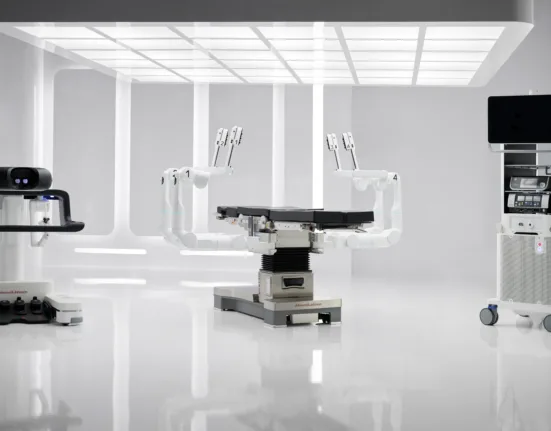
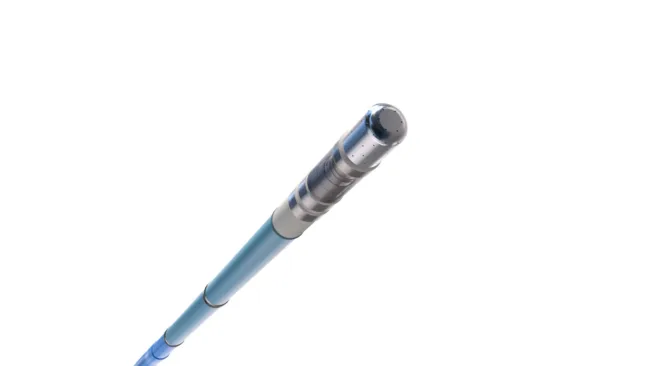
Johnson & Johnson has received U.S. Food and Drug Administration approval for the Dual Energy Thermocool Smarttouch SF Platform, an integrated cardiac ablation system that allows electrophysiologists to deliver both radiofrequency and pulsed field energy through a single catheter. The approval places the Johnson & Johnson MedTech electrophysiology business into a more direct U.S. rollout phase for a platform designed for atrial fibrillation procedures, where pulsed field ablation adoption is accelerating and competitive pressure is intensifying.
Why combining radiofrequency and pulsed field energy changes the ablation workflow
The real significance of the approval is not simply that Johnson & Johnson has another catheter on the U.S. market. It is that the medical device manufacturer is trying to solve a workflow problem that has become more visible as pulsed field ablation moves from early enthusiasm to practical electrophysiology lab adoption. Pulsed field ablation offers tissue-selective, nonthermal lesion creation, while radiofrequency ablation remains familiar, widely used, and deeply embedded in complex mapping workflows. Putting both energy modes into a single integrated platform gives physicians a more flexible procedural toolkit.
That flexibility matters because atrial fibrillation ablation is not a uniform procedure. Anatomy, lesion location, disease complexity, operator experience, and mapping strategy can all influence which energy source is preferred at a given stage. A single catheter that supports both radiofrequency and pulsed field energy could reduce the need for device switching, help preserve procedural rhythm, and allow physicians to tailor energy delivery more precisely. In busy electrophysiology labs, saving workflow friction can be almost as important as adding a new clinical feature. Nobody in a procedure room wants a technology upgrade that behaves like a software update at airport Wi-Fi speed.
The limitation is that flexibility can also add complexity. Dual-energy capability gives operators more choices, but it also requires clear training, consistent protocols, and disciplined lesion strategy. If physicians use pulsed field energy and radiofrequency energy inconsistently, adoption could vary widely across centers. The regulatory approval validates market entry, but it does not guarantee that real-world outcomes will be uniform once the platform moves beyond experienced operators and early commercial sites.

What the approval reveals about Johnson & Johnson’s competitive position in pulsed field ablation
Johnson & Johnson is entering a U.S. pulsed field ablation market that is no longer waiting for proof of concept. Competitors have already pushed the technology into mainstream investor and clinical conversations, with Boston Scientific, Medtronic, Abbott, and other cardiac rhythm device players seeking share in an area that could reshape ablation growth for years. In that context, the Dual Energy Thermocool Smarttouch SF Platform is not just an approval. It is a strategic response to a market where product ecosystems, operator familiarity, and procedural efficiency may determine share.
The confirmed development gives Johnson & Johnson a more differentiated angle than a pure pulsed field catheter alone. The platform builds on an established Thermocool Smarttouch SF base and integrates with the Carto ecosystem, which gives the medical device manufacturer a built-in installed workflow advantage among electrophysiologists already using Johnson & Johnson mapping and ablation tools. That matters commercially because medtech adoption often follows existing lab infrastructure. Hospitals rarely rebuild procedure rooms around a single new catheter unless the clinical and economic case is overwhelming.
The risk is that the pulsed field ablation market is moving fast enough that familiarity may not be enough. If rival systems demonstrate faster procedures, cleaner safety profiles, stronger physician preference, or more compelling economics, Johnson & Johnson will need more than ecosystem loyalty. Industry observers will be watching whether the U.S. rollout can recapture momentum in a field where early competitive positioning has already shaped physician habits and investor sentiment.
How the clinical evidence supports adoption and where it leaves open questions
The SmartfIRE evidence base gives Johnson & Johnson a credible clinical foundation, particularly because it evaluated the platform in paroxysmal atrial fibrillation and showed safety and effectiveness performance that supports regulatory confidence. The study design included prospective, multicenter evaluation, and the reported outcomes included acute procedural success, 12-month effectiveness measures, workflow adherence, and quality-of-life signals. For a device platform entering a high-growth but highly scrutinized field, that combination is useful because it connects technical performance with clinical and procedural relevance.
The clinical context is important. Atrial fibrillation is common, recurrent, and expensive to manage, and ablation has increasingly moved earlier in the treatment discussion for appropriate patients. Pulsed field ablation has gained attention because it may reduce injury to surrounding structures compared with thermal approaches, especially when procedures involve tissue near sensitive anatomy. A dual-energy platform potentially lets electrophysiologists use pulsed field energy where tissue selectivity is most valuable while retaining radiofrequency energy where a thermal approach remains familiar or strategically useful.
The unresolved issue is generalizability. Prospective studies can demonstrate controlled performance, but real-world electrophysiology labs differ in operator volume, mapping discipline, patient complexity, anesthesia practices, and follow-up intensity. Some of the most attractive results in device studies can depend on adherence to a recommended workflow, and that dependence becomes important once adoption spreads. Johnson & Johnson will need to show that the platform performs reliably not only in selected trial environments but also in broader U.S. clinical practice.
Why approval is only the first stage of the commercial test
The first U.S. procedures are expected through a phased rollout, which is a sensible commercial strategy for a device that requires training and procedural confidence. In medtech, especially in cardiac rhythm management, controlled launch pacing can protect safety, build operator advocates, and generate cleaner early experience. A rushed launch can create avoidable friction if physicians feel undertrained or if centers encounter workflow surprises. Johnson & Johnson has enough scale to move quickly, but the smarter question is whether it can move consistently.
The commercial upside comes from a market that rewards procedure volume, installed systems, and recurring device utilization. If electrophysiologists view the Dual Energy Thermocool Smarttouch SF Platform as a natural extension of familiar Carto-guided workflows, Johnson & Johnson could defend and potentially expand its presence in ablation labs. The platform also helps the medical device manufacturer speak to two audiences at once: physicians who want pulsed field capability and physicians who are not ready to abandon radiofrequency in complex cases.
The risk sits in hospital purchasing behavior and competitive economics. Electrophysiology labs are not buying innovation in a vacuum. They are weighing catheter costs, procedure time, training burden, generator compatibility, mapping integration, reimbursement, and comparative outcomes. If rival platforms are easier to adopt or already entrenched, Johnson & Johnson may need strong clinical education and contracting support to convert approval into share. Approval opens the door. Procurement committees decide how wide it swings.
What investors should read into Johnson & Johnson’s medtech signal
Johnson & Johnson shares traded slightly lower intraday, suggesting that investors did not treat the approval as a major standalone catalyst for a company with a very large diversified revenue base. That reaction makes sense. For a company of Johnson & Johnson’s scale, even meaningful device approvals can be absorbed into a broader narrative involving pharmaceuticals, litigation overhangs, medtech growth rates, margin trends, and capital allocation. The approval is strategically relevant, but it is not the kind of event that usually moves a mega-cap healthcare stock dramatically on its own.
Still, the sentiment signal should not be dismissed. Johnson & Johnson needs durable medtech growth to complement its pharmaceutical portfolio, and electrophysiology is one of the more attractive procedure-driven device categories. A stronger cardiac ablation platform can support recurring revenue, deepen relationships with high-volume hospitals, and reinforce the company’s position in cardiovascular intervention. The approval therefore matters less as a one-day stock event and more as a test of whether Johnson & Johnson can translate innovation into sustained medtech share gains.
The investor risk is competitive compression. Pulsed field ablation is exciting, but excitement invites rivals, price pressure, and faster product cycles. If every major cardiac device manufacturer can offer a credible pulsed field platform, differentiation shifts to workflow, evidence, training, ecosystem integration, and contracting. Johnson & Johnson has assets in those areas, but the market will ask for proof through procedure adoption and segment growth rather than product claims.
What clinicians, regulators and competitors are likely to watch next
Clinicians will be watching early U.S. experience carefully, especially around procedure efficiency, lesion durability, ease of switching between energy modes, and integration with mapping workflows. Electrophysiologists are practical adopters. They may appreciate elegant engineering, but they ultimately reward devices that make procedures more predictable, reduce avoidable complications, and fit into the rhythm of a busy lab. If the platform helps operators handle different anatomies without procedural disruption, adoption could build steadily.
Regulators and hospitals will focus on postmarket performance, adverse event patterns, and whether training adequately supports safe use of dual-energy functionality. Pulsed field ablation has a favorable theoretical and emerging clinical profile, but the category is still young compared with conventional thermal ablation. As more devices reach broader use, the field will need rigorous surveillance to identify rare complications, operator-dependent risks, and patient groups where the benefit-risk balance differs.
Johnson & Johnson approval is commercially important because it gives the medical device manufacturer a more complete answer in the U.S. pulsed field ablation race. The platform’s dual-energy design is not just a feature. It is a bet that electrophysiologists want choice without workflow fragmentation. The opportunity is significant, but the next test is execution. If Johnson & Johnson can pair familiar infrastructure with credible training, strong real-world evidence, and competitive economics, the Dual Energy Thermocool Smarttouch SF Platform could become a meaningful piece of the company’s cardiac rhythm growth story. If adoption is uneven, the approval will still matter, but rivals will be more than happy to keep the spotlight warm.