Alchemab Therapeutics has secured a £25 million investment from British Business Bank to expand its AI-enabled Resiliome antibody discovery platform and advance two wholly owned therapeutic programs toward clinical development. The investment, the Bank’s largest direct commitment to a life sciences company, increases Alchemab’s total Series A financing to £109 million.
The Cambridge-based clinical-stage biotechnology company plans to use the capital to expand its proprietary database from more than 500 million antibody sequences to over one billion. It will also accelerate research and development around candidates generated by studying naturally occurring antibodies found in people who remain unexpectedly resilient to serious diseases.
The financing arrives after Alchemab produced an important external validation for its unconventional discovery strategy. Its first clinical asset, ATLX-1282, was licensed to Eli Lilly and Company in a transaction valued at up to $415 million, excluding potential royalties, and entered a Phase 1 study in 2025. However, the latest investment is not simply a reward for that partnership. It is designed to determine whether Alchemab can repeatedly convert its large human antibody dataset into independently valuable clinical candidates.
Why does the £25 million public investment matter beyond the size of Alchemab’s financing?
The £25 million commitment is notable because it represents a substantial direct public-sector investment in a private clinical-stage biotechnology company. British Patient Capital, a commercial subsidiary of British Business Bank, is providing the capital as part of an extension to Alchemab’s Series A rather than through a general life sciences venture fund.
That distinction matters. Indirect fund investments spread risk across multiple companies, while a direct equity commitment places greater weight on the prospects of an individual platform, management team and pipeline. The valuation, ownership percentage and other transaction terms have not been disclosed, making it impossible to assess how much dilution existing shareholders accepted or how the company was valued after its Eli Lilly and Company agreement.
Nevertheless, the size of the investment indicates that Alchemab has moved beyond being viewed as an early computational discovery experiment. The business now combines a clinical-stage partnered asset, a substantial proprietary dataset, two intended wholly owned clinical programs and several relationships with specialist investors and pharmaceutical companies.
The investment also provides Alchemab with strategic flexibility. Biotechnology companies entering the clinic frequently face pressure to license assets early because human trials require far more capital than discovery and preclinical research. Additional funding may allow Alchemab to retain ownership of selected programs for longer, generate stronger clinical evidence and negotiate future partnerships from a less dependent position.
That flexibility does not remove development risk. Moving two additional programs into clinical testing can consume capital quickly, particularly if manufacturing, toxicology or regulatory work exposes unexpected complications. The £25 million therefore creates a larger opportunity set, but it also raises expectations around pipeline prioritisation and operational execution.
Can one billion antibody sequences make Alchemab’s AI discovery engine more productive?
Alchemab’s platform begins from a different question than many conventional antibody discovery programs. Instead of selecting a known disease target and designing an antibody against it, the company studies people who remain healthier than expected despite genetic predisposition, disease exposure or other risk factors.
The Resiliome platform compares antibody repertoires from these resilient individuals with those from patients whose diseases progressed. Machine-learning systems search for antibodies or related sequence patterns that appear disproportionately in resilient groups. Researchers then investigate the biological targets and determine whether the identified antibodies can be developed into medicines.
This target-agnostic approach may uncover protective biological mechanisms that would be missed by discovery programs built around established disease pathways. It also uses the human immune system as a source of therapeutic hypotheses, potentially reducing some uncertainty associated with designing entirely artificial molecules against targets supported mainly by laboratory models.
Expanding from 500 million to more than one billion antibody sequences should improve the platform’s ability to detect uncommon patterns, study variation across diseases and distinguish meaningful signals from background immune diversity. A larger database could also improve machine-learning models, particularly when sequences are linked to carefully defined clinical characteristics and longitudinal patient information.
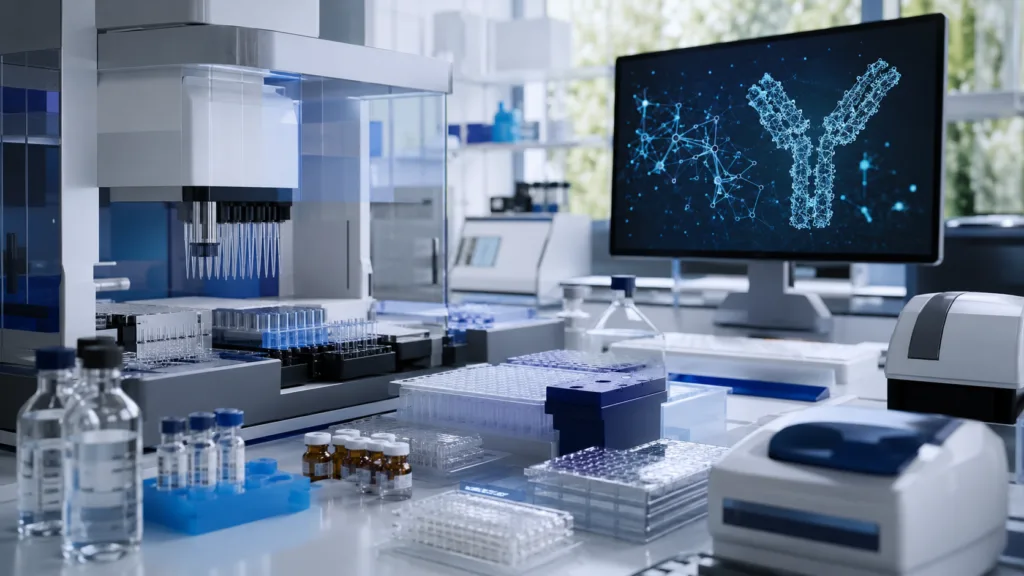
However, biological data do not become twice as informative simply because the number of sequences doubles. The value of the expansion will depend on sample quality, cohort diversity, clinical annotation and whether new data represent genuinely different patient populations rather than additional observations from similar groups.
Immune repertoires are shaped by age, infection history, vaccination, genetics, treatment exposure and numerous environmental factors. An antibody associated with resilience may be causally protective, indirectly linked to another biological process or simply more common in a particular cohort. Alchemab must therefore continue connecting computational discoveries with target identification, laboratory validation, animal studies and eventually human evidence.
This is why the platform’s wet-laboratory component is as important as its artificial intelligence. Algorithms can narrow an enormous search space, but experimental biology must establish whether a candidate binds the intended target, changes disease-relevant pathways and can be manufactured as a stable therapeutic antibody.
How much clinical validation does the Eli Lilly and Company agreement really provide?
ATLX-1282 remains the strongest evidence that the Resiliome platform can produce an asset considered valuable by an established pharmaceutical developer. The antibody was identified through samples associated with people carrying mutations linked to frontotemporal dementia who remained well into later life.
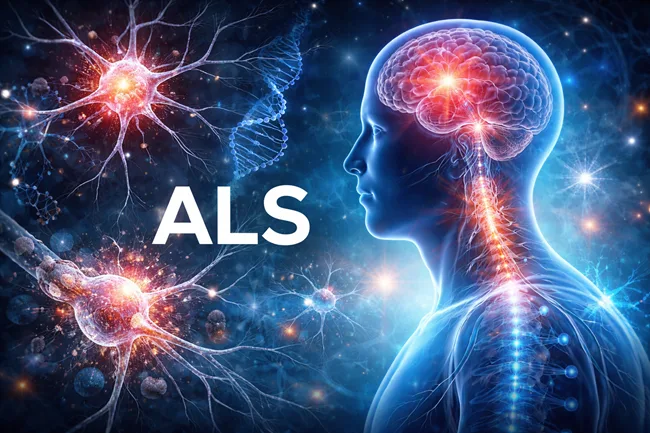
Alchemab subsequently investigated the antibody’s target and its potential relevance across neurodegenerative conditions, including amyotrophic lateral sclerosis and frontotemporal dementia. The program moved from discovery into clinical development within approximately three years, a relatively rapid progression for an asset arising from an unfamiliar target and mechanism.
Eli Lilly and Company licensed ATLX-1282 in May 2025 under an agreement worth up to $415 million through upfront, development, regulatory and commercial payments, with royalties potentially payable on future sales. Alchemab is responsible for conducting the early Phase 1 work, while Eli Lilly and Company is expected to lead subsequent development and commercialisation.
The transaction validates pharmaceutical interest in the candidate and the broader discovery approach, but it should not be confused with clinical proof. Most of the stated $415 million value is likely dependent on future milestones, and the economics will be realised only if the program progresses through several uncertain stages.
Early clinical testing must first establish safety, tolerability, pharmacokinetics and appropriate dosing. For a neurodegenerative therapy, developers may also need evidence that the antibody reaches the relevant biological compartment and engages its intended target at meaningful levels.
Amyotrophic lateral sclerosis presents further challenges because the disease is clinically and biologically heterogeneous, progression can vary substantially among patients, and measuring disease modification requires carefully selected endpoints and adequate follow-up. The first-in-human study can provide important evidence, but decisive validation of ATLX-1282 will require later trials designed to test whether the antibody changes clinical outcomes.
The Eli Lilly and Company relationship therefore offers commercial and scientific credibility without eliminating the central risk. It shows that Alchemab can generate an asset attractive enough for a major pharmaceutical partner to license. It has not yet shown that an antibody identified through disease resilience can become an effective approved medicine.
What will partners expect from Alchemab’s two wholly owned clinical programs?
British Business Bank has indicated that the new capital will help advance two additional wholly owned programs into the clinic. Alchemab has previously identified ATLX-2847, a first-in-class muscle atrophy program targeting the prostaglandin pathway, as one candidate being prepared for clinical development.
Muscle atrophy can occur across several diseases and periods of immobility, creating potentially broad therapeutic relevance. That breadth can support multiple development paths, but it also creates a prioritisation problem. Alchemab will need to identify an initial indication with a measurable biological effect, a practicable trial design and a sufficiently clear regulatory route.
The identity and indication of the second program have not been publicly detailed. Earlier pipeline disclosures referred to work across metabolic, immunological and neurological conditions, while the platform has also been used to explore oncology. Greater disclosure will be needed as the candidate moves toward regulatory-enabling studies and clinical testing.
Keeping these programs wholly owned changes the company’s risk profile. A partnered asset transfers part of the financial burden to a larger organisation, while an internally controlled clinical program requires Alchemab to fund manufacturing, regulatory submissions, trial operations and specialist development capabilities.
The benefit is that successful early data could substantially increase the value of the programs. Alchemab would then have several options, including retaining ownership, entering a regional partnership, negotiating a global licensing agreement or using the clinical evidence to support a larger private financing.
The challenge will be avoiding excessive pipeline expansion. Platform companies can generate more candidates than they can realistically finance, and the temptation to pursue numerous indications can weaken focus. Alchemab’s next stage will require disciplined decisions about which assets remain internal, which are partnered and which are discontinued before consuming significant clinical capital.
Why is British Business Bank taking greater direct risk in UK biotechnology?
The Alchemab investment also reflects a wider UK industrial-policy concern. The country produces substantial academic research and early-stage biotechnology innovation, but many companies struggle to access enough domestic growth capital to remain independent through clinical development.
UK biotechnology companies raised approximately £1.8 billion in venture capital during 2025, down 13.2 percent from the previous year. Financing was concentrated in a relatively small number of large transactions, while the median round size declined. No UK biotechnology company completed an initial public offering for a third consecutive year, limiting one of the traditional routes for funding clinical expansion.
This environment increases dependence on overseas venture investors, pharmaceutical partnerships and acquisitions. Foreign capital is valuable, but early sales or licensing agreements can shift future development, employment and intellectual-property economics away from the United Kingdom.
British Business Bank has consequently been increasing its role in later-stage life sciences investment. Before the Alchemab transaction, it had invested £238 million across 22 life sciences companies and described itself as the most active late-stage investor in the sector.
Alchemab fits the type of company such intervention is intended to support. It was founded in the United Kingdom, maintains laboratories in Cambridge, has attracted international specialist investors and has demonstrated commercial interest through its relationship with Eli Lilly and Company. The £25 million commitment provides capital for clinical development while supporting the objective of keeping high-value research and company-building activity in the country.
The policy case will ultimately depend on returns and outcomes rather than the announcement’s size. Successful clinical assets, follow-on private investment and continued UK operations would support the argument for larger public commitments. Clinical failure or repeated dependence on public financing without private-market validation would produce a less favourable assessment.
What evidence must Alchemab produce before the Resiliome model is clinically validated?
Alchemab has crossed several important thresholds. It has converted a disease-resilience hypothesis into a large proprietary antibody database, produced a clinical candidate, signed a major pharmaceutical licensing agreement and attracted the largest direct life sciences investment yet made by British Business Bank.
The next thresholds will be harder. ATLX-1282 must generate credible early clinical evidence, while the two wholly owned programs must progress through candidate selection, manufacturing, toxicology and regulatory review without losing their biological rationale. The expanded database must also produce additional discoveries at a pace and quality that justify the cost of maintaining a data-intensive platform.
Industry observers will be watching whether the database expansion creates a genuine discovery flywheel. The strongest outcome would be a sequence in which additional patient data improve the algorithms, the improved models identify more distinctive antibodies, experimental work validates novel targets and those targets generate clinically useful medicines.
A weaker outcome would be a platform that continues producing scientifically interesting associations but struggles to convert them into therapies. That conversion gap is a familiar problem across AI-enabled drug discovery, where computational scale can accelerate hypothesis generation without shortening every subsequent stage of biological validation and clinical development.
The £25 million investment gives Alchemab greater capacity to test which version of that story applies. Its significance lies less in the headline size than in what the company must now demonstrate: that studying people who resist disease can become a repeatable source of medicines, not just a compelling scientific proposition.