
KMM Group has completed an investment from RS2 Healthcare Partners and appointed medical device manufacturing executive J. Mark King as president and chief executive officer, combining new financial backing with a significant leadership restructuring. The Hatboro, Pennsylvania-based precision manufacturer announced the transaction on July 27, 2026, but did not disclose the size of the investment, KMM Group’s valuation or the ownership interest acquired by RS2 Healthcare Partners.
The deal places King, a former Tegra Medical chief executive who has advised KMM Group since 2023, in charge of a vertically integrated manufacturing business specialising in complex, tight-tolerance components for medical devices and other technically demanding industries. Co-founder John Shegda is moving into the role of chief technology officer, while co-founder Eric Wilhelm will become executive vice president for business transformation and organisational capability.
That structure matters because it suggests the transaction is intended to expand KMM Group without separating the company from the technical knowledge and operating culture developed by its founders. King will lead the business and its commercial scaling strategy, but Shegda will continue directing engineering and manufacturing technology, while Wilhelm will oversee operational improvement and the systems required to support a larger organisation.
Why does the KMM Group investment represent more than a conventional private equity transaction?
RS2 Healthcare Partners is entering KMM Group with an executive who already understands both the company and the investor’s approach to medical device contract manufacturing. King joined KMM Group in January 2023 as non-executive chairman and healthcare industry adviser, meaning his appointment is an extension of an established relationship rather than the arrival of an unfamiliar outside operator.
He also brings more than three decades of medical device experience, including previous leadership positions at Tegra Medical and Clinical Innovations, as well as roles at Baxter Healthcare, Cardinal Health and Johnson & Johnson. At Tegra Medical, King led a contract manufacturing company that was itself backed by Riverside Partners, the former name of RS2 Healthcare Partners.
RS2 Healthcare Partners’ history with Tegra Medical provides a useful indication of the capabilities it may seek to develop at KMM Group, although it does not confirm that the same strategy will be repeated. Riverside Partners created Tegra Medical by combining several precision manufacturing businesses and subsequently expanded the company through further acquisitions, technology investment, organic growth and new customer relationships. Tegra Medical was sold to Switzerland-based SFS Group in 2016 after developing into an end-to-end medical device manufacturing provider.
The similarities are difficult to overlook. Like Tegra Medical during its development, KMM Group combines precision machining, grinding, engineering support and production services for medical device original equipment manufacturers. Both companies also emerged from the integration of specialist manufacturing operations rather than from a single narrow production capability.
However, neither KMM Group nor RS2 Healthcare Partners has announced an acquisition pipeline, international expansion plan or defined capital expenditure programme. The Tegra Medical history therefore provides strategic context, not evidence that KMM Group will immediately pursue a buy-and-build programme.
What manufacturing capabilities make KMM Group strategically attractive to a healthcare investor?
KMM Group was created in 2020 through the combination of KV Inc., M&S Centerless Grinding and Meron Medical. The merger brought together machining, centreless grinding and medical component expertise that had previously operated across separate family-owned businesses.
The company’s medical manufacturing activities include components used in guidewires, hypotubes, cardiovascular and neurovascular delivery systems, orthopaedic implants, neuromodulation systems, surgical equipment and other applications requiring narrow tolerances and reliable material performance. It supports customers from design-for-manufacturability work and prototyping through validation and volume production.
This combination of engineering support and production capability is commercially important. Medical device manufacturers do not choose suppliers solely by comparing the cost of an individual component. They must also consider whether a supplier can reproduce complex geometries, document processes, maintain traceability, manage qualified secondary operations and scale production without introducing unacceptable variation.
A manufacturer that participates during early product development can also become more deeply embedded in the customer’s supply chain. Once a component, process and manufacturing location have been incorporated into a regulated device programme, changing the supplier can require additional qualification, validation and regulatory documentation. These requirements can create durable customer relationships, but they also place a heavy burden on the manufacturer to maintain quality, delivery performance and process control.
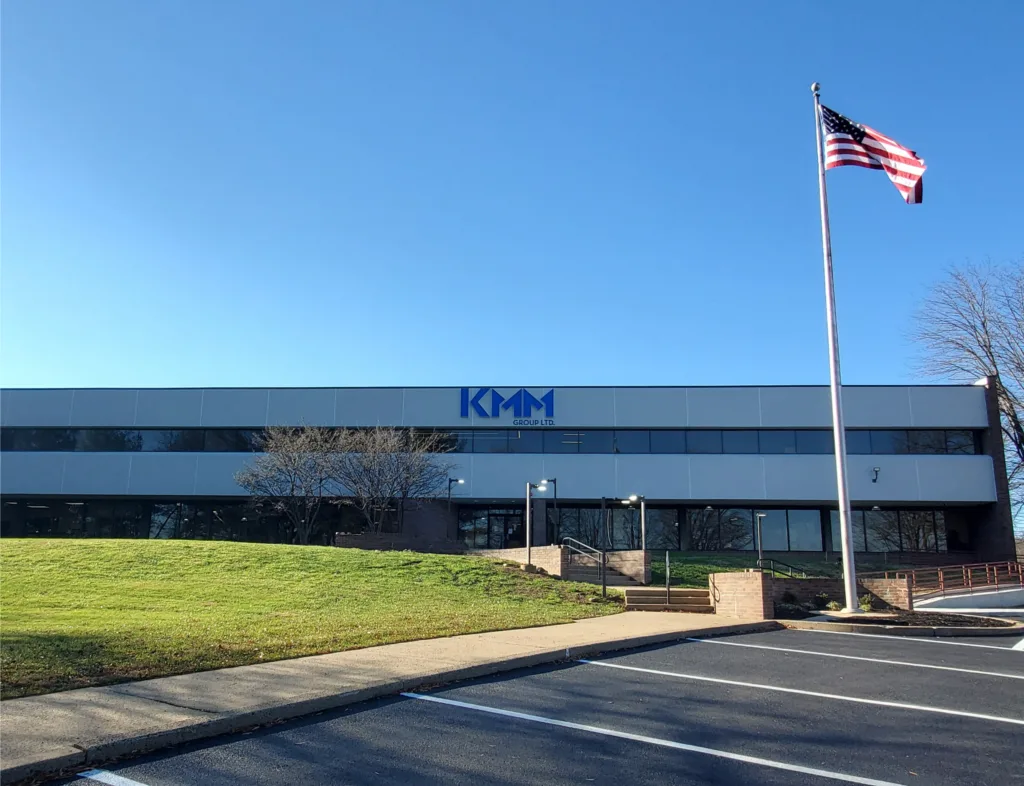
KMM Group has already invested in the physical infrastructure needed to pursue larger and more complex programmes. Its Hatboro headquarters provides approximately 100,000 square feet of space, more than 150 milling, turning, grinding and electrical discharge machining systems, an ISO Class 8 cleanroom and dedicated research and development resources. The company also says the site supports more than 150 manufacturing professionals, engineers and craftspeople.
The RS2 Healthcare Partners investment may therefore be less about creating a manufacturing platform from scratch and more about improving utilisation, broadening capabilities and turning an existing technical base into a larger commercial organisation.
How could J. Mark King change KMM Group’s commercial and operating strategy?
King’s central challenge will be converting highly specialised manufacturing capabilities into repeatable, scalable growth. Technical excellence can win difficult projects, but scaling a contract manufacturer requires more than adding machines or production shifts.
The company will need to decide which medical device categories, customers and component families justify additional investment. A precision manufacturer can dilute its competitive advantage by accepting too many low-volume projects that require extensive engineering work but never progress into meaningful production. Conversely, concentrating too heavily on a small number of customers or programmes can expose revenue to product delays, design changes and demand fluctuations.
King’s experience at Tegra Medical is relevant because that company expanded from a collection of specialist manufacturers into a broader medical device outsourcing provider. During Riverside Partners’ ownership, Tegra Medical increased its capabilities through acquisitions, technology investment, organic sales growth and new customer wins before its sale to SFS Group.
At KMM Group, Shegda’s move to chief technology officer should allow him to focus on manufacturing innovation, engineering knowledge and the equipment required for emerging device designs. Wilhelm’s business transformation role is likely to concentrate on process consistency, capacity planning, organisational structure and the operating discipline needed as customer volumes and headcount increase.
The leadership arrangement is therefore designed to separate three responsibilities that can become difficult for founders to manage simultaneously: corporate leadership and commercial expansion, technical strategy, and organisational scaling.
The risk is that an expanded management structure can add complexity without improving execution. The practical test will be whether KMM Group can shorten quotation and development cycles, improve equipment utilisation, win larger production programmes and maintain quality as its operations grow.
Why will medical device quality systems remain central to KMM Group’s growth strategy?
KMM Group states that it maintains ISO 13485:2016 certification, ISO 9001:2015 certification, AS9100D certification, United States Food and Drug Administration establishment registration and an ISO Class 8 cleanroom. These credentials support its ability to work within regulated and mission-critical supply chains, although they apply to different industries and should not be treated as interchangeable.
FDA establishment registration should also not be confused with regulatory approval or clearance. The FDA explicitly states that registration and device listing do not represent agency approval, clearance, authorisation or certification of a facility or its products.
The timing of the transaction is nevertheless notable because the FDA’s Quality Management System Regulation became effective on February 2, 2026. The regulation incorporated ISO 13485:2016 into the United States medical device quality framework and introduced a revised inspection process for device manufacturers.
For KMM Group, ISO 13485 experience may make the regulatory transition more manageable, but certification alone does not remove execution risk. Customers will continue to examine supplier controls, process validation, non-conformance management, corrective and preventive action systems, equipment maintenance, material traceability and change-control procedures.
As the company grows, quality documentation must scale at the same pace as production. An engineering-led manufacturer can sometimes manage complex work successfully through individual expertise and informal knowledge. A larger regulated supplier requires that knowledge to be converted into controlled processes that remain reliable across shifts, programmes and personnel changes.
Could RS2 Healthcare Partners use KMM Group as a medical device manufacturing consolidation platform?
RS2 Healthcare Partners rebranded from Riverside Partners in May 2026 as part of a decision to focus exclusively on lower-middle-market healthcare investments. The firm identified medical device contract manufacturing, pharmaceutical services and technology-enabled healthcare as core areas of interest and reported having raised $1.6 billion in total capital commitments since its establishment in 1989.
KMM Group fits that strategy unusually well. It is a founder-developed company operating in a specialised healthcare supply-chain segment, with existing manufacturing infrastructure, technical differentiation and opportunities to professionalise commercial and operational systems.
A consolidation strategy could potentially add complementary machining processes, polymer capabilities, assembly, finishing, packaging or additional geographic capacity. It could also allow KMM Group to offer customers a wider range of services while reducing the number of individual suppliers they must qualify and manage.
Yet acquisitions in precision manufacturing can be difficult to integrate. Different plants may use incompatible quality systems, enterprise software, inspection methods and production cultures. Customer approvals can also limit how quickly work can be transferred between facilities. Purchasing another manufacturer may expand theoretical capacity without creating immediately interchangeable production.
RS2 Healthcare Partners and KMM Group have not confirmed that acquisitions form part of the investment plan. Until specific transactions or expansion projects are announced, the more defensible interpretation is that RS2 is backing KMM Group’s existing platform while preserving the option to pursue inorganic growth.
What milestones will show whether the RS2 Healthcare Partners investment is working?
Because KMM Group and RS2 Healthcare Partners are privately held, there is no public share-price reaction or quarterly market disclosure through which investors can judge the transaction. The meaningful indicators will instead emerge through operating developments, customer wins, facility expansion, recruitment and further transactions.
One milestone will be whether KMM Group adds manufacturing processes that move it closer to complete device or subassembly production. Another will be whether it secures programmes that progress from engineering and prototype work into recurring commercial volumes.
Hiring patterns will also be revealing. Additions in quality, regulatory support, programme management, automation, business development and operational leadership would indicate that KMM Group is building the organisational layer required to serve larger medical device customers.
The company will also need to demonstrate that the new leadership structure preserves founder expertise while giving King sufficient authority to make capital allocation and commercial decisions. Private equity partnerships can become ineffective when founders remain responsible for every important operational choice but outside executives are expected to deliver accelerated growth.
The transaction gives KMM Group several ingredients required for expansion: a modern manufacturing base, experienced founders, an established medical device adviser turned chief executive and an investor with relevant contract manufacturing experience. What remains unknown is the financial scale of RS2 Healthcare Partners’ commitment and how aggressively the partners intend to deploy it.
The next phase will be measured not by the investment announcement itself, but by whether KMM Group can transform specialised engineering strength into a larger, more repeatable and quality-controlled medical device manufacturing business.