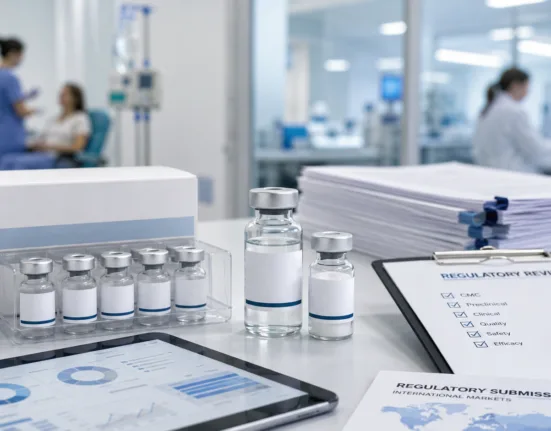
Vanda Pharmaceuticals Inc. (Nasdaq: VNDA) announced on July 16, 2026 that the Committee for Orphan Medicinal Products at the European Medicines Agency had adopted a positive opinion recommending orphan drug designation for imsidolimab in generalized pustular psoriasis. Imsidolimab remains an investigational monoclonal antibody, and the committee’s recommendation is neither European marketing authorisation nor proof that the drug will ultimately be approved.
The positive opinion nevertheless gives Vanda Pharmaceuticals an important regulatory foothold in Europe as it builds a global development strategy around the interleukin-36 receptor inhibitor. The company already has an imsidolimab Biologics License Application under review in the United States and secured orphan drug designation in Japan in May 2026.
The central question is no longer whether generalized pustular psoriasis qualifies as a serious rare condition. It is whether Vanda Pharmaceuticals can demonstrate that imsidolimab offers sufficient clinical and practical value in a European market where Boehringer Ingelheim’s Spevigo is already authorised for treating and preventing generalized pustular psoriasis flares.
Why does the EMA orphan recommendation matter if imsidolimab is still investigational?
European orphan designation is intended to encourage the development of medicines for life-threatening or chronically debilitating conditions affecting no more than five in 10,000 people in the European Union, unless commercial returns would otherwise be insufficient to justify development.
The Committee for Orphan Medicinal Products assesses whether a candidate meets the regulatory criteria and recommends whether the designation should be granted. A formal European Commission decision normally follows the committee’s opinion. The process is separate from the evaluation of quality, safety and efficacy required for marketing authorisation.
For Vanda Pharmaceuticals, the immediate benefits could include access to protocol assistance, potential reductions in certain regulatory fees and a more structured dialogue with European regulators. These advantages can be meaningful for a relatively small company developing a biologic for a geographically dispersed rare-disease population.
The potentially more valuable incentive is up to 10 years of European market exclusivity following marketing authorisation. That protection does not begin with the orphan recommendation, however, and it is not guaranteed simply because the committee has issued a positive opinion. Imsidolimab must be authorised, and the orphan criteria must remain satisfied when the marketing application is assessed.
Vanda Pharmaceuticals described the development as the first European orphan designation recognition involving a medicine for generalized pustular psoriasis. That is a narrower claim than saying Europe has only now recognised the disease or its need for targeted treatment. European regulators authorised Spevigo for generalized pustular psoriasis in December 2022, meaning the condition already has an established regulatory and commercial presence.

What do GEMINI-1 and GEMINI-2 show about flare clearance and longer-term control?
The clinical case for imsidolimab is primarily based on the Phase 3 GEMINI programme. GEMINI-1 was a randomized, double-blind and placebo-controlled trial involving 45 adults experiencing an active generalized pustular psoriasis flare across 26 sites in 11 countries.
Participants were assigned to a single intravenous infusion of 300 milligrams of imsidolimab, 750 milligrams of imsidolimab or placebo. The primary assessment examined the proportion of patients achieving a Generalized Pustular Psoriasis Physician Global Assessment score of clear or almost clear at Week 4.
Approximately 53% of patients in both imsidolimab dose groups achieved clear or almost clear skin, compared with 13% in the placebo group. The difference between the 750-milligram group and placebo met the prespecified statistical threshold, with a reported p-value of 0.0131.
The endpoint required improvement across pustulation, redness and scaling rather than relying only on a single disease feature. That makes the response clinically informative, although the four-week assessment does not by itself answer how quickly patients begin improving or whether the benefit persists without maintenance treatment.
GEMINI-2 addressed the maintenance question in patients who had improved during GEMINI-1. Sixteen patients who achieved clear or almost clear skin were re-randomized to monthly subcutaneous treatment with 200 milligrams of imsidolimab or placebo.
All eight patients assigned to imsidolimab maintenance reportedly retained clear or almost clear skin, and none experienced a flare during the disclosed follow-up. Among the eight assigned to placebo, 25% maintained clear or almost clear skin and 63% experienced a flare. Follow-up ranged from at least 24 weeks to as long as 92 weeks in the initial analysis.
Those percentages appear striking, but they come from only eight patients in each randomized maintenance group. The rarity of generalized pustular psoriasis makes large trials difficult, yet the small sample creates wide uncertainty around the size and reproducibility of the maintenance benefit.
The published GEMINI analysis reported no treatment-related serious adverse events and no serious adverse events leading to discontinuation among imsidolimab-treated patients. That is encouraging within the observed population, but the programme remains too small to define uncommon risks or fully characterise safety during prolonged immune-pathway inhibition.
Why does targeting interleukin-36 make clinical sense in a disease distinct from plaque psoriasis?
Generalized pustular psoriasis can be mistakenly grouped with more familiar forms of plaque psoriasis because both conditions affect the skin. The biology, clinical course and immediate risks are materially different.
Generalized pustular psoriasis is a systemic inflammatory disease characterised by episodes of widespread sterile pustules, redness and systemic symptoms that may include fever and severe fatigue. Serious flares can be accompanied by infections, sepsis-like presentations and organ complications, making rapid disease control clinically important.
Dysregulated interleukin-36 signalling is considered a central mechanism in the disease. Variants affecting the IL36RN gene can reduce the activity of the body’s natural interleukin-36 receptor antagonist, allowing inflammatory signalling to become excessively active. Not every patient carries an identified IL36RN variant, which is why the GEMINI programme enrolled patients irrespective of mutation status.
Imsidolimab is a high-affinity humanized immunoglobulin G4 monoclonal antibody designed to block the interleukin-36 receptor. The mechanism therefore has a strong biological rationale and has produced a controlled Phase 3 efficacy signal.
That rationale should not be confused with proof that imsidolimab will benefit every generalized pustular psoriasis patient. Regulators will consider whether the clinical evidence supports the proposed population, dose, acute-flare regimen and longer-term maintenance strategy. They will also examine manufacturing consistency, immunogenicity and the durability of benefit.
How does approved Spevigo competition raise the evidence bar for imsidolimab in Europe?
The most important commercial and regulatory complication is that imsidolimab would not enter an untreated European market. Spevigo, which contains the interleukin-36 receptor antagonist spesolimab, is authorised in the European Union for treating and preventing generalized pustular psoriasis flares in adults and adolescents aged 12 years and older.
For active flares, Spevigo is administered as an intravenous infusion, with a second dose available after one week if symptoms persist. For flare prevention, it is administered subcutaneously every four weeks after a loading dose.
In the pivotal European evidence supporting acute treatment, 54% of Spevigo-treated patients had no visible pustules after one week, compared with 6% receiving placebo. A separate prevention study found that 10% of patients receiving Spevigo experienced at least one flare over 48 weeks, compared with 52% receiving placebo.
Those figures cannot be compared directly with the imsidolimab results. The trials used different populations, assessment times, endpoint definitions, dosing schedules and statistical methods. There has been no head-to-head trial establishing that imsidolimab is superior, equivalent or inferior to spesolimab.
The existence of Spevigo nevertheless changes what Vanda Pharmaceuticals may need to demonstrate. At the orphan-designation stage, a sponsor can present a plausible case for significant benefit over satisfactory existing treatment. At marketing authorisation, European authorities generally expect a more developed evidence package supporting that claimed benefit.
Possible differentiators could include response durability, dosing, tolerability, retreatment needs, patient selection or practical administration. None can be considered established advantages without an appropriately designed comparison or a compelling regulatory assessment.
What commercial advantages could European orphan status deliver after authorisation?
Orphan status can reduce regulatory friction, but it cannot eliminate the commercial challenges of a rare-disease launch. Vanda Pharmaceuticals would need to identify eligible patients across multiple national health systems, establish specialist prescriber relationships and negotiate reimbursement country by country.
Generalized pustular psoriasis may be underdiagnosed or confused with other inflammatory skin conditions. A successful launch would therefore depend on specialist education and referral pathways, not simply on the number of patients estimated to have the disease.
Manufacturing will be equally important. Imsidolimab is a biologic requiring consistent monoclonal antibody production, validated supply processes and dependable distribution. Vanda Pharmaceuticals acquired the exclusive global development and commercialisation rights from AnaptysBio Inc. in February 2025, paying $10 million upfront and $5 million for existing drug supply. AnaptysBio is also entitled to a 10% royalty on global net sales.
The agreement allowed Vanda Pharmaceuticals to acquire a late-stage programme without funding the entire discovery and Phase 3 development process. It also transferred responsibility for regulatory execution, manufacturing readiness and commercialisation to a company already managing several product launches.
European orphan exclusivity could improve the economic case if imsidolimab is authorised and the designation is maintained. It would not guarantee reimbursement, preferred formulary positioning or rapid uptake against an established competitor.
Why is the United States review still the more immediate catalyst for Vanda Pharmaceuticals?
The United States Food and Drug Administration accepted Vanda Pharmaceuticals’ imsidolimab Biologics License Application in February 2026 and assigned a target action date of December 12, 2026. Acceptance confirmed that the application was sufficiently complete for substantive review, but it did not indicate whether approval is likely.
The United States decision is more immediate because Vanda Pharmaceuticals has already filed the full marketing application there. The July 16 European announcement did not disclose the submission or validation of a European marketing authorisation application.
An approval in the United States could provide regulatory validation, clarify the final treatment label and move imsidolimab into launch preparation. It could also inform subsequent European discussions, although European authorities conduct their own benefit-risk evaluation and may inform reach different conclusions about the evidence, indication or orphan criteria.
Japan’s May 2026 orphan designation adds another potential market, particularly because generalized pustular psoriasis has a recognised patient population and genetic relevance in Japan. It remains a development incentive rather than a marketing approval.
What does Vanda Pharmaceuticals’ stock performance reveal about current investor sentiment?
Vanda Pharmaceuticals shares closed at $5.45 on July 16, down 6.8% during the regular session. The orphan recommendation was announced at 4:30 p.m. Eastern Time, after the market had closed, so the decline cannot reasonably be attributed to the news.
The stock fell approximately 12.7% over the five trading sessions from July 10 and was down roughly 7% over one month. It remained within a 52-week range of $4.14 to $9.94, giving Vanda Pharmaceuticals a market capitalisation of approximately $328 million at the July 16 close.
That performance suggests cautious sentiment toward a company balancing multiple launches, late-stage programmes and rising expenditure. First-quarter 2026 net product sales increased 3% year over year to $51.7 million, but the net loss widened to $48.6 million from $29.5 million.
Vanda Pharmaceuticals held $202.3 million in cash, cash equivalents and marketable securities at March 31, 2026. The balance declined by $61.5 million during the quarter, including a $10 million milestone payment related to the approval of Nereus.
Imsidolimab’s European progress adds strategic value, but an orphan recommendation is unlikely to carry the same weight as an approval decision. The December Food and Drug Administration action date, the commercial performance of recently launched products and the company’s spending trajectory are likely to remain more influential near-term sentiment drivers.
Which clinical, regulatory and commercial milestones will determine imsidolimab’s value?
The next European step is confirmation of the orphan designation through the formal decision process, followed by clarity on Vanda Pharmaceuticals’ marketing authorisation timetable. Investors and industry observers will need to distinguish each procedural advance from an actual approval.
The proposed European indication will also matter. An application covering acute flare treatment, recurrence prevention or both would carry different evidence, dosing and competitive requirements. Eligibility by age could further shape the addressable population, particularly because Spevigo already covers adults and adolescents from 12 years of age.
Regulators will examine whether the modestly sized GEMINI programme provides a sufficiently reliable assessment of efficacy and safety. They will also need to determine whether Vanda Pharmaceuticals has demonstrated a meaningful benefit in the context of an existing interleukin-36 receptor therapy.
Imsidolimab has now accumulated orphan regulatory recognition across three major markets, peer-reviewed Phase 3 evidence and an active United States application. The remaining challenge is substantially harder: converting those assets into an approved label, reproducible manufacturing, payer acceptance and a clinically credible position beside an established competitor.