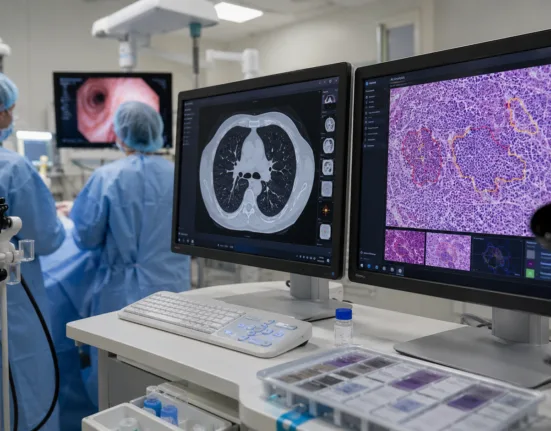
Polpharma Biologics International AG has moved its proposed vedolizumab biosimilar PB016 into formal regulatory review in the United States and Europe. The United States Food and Drug Administration has accepted the company’s Biologics License Application, while the European Medicines Agency has accepted the corresponding Marketing Authorisation Application for the intravenous candidate, which references Takeda Pharmaceutical Company’s Entyvio.
The submissions cover a lyophilised vial for intravenous administration and are directed at the treatment of adults with moderately to severely active ulcerative colitis and Crohn’s disease. Acceptance means that the regulators have determined that the applications are sufficiently complete to enter substantive review. It does not establish that PB016 is biosimilar to Entyvio, confirm that the product will be approved, or indicate what final wording may appear in any authorised label.
PB016 was developed by Polpharma Biologics, which is also expected to manufacture the product. Fresenius Kabi holds exclusive commercialisation rights across most global markets, excluding the Middle East and North Africa, subject to regulatory approvals. The arrangement gives Polpharma access to a multinational commercial platform while allowing Fresenius Kabi to add a potentially important inflammatory bowel disease therapy to its expanding biosimilars portfolio.
Why does dual FDA and EMA review acceptance matter for PB016’s regulatory and commercial prospects?
The immediate significance is that PB016 has crossed the administrative filing threshold in two of the world’s most commercially important biologics markets. Polpharma Biologics has therefore progressed beyond clinical development and dossier preparation into the phase where regulators will examine analytical similarity, manufacturing controls, clinical pharmacology, comparative clinical evidence, immunogenicity and the proposed prescribing information.
The more important commercial takeaway is that PB016 is not entering an empty field. Alvotech disclosed in June 2026 that the United States Food and Drug Administration had accepted an application for AVT16, its proposed interchangeable biosimilar to the intravenous formulation of Entyvio. Alvotech is responsible for developing and manufacturing AVT16, while Teva Pharmaceutical Industries holds United States commercialisation responsibilities under their partnership.
PB016 therefore represents another serious entrant in an emerging vedolizumab biosimilar contest. Approval timing, manufacturing readiness, intellectual-property arrangements, payer contracting and the ability of commercial partners to secure formulary access may ultimately matter as much as the order in which applications were accepted.
Why does FDA and EMA acceptance move PB016 forward without establishing biosimilarity?
Regulatory acceptance is an important procedural milestone because it confirms that the submitted package can move into detailed scientific review. However, neither agency has yet concluded that PB016 is highly similar to Entyvio or that any identified differences lack clinical significance.
The United States biosimilar pathway is built around a totality-of-evidence approach. Analytical studies form the foundation, supported where necessary by comparative functional testing, pharmacology, immunogenicity and clinical studies intended to resolve remaining uncertainty. The objective is not to independently re-establish every element of the reference biologic’s efficacy and safety, but to demonstrate that the proposed biosimilar is highly similar and has no clinically meaningful differences from the reference product.
European regulators follow a comparable principle, placing substantial emphasis on comparative quality, analytical and functional characterisation, alongside an appropriately tailored nonclinical and clinical programme. A validated Marketing Authorisation Application proceeds to evaluation by the European Medicines Agency’s scientific committees, but validation alone does not predict a positive Committee for Medicinal Products for Human Use opinion or final European Commission authorisation.
For PB016, the review will consequently test more than whether the clinical trial produced broadly similar response rates. Regulators will examine the consistency of the manufacturing process, structural and functional comparability, product-related impurities, biological activity, pharmacokinetics, immunogenicity and the justification for every indication sought.

What does the UCESIVE Phase 3 programme contribute to the PB016 evidence package?
Polpharma’s development programme included a Phase 1 study involving healthy volunteers and the Phase 3 UCESIVE trial in patients with ulcerative colitis. The company has not publicly released a complete regulatory dataset or detailed results alongside the application-acceptance announcement, limiting the ability of external observers to assess effect estimates, predefined equivalence margins, immunogenicity findings or the full safety profile.
The registered UCESIVE study was designed as a multicentre, randomised, parallel-group and blinded comparison of intravenous PB016 with Entyvio. Approximately 750 adults with moderately to severely active ulcerative colitis were expected to participate across as many as 200 centres in about 18 countries. Participants were assigned to receive 300 milligrams of PB016 or reference vedolizumab using the established induction and maintenance schedule.
Treatment was administered at weeks zero and two during induction, followed by doses at weeks six, 14, 22, 30, 38 and 46. The programme extended to 54 weeks, including follow-up, allowing investigators to assess induction response, maintenance outcomes, safety and immunogenicity over a clinically relevant period.
The primary outcome was structured around similarity in clinical response during induction, using changes in the complete Mayo score and rectal-bleeding component. Secondary assessments included maintenance of clinical response, mucosal healing, changes in partial Mayo scores and other efficacy, safety and immunogenicity measures through the maintenance period.
A comparative Phase 3 study can help resolve residual uncertainty, but it is only one component of the biosimilar dossier. The decisive regulatory question will be whether the analytical, functional, pharmacokinetic and clinical evidence collectively supports a conclusion of biosimilarity. Application acceptance indicates that the package is ready to be assessed, not that the agencies have endorsed its findings.
Why are the PB016 formulation and proposed indications commercially important?
Vedolizumab is a monoclonal antibody targeting the alpha-4-beta-7 integrin, a protein involved in directing certain immune cells toward gastrointestinal tissue. Blocking this interaction is intended to reduce inflammatory-cell migration into the gut, providing a relatively targeted mechanism for inflammatory bowel disease treatment.
The reference product is available in intravenous and subcutaneous formulations in major markets. In Europe, Entyvio is authorised for adults with moderately to severely active ulcerative colitis or Crohn’s disease under specified treatment circumstances, as well as for certain adults with chronic pouchitis.
Polpharma’s announcement specifically describes PB016 as an intravenous lyophilised-vial candidate for adult ulcerative colitis and Crohn’s disease. It does not state that the current filings include a subcutaneous presentation or the European pouchitis indication. The commercial opportunity should therefore be assessed against the exact formulation and indications under review rather than the entire global Entyvio franchise.
The intravenous format remains commercially meaningful because it is delivered through infusion settings where purchasing decisions may be influenced by institutional contracts, payer policies, reimbursement structures and health-system biosimilar programmes. At the same time, the increasing availability of subcutaneous maintenance options means an intravenous-only entrant may not compete across every part of the reference product’s evolving market.
How does Alvotech’s AVT16 change the competitive race for an Entyvio biosimilar?
Alvotech’s AVT16 adds urgency to the PB016 programme because its United States application was accepted before Polpharma announced the PB016 acceptance. AVT16 is being pursued as a proposed interchangeable biosimilar, while Polpharma’s announcement describes PB016 as a proposed biosimilar and does not disclose an interchangeability request.
That distinction matters in the United States. Biosimilar approval and interchangeable designation are separate regulatory concepts. An interchangeable biosimilar may qualify for pharmacy-level substitution without prescriber intervention where state law permits, although the practical relevance varies by product, distribution channel and treatment setting. Interchangeability does not mean that one biosimilar is clinically superior to another.
Intravenous biologics administered in clinics and infusion centres often compete through medical-benefit contracting rather than conventional retail-pharmacy substitution. Commercial success may consequently depend more heavily on net pricing, payer preferences, provider economics, supply reliability and the commercial partner’s account relationships than on interchangeability status alone.
In Europe, the European Medicines Agency and the Heads of Medicines Agencies consider authorised biosimilars scientifically interchangeable with their reference products. Decisions concerning automatic substitution and implementation remain within the authority of individual European countries, creating a market-access landscape that can differ substantially between jurisdictions.
Can Fresenius Kabi convert Polpharma’s development asset into a global commercial product?
The division of responsibilities is strategically straightforward. Polpharma Biologics developed PB016 and expects to manufacture it, while Fresenius Kabi controls commercialisation across most territories outside the Middle East and North Africa. This structure allows each company to focus on its core capabilities, but it also creates linked execution risks.
Polpharma must demonstrate manufacturing consistency, maintain compliant quality systems, support regulatory inspections and produce sufficient commercial inventory. Fresenius Kabi must prepare market-specific launches, negotiate with payers and healthcare systems, establish distribution, educate providers and compete against both the originator and other biosimilars.
Fresenius Kabi already operates an international biosimilars business spanning immunology, oncology, haematology and bone-health products. The company has used internal development and licensing partnerships to expand that portfolio, making PB016 consistent with a broader strategy of building commercial scale without relying exclusively on internally discovered assets.
Fresenius SE shares traded around €44.79 on July 31, approximately 13% below their 52-week high but substantially above late-June levels. The movement reflects the group’s wider operational turnaround, earnings expectations and balance-sheet narrative rather than a demonstrable standalone reaction to PB016. The company was scheduled to publish its second-quarter results on August 5, making that report a more immediate driver of investor sentiment.
What do Entyvio’s latest sales reveal about the opportunity and the challenge?
The commercial attraction is evident in Takeda’s latest product figures. Entyvio generated ¥958 billion in Takeda’s fiscal year ended March 2026. The company maintained its fiscal 2026 forecast of ¥1.046 trillion, representing reported growth of approximately 9% and constant-exchange-rate growth of about 4%.
During the first quarter of fiscal 2026, Entyvio sales reached ¥268.3 billion, increasing 15.4% at actual exchange rates and 3.8% at constant exchange rates. Those figures show that the franchise remains large and continues to expand despite intensifying competition across inflammatory bowel disease treatment.
For biosimilar developers, a reference product approaching ¥1 trillion in annual revenue creates an unusually attractive addressable market. It also raises the competitive threshold. Takeda has an established prescriber base, extensive clinical evidence, intravenous and subcutaneous formulations, continuing indication-development programmes and longstanding payer relationships.
Takeda has previously indicated that it expects meaningful Entyvio biosimilar exposure around 2031. The arrival of accepted regulatory applications several years earlier does not necessarily contradict that expectation because regulatory approval and commercial launch can be separated by intellectual-property arrangements, litigation, settlements and product-specific market-entry agreements.
Takeda’s Tokyo-listed shares were quoted at approximately ¥4,975 on the company’s investor page on July 31, below the ¥5,648 close recorded on July 24. The movement occurred around Takeda’s July 30 quarterly reporting window and should not be attributed to the PB016 filing without stronger evidence. Investor attention is likely to remain centred on Takeda’s overall pipeline, launch investments, profitability and Entyvio’s continuing growth rather than one biosimilar application alone.
Which manufacturing, legal and market-access tests will determine PB016’s launch prospects?
For a monoclonal-antibody biosimilar, regulatory review places substantial weight on chemistry, manufacturing and controls. Even convincing clinical similarity cannot compensate for unresolved questions involving cell-line consistency, process validation, impurity profiles, analytical comparability, stability, facility compliance or commercial-scale production.
Polpharma’s responsibility for development and manufacturing means regulatory inspections and manufacturing readiness will be central to the programme’s timeline. A positive scientific assessment would still need to be translated into validated production, release testing, inventory creation and reliable supply across multiple markets.
Commercial entry may also depend on factors that sit outside the scientific review. Patent litigation, confidential settlements and jurisdiction-specific exclusivity arrangements can determine when an approved biosimilar is permitted to launch. Polpharma Biologics and Fresenius Kabi have not disclosed an expected approval date, launch timetable, pricing strategy or any agreement governing market entry against Entyvio.
After launch, adoption will not be automatic. Payers and hospital systems will compare net prices, contracting terms, supply guarantees and implementation costs. Gastroenterologists may also evaluate switching protocols, pharmacovigilance arrangements and the practical implications of moving stable patients from a familiar reference product.
What should the industry watch next as PB016 moves through dual regulatory review?
The next meaningful milestones will be confirmation of regulatory review timetables, any requests for additional information, manufacturing-inspection progress and eventual decisions from the United States Food and Drug Administration and the European Medicines Agency’s Committee for Medicinal Products for Human Use.
Greater disclosure of the UCESIVE results would also help clinicians and industry observers understand the comparative clinical-response data, equivalence framework, immunogenicity findings and safety profile submitted to regulators. Until such information is published, the evidence package cannot be independently evaluated in the same detail as the procedural acceptance itself.
PB016 has nevertheless reached an important inflection point. Polpharma Biologics has converted a development-stage vedolizumab programme into applications under active review, while Fresenius Kabi has secured a potential route into a commercially valuable inflammatory bowel disease market.
The harder test now begins. PB016 must survive detailed scientific and manufacturing scrutiny, navigate a growing field of competing vedolizumab biosimilars and enter markets where Takeda continues to grow Entyvio while investing in additional formulations and indications. Regulatory acceptance has put PB016 in the race, but approval, launch timing and sustained commercial adoption will determine whether it becomes a meaningful competitor.