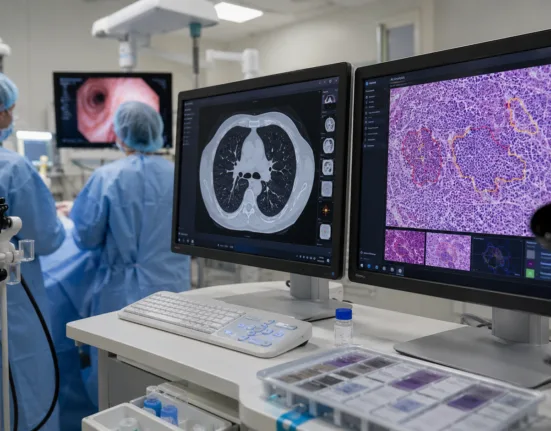
SurGenTec, LLC said on July 24, 2026, that the United States Food and Drug Administration granted 510(k) clearance for ION-L navigation instruments intended for use with the company’s ION-L Lumbar Facet Fixation System. The instruments are engineered for compatibility with Medtronic plc’s StealthStation navigation platform, allowing surgeons to track instruments relative to lumbar anatomy during open or minimally invasive posterior facet fusion procedures.
The development builds on the FDA’s June 11 clearance of the underlying ION-L implant system. The FDA database identifies ION-L under 510(k) number K261209 as a facet screw spinal device that was found substantially equivalent to legally marketed predicate systems. SurGenTec has described the implant as intended for skeletally mature patients with degenerative disc disease from L3 to S1 who have not responded to conservative care.
Navigation compatibility is commercially relevant because it gives ION-L a route into operating rooms that already use StealthStation for image-guided spine procedures. It does not broaden the underlying indication, demonstrate that ION-L produces better clinical outcomes than other fixation approaches, or guarantee that hospitals will incorporate the system into routine lumbar fusion pathways. The clearance is better understood as a workflow expansion that could make the implant easier to position within technology-enabled spine programmes.
What exactly does the FDA-cleared ION-L system permit surgeons to do in lumbar fusion procedures?
The underlying ION-L implant has a narrower regulatory scope than the phrase “lumbar facet fixation system” may initially suggest. It is intended for bilateral placement through a posterior surgical approach, spanning the facet joint at one level between L3 and S1. Its role is temporary stabilisation as an adjunct to a one-level lumbar interbody fusion performed at the same level, rather than an independently cleared replacement for every conventional posterior fixation construct.
The implant is intended to be used with an FDA-cleared intervertebral body fusion device and autogenous or allogenic bone graft. This distinction matters clinically and commercially. SurGenTec is not positioning ION-L as a general treatment for uncomplicated back pain or as a stand-alone intervention for all lumbar degenerative disease. Candidate selection remains tied to the cleared population, skeletal maturity, failure of conservative care and the decision to undertake an interbody fusion procedure.
The navigation instruments do not change those boundaries. Their purpose is to help the surgeon locate anatomical structures, particularly the lumbar facet joint, and guide instrument placement using the StealthStation platform. SurGenTec said the system can be used during open or minimally invasive procedures, but navigation remains an intraoperative aid rather than an autonomous decision-making technology. Surgical planning, registration, trajectory confirmation and final implant placement remain under clinician control.
Why could StealthStation compatibility matter more commercially than another implant design update?
Medtronic’s StealthStation S8 platform combines imaging data, tracking hardware, software and specialised instruments to show the position of surgical tools relative to patient anatomy. The platform is indicated as an aid for locating anatomical structures during open or percutaneous procedures where rigid anatomy, including a vertebra, can be referenced against computed tomography, magnetic resonance, fluoroscopic or digitised anatomical data.
For SurGenTec, compatibility with an established navigation ecosystem could reduce one barrier encountered by smaller medical device companies. Hospitals generally resist purchasing isolated technologies that require additional capital equipment, unfamiliar imaging processes or extensive operating-room reconfiguration. ION-L can instead be presented to compatible facilities as an implant and instrument addition to navigation infrastructure they may already operate.
That advantage is not universal. Hospitals without StealthStation access would still need to rely on the existing non-navigated workflow or invest in navigation capacity through a separate capital purchasing decision. Even facilities possessing the platform must assess instrument compatibility, staff training, imaging protocols, system registration, sterile processing requirements and case coverage. The clearance opens a door, but every hospital purchasing committee will still ask how frequently the system will be used and whether its clinical and operational value justifies the additional inventory.
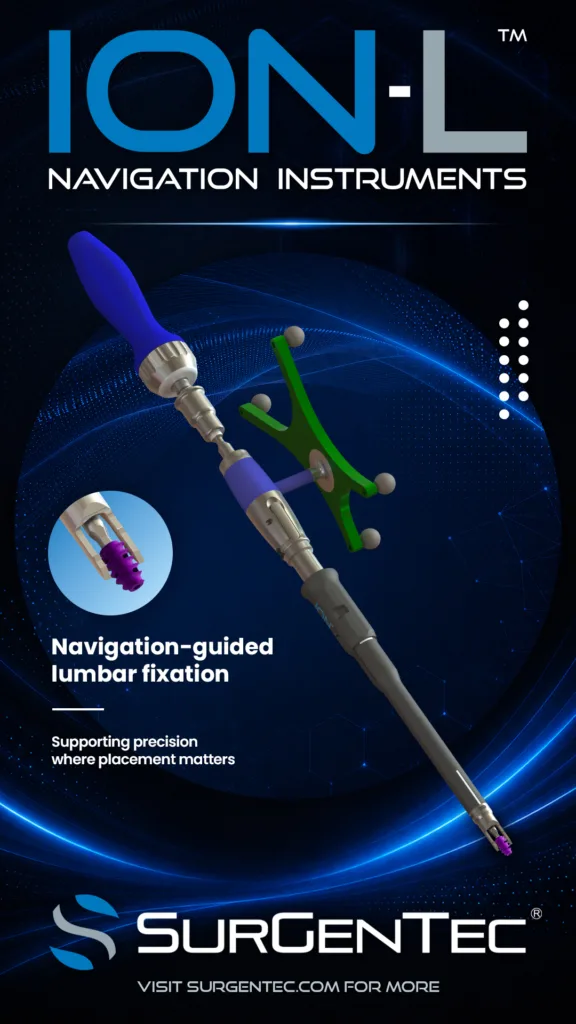
SurGenTec has also been building navigation compatibility across its portfolio. The FDA cleared navigation instruments for the company’s TiLink sacroiliac joint fusion system in March 2026 and ION-C cervical navigation instruments in May 2026. The ION-L development therefore appears to be part of a broader platform strategy rather than an isolated regulatory event.
Does available evidence show that navigated ION-L placement reduces radiation, complications or operating time?
SurGenTec described several potential benefits, including more precise facet targeting, improved visualisation, greater procedural control and possible reductions in operative time, radiation exposure and complications. Those statements should be interpreted as intended or potential advantages. The July announcement did not disclose an ION-L-specific comparative study demonstrating that navigated placement reduced radiation, shortened procedures or lowered complication rates against fluoroscopy-guided placement.
The broader spine-navigation literature provides a plausible rationale, but it does not establish product-specific outcomes. A systematic review of 38 studies comparing image-guided techniques in lumbar fusion found that conventional C-arm fluoroscopy tended to result in higher radiation exposure for surgeons and higher absorbed doses for patients than several navigated or robotic approaches. However, the investigators reported wide dose ranges, low evidence levels and serious risks of bias across much of the included literature.
A 2026 meta-analysis of eight randomised studies involving 1,042 patients found that robot-guided spinal fusion reduced radiation time compared with fluoroscopy-guided procedures. It also found that robot-guided surgery lasted approximately 12 minutes longer on average, while differences in pedicle screw accuracy and hospital stay were not statistically significant. Those findings relate to robot-guided pedicle screw placement, not ION-L facet fixation, but they illustrate why navigation claims require procedure-specific evidence rather than assumptions.
Navigation can reduce repeated fluoroscopic imaging in some workflows, but it may introduce additional steps involving imaging acquisition, patient registration, instrument verification and troubleshooting. The balance can vary by surgeon experience, procedure complexity, operating-room setup and the navigation system used. SurGenTec will therefore need prospective or carefully designed real-world studies if it wants to move the conversation from technical compatibility to measurable clinical and operational value.
How mature is the clinical evidence supporting the underlying ION-L implant system?
The FDA’s public record states that ION-L was cleared through the 510(k) pathway after being found substantially equivalent to predicate facet fixation systems. The public summary says SurGenTec supplied retrospective clinical data, alongside mechanical testing that included static and dynamic bending, pushout, compression, insertion and removal torque, and torque-to-failure evaluations. A substantial-equivalence decision permits marketing for the cleared use, but it does not represent a finding that the device is superior to its predicates.
When SurGenTec announced the original ION-L implant clearance in June, it said the supporting clinical programme was an Institutional Review Board-approved multicentre study conducted by an independent third party. The company also said two radiologists independently assessed fusion outcomes and that no adverse events were reported in the evaluated cohort.
The public announcement did not provide the study’s sample size, patient-level baseline characteristics, comparator group, prespecified primary endpoint, numerical fusion rate, follow-up distribution, reoperation rate or detailed adverse-event definitions. It also did not indicate whether the complete findings had been accepted for peer-reviewed publication. Consequently, the available disclosure supports the existence of clinical evidence but does not allow clinicians or hospital committees to independently judge the magnitude and durability of benefit.
The new navigation clearance does not resolve that limitation. It changes how the system may be placed, not the maturity of the evidence supporting fusion outcomes. The next meaningful evidence step would be a transparent clinical dataset evaluating both the implant and the navigated workflow, including placement accuracy, fusion, procedural time, radiation, blood loss, complications, revisions and patient-reported outcomes.
Can facet-based fixation compete with established pedicle screw constructs in lumbar surgery?
Facet fixation is not a new concept, but it remains less dominant than pedicle screw-based posterior fixation in many lumbar fusion pathways. Its potential appeal lies in achieving stabilisation with a smaller posterior footprint, reduced soft-tissue disruption and less prominent hardware. SurGenTec has designed ION-L with a zero-profile configuration, controlled non-impact insertion, fenestrations for bone graft integration and features intended to resist implant expulsion.
A systematic review covering 19 studies and 1,577 patients found that lumbar facet stabilisation techniques had produced generally encouraging clinical and radiological results across several device and surgical categories. The authors nevertheless identified considerable variation in techniques, indications, follow-up and outcome reporting, making it difficult to draw broad conclusions about one product from results obtained with another.
That heterogeneity is particularly relevant to ION-L. Published evidence involving translaminar screws, facet wedges, intra-articular devices or hybrid constructs cannot automatically validate SurGenTec’s implant. Device geometry, surgical approach, supplemental interbody technology, bone graft, patient selection and biomechanical demands all affect outcomes.
ION-L’s strongest near-term commercial opportunity may therefore be in carefully selected procedures where surgeons want supplemental posterior stabilisation without the footprint of a larger construct. Expansion beyond that niche will depend on evidence showing where the system delivers comparable fusion and revision outcomes, which patient anatomies are best suited and when a facet-based approach may be insufficient.
What practical hurdles could determine ION-L adoption in hospitals and ambulatory surgery centres?
SurGenTec previously said ION-L would be supplied with sterile implants and sterile single-use instruments, presenting the system as suitable for both hospitals and ambulatory surgery centres. Single-use components can simplify tray management and reduce reprocessing requirements, but they also create recurring purchasing costs that facilities must compare with reusable instrumentation models.
Navigation adds another layer to the economic calculation. Facilities will consider the cost of imaging, navigation disposables, technical support, surgeon training and operating-room time alongside any potential reduction in fluoroscopy or instrument processing. Existing StealthStation users may face a lower adoption threshold, particularly where spine teams already have established registration and image-guidance protocols.
Surgeon familiarity will be equally important. Precise navigation depends on accurate registration, stable tracking and verification that the displayed instrument position continues to correspond to the patient’s anatomy. Navigation cannot compensate for poor registration, movement of the reference frame or inappropriate surgical planning. Training programmes and initial case support will therefore influence whether the technology becomes an everyday tool or another cleared option that remains on the shelf.
SurGenTec is privately held, so there is no public share-price response or market-capitalisation layer through which investors can assess the announcement. Commercial progress will instead become visible through hospital placements, surgeon adoption, distribution expansion, product utilisation and future disclosures regarding procedure volumes.
What should clinicians and procurement teams watch after the ION-L navigation clearance?
The immediate questions concern rollout execution. SurGenTec has not disclosed the navigation instrument clearance number in its announcement, detailed launch pricing, the number of compatible instruments, training requirements or whether initial availability will be restricted to selected United States centres.
Clinicians will want product-specific evidence showing that navigation maintains or improves implant placement without introducing unnecessary procedural complexity. Procurement teams will focus on compatibility with existing StealthStation configurations, disposable costs, inventory requirements, staff support and the number of eligible cases expected at each facility.
The most valuable future dataset would compare navigated ION-L placement with fluoroscopic placement using clearly defined endpoints. These should include successful facet targeting, implant position, fluoroscopy time and dose, total operating time, conversion to alternative fixation, fusion outcomes, neurological or device-related complications, reoperations and longer-term patient function.
SurGenTec has completed an important piece of its platform strategy by extending navigation from sacroiliac and cervical applications into the lumbar spine. The regulatory step makes ION-L more usable within technologically advanced operating rooms, but its commercial significance will be decided case by case. The decisive test is no longer whether the instruments can connect with StealthStation. It is whether surgeons and hospitals can document that the connected workflow produces sufficient clinical and operational value to justify routine use.