Teal Health and UC Davis Health launched a pilot study on July 23, 2026, to examine whether the FDA-authorized Teal Wand at-home HPV self-collection pathway can be embedded directly into a large health system. The program will invite selected UC Davis Health patients aged 30 to 65 who are due or overdue for cervical cancer screening to complete eligibility checks, receive a collection kit by mail and return their sample for laboratory testing.
The project is not another clinical accuracy trial or a new regulatory submission. Its importance lies in implementation: whether patient outreach, prescription ordering, kit fulfilment, specimen transport, laboratory processing, electronic health record reporting and clinical follow-up can function as one dependable care pathway.
That makes the UC Davis Health collaboration a consequential commercial and operational test for Teal Health. The company has already secured authorization and made its service available nationally. It must now demonstrate that at-home screening can move beyond a digitally ordered product and become part of routine population-health management inside hospitals and integrated delivery networks.
Why does the UC Davis pilot matter after the Teal Wand received FDA authorization?
The United States Food and Drug Administration granted Teal Health’s De Novo request for the Teal Wand in May 2025, classifying the prescription device as a Class II medical device. Its authorized purpose is the self-collection and transport of vaginal specimens for testing with an FDA-approved HPV molecular assay that has been validated for use with the device. It can be used at home or in another private setting, with the collected specimen shipped dry in an empty vial.
That regulatory description matters because the Teal Wand does not independently diagnose cervical cancer. It collects a vaginal specimen that is subsequently tested for high-risk human papillomavirus, the viral infection associated with nearly all cervical cancers. An abnormal result may trigger additional testing or an in-person examination, while the FDA-required labelling makes clear that a self-collected result does not replace appropriate healthcare-provider evaluation.
The authorization was also tied to a defined technical configuration. FDA review documents indicate that the device’s performance was validated with the Roche cobas HPV assay on the cobas 5800, 6800 and 8800 systems. Health systems adopting the pathway therefore cannot treat the collection device and laboratory assay as freely interchangeable components. Laboratories must operate within the validated configuration or obtain the necessary evidence and regulatory support for any expanded use.
The UC Davis pilot moves the discussion from whether the device can collect an adequate specimen to whether an academic health system can reliably deliver the complete screening episode. That includes finding eligible patients, persuading them to participate, tracking kits, obtaining valid specimens, returning results and ensuring that patients with abnormal findings receive the required follow-up.
How will UC Davis Health integrate mailed HPV screening kits into existing clinical workflows?
UC Davis Health plans to identify patients aged 30 to 65 who are due or overdue for cervical cancer screening. Invitations may be delivered through MyChart, email, text messages or direct outreach from care teams. Patients who qualify and choose to participate will receive a kit by mail, collect the specimen at home and mail it back for testing.
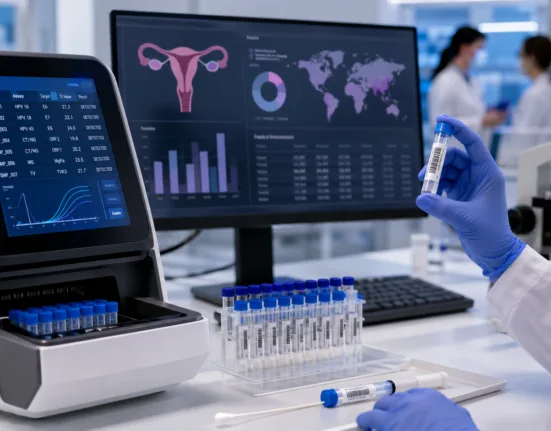
Unlike a standalone direct-to-consumer arrangement, samples will be processed by the UC Davis Health in-house laboratory. Results will then enter the patient’s electronic health record, allowing clinicians to view the test within the same system used for the patient’s other medical information.
Teal Health and UC Davis Health have connected ordering, laboratory processing and result reporting through Epic and Health Level Seven workflows. This integration is commercially important because health systems are unlikely to adopt a preventive-care product at scale if each order requires manual data entry, disconnected portals or repeated reconciliation between outside laboratories and internal records.
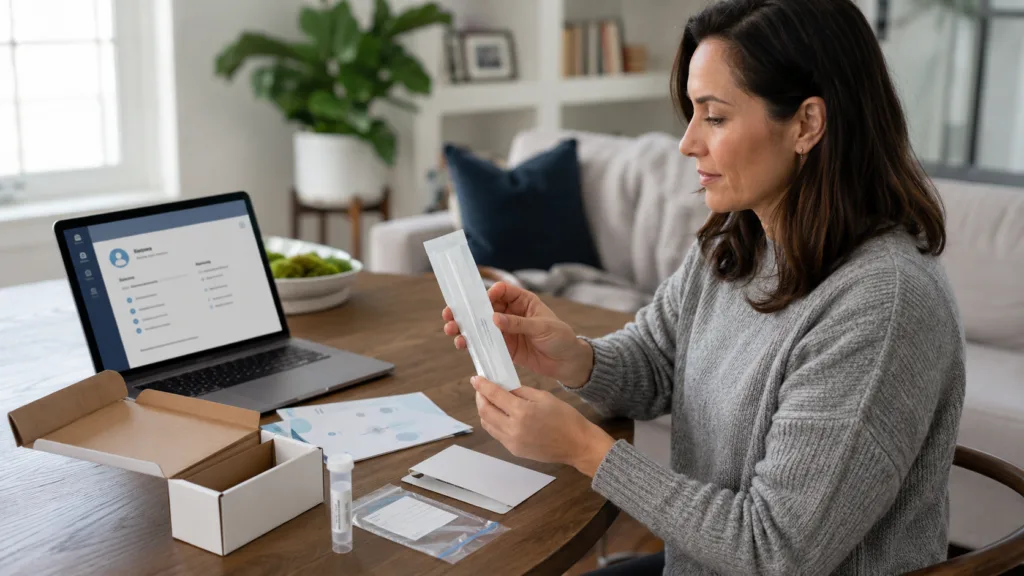
The infrastructure also creates an opportunity to study where patients are lost along the pathway. An invitation may be opened but ignored. A kit may be ordered but never used. A specimen may be collected incorrectly, delayed in transit or returned without enough material for a valid result. A positive result may be reported but not followed by the recommended diagnostic evaluation.
The pilot’s most useful outcome may therefore be a detailed operational map rather than a simple completion percentage. Health systems will want to know how much care-team intervention is required, whether automated reminders improve returns, how often specimens are invalid and whether abnormal results generate timely clinical action without creating an unmanageable administrative burden.
What does the SELF-CERV study establish about Teal Wand performance and usability?
The Teal Wand’s regulatory evidence was supported by the SELF-CERV study, a prospective, nonrandomized method-comparison trial conducted at 16 United States sites. Researchers enrolled 609 screening-eligible participants aged 25 to 65, with 599 providing paired self-collected and clinician-collected samples and 582 valid sample pairs included in the main endpoint analysis.
The peer-reviewed study reported 95.2% positive percentage agreement between self-collected and clinician-collected samples for detecting high-risk HPV. Negative percentage agreement was 90%. Among the participants with histopathologically confirmed cervical intraepithelial neoplasia grade 2 or higher, the self-collected method showed 95.8% sensitivity, equal to the clinician-collected method in that analysis.
The study also reported that 92.3% of respondents found the device instructions easy or very easy to understand. About 93% said they would choose self-collection if they knew its results were comparable with clinician collection. These usability findings support the argument that at-home collection can reduce procedural and scheduling barriers that discourage some people from attending clinic-based screening.
However, SELF-CERV was primarily designed to assess specimen agreement, clinical sensitivity and usability, not the real-world impact of mailing kits to an overdue population. Participants performed self-collection in a simulated home environment at a clinical site before undergoing clinician collection during the same visit. Nearly 60% came from a population enriched for high-risk HPV or abnormal screening histories, helping researchers obtain enough positive samples for performance analysis.
The study therefore supports the clinical validity of the collection method, but it does not establish how many previously unscreened patients will complete a mailed test, whether screening disparities will narrow or whether cervical cancer incidence will decline. Those outcomes depend on the delivery system surrounding the device, which is precisely what the UC Davis Health pilot is intended to explore.
Why are patients overdue for cervical cancer screening the decisive target population?
The central public-health opportunity is not merely offering a more convenient option to patients who already attend preventive-care appointments. It is reaching people who have fallen behind and may remain outside routine screening pathways.
United States data indicate that the proportion of eligible adults up to date with cervical cancer screening declined from an age-standardized 80% in 2019 to 75.8% in 2023. The Centers for Disease Control and Prevention estimates that approximately 13,000 new cervical cancer cases are diagnosed annually in the country and about 4,000 women die from the disease.
A mailed self-collection pathway can remove several barriers at once, including the need to schedule a clinic visit, arrange transportation, take time away from work or undergo a speculum examination. Yet offering a kit is not the same as completing screening. Programs must generate trust, explain eligibility, address language and digital-access barriers, and provide an understandable route from an abnormal HPV result to diagnostic care.
UC Davis Health’s in-house laboratory and electronic health record integration could strengthen that continuity. Keeping results within the health system may reduce the risk that reports remain isolated inside an external portal or require patients to relay information between providers.
The pilot will compare patient participation, screening completion, overdue-patient reach and operational feasibility with traditional clinic-based approaches. No participant target, completion deadline or prespecified statistical threshold was disclosed in the announcement, limiting the ability to judge how conclusive the eventual results may be.
How are updated screening and insurance guidelines improving the adoption window?
The regulatory and guideline environment has become more supportive of self-collected HPV screening since the Teal Wand was authorized. The American Cancer Society updated its cervical cancer screening guideline in December 2025 to recognise self-collected vaginal specimens as an acceptable option for primary HPV testing, although clinician-collected cervical specimens remain preferred.
For average-risk individuals, the American Cancer Society recommends self-collected HPV testing every three years, compared with every five years for provider-collected primary HPV testing. It also notes that an abnormal self-collected result generally requires a healthcare visit and further evaluation, reinforcing why follow-up integration is as important as specimen collection.
In January 2026, the Health Resources and Services Administration announced updated preventive-service guidance that recognises self-collection and identifies high-risk HPV testing as the preferred screening approach for average-risk women aged 30 to 65. Most affected insurance plans are expected to implement the updated coverage requirements for plan years beginning in 2027.
This creates a favourable policy direction for Teal Health, but reimbursement should not be treated as fully resolved. Coverage rules, contracting arrangements, laboratory billing, patient eligibility and follow-up services may still vary during the transition. Hospitals will also need to determine whether the programme reduces total screening costs or simply relocates work from clinics to logistics, laboratories and population-health teams.
What could prevent at-home HPV screening from scaling across major health systems?
Laboratory compatibility is one potential constraint. Every institution must determine whether its molecular testing platforms, specimen-handling processes and quality systems support the authorized workflow. Dry specimens must be tracked from dispatch through collection, transport, receipt, preparation and testing without compromising stability or patient identification.
Electronic integration is another challenge. Epic and Health Level Seven connectivity may reduce manual processing at UC Davis Health, but other hospitals use different configurations, laboratory information systems and result-management rules. A supposedly repeatable programme may still require substantial implementation work at every institution.
Patient selection will also require care. Self-collected HPV screening is intended for screening rather than diagnosis, and average-risk recommendations do not automatically apply to people with previous high-grade abnormalities, cervical cancer, certain immune conditions or other factors requiring individualised surveillance. Automated outreach must be sophisticated enough to avoid inviting inappropriate patients or falsely implying that home collection replaces necessary clinical care.
The competitive environment is also evolving. Teal Health created the first FDA-authorized at-home collection device in this category, but the Food and Drug Administration subsequently cleared the Becton, Dickinson and Company Onclarity Self-Collection Kit in April 2026. Teal Health’s longer-term advantage will therefore depend increasingly on patient experience, clinical integration, health-system relationships and follow-up performance rather than first-mover status alone.
What does the UC Davis collaboration mean for Teal Health’s commercial strategy?
Teal Health is privately held and has historically combined the Teal Wand with prescription ordering, telehealth support and laboratory testing. The company expanded availability across all 50 states in January 2026, giving it a national consumer-facing footprint before the UC Davis partnership.
The health-system channel could become strategically more valuable. Hospitals already maintain lists of patients due for screening, trusted clinician relationships, laboratory infrastructure and mechanisms for coordinating abnormal-result follow-up. Embedding the Teal pathway inside those assets may produce higher participation and stronger continuity than asking patients to discover and purchase a service independently.
The pilot is supported through Teal Health’s National Institutes of Health Small Business Innovation Research award. Federal records show a Phase II award of approximately $1.63 million for evaluating the Teal self-collection device, with the funded project scheduled through August 2026.
Still, the UC Davis programme is a research and implementation pilot, not evidence of a system-wide commercial rollout. The announcement disclosed no purchase commitment, revenue value, kit volume or timetable for expansion. Its commercial importance will depend on whether the partners publish measurable results and whether the workflow can be reproduced without extensive customisation.
The decisive questions are now operational. Teal Health must show that outreach produces completed screenings, that laboratories receive reliable specimens, that electronic records capture results correctly and that patients with abnormal findings remain connected to care. If the UC Davis Health pilot can demonstrate those outcomes, the Teal Wand may become more than an authorized home-collection device. It could become part of the preventive-care infrastructure through which health systems manage cervical cancer screening at population scale.