Momentis Surgical has received United States Food and Drug Administration 510(k) clearance for the multiport configuration of its Anovo Surgical System, extending the flexible robotic platform beyond its previously cleared natural-orifice and single-port applications. The privately held medical device company said the decision makes Anovo the first robotic surgical platform capable of supporting natural-orifice, single-port and conventional multiport access through one underlying system.
The clearance expands the choices available to surgeons within Anovo’s indicated procedures rather than authorising unrestricted use across every surgical specialty. Momentis said general surgeons can now choose between single-site and multiport approaches for ventral hernia repair, while gynaecological surgeons gain a multiport option alongside previously cleared single-site and transvaginal approaches.
The distinction matters because the regulatory milestone is broader than a routine instrument update but narrower than a universal surgical robotics label. Its commercial importance will depend on whether hospitals view access flexibility as sufficiently valuable to justify purchasing, training on and supporting another robotic platform in an increasingly crowded market.
What exactly did the FDA clearance change for the Anovo Surgical System?
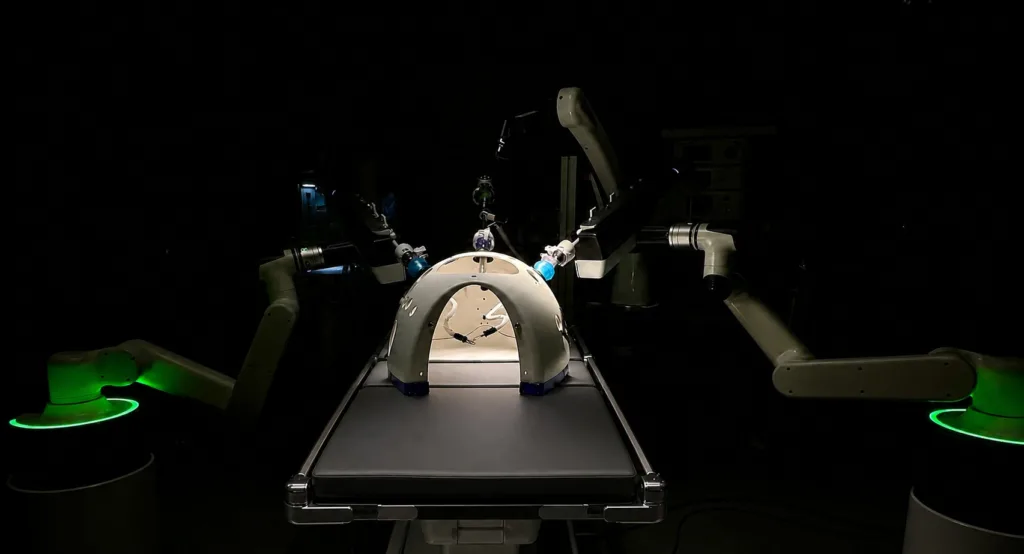
The July 23, 2026 announcement covers a multiport configuration that allows surgeons to deploy Anovo’s internally articulated robotic instruments through separately positioned access ports. Those instruments are designed with shoulder-like, elbow-like and wrist-like joints, moving the point of articulation inside the patient rather than relying primarily on large external robotic arm movements.
Momentis argues that this architecture can reduce external arm motion and the potential for collisions while preserving 360-degree movement around the surgical site. The technology is intended to retain the flexibility associated with the company’s natural-orifice and single-site configurations while accommodating the familiar port placement used in conventional robotic procedures.
This does not mean that every surgical approach is cleared for every procedure. The platform’s permitted use remains governed by the specific indication, patient population, procedural setting and instrument configuration described in its FDA-cleared labelling. Momentis’ announcement did not disclose the new 510(k) number or reproduce the complete indications-for-use statement, making it important to avoid interpreting the clearance as a general authorisation for all abdominal or gynaecological surgery.
Anovo’s regulatory history began with FDA De Novo marketing authorisation in February 2021 for natural-orifice, laparoscopic-assisted transvaginal benign procedures. The authorised representative uses included benign hysterectomy, salpingectomy, oophorectomy, adnexectomy and ovarian cyst removal in adult patients when performed by trained physicians in an operating-room environment.
The company subsequently obtained clearances related to single-site transabdominal ventral hernia repair, a second-generation Anovo platform and additional robotic instruments. The multiport decision therefore represents another step in a staged regulatory expansion rather than the introduction of an entirely new system.
Why does supporting three surgical access strategies matter to hospitals and surgeons?
Most robotic surgery platforms are designed around a particular physical architecture. Conventional multiport systems use several robotic arms positioned around the patient, while dedicated single-port systems route multiple instruments through one entry point. Natural-orifice procedures introduce different access, visualisation and articulation requirements.
Momentis is attempting to combine those approaches around a common platform, giving surgeons greater freedom to select an access strategy without requiring the hospital to purchase a separate robotic system for each configuration. The theoretical attraction is straightforward: one capital platform could support a broader mix of cases, surgeons and procedural preferences.
For hospitals, however, platform versatility only creates economic value when the cleared indications align with local procedure volumes. A facility that performs a substantial number of benign gynaecological and ventral hernia procedures may see a stronger utilisation argument than a centre whose robotic programme is concentrated in urology, oncology, colorectal surgery or complex upper-abdominal procedures outside Anovo’s current label.
The decision also does not eliminate the operational differences between access methods. Multiport, single-port and transvaginal procedures can require different patient selection, operating-room preparation, docking routines, instrument placement and surgeon skills. A shared platform may simplify parts of the equipment infrastructure, but it does not automatically create a universal clinical workflow.
Momentis said the Anovo platform has a compact footprint and lower capital requirements than conventional systems. Those claims could be important for ambulatory surgery centres and smaller hospitals that have struggled to justify the cost or space requirements of established robotic platforms. The company has not, however, publicly disclosed sufficient pricing, service-contract, instrument-cost or procedure-volume information to establish a comparative total cost of ownership.
Can Anovo’s flexible architecture reduce the need for multiple surgical robots?
The commercial proposition rests on modularity. Momentis wants hospitals to view Anovo not as a niche transvaginal robot but as a flexible platform capable of supporting an expanding portfolio of minimally invasive procedures.
That positioning could help the company address a persistent hospital procurement problem. Robotic programmes are expensive to install and maintain, while equipment utilisation can vary significantly between departments. A platform that supports several access strategies could theoretically increase case volumes and spread fixed costs across a broader range of surgeons.
Yet reducing the number of systems a hospital needs is not the same as displacing existing platforms. Robotic purchasing decisions are shaped by the installed base, surgeon familiarity, clinical evidence, procedure coverage, training infrastructure, instrument availability, service responsiveness and integration with the hospital’s wider digital and surgical ecosystem.
Established robotic systems also benefit from large communities of trained surgeons and extensive procedural experience. Switching platforms can require credentialing, proctoring and changes to operating-room routines. Hospitals may therefore add Anovo for selected procedures rather than use it as an immediate replacement for an incumbent multi-specialty system.
Momentis reported that surgeons using its second-generation platform had transferred many benign gynaecological procedures from legacy robotic systems to Anovo. The announcement did not provide the number of surgeons, hospitals, procedures or comparison period behind that statement, so it should be interpreted as a company-reported commercial observation rather than independent evidence of broad market conversion.
What does the clinical evidence reveal about Anovo’s readiness for broader use?
FDA 510(k) clearance establishes that the regulator found the submitted device substantially equivalent to an appropriate legally marketed device for its specified use. It should not be interpreted as proof that Anovo produces superior clinical outcomes, reduces complications or lowers total hospital costs compared with competing robotic or laparoscopic approaches.
The registered CLEVER study is evaluating the Anovo Surgical System in ventral hernia procedures. The study was designed as a prospective, single-group, open-label investigation with estimated enrolment of 50 adults. Its primary endpoint is conversion to open surgery or a multiport laparoscopic approach, with secondary measures including adverse events, device-related events, operating time, procedure completion, console time, docking time, hospital stay, surgical-site infection and wound seroma.
The registry states that no predetermined success criterion was established for the primary endpoint. The record was last updated in November 2024, listed an estimated study completion date of December 2025 and did not contain posted results when most recently available. That limits the ability to assess procedure completion, complications, learning curves and workflow performance from the registered study.
The absence of publicly posted results does not imply that the device lacks supporting evidence. FDA submissions can include bench testing, usability assessment, software verification, validation work and clinical data that are not immediately available through a trial registry. It does mean that surgeons and procurement teams may need additional peer-reviewed or real-world data before drawing conclusions about comparative performance.
The existing natural-orifice indication is also specific to benign procedures. Momentis’ published labelling states that the evidence supporting those representative procedures did not evaluate outcomes related to cancer treatment, including survival, recurrence or disease control. The platform should therefore not be described as clinically validated for oncological outcomes based on its benign gynaecological authorisation.
How does Anovo compare with a rapidly expanding surgical robotics market?
The clearance arrives during an unusually active period for surgical robotics. Intuitive Surgical continues to develop its da Vinci portfolio through separate multiport and single-port platforms. The da Vinci SP system is designed for procedures through a single incision or natural orifice, while da Vinci 5 represents the company’s latest multiport architecture.
Medtronic entered the United States commercial market with FDA clearance of the Hugo robotic-assisted surgery system for specified urological procedures. The company subsequently submitted applications seeking expansion into general and gynaecological surgery, including hernia repair, but those submissions should not be confused with completed clearances.
Johnson & Johnson received FDA De Novo marketing authorisation for the Ottava Robotic Surgical System on July 22, 2026, one day before the Momentis announcement. Ottava was authorised for multiple upper-abdominal general-surgery procedures and uses robotic arms integrated into the operating table. Johnson & Johnson plans an initial commercial launch with selected United States customers.
Against those competitors, Anovo’s clearest differentiation is not breadth of procedure coverage or installed-base scale. It is the ability, within its cleared uses, to support three access strategies through a compact, internally articulated architecture.
That positioning may resonate with surgeons who want access flexibility and hospitals seeking a smaller robotic footprint. It may be less decisive for health systems that prioritise broad specialty coverage, extensive instrument catalogues, established service networks or compatibility with existing training programmes.
The market comparison must also remain indication-specific. A system authorised for upper-abdominal procedures, another cleared for urology and a platform cleared for selected benign gynaecological and ventral hernia procedures are not interchangeable simply because all are described as surgical robots.
Why will training and procedure economics determine Anovo’s commercial adoption?
Robotic surgery platforms require more than regulatory clearance and hardware installation. Hospitals must train surgeons, nurses, technicians and sterile-processing teams while establishing credentialing requirements, emergency conversion protocols, maintenance schedules and instrument-management processes.
Anovo’s internally articulated instruments may offer a different movement pattern from conventional rigid robotic instruments. That could create clinical advantages in selected anatomical spaces, but it may also introduce a learning curve. Momentis will need to demonstrate that surgeons can transition efficiently while maintaining consistent procedure times and outcomes.
Service coverage will be another important consideration. Large hospital systems expect rapid technical support, predictable instrument availability and minimal equipment downtime. A smaller medical device company must show that it can provide those capabilities across every market in which it places systems.
The recurring economic model remains equally important. Lower initial capital expenditure can attract hospitals and ambulatory surgery centres, but purchasing committees will examine the combined cost of instruments, disposables, maintenance, staff training and operating-room time. A compact robot that is inexpensive to acquire can still become costly if utilisation remains low or consumable expenses are high.
Momentis could strengthen its commercial case by publishing transparent data on procedure volumes, installation times, docking performance, instrument use, service requirements and total operating costs. Comparative studies do not necessarily need to prove superiority, but they should help hospitals understand where Anovo delivers operational value and where its benefits are primarily architectural.
What should the surgical robotics industry watch after the multiport clearance?
The next test is whether Momentis can translate regulatory flexibility into repeatable hospital adoption. New placements, procedure volumes, surgeon-training numbers and expansion into additional institutions would provide clearer evidence that the platform is progressing beyond early specialist use.
Clinical evidence will also matter. Publication of the CLEVER ventral hernia results, particularly conversion rates, device-related events, docking times, procedure completion and short-term postoperative outcomes, would help surgeons evaluate the system more independently.
Further FDA clearances could broaden the platform’s commercial relevance, although each new procedure will require appropriate regulatory support and should be assessed on its own evidence. Momentis must avoid allowing the three-access message to create the impression that Anovo already covers the entire spectrum of robotic surgery.
The July clearance gives the company a differentiated regulatory story at a time when competition is intensifying across surgical robotics. It does not settle the clinical or economic debate. Anovo’s significance will ultimately be determined by whether hospitals can use its access flexibility to perform enough appropriate procedures, with dependable outcomes and manageable costs, to justify making the platform part of routine surgical infrastructure.