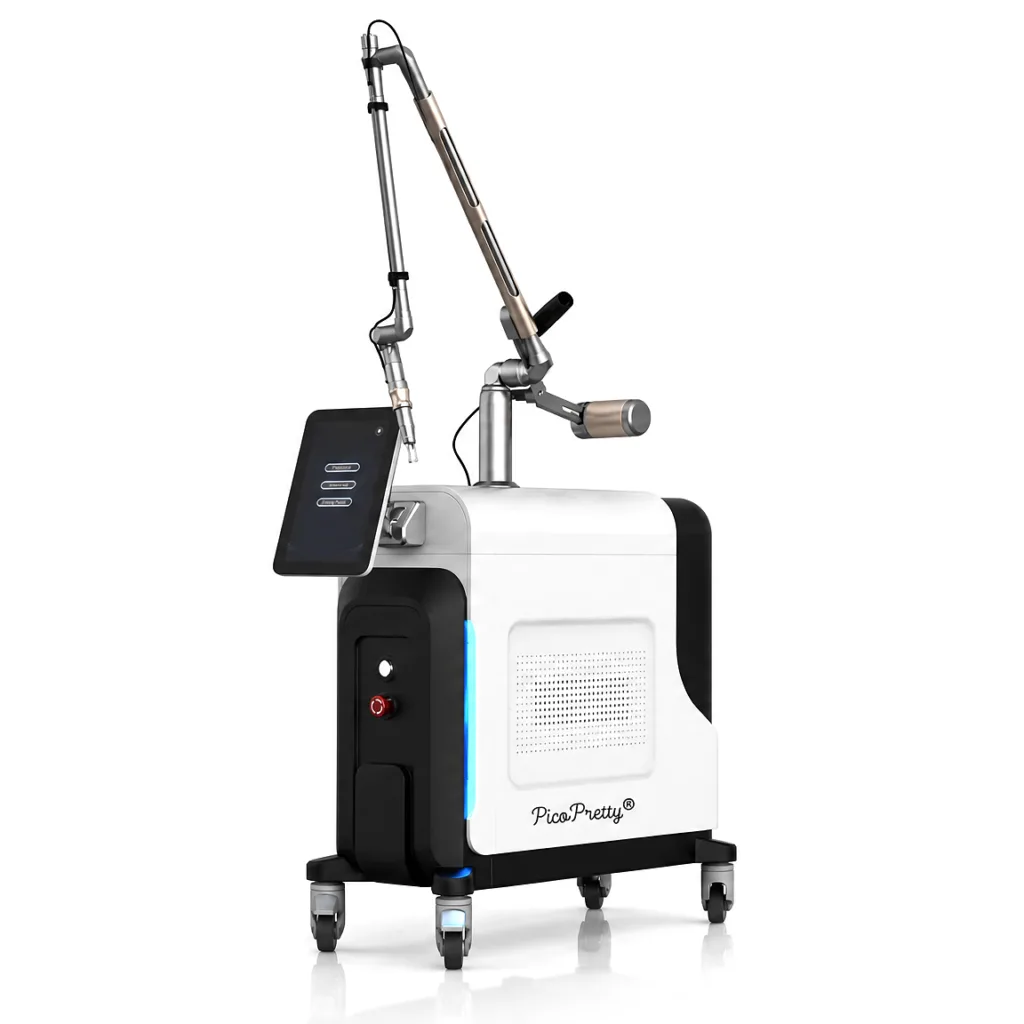
Rejuva Fresh LLC has announced that its PicoPretty Q-Switched Nd Laser has received Health Canada medical device licence No. 115678, creating a regulatory pathway for the company to market the aesthetic laser system to Canadian medical spas and clinics. The company is positioning PicoPretty as a multi-mode platform for tattoo removal, pigment-focused procedures, skin rejuvenation, vascular applications and hair reduction, although the precise licensed indications should be confirmed against the device labelling rather than inferred from promotional descriptions alone.
The licence is commercially important because it removes a central market-access obstacle in Canada. Health Canada’s Medical Devices Active Licence Listing covers licensed Class II, III and IV medical devices, and the regulator states that only devices appearing in the database may be offered for general marketing in the country. A licence therefore represents a substantive regulatory event, but it does not automatically establish clinical superiority, rapid clinic adoption or the financial return promoted by a manufacturer.
For Rejuva Fresh, the opportunity lies in presenting PicoPretty as more than a single-purpose tattoo-removal system. For potential buyers, however, the decision will depend on whether the platform’s different operating modes can be used safely and consistently, whether training is sufficient for the procedures offered, and whether treatment demand can support the capital cost and ongoing operational burden.
What does the Health Canada licence actually change for PicoPretty’s Canadian market access?
The immediate change is that Rejuva Fresh can move from promoting the technology conceptually to building a regulated Canadian commercial operation around the licensed device. Medical spas and aesthetic clinics considering the system can now assess it as a product with an identified Canadian medical device licence rather than as equipment relying solely on authorisation or certifications obtained in another jurisdiction.
This distinction matters because regulatory decisions are jurisdiction-specific. A United States clearance or European certification does not independently permit a medical device to be marketed in Canada. Health Canada separately evaluates the information required under the Canadian Medical Devices Regulations, including the device description, intended purposes, manufacturing controls, labelling and supporting evidence appropriate to its risk classification.
Health Canada’s licensing framework also should not be described as an endorsement of every sentence in a company’s marketing material. Manufacturers must have objective evidence supporting device safety and effectiveness, but the nature of that evidence can vary according to the device, its novelty, its risk and whether the underlying technology has a well-established clinical history. Health Canada guidance allows established technologies, in appropriate circumstances, to be supported through relevant scientific literature and comparisons rather than requiring a new device-specific clinical trial for every application.
That creates an important editorial boundary around the PicoPretty announcement. The licence supports Canadian market access for the uses described in the authorised labelling. It does not, by itself, demonstrate that PicoPretty produces better clearance, shorter recovery, fewer sessions or higher clinic returns than competing laser systems.
Why does combining Q-switched, picosecond and long-pulse modes matter commercially?
Rejuva Fresh said PicoPretty integrates picosecond, long-pulse and Genesis technologies. The company described applications spanning tattoo removal, melasma and other pigmentation concerns, skin resurfacing, benign lesions, vascular treatments and hair reduction. It also said the system incorporates water-temperature and water-flow monitoring, an external filter and components intended to support energy delivery and maintenance.
Commercially, a multi-mode configuration can be attractive because a clinic may seek to spread equipment expenditure across several procedure categories. A platform that supports pigment treatments, tattoo removal, hair reduction and selected rejuvenation procedures potentially offers more scheduling flexibility than equipment tied to one narrow service.
The challenge is that the device’s commercial breadth can exceed its practical breadth if clinics do not have the appropriate patients, treatment protocols or practitioner expertise. Each application may require different wavelengths, pulse durations, spot sizes, fluence settings, treatment intervals and patient-selection criteria. A clinic cannot safely convert technical versatility into a long treatment menu simply by purchasing the machine.
There is also a nomenclature issue that providers should examine carefully. Q-switched lasers and picosecond lasers are generally differentiated by pulse duration, while long-pulsed Nd operation serves a separate set of applications. The announcement describes PicoPretty as a Q-switched Nd laser while also stating that it incorporates picosecond technology, but it does not publish detailed pulse-width specifications or identify the precise device configuration in the release. Rejuva Fresh markets several PicoPretty variants, meaning buyers should verify which model identifiers, handpieces and operating modes are covered by licence No. 115678.
That detail could determine whether PicoPretty functions as a genuinely integrated platform or as a broader product family with different capabilities across individual configurations.
How strong is the evidence behind tattoo removal and pigmentation claims?
The underlying use of short-pulsed lasers for tattoo and pigment treatment is well established, but the strength of evidence varies by wavelength, pulse duration, pigment type, skin phototype and clinical indication. Evidence generated using another manufacturer’s picosecond or Q-switched laser cannot be automatically transferred to PicoPretty without establishing that the systems have relevant technical and performance similarities.
Comparative research suggests that picosecond technology can provide advantages in certain pigment-focused procedures, but the evidence is not uniform. A small randomized split-face study involving Asian patients with lentigines and acquired bilateral nevus of Ota-like macules reported greater improvement on sites treated with a picosecond laser than on sites treated with a Q-switched laser. The study included only 14 participants across the two pigment conditions, limiting the extent to which its results can be generalized across devices and patient populations.
Tattoo removal is similarly dependent on ink composition, colour, depth, tattoo age and treatment history. Picosecond devices may fragment some pigment particles more efficiently than nanosecond systems, but complete clearance is not guaranteed, and different tattoo colours respond to different wavelengths. The presence of 1064-nanometre and 532-nanometre capabilities can broaden the range of pigments that may be targeted, yet practitioner technique and realistic patient counselling remain essential.
Rejuva Fresh’s strongest promotional language relates to the device’s ability to remove multicoloured tattoos and address conditions such as melasma, freckles, age spots and post-inflammatory hyperpigmentation. Those conditions should not be grouped together as though they have identical biology or predictable treatment responses.
Melasma is a particularly important example. Systematic reviews indicate that low-fluence Q-switched 1064-nanometre Nd treatment may reduce melasma severity in some patients, but studies are heterogeneous, recurrence is common and the treatment is generally considered an adjunct rather than a universally appropriate first-line intervention. Reported complications include transient erythema and burning as well as post-inflammatory hyperpigmentation, hypopigmentation and, in some cases, persistent mottled depigmentation after excessive cumulative exposure.
The practical implication is that the Health Canada licence may allow Rejuva Fresh to compete for pigment-treatment demand, but commercial messaging such as “clears melasma” requires more qualification than tattoo or benign-lesion treatment claims. Patient selection, test spots, treatment intensity, sun exposure, combination therapy and recurrence management can materially influence outcomes.
Can PicoPretty’s long-pulse mode strengthen its position in hair reduction for darker skin types?
The inclusion of a long-pulsed 1064-nanometre Nd mode could broaden PicoPretty’s appeal beyond tattoo and pigment procedures. Longer-wavelength Nd lasers penetrate more deeply and are absorbed less strongly by epidermal melanin than shorter-wavelength alternatives, which has supported their use for hair reduction in darker skin phototypes.
A clinical study involving 36 adults across Fitzpatrick skin types I to VI found meaningful hair reduction after three long-pulsed Nd treatments, although hair reduction declined between the one-month and six-month assessments. Another retrospective study involving 150 people with Fitzpatrick skin types IV to VI reported an average hair reduction of about 54%, with most participants requiring multiple treatments and transient hyperpigmentation representing the most frequent complication among those who experienced an adverse effect.
These findings support the broader clinical rationale for long-pulsed Nd hair reduction, but they do not establish PicoPretty-specific performance. Clinics will need to examine whether the licensed configuration includes the cooling, pulse-control, spot-size and energy-delivery characteristics needed for their intended patient population.
The company’s statement that the system can be used across all Fitzpatrick skin types should therefore be interpreted as a claim requiring careful implementation rather than as permission to use identical settings for every patient. Darker skin can benefit from an appropriate 1064-nanometre system, but it may also carry increased burn and pigmentary-risk consequences when parameters, cooling or practitioner technique are unsuitable.
Why will training and parameter control determine whether clinics obtain value from PicoPretty?
Rejuva Fresh is promoting training and support as part of its equipment proposition. That is commercially relevant because aesthetic lasers are not simply installed and operated through a uniform preset. Competency must extend beyond switching between device modes to understanding contraindications, skin typing, treatment endpoints, eye protection, test-spot protocols, adverse-event management and when a procedure should not be performed.
Training quality will also affect the company’s reputation after launch. A versatile laser can produce more revenue-generating opportunities, but it can also create more opportunities for misuse when a clinic expands its menu faster than its clinical capability. Pigmentary injury, burns, scarring or inconsistent outcomes may originate from patient selection and operator decisions rather than a device malfunction, but those events can still influence how clinics perceive the platform.
The company highlighted water-temperature and flow monitoring as safety-related engineering features. Such controls may help prevent the machine from operating outside specified internal conditions, but they do not replace practitioner judgement or eliminate risks at the tissue level. Equipment monitoring protects one part of the treatment chain. Clinical safety depends on the complete chain, including maintenance, calibration, handpiece selection, energy settings, skin preparation and post-procedure care.
Post-market support will therefore be as important as the initial licence. Clinics purchasing capital equipment typically evaluate response times for technical faults, access to replacement parts, warranty terms, preventive maintenance, software support and the availability of advanced training after staff turnover. Rejuva Fresh will need to show that its support infrastructure can scale geographically as the Canadian installed base grows.
What does the licence mean for Rejuva Fresh’s competitive position in Canada?
Rejuva Fresh enters a Canadian aesthetic-device market where clinics can choose among established laser manufacturers, lower-cost equipment suppliers and multifunction platforms. The company’s competitive proposition appears to rest on combining several applications, training, service and a lower ownership barrier than some premium systems.
Price, however, cannot be assessed from the licence announcement alone. Rejuva Fresh’s Canadian websites list multiple PicoPretty configurations, with advertised prices ranging from roughly CAD 57,000 to more than CAD 145,000, depending on the model and current promotional pricing. The precise licensed device, included handpieces, warranty package and service obligations would need to be matched with the relevant quotation before a clinic could calculate its actual investment.
The return on that investment will depend on procedure volumes rather than theoretical treatment breadth. Tattoo removal may require multiple appointments but can involve long treatment intervals. Pigmentation work may create repeat demand but requires careful patient management. Hair reduction can generate multi-session packages, although it is also a competitive service with substantial local pricing pressure.
A clinic will therefore need to model utilization by application, realistic treatment pricing, practitioner time, room occupancy, consumables, financing costs, maintenance and patient-acquisition expenses. A platform with five possible treatment categories does not automatically generate five reliable revenue streams.
Rejuva Fresh is not presented as a publicly traded company, so there is no meaningful share-price or listed-investor sentiment layer attached to the announcement. The clearest commercial signals will instead be the pace of Canadian installations, repeat purchases, distributor development, service performance and the extent to which clinics use more than one of the platform’s operating modes.
Which milestones will reveal whether PicoPretty becomes a durable Canadian platform?
The Health Canada licence gives Rejuva Fresh regulatory credibility and a route into an attractive professional-aesthetics market. The next stage is less about regulatory language and more about execution.
Industry observers should watch for confirmation of the exact model and device identifiers covered by licence No. 115678, the authorised indications stated in the Canadian labelling, the scope of practitioner training and the company’s service capacity. Device-specific clinical evidence, particularly across different skin phototypes and for the platform’s broader pigment and rejuvenation claims, would strengthen the commercial proposition.
Canadian clinic adoption will also show whether customers view PicoPretty primarily as a tattoo-removal system, a pigmentation platform or a genuinely multipurpose capital asset. That distinction matters because Rejuva Fresh’s value proposition depends heavily on utilization across modes rather than success in a single procedure category.
The licence has opened the Canadian door. Whether PicoPretty earns a lasting place inside clinics will be determined by labelled capabilities, operator discipline, treatment outcomes and the less glamorous but decisive business of keeping a complex laser platform trained, maintained and consistently busy.