Alcon Inc. has launched the UNITY Cataract System in Canada, making its next-generation standalone cataract surgical platform available to Canadian ophthalmic surgeons around the Canadian Ophthalmological Society Annual Meeting and Exhibition in Montréal. The product enters a commercial and clinical setting where cataract surgery remains one of the highest-volume ophthalmic procedures, and where device innovation is increasingly judged not only by surgical precision but also by operating-room efficiency, workflow consistency and capital equipment value.
The important point is not that cataract surgery has suddenly changed overnight. Phacoemulsification remains a mature, highly standardised procedure, and many surgeons already operate with sophisticated platforms that deliver predictable outcomes. The more meaningful development is that Alcon is moving the UNITY platform from regulatory and global launch momentum into a practical adoption conversation for Canadian hospitals, ambulatory surgical centres and ophthalmology groups that must balance surgical volume, training burden, capital budgets and patient-flow pressure.
Why Alcon’s UNITY CS availability in Canada matters for cataract surgery capacity and workflow strategy
The Canadian availability of UNITY CS positions Alcon more directly inside a system-level debate about how ophthalmology services manage rising demand without simply adding more operating rooms, more staff or more clinic hours. Cataract surgery is often discussed as a routine procedure, but the operational reality is more demanding. Small gains in case time, fluidics stability, energy delivery or setup efficiency can matter when surgical centres are running tightly scheduled lists and when public health systems are scrutinising wait times.
That is where the distinction between a surgical device and a surgical platform becomes commercially important. UNITY CS is not being positioned only as a console for lens removal. It is part of a broader operating-room ecosystem that includes phacoemulsification technology, consumables, handpiece design, connectivity and service support. For Alcon, the strategic upside is that a platform sale can pull through recurring consumables, training relationships and future digital integration. For providers, the question is whether the platform can justify adoption through measurable workflow gains rather than theoretical performance advantages.
The risk is that efficiency claims in surgical technology are often easier to demonstrate under controlled conditions than in heterogeneous real-world practice. Canadian surgical centres vary in staffing models, procedure volume, procurement policies, surgeon preference and patient complexity. A platform that helps one high-volume centre improve throughput may deliver less visible value in a smaller hospital with lower utilisation or limited capital flexibility. That means the real commercial test for UNITY CS in Canada will be less about headline specifications and more about whether early adopters can show dependable gains across routine cataract lists.
What is genuinely new in UNITY CS, and what remains an incremental platform upgrade?
The genuinely new element is Canadian access to Alcon’s standalone UNITY Cataract System as part of the wider UNITY surgical platform. The technology is designed around a newer phacoemulsification modality, a handpiece that estimates incision-site temperature and workflow features intended to support consistency in cataract surgery. Those are meaningful engineering updates in a field where incremental improvements can still matter, particularly when they affect the surgeon’s control, the surgical team’s rhythm and the predictability of a case.
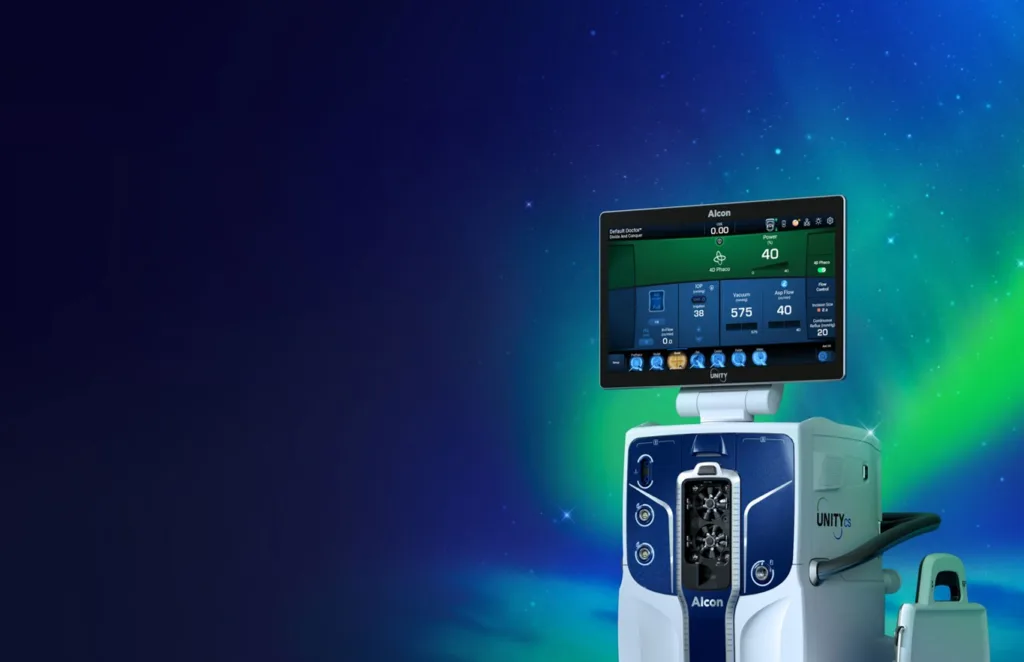
However, the announcement should not be read as the creation of a new cataract surgery category. UNITY CS is an upgrade pathway within an established procedure, not a replacement for the clinical fundamentals of cataract extraction and intraocular lens implantation. Its value proposition sits in the middle ground between genuine device innovation and the practical economics of platform refresh. That makes the rollout important, but it also raises the bar for proof because customers will compare UNITY CS against the installed base of existing Alcon systems and competing ophthalmic surgery platforms.
This is where medical device adoption can become trickier than product marketing suggests. Surgeons may appreciate faster nucleus removal, lower delivered energy and temperature-related design features, but purchasing committees will still ask whether those features reduce complications, shorten case times, lower consumable waste, improve scheduling reliability or support surgeon recruitment and retention. Unless those benefits become visible in real-world Canadian use, UNITY CS may be viewed as a sophisticated upgrade rather than a must-have infrastructure shift.
How UNITY CS compares with broader cataract and vitreoretinal platform choices
The product architecture gives Alcon a segmented platform story. UNITY CS is dedicated to cataract surgery, while UNITY Vitreoretinal Cataract System supports both vitreoretinal and cataract procedures within an integrated system. That distinction matters because not every surgical centre needs the same level of procedural breadth. A high-volume cataract-focused site may prefer a standalone platform optimised for anterior segment work, while a hospital serving retina and combined cases may see more strategic value in the broader UNITY VCS configuration.
The comparison with legacy systems is also commercially significant. Alcon’s older cataract and vitreoretinal platforms have large installed footprints, which creates a natural replacement opportunity. Yet a large installed base is both an advantage and a barrier. It gives Alcon a substantial upgrade audience, but it also means many surgeons and staff already operate comfortably within existing workflows. A new platform must therefore overcome the inertia of familiarity, service history, staff muscle memory and procurement timing.
Competitively, UNITY CS strengthens Alcon’s ability to defend its surgical franchise by linking equipment innovation with consumable continuity and broader ecosystem integration. In medtech, that combination often matters more than a single feature improvement. However, it also exposes Alcon to the classic platform-risk question: if the value story depends on an ecosystem, customers may demand proof that the ecosystem improves operational performance without locking them into a costly upgrade cycle. That is likely to be a major theme in procurement discussions.
Why clinical relevance will depend on real-world evidence rather than bench performance alone
The clinical logic behind UNITY CS is straightforward. Cataract surgery involves ultrasound energy, fluidics management and tissue interaction inside a delicate ocular environment. Technologies that aim to reduce delivered energy, maintain stability or provide additional safety-related information at the incision can be clinically relevant because surgeons want predictable conditions during high-volume procedures. For dense cataracts or more complex cases, even modest improvements in control can become valuable.
The limitation is that many early performance claims in surgical platforms rely heavily on bench testing, controlled evaluations or company-held data before broad post-market evidence accumulates. Bench metrics can be useful, especially when they measure mechanical performance consistently, but they are not the same as clinical endpoints such as visual outcomes, corneal endothelial protection, complication rates, inflammation, recovery time or patient-reported quality of vision. Clinicians tracking the field are therefore likely to separate the engineering promise from the still-emerging evidence base.
That distinction should not diminish the technology, but it should frame expectations. UNITY CS may offer measurable technical advantages, yet the strongest adoption case would come from real-world datasets showing that those advantages translate into fewer workflow disruptions, consistent case times, reliable surgeon experience and potentially better tissue-sparing performance across diverse cataract types. Until then, the platform’s clinical story will remain promising but not fully settled.
What Canadian hospitals and surgical centres are likely to watch before adopting UNITY CS
For Canadian providers, the adoption question is likely to begin with workflow rather than prestige. Cataract surgery demand is tied to ageing demographics, and wait-time pressure makes efficiency more than a convenience. A platform that can help surgical teams standardise performance, reduce downtime or improve case-to-case consistency could be attractive. The strongest argument for UNITY CS will emerge if it helps providers increase confidence in high-volume lists without compromising surgical control.
The commercial hurdle is capital allocation. Ophthalmic surgery platforms are not minor purchases, and adoption may require staff training, surgeon onboarding, consumable planning, service arrangements and changes in operating-room routines. Public and private surgical providers will weigh those costs against the expected life of existing equipment. Even when a new system is clinically appealing, procurement can slow if current platforms remain functional and if reimbursement structures do not directly reward faster throughput.
There is also a behavioural barrier. Surgeons do not change platforms casually, especially when they have spent years refining technique around specific fluidics, pedal response, handpiece feel and procedure settings. Training support and early user confidence will therefore be central to Canadian uptake. If Alcon can make the transition feel familiar enough to reduce friction while still demonstrating meaningful advantages, adoption could build steadily. If the learning curve feels disproportionate to the perceived benefit, conversion could be more gradual.
How the UNITY platform fits Alcon’s medtech growth story and investor sentiment
The financial context makes UNITY CS more than a product-line update. Alcon’s recent growth has been supported by new product launches, and its surgical segment has shown particular strength in equipment. That gives investors a clear reason to monitor whether UNITY can keep converting regulatory progress and conference visibility into orders, installations and consumable pull-through. For a publicly traded medtech manufacturer, the real prize is not just selling consoles. It is building a recurring surgical ecosystem around those consoles.
Alcon shares have recently traded with a cautious but not distressed tone, reflecting a broader investor debate around product-launch momentum, operating costs, tariff exposure, international pricing pressure and the pace of surgical equipment adoption. UNITY CS in Canada is unlikely to change that sentiment alone. However, it contributes to a larger pattern in which Alcon is trying to show that innovation across surgical equipment, intraocular lenses and ocular health products can support durable growth even when some markets remain price-sensitive.
The risk for investors is that medtech launch cycles can be expensive before they become margin-accretive. Equipment platforms require manufacturing scale, field support, training infrastructure and surgeon education. If adoption is strong but rollout costs rise, margin benefits may take longer to appear. If adoption is slower than expected, investors may question whether the platform cycle can offset softer conditions in parts of the cataract market. That makes UNITY’s installation pace and recurring consumables impact key watchpoints.
What could go wrong as Alcon pushes UNITY CS deeper into cataract surgery markets?
The most obvious risk is overestimating how quickly surgical centres will replace existing equipment. Cataract surgery platforms often remain in service for years, and upgrade decisions are influenced by budget cycles, service contracts and surgeon preference. Even a technically stronger platform may face delayed adoption if hospitals are under financial pressure or if surgical teams feel current systems are adequate.
A second risk is evidence translation. Lower energy delivery, faster nucleus removal and temperature-estimation features may appeal to clinicians, but the most persuasive case will require practical evidence in real operating rooms. If real-world gains vary significantly by surgeon, cataract density or case type, the platform’s value proposition may become more nuanced than a simple efficiency narrative. Alcon will need to support adoption with education and data that reflect everyday clinical use rather than only controlled performance settings.
A third risk is competitive response. Ophthalmic surgery remains a sophisticated medtech category with established competitors and strong surgeon loyalty. Rival platforms may respond through pricing, service packages, software upgrades or targeted claims around safety, efficiency and ergonomics. Alcon’s advantage lies in its installed base and broad eye-care portfolio, but those strengths do not eliminate the need to prove that UNITY CS creates enough incremental value to justify switching or upgrading.
Why the next phase of cataract innovation will be measured in workflow economics
The UNITY CS rollout in Canada shows where cataract surgery innovation is heading. The next wave is not only about removing the lens more efficiently. It is about making the surgical environment more predictable, connected and economically defensible. That shift matters because ophthalmology is facing the same pressure seen across many procedural specialties: higher demand, constrained staffing, tighter budgets and stronger expectations for measurable value.
For clinicians, UNITY CS will be judged by whether it improves confidence and consistency without disrupting established technique. For hospital administrators, it will be judged by uptime, throughput, training requirements and total cost of ownership. For Alcon, it will be judged by whether the platform can accelerate a replacement cycle while reinforcing the medical device manufacturer’s recurring consumables engine.
The launch is therefore best understood as a strategic platform expansion rather than a standalone product event. UNITY CS gives Alcon a sharper cataract-only offer in Canada, but its long-term significance will depend on what happens after the conference floor excitement fades. The real test will come inside operating rooms, procurement meetings and post-market performance reviews, where surgeons and administrators will decide whether the next generation of cataract technology is genuinely changing care delivery or simply making an already advanced procedure incrementally more refined.