
Nexus, formerly known as Nexus Bedside, has acquired remote patient monitoring and chronic care management company Telemetrix RPM, extending its clinical technology strategy from inpatient nursing units into post-discharge and home-based care. The acquisition closed on July 23, 2026, with Telemetrix becoming a wholly owned Nexus subsidiary, although the companies did not disclose the purchase price, financing structure or revenue contribution expected from the transaction.
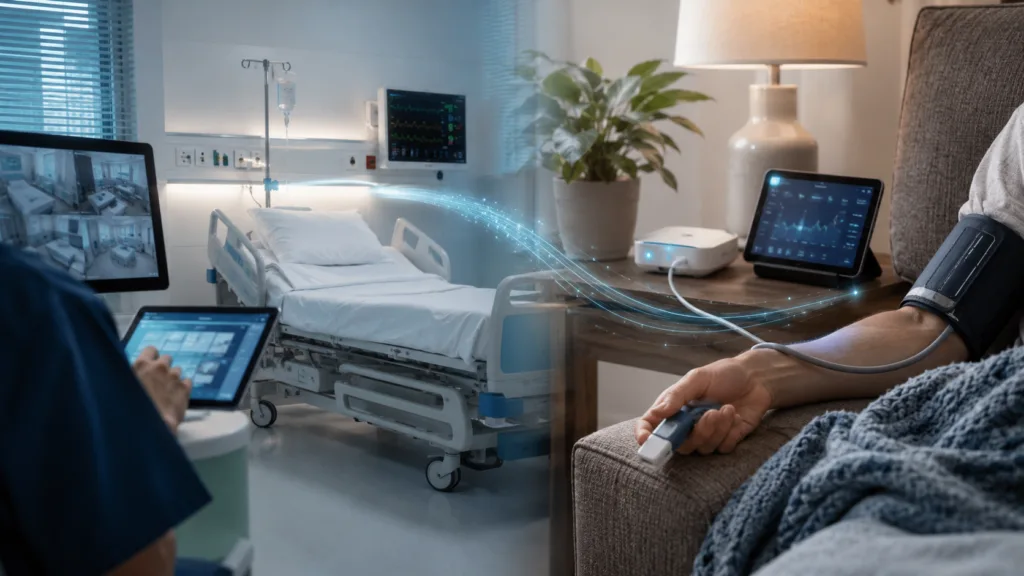
The combination brings together Nexus Bedside’s hybrid nursing and inpatient monitoring capabilities with Telemetrix RPM’s remote physiologic monitoring, chronic care management, connected devices, clinical support and electronic health record integration. Nexus is positioning the resulting business as a clinical care operating system spanning the hospital, transition to home and longer-term management of patients with chronic conditions.
That description should be understood as the company’s commercial positioning rather than a regulatory category or independently validated clinical standard. The transaction does not itself represent a regulatory approval, medical device clearance or confirmation that the combined platform improves outcomes across different hospitals and patient populations.
The strategic logic is nevertheless substantial. Many health systems have introduced virtual nursing, remote monitoring, digital care management and artificial intelligence through separate vendors, interfaces and clinical teams. Nexus is betting that hospitals will increasingly prefer a consolidated architecture in which inpatient workflows, discharge planning, home monitoring and escalation decisions remain connected through the electronic health record.
Why does the Telemetrix RPM acquisition change Nexus from a bedside platform into a wider care infrastructure company?
Before the transaction, Nexus was principally associated with an inpatient operating model that combined bedside nursing, virtual nursing, remote observation and workflow technology. Its initial commercial proposition focused on giving bedside nurses more time for direct patient care while shifting suitable documentation, monitoring and coordination tasks to remote clinical personnel.
Telemetrix adds the infrastructure needed to follow selected patients after discharge. Its platform supports connected medical devices, remote patient monitoring, chronic care management, telehealth, clinical services and the ingestion of data from third-party digital health products. Telemetrix says these capabilities operate within existing electronic health record workflows rather than requiring clinicians to manage a separate dashboard for every service.
Nexus has organised the combined offering into three layers. Nexus Bedside remains the acute inpatient component. Nexus Continuum covers post-acute remote patient monitoring and chronic care management. Nexus Intelligence is intended to provide the data and technology layer that identifies risks and supports action across both environments.
This structure gives Nexus a more ambitious sales proposition. Instead of selling virtual nursing as a departmental solution, it can approach health-system executives with a platform intended to influence staffing, patient flow, discharge readiness, avoidable utilisation and chronic-care management.
The acquisition also reshapes the management team. Nexus chief executive officer Akram Boutros has become chief executive officer of both Nexus and Telemetrix RPM. Former Telemetrix chief executive officer Burley Wright has moved into the chief operating officer role at Nexus, while Telemetrix founder Bret Shillingstad continues as chief medical officer of Telemetrix and has also become chief medical officer of Nexus.
Retaining Telemetrix leadership may reduce some integration risk because the acquired company’s clinical relationships and implementation knowledge remain inside the organisation. It also places considerable responsibility on the enlarged team to combine product development, customer support, clinical operations, device logistics and revenue-cycle functions without disrupting existing deployments.
How much evidence supports Nexus claims about nursing efficiency, patient flow and clinical outcomes?
Nexus has pointed to an early deployment at OU Health as evidence that its inpatient model can improve clinical and operational performance. According to the acquisition announcement, the initial six-month deployment was associated with no falls resulting in injury, a 67% reduction in nursing turnover, a 26% reduction in length of stay and the elimination of medication errors involving dual sign-off processes. These figures were presented through an April 2026 KLAS Research Emerging Insights case study.
The results are commercially meaningful because nursing turnover, patient length of stay, medication safety and inpatient capacity directly affect hospital economics. A sustained reduction in length of stay could allow a health system to treat more patients without immediately adding physical capacity, while lower nursing turnover could reduce recruitment, agency staffing and onboarding expenses.
However, the findings should not be interpreted as controlled clinical-trial evidence. The publicly available KLAS description identifies the report as an initial look at one healthcare organisation and warns that performance findings in emerging markets can change significantly when more customers are included. KLAS also states that such findings should not be treated as conclusive for an entire vendor client base.
The acquisition therefore broadens Nexus before the inpatient evidence base has fully matured. Health systems evaluating the combined platform will need to examine baseline conditions at OU Health, the units involved, patient acuity, staffing changes implemented alongside the technology and whether the reported improvements persist over longer periods.
Telemetrix presents its own real-world performance data from a remote monitoring programme at Memorial Healthcare System. The company says an analysis covering 508 patients and 569 monitoring episodes between November 2021 and July 2023 showed reductions in hospital admissions, readmissions and emergency department visits, alongside increased office-based care and approximately $3.5 million in realised savings. Telemetrix attributes the analysis to data obtained through Epic Clarity.
Those figures strengthen the commercial narrative, but they remain company-presented outcomes rather than evidence from a randomised comparison or publicly described peer-reviewed study. Patient selection, programme eligibility, disease mix, follow-up periods and the method used to calculate avoided utilisation could materially influence the results.
The most persuasive future evidence would come from multicentre deployments using prespecified clinical and economic endpoints. Nexus will also need to show whether combining inpatient and home-based workflows produces incremental benefits beyond those achieved when virtual nursing and remote monitoring are implemented separately.
Why could Telemetrix’s position inside Epic workflows become the most valuable part of the transaction?
Telemetrix states that it operates within native Epic workflows under an Epic Consultant Access Agreement and can also integrate with other electronic health record systems. The company contrasts this approach with digital health applications that sit above the electronic health record through relatively limited application programming interfaces.
Electronic health record integration is important because remote monitoring can create large volumes of measurements, alerts and patient communications. A technically capable monitoring platform can still increase clinician workload when information is delivered to a separate portal, routed to the wrong team or presented without sufficient context.
Epic provides established methods for remote patient monitoring software and connected devices to transmit information through interfaces and Fast Healthcare Interoperability Resources APIs. Yet the presence of a technical connection does not by itself determine whether a programme is operationally successful. Health systems must still decide where readings appear, which thresholds generate alerts, who reviews the data and how decisions are documented.
Telemetrix’s potential advantage is therefore less about simply placing data in Epic and more about orchestrating the entire workflow around that data. The platform must identify which information requires action, assign it to an appropriate clinician, document the response and prevent duplicate work between inpatient, ambulatory and remote teams.
This becomes particularly important when Nexus attempts to connect discharge planning with home monitoring. A patient identified as high risk during an inpatient stay could theoretically be enrolled in a remote programme before leaving the hospital, receive a configured device and remain visible to an extended care team after discharge.
Making that journey reliable requires more than software integration. Nexus will need standardised enrolment criteria, device fulfilment, patient education, consent management, technical support, alert escalation policies and clear accountability when a patient’s condition deteriorates.
Cybersecurity and data governance will also become more complex as Nexus combines inpatient observation, connected home devices, clinical communications and artificial intelligence. Hospitals will need to understand where information is stored, which organisations can access it, how third-party devices are validated and how the platform handles downtime, inaccurate readings and unsuccessful data transmission.
How could Medicare reimbursement changes affect Nexus Continuum and the Telemetrix operating model?
Remote patient monitoring has become an established Medicare service category, but reimbursement depends on specific operational requirements rather than the purchase of technology alone. The Centers for Medicare and Medicaid Services describes RPM as the collection and automatic transmission of physiologic information through a connected medical device for the management of an acute or chronic condition.
Medicare separates the service into education and device setup, device supply and ongoing treatment management. Current guidance also requires the connected device to meet the applicable definition of a medical device and to transmit a sufficient number of readings during the billing period. These requirements make patient engagement, device adherence and documented clinical management central to the financial performance of an RPM programme.
The regulatory environment is also tightening. In the proposed 2027 Medicare Physician Fee Schedule, the Centers for Medicare and Medicaid Services proposed requiring an initiating visit when remote physiologic or remote therapeutic monitoring begins. More significantly for technology-enabled service providers, the agency proposed allowing payment only when the clinical staff performing RPM or remote therapeutic monitoring services are employed by the billing practice rather than supplied as contractors.
The proposal was published in July 2026 and remains subject to public comment and a final rule, meaning it should not be treated as current policy. Nevertheless, it introduces a material strategic uncertainty for vendors that combine software with externally staffed clinical monitoring.
Telemetrix markets clinical services alongside its technology, while Nexus plans to use experienced remote nurses across its care model. The commercial effect of any contractor restriction would depend on how those personnel are employed, which services they perform, who submits claims and whether customers use the platform for reimbursed monitoring, value-based care or hospital-funded programmes.
Nexus may have several options if tighter rules are finalised. It could operate as technology and workflow infrastructure while health systems directly employ the relevant clinical staff. It could support customers through implementation, device management and non-billable administrative functions. It could also focus on value-based arrangements in which savings from reduced utilisation are more important than individual fee-for-service codes.
The reimbursement debate reflects wider scrutiny of the RPM market. The United States Department of Health and Human Services Office of Inspector General reported that Medicare payments for remote patient monitoring exceeded $500 million in 2024 and has called for stronger safeguards against inappropriate billing. An earlier review found that approximately 43% of Medicare enrollees receiving RPM between 2019 and 2022 did not receive all three principal service components.
For Nexus, stronger compliance controls could eventually favour an integrated platform capable of documenting enrolment, device transmission, clinical review and patient communication inside the health record. Conversely, any uncertainty around staffing, billing responsibility or clinical documentation could slow procurement decisions.
What must Nexus prove before its hospital-to-home operating system can scale across health systems?
The first challenge is demonstrating that Nexus Bedside and Telemetrix function as one product architecture rather than a collection of acquired components. Hospitals will expect unified implementation, contracting, analytics and customer support, even when inpatient and home-care services involve different clinical teams and reimbursement models.
The second challenge is evidence. Nexus has encouraging early findings from OU Health, while Telemetrix presents real-world utilisation and savings data from Memorial Healthcare System. The next stage should show reproducibility across additional hospitals, patient populations and operating conditions.
The third challenge is financial transparency. Nexus completed a $2.6 million seed financing in February 2025, while the acquisition price and financing arrangements for Telemetrix have not been disclosed. It is therefore unclear how much capital the enlarged company has available for integration, product development, clinical staffing, sales expansion and device deployment.
The transaction could create cross-selling opportunities because existing Nexus hospital customers become potential users of Telemetrix services, while Telemetrix customers may be candidates for Nexus inpatient technology. That opportunity will depend on contract cycles, integration resources and whether health systems see sufficient value in consolidating vendors.
Nexus must also decide how broadly to describe its artificial intelligence capabilities. The acquisition announcement refers to cardiac artificial intelligence and intelligence-driven monitoring, but it does not identify a specific algorithm, intended use, regulatory classification or validation dataset. Until those details are available, the artificial intelligence component should be viewed as a platform capability rather than proof of autonomous clinical decision-making.
The acquisition gives Nexus a coherent strategic story at a time when hospitals are searching for ways to manage nursing shortages, improve discharge transitions and extend care beyond physical facilities. Yet the difference between an attractive architecture and a durable healthcare platform will be measured through repeatable clinical outcomes, reduced staff workload, compliant reimbursement and successful integration across multiple health systems.
Nexus has expanded the boundaries of what it intends to sell. Its next task is harder: proving that a single operating model can connect the bedside and the home without transferring fragmentation, alert burden and administrative complexity from one setting to another.