GRAIL, Inc. will face a potentially defining regulatory examination on September 23, 2026, when outside advisers to the United States Food and Drug Administration review the premarket approval application for its Galleri multi-cancer early detection blood test.
The FDA’s Molecular and Clinical Genetics Panel is scheduled to discuss and vote on whether the available evidence provides reasonable assurance that Galleri is safe and effective for screening adults aged 50 and older. The meeting will run from 9 a.m. to 6 p.m. Eastern Time and will be accessible both in person and virtually, according to the FDA meeting notice.
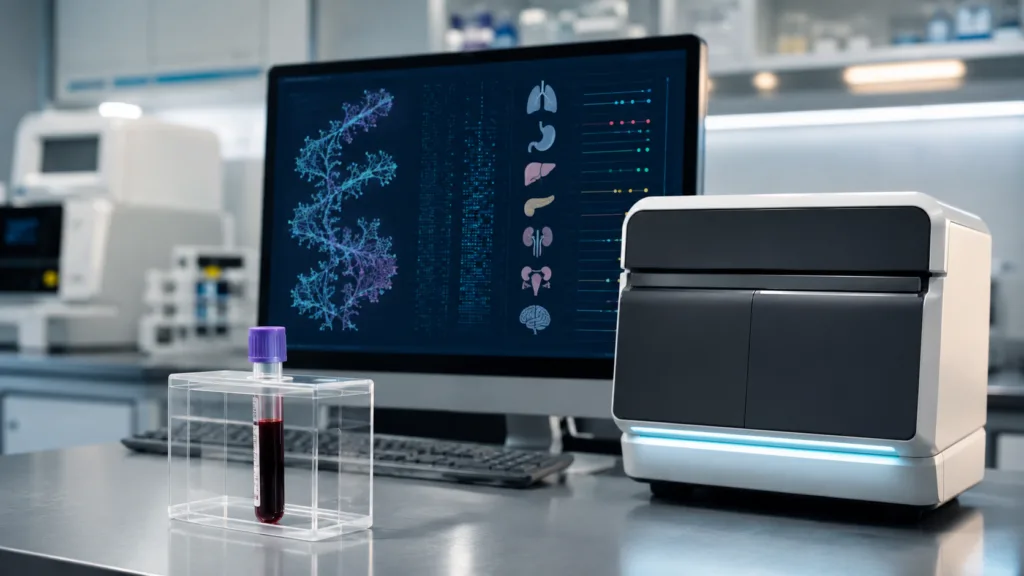
Galleri is a prescription-only, next-generation sequencing-based in vitro diagnostic that looks for cancer-associated methylation patterns in cell-free DNA obtained from a blood sample. When it detects a cancer signal, the test attempts to identify the organ or tissue from which that signal originated so clinicians can direct the subsequent diagnostic investigation.
The test is intended to complement mammography, colonoscopy, cervical screening, lung screening and other recommended procedures. It is not intended to replace them, and a positive result does not diagnose cancer. Imaging, endoscopy, biopsy or another established diagnostic procedure is still required to confirm whether malignant disease is present.
The panel meeting arrives at a difficult moment for multi-cancer screening. Galleri has produced strong specificity, relatively high positive predictive value and encouraging Stage IV cancer reductions in large studies. However, the 142,250-participant NHS-Galleri trial did not achieve its primary goal of significantly reducing combined Stage III and Stage IV cancers.
That tension will make the September discussion much more consequential than a conventional review of laboratory accuracy. The FDA must decide whether Galleri finds enough important cancers early enough to justify population-level screening before a reduction in cancer mortality has been demonstrated.
What exactly is the FDA being asked to approve for the Galleri blood test?
The proposed indication covers screening for the early detection of multiple types of cancer in adults aged 50 years and older.
Galleri produces a qualitative result rather than measuring a tumor marker on a continuous numerical scale. The initial report states either that a cancer signal was detected or that no cancer signal was detected. A positive result is accompanied by a prediction of the cancer signal’s likely origin.
The commercial test is promoted as capable of screening for signals associated with more than 50 cancer types. This includes pancreatic, ovarian, liver, bile-duct and several other cancers for which routine population screening is not currently recommended.
GRAIL submitted the premarket approval application on January 29, 2026. The application is focused on performance and safety evidence from 25,490 consented participants in the United States-based PATHFINDER 2 study and more than 70,000 participants from the first screening round of the NHS-Galleri trial.
A bridging analysis is also important because the version submitted for FDA approval is an updated test rather than precisely the same laboratory configuration used throughout the clinical studies. GRAIL must demonstrate that changes to the assay, automation, software and laboratory workflow have not materially altered clinical performance.
Premarket approval is the FDA’s most demanding medical-device review pathway. Approval would make Galleri the first multi-cancer early detection blood test to pass this form of federal evaluation, potentially establishing a regulatory benchmark for the rest of the industry.
How can Galleri search for signals associated with more than 50 cancers?
Tumors can release fragments of DNA into the bloodstream as cancer cells grow, die and interact with surrounding tissue. Galleri analyzes cell-free DNA for patterns of methylation, a chemical modification that influences how genetic information is read.
Cancer cells commonly develop abnormal methylation patterns. Those patterns can differ from the signals produced by healthy cells and can also retain information about the tissue from which the cancer originated.
The process involves targeted sequencing followed by computational classification. Machine-learning algorithms compare the observed methylation pattern with patterns learned from cancer and non-cancer samples during assay development.
This design attempts to solve two problems simultaneously. The test must first distinguish a genuine cancer-associated signal from the background DNA circulating in a person without cancer. It must then predict where that signal originated so clinicians are not forced to search the entire body without direction.
The task becomes especially difficult in early-stage disease because small tumors may release only tiny quantities of DNA. A test can achieve very high specificity by setting a strict threshold for declaring a positive result, but that same threshold may cause it to miss cancers producing weaker signals.
Galleri therefore should not be interpreted like a comprehensive scan that excludes every cancer after a negative result. Its ability to detect disease varies by tumor biology, cancer type and stage.
What did the full PATHFINDER 2 study show about Galleri’s performance?
PATHFINDER 2 enrolled 35,878 adults aged 50 and older in the United States and Canada who did not have a clinical suspicion of cancer when they entered the study.
In the full analysis, 287 participants received a cancer-signal-detected result. Cancer was subsequently diagnosed in 173 of them, producing a positive predictive value of 60.3%.
This means roughly six of every ten participants with a positive Galleri result were confirmed to have cancer within the study’s diagnostic framework. The remaining participants underwent evaluation without receiving a cancer diagnosis during the defined follow-up period.
Galleri’s episode sensitivity was 39.3% across all cancer types. Episode sensitivity measured the proportion of cancers diagnosed within 12 months of the blood draw that had been detected by the test.
Sensitivity rose to 69.8% for 12 cancers responsible for a large proportion of cancer deaths in the United States. The difference indicates that Galleri may be more effective at identifying certain aggressive cancers than detecting every malignant condition developing within the screened population.
More than half of the new cancers detected through Galleri were Stage I or Stage II, while 70.9% were diagnosed at Stages I through III. Many were cancers for which the United States Preventive Services Task Force does not have a Grade A or B screening recommendation.
The test correctly predicted the cancer signal’s origin in 91.3% of confirmed cases. Diagnostic resolution required a median of 48 days, showing that even an accurately localized blood signal can initiate several weeks of imaging, consultation and possible tissue sampling.
Only 0.6% of the safety-evaluable participants underwent an invasive procedure following a positive result. Five study-related adverse events were reported during diagnostic evaluation, all among participants who were ultimately diagnosed with cancer. No serious study-related adverse event was reported.
These results support Galleri’s ability to add cancers to those found through standard screening, but PATHFINDER 2 did not contain a randomized control group designed to determine whether testing reduces advanced cancer incidence or cancer deaths.
Why is very high specificity not the same as high cancer-detection sensitivity?
Specificity describes how reliably a test returns a negative result in people who do not have cancer. Sensitivity describes how frequently it identifies cancer when cancer is present.
Galleri has consistently demonstrated specificity of approximately 99.5% to 99.6%, corresponding to a false-positive rate of roughly 0.4% to 0.5%. This is important because even a modest false-positive percentage can send thousands of healthy people into diagnostic workups when a test is deployed across millions of adults.
High specificity does not mean that Galleri detects almost every cancer. PATHFINDER 2’s all-cancer episode sensitivity of 39.3% indicates that a majority of cancers diagnosed during the relevant follow-up interval did not produce a positive Galleri result.
The apparent contradiction reflects the threshold chosen by the assay. Requiring a strong molecular signal helps avoid false alarms, but weaker cancer signals may fall below that threshold.
This trade-off may be defensible if the cancers missed by the test are relatively slow-growing or are likely to be detected through established screening. It becomes more concerning if aggressive early-stage cancers are also being missed.
The FDA will consequently examine performance by cancer type and stage rather than relying only on an aggregate figure. A broad claim covering multiple cancers requires enough evidence to understand where the test performs strongly, where it performs weakly and how clinicians should interpret a negative result.
Why did the randomized NHS-Galleri trial miss its primary endpoint?
The NHS-Galleri trial randomized 142,250 asymptomatic adults aged 50 to 77 in England to standard National Health Service screening alone or standard screening supplemented by three annual Galleri blood tests.
The study’s primary endpoint was a statistically significant reduction in combined Stage III and Stage IV diagnoses across 12 prespecified cancers responsible for approximately two-thirds of cancer deaths in England and the United States.
That endpoint was not achieved. The incidence-rate ratio was 1.03, with a 95% confidence interval ranging from 0.92 to 1.14 and a p-value of 0.6324. The intervention group therefore recorded no significant reduction in the primary endpoint after three screening rounds.
GRAIL has attributed part of the result to a higher-than-expected number of Stage III cancers in the Galleri group. One possible explanation is that some cancers otherwise destined to appear at Stage IV were detected earlier at Stage III.
Another possibility is that screening identified additional Stage III cancers in the intervention group before comparable cancers became clinically apparent in the control group. Longer follow-up could allow those control-group cancers to emerge, potentially changing the comparison.
Neither explanation is proven by the current data. An increase in detected Stage III disease can represent beneficial downstaging, earlier diagnosis without a change in outcome, or detection of cancers that would not have caused harm during the patient’s lifetime.
The failure of the primary endpoint cannot be erased by more favourable secondary findings. It means the trial did not demonstrate its central prespecified hypothesis under the original statistical definition.
Did Galleri still reduce Stage IV cancer diagnoses in the NHS trial?
Stage IV cancer diagnoses declined progressively across the three screening rounds, providing GRAIL with its strongest argument for clinical benefit.
Within the 12 prespecified cancers, Stage IV diagnoses were 9% lower during the first screening round, 22% lower during the second round and 26% lower during the third round. Across all three rounds, the reduction was 14%, with an incidence-rate ratio of 0.86.
The secondary Stage IV result was nominally statistically significant. The word nominally matters because the interpretation can depend on the study’s statistical hierarchy and adjustment for testing multiple endpoints.
The improvement across the second and third screening rounds is nevertheless clinically interesting. The first, or prevalent, round searches for cancers that may already have existed for varying periods when screening began. Later incident rounds more closely approximate an established annual screening programme attempting to detect cancers that developed or became detectable between tests.
Stage I and Stage II diagnoses among the 12 prespecified cancers increased by 16% in the intervention group. Screen-detected cancers increased fourfold when Galleri was added to established NHS programmes, while cancers diagnosed after an emergency presentation decreased by 25%.
Over three rounds, 1,801 participants received a positive Galleri result and 937 were diagnosed with cancer. Positive predictive value was 52%, specificity was 99.55%, and cancer-signal-origin accuracy reached 92.5%.
Episode sensitivity was 54.7% for the 12 prespecified cancers but only 30.7% across all cancers. The NHS-Galleri results therefore contain both a potentially important reduction in metastatic diagnoses and clear evidence that many cancers remained undetected.
Can fewer Stage IV diagnoses be treated as proof that Galleri saves lives?
A reduction in metastatic disease is a plausible pathway toward fewer cancer deaths, but it is not identical to a demonstrated mortality benefit.
Screening can make survival from the date of diagnosis appear longer simply because the cancer was discovered earlier. This lead-time effect can occur even when the patient dies at the same age they would have without screening.
Overdiagnosis creates another complication. Screening may identify a biologically slow or indolent cancer that would never have become symptomatic. Treating that condition as a screening success can inflate detection and survival statistics without preventing a death.
Stage migration can also alter results. Improved imaging and diagnostic investigation may classify a cancer more precisely, changing its recorded stage without necessarily changing its underlying prognosis.
Galleri’s preference for molecular signals associated with aggressive disease could reduce some overdiagnosis risk compared with a test that detects every small abnormality. It cannot eliminate that risk, especially across more than 50 biologically different cancers.
Longer NHS-Galleri follow-up will be important for determining whether the Stage IV reduction persists and eventually produces fewer cancer deaths. GRAIL has indicated that additional analyses, including observed and modelled mortality effects, will be reported as data mature.
The FDA does not necessarily need to wait for a definitive mortality result before approving a screening device. It must still determine whether the available surrogate and performance evidence provides reasonable assurance of benefit for the proposed population.
What happens after Galleri reports that a cancer signal was detected?
A positive Galleri result begins a diagnostic process rather than completing one.
The cancer-signal-origin prediction can guide clinicians toward a specific organ or tissue. Depending on that prediction, the next step might involve computed tomography, magnetic resonance imaging, ultrasound, endoscopy, specialist consultation or laboratory testing.
A suspicious abnormality may require biopsy before cancer can be confirmed. If initial testing finds nothing, clinicians must decide whether to stop the investigation, repeat imaging, pursue a different organ or continue surveillance.
PATHFINDER 2 recorded a median of 48 days to diagnostic resolution. That interval may feel long to a person who has been told that a molecular cancer signal is present, even when the ultimate result is negative.
Primary-care practices will need protocols for handling results that can point toward dozens of cancer types. Familiar pathways exist for an abnormal mammogram or a positive colorectal screening test, but a multi-cancer signal can involve organs for which screening infrastructure is less developed.
The predicted origin accuracy of more than 90% should make investigations more targeted. The remaining misclassified signals still create a risk of examining the wrong organ first, prolonging uncertainty and increasing healthcare use.
How serious is the false-positive burden when Galleri is used at population scale?
A false-positive rate below 0.5% appears small when considered for a single patient. Across one million screened adults, a 0.45% rate could generate approximately 4,500 positive results in people who are not confirmed to have cancer.
Not every false-positive result leads to an invasive procedure. PATHFINDER 2 showed that the overall invasive-procedure rate was low, and most procedures performed after positive results were non-surgical.
The burden extends beyond procedural complications. Additional imaging can expose patients to radiation, produce incidental findings and lead to further tests unrelated to the original signal. Diagnostic uncertainty can also cause anxiety, interfere with work and generate substantial out-of-pocket costs.
Some apparently false-positive signals may later be reclassified if a cancer becomes detectable after the study’s follow-up window. This possibility complicates performance calculations but can also leave patients and clinicians uncertain about how long surveillance should continue.
A safe national programme will require standardized diagnostic pathways, clear stopping rules and evidence about what should happen when the predicted organ appears normal. Without those safeguards, a low false-positive percentage could still create a large and unevenly managed clinical burden.
Why must Galleri remain an addition to standard cancer screening?
Galleri’s all-cancer sensitivity is not high enough to support using a negative result as evidence that cancer has been excluded.
A person with a no-cancer-signal-detected result must still follow recommendations for mammography, cervical screening, colorectal screening and lung cancer screening when eligible. Symptoms also require medical assessment regardless of the Galleri result.
Replacing proven screening with Galleri could cause cancers to be missed. Colonoscopy, for example, can identify and remove precancerous colorectal lesions, offering a prevention benefit that a cell-free DNA signal cannot reproduce.
Established screening programmes also have decades of evidence, defined follow-up pathways and clearer knowledge of their effect on disease-specific mortality. Galleri offers broader reach, but breadth does not automatically provide equivalent clinical certainty.
FDA labelling, clinician education and marketing oversight will need to prevent false reassurance. The convenience of one blood draw could otherwise encourage some patients to skip less pleasant but well-validated procedures.
The clearest potential role is additive. Galleri could search for cancers lacking routine screening while existing programmes continue targeting diseases for which organ-specific tests have already demonstrated benefit.
Why does the version of Galleri submitted to the FDA require bridging evidence?
Diagnostic platforms can change between the start of a clinical programme and commercial-scale manufacturing. Laboratories may introduce new automation, sequencing equipment, software, reagents or sample-processing workflows.
These changes can improve efficiency and reduce cost, but they can also alter the strength and interpretation of molecular signals. Even a small shift in classification thresholds could change sensitivity, specificity or cancer-signal-origin accuracy across a large screening population.
The Galleri PMA includes a bridging analysis comparing the version used in PATHFINDER 2 and NHS-Galleri with the updated version submitted for approval.
The panel must determine whether the bridge is sufficiently strong to apply clinical results from earlier versions to the proposed commercial assay. Analytical agreement alone may not be enough if disagreements occur disproportionately in early-stage cancers or rare signal types.
Reproducibility will also matter. A population-screening test must perform consistently across laboratory runs, reagent lots, collection sites, shipping conditions and patient subgroups.
An approved test will need quality controls capable of identifying drift in both laboratory measurements and algorithmic classification. Post-market monitoring may be particularly important because the clinical impact of small performance changes becomes magnified when millions of tests are processed.
Could FDA approval make Galleri affordable for more patients?
Galleri is already commercially available in the United States as a prescription laboratory-developed test, but it has not been cleared or approved by the FDA.
The list price is $949, although some healthcare providers offer a reduced self-pay price of $799 or less. Most health insurance plans and Medicare do not currently cover the test, leaving access dependent on personal finances, selected employer programmes, limited health benefits or other arrangements.
The price does not include every downstream diagnostic procedure required after a positive result. Imaging, specialist visits and biopsy can create additional costs, and coverage disputes may occur when an insurer is asked to investigate a positive result from a non-covered screening test.
Federal legislation signed in February 2026 created a pathway allowing the Centers for Medicare and Medicaid Services to evaluate coverage for FDA-approved multi-cancer early detection tests. It does not guarantee that Galleri will receive immediate or unrestricted Medicare coverage after approval.
Coverage authorities can still examine clinical benefit, eligible ages, testing frequency, risk factors and evidence-development requirements. Private insurers may conduct separate assessments.
FDA approval would nevertheless remove a major obstacle. It could support broader payer discussions, strengthen health-system confidence and help move Galleri beyond a predominantly self-pay market.
Equitable access will remain a concern. A screening technology intended to reduce late-stage cancer should not become concentrated among people already most likely to receive established screening, rapid imaging and specialist follow-up.
What will FDA advisers probably scrutinize at the September meeting?
The panel will receive FDA and GRAIL briefing documents shortly before the meeting, making the precise areas of disagreement clearer.
The missed NHS-Galleri primary endpoint is likely to dominate the clinical-utility discussion. Advisers will need to decide whether the Stage IV reduction and increased earlier-stage detection compensate for the absence of a combined Stage III and IV benefit.
Sensitivity across cancer types and stages will also be central. Strong detection of several aggressive cancers may carry more clinical value than a simple average, but a broadly worded indication must communicate important weaknesses.
Advisers are likely to examine the false-positive burden, time to diagnostic resolution, invasive procedures, psychological effects and management of unresolved signals. The safety of the blood draw itself is not the central question; most potential harm arises from what happens after the result.
The bridging study will determine how confidently trial evidence can be transferred to the version proposed for approval. The panel may also consider whether the final label should specify annual testing, elevated-risk populations or limitations involving particular cancers.
The FDA could require post-approval studies, long-term NHS follow-up, mortality analyses or detailed real-world monitoring. Approval could also be accompanied by strong warnings that Galleri does not replace existing screening and that a negative result does not rule out cancer.
Could the FDA reject Galleri even if the advisory panel votes in favour?
Advisory committee recommendations are not binding. The FDA can approve, reject or request additional information regardless of the vote.
A favourable recommendation would strengthen GRAIL’s position by showing that outside specialists believe the benefit-risk profile is acceptable despite the failed primary endpoint. An unfavourable vote would intensify questions about whether performance metrics and secondary Stage IV results are enough for population screening.
The FDA could determine that the evidence supports approval but only with a narrower indication or more restrictive labelling. It could also conclude that additional follow-up, analytical bridging or randomized clinical evidence is necessary.
The September meeting will not itself authorize Galleri for sale as an FDA-approved device. No final agency decision date has been announced, and the review could continue after the advisory discussion.
The significance of the meeting extends beyond one product. The panel’s reasoning could influence the endpoints, trial designs and evidentiary standards applied to other multi-cancer screening tests.
Is Galleri ready to change cancer screening despite the unanswered questions?
Galleri has moved multi-cancer early detection beyond small case-control experiments. PATHFINDER 2 shows that the test can find cancers in asymptomatic adults with high specificity, a positive predictive value near 60% and cancer-signal-origin accuracy above 90%.
NHS-Galleri provides randomized evidence that repeated testing can reduce Stage IV diagnoses, particularly after the initial screening round. It also presents the programme’s most difficult fact: the trial did not significantly reduce the prespecified combination of Stage III and Stage IV cancers.
Both findings must be considered together. Describing NHS-Galleri simply as a failed trial ignores the progressively lower Stage IV incidence and increased detection of early cancers. Presenting the study as an unqualified success ignores its primary endpoint and the absence of mortality evidence.
Galleri could fill a genuine gap by identifying pancreatic, ovarian, liver, head and neck, and other cancers that often remain invisible until symptoms develop. Its value will depend on whether those earlier diagnoses lead to more curative treatment rather than simply more testing and longer awareness of disease.
The September 23 advisory meeting will ask regulators to make that judgment before every uncertainty has been resolved. Approval would place Galleri at the beginning of a closely monitored transformation in cancer screening, not at the end of its evidentiary journey.
The central question is no longer whether one blood sample can reveal molecular signals from many cancers. GRAIL has shown that it can. The question for the FDA is whether the signals are accurate, actionable and clinically beneficial enough to justify screening millions of people who feel healthy.