Click Therapeutics has received U.S. Food and Drug Administration clearance for Motivista, a prescription digital therapeutic designed specifically to treat negative symptoms of schizophrenia in adults whose positive symptoms are clinically stable. The smartphone-delivered treatment is intended to be used alongside clinician-managed outpatient care and antipsychotic medication, making it the first FDA-authorized treatment specifically indicated for negative symptoms such as reduced motivation, diminished ability to experience pleasure and social withdrawal.
The authorization was supported by the Phase III CONVOKE randomized trial, in which Motivista produced a statistically significant improvement in motivation and pleasure symptoms compared with a digital control application over 16 weeks. The result addresses an area of schizophrenia care where conventional antipsychotics primarily control hallucinations, delusions and other positive symptoms but frequently leave persistent functional impairment associated with negative symptoms.
Phase III CONVOKE trial showed a significant improvement in motivation and pleasure symptoms
CONVOKE was a multicenter, double-blind, randomized Phase III study conducted across 66 clinical sites in the United States. The trial enrolled 457 adults with schizophrenia who were experiencing negative symptoms while receiving stable treatment with up to two antipsychotic medications. Participants were randomized to either CT-155, now marketed as Motivista, or a digital control application for 16 weeks.
The primary endpoint evaluated change on the Motivation and Pleasure subscale of the Clinical Assessment Interview for Negative Symptoms, known as CAINS-MAP. Patients receiving Motivista improved by an average of 6.8 points from baseline compared with a 4.2-point improvement in the digital control group. The least-squares mean difference was 2.6 points in favor of Motivista, with a 95% confidence interval of 1.2 to 4.0 points and a p-value below 0.001.
The corresponding effect size was approximately 0.36, representing a small-to-moderate treatment effect. Investigators noted that the magnitude was broadly consistent with effects reported for psychosocial interventions and some pharmacologic treatments in psychiatry, although direct cross-trial comparisons should be interpreted cautiously because study populations and outcome measures differ.
Post hoc analyses suggested that much of the treatment difference came from improvements in social and recreational domains. Those findings may help explain how the digital therapeutic affects day-to-day functioning, but because the subgroup analyses were not controlled for multiplicity, they should be considered supportive rather than independently confirmatory.
Motivista uses behavioral and cognitive techniques rather than a pharmacologic mechanism
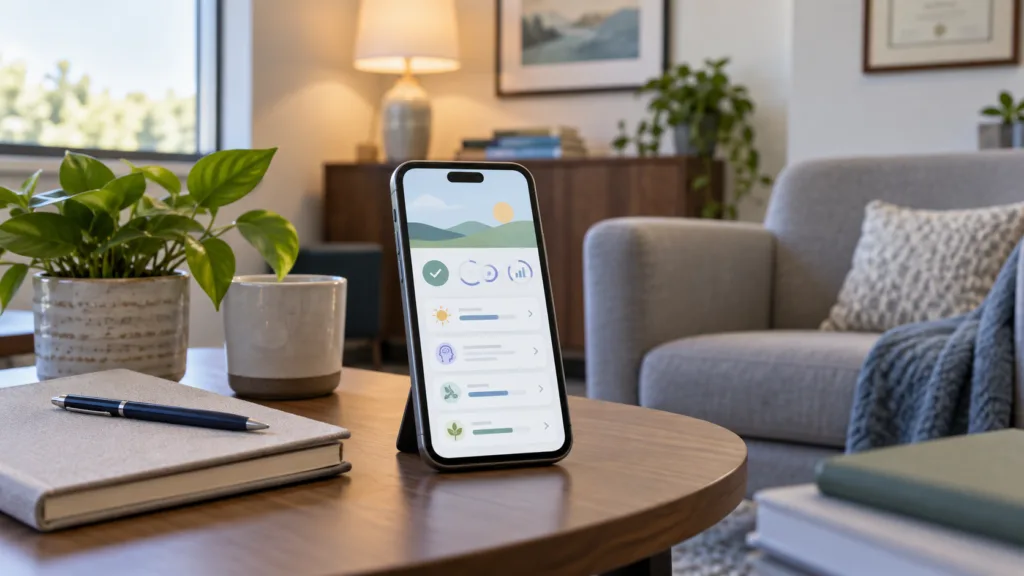
Motivista is not a drug and does not act through dopamine, serotonin or another conventional pharmacologic target. Instead, the software combines several evidence-based psychosocial treatment approaches intended to address impaired motivation, reward processing and goal-directed behavior.
The intervention uses adaptive goal setting, behavioral activation, cognitive restructuring, social-skills training, positive-affect techniques and distress-tolerance strategies. These components are delivered through a smartphone interface intended to encourage patients to engage in rewarding activities and challenge beliefs that may contribute to withdrawal or reduced motivation.
The therapeutic was developed with input from patients and clinicians and is designed to complement existing schizophrenia management rather than replace it. Patients using Motivista are expected to remain under clinician supervision and continue prescribed antipsychotic therapy.
That distinction is clinically important because Motivista was studied in adults whose positive symptoms were already clinically stable. Its FDA-cleared indication does not extend to patients with uncontrolled hallucinations, delusions or other acute manifestations of schizophrenia, and the software is not intended for use as standalone treatment.
Negative symptoms remain a major treatment gap despite effective antipsychotic therapy
Negative symptoms include diminished motivation, reduced anticipation or experience of pleasure, social withdrawal and reduced emotional or verbal expression. They can persist even when positive symptoms respond adequately to antipsychotic treatment and are strongly associated with impaired employment, relationships, independent living and overall functioning.
Click Therapeutics estimates that approximately 60% of people living with schizophrenia experience negative symptoms. Existing antipsychotic medicines are primarily used to manage positive symptoms and have not received FDA indications specifically targeting the negative-symptom domain addressed by Motivista.
Psychosocial interventions can help some patients, but access to trained therapists, transportation, cost and the challenge of sustaining engagement can limit availability. A prescription digital approach may provide another way to deliver structured therapeutic techniques at home, although real-world effectiveness will depend heavily on whether patients continue using the software outside the structured environment of a clinical trial.
That issue is particularly relevant in schizophrenia because motivational impairment itself could make adherence to a digital therapeutic difficult. CONVOKE nevertheless showed relatively strong engagement, with 70.4% of participants assigned to Motivista remaining active through the end of Week 15 compared with 76.5% using the digital control. Participants assigned to Motivista spent approximately one hour per week using the program.
Safety findings were favorable but the cleared population remains deliberately restricted
Motivista was generally well tolerated in CONVOKE. Serious adverse events occurred in 1.3% of participants assigned to CT-155 compared with 2.2% receiving the digital control, and investigators reported no serious adverse events judged related to the treatment.
The FDA labeling nevertheless places important boundaries around use. Motivista has not been evaluated in patients with uncontrolled positive symptoms, those not receiving antipsychotic medication, people with severe cognitive impairment that prevents independent app use, patients considered at serious suicide risk or individuals younger than 18 years.
Two episodes classified as psychotic disorder were considered possibly related to Motivista in one participant during the pivotal study, although neither event resulted in study discontinuation. The product cannot monitor patients continuously or automatically warn clinicians if symptoms worsen, making continued clinical supervision necessary. These limitations reinforce that Motivista should be viewed as an adjunctive treatment for a relatively stable outpatient population rather than an intervention for acute psychiatric deterioration.
Longer-term studies will need to establish whether benefits persist beyond the 16-week trial
The pivotal CONVOKE study demonstrates that Motivista can improve negative-symptom severity over approximately four months, but several questions remain about durability and real-world use. Click Therapeutics is collecting longer-term evidence through an open-label extension study intended to examine sustained engagement and persistence of therapeutic effects. Longer follow-up will be important because schizophrenia is a chronic condition and the clinical value of a digital therapeutic will depend partly on whether patients continue to derive benefit after the initial treatment period.
Real-world adherence could also differ from the pivotal trial, where patients had routine contact with clinical research sites. Investigators specifically noted that engagement findings should be interpreted in that context even though study personnel did not provide dedicated motivational coaching.
The Phase III trial also does not establish whether Motivista improves longer-term outcomes such as employment, independent living, hospitalization risk or overall healthcare utilization. Those endpoints could become important for payer coverage, particularly because Click Therapeutics is now working with insurers, healthcare providers and state Medicaid programs to broaden commercial access.
FDA clearance could test whether prescription digital therapeutics can scale in serious mental illness
Motivista represents a notable regulatory milestone not only for schizophrenia but also for prescription digital therapeutics more broadly. Digital treatments have historically faced questions around reimbursement, physician adoption, patient engagement and sustainable commercial models even when regulatory authorization has been obtained.
Negative symptoms of schizophrenia may provide a particularly relevant use case because conventional treatment leaves a clear therapeutic gap and access to intensive psychosocial care can be inconsistent. A smartphone-based intervention could potentially reach patients more broadly without requiring weekly in-person therapy appointments.
Commercial success will still depend on whether clinicians prescribe the treatment, patients continue using it and insurers agree that the measured improvement justifies reimbursement. Click Therapeutics said it is preparing Motivista for broader commercial availability and is working with payers, providers and advocacy organizations to establish access.
Motivista was initially developed through a collaboration between Click Therapeutics and Boehringer Ingelheim. The companies later modified their agreement, transferring full control of CT-155 to Click while Boehringer Ingelheim invested in the digital therapeutics company.
The FDA clearance therefore moves Motivista from an experimental digital intervention into a regulated treatment category with a specific schizophrenia indication. Its Phase III results show a measurable but moderate improvement in motivation and pleasure symptoms, while the absence of a conventional drug specifically approved for this symptom domain gives the product a distinct clinical position.
The larger question will be whether those controlled-trial improvements translate into meaningful gains in everyday functioning once Motivista is deployed in routine psychiatric care. If they do, the authorization could establish a new treatment model in which software complements antipsychotic medication to address a part of schizophrenia that pharmacotherapy has struggled to treat.