Organon & Co. has entered into an agreement to exclusively license global rights to MIUDELLA, a hormone-free copper intrauterine device developed by Sebela Pharmaceuticals, expanding its women’s health portfolio. The transaction is subject to Hart-Scott-Rodino review and U.S. Food and Drug Administration clearance of alternate supply chain entities, while MIUDELLA itself received U.S. approval in February 2025 for up to three years of pregnancy prevention and is not yet commercially available
The strategic significance of this deal lies less in novelty of mechanism and more in portfolio architecture. Organon & Co., a women’s health–focused pharmaceutical company spun out of Merck & Co., has been rebuilding scale in contraception and reproductive medicine. By licensing a newly approved copper intrauterine system, the Jersey City–based firm signals that non-hormonal long-acting reversible contraception remains commercially and clinically relevant in an era dominated by levonorgestrel-releasing systems.
What this licensing move reveals about Organon & Co.’s long-term contraception strategy in a competitive LARC market
The U.S. long-acting reversible contraception market has historically been bifurcated between hormonal intrauterine systems and copper-based devices. For decades, Paragard, currently marketed by CooperSurgical, has effectively defined the copper segment. The approval of MIUDELLA introduces the first new hormone-free copper intrauterine system in 40 years, according to the company’s disclosure
What changes here is not the existence of copper as a contraceptive modality but the competitive dynamics around design, insertion profile, and training infrastructure. MIUDELLA features a flexible frame and a preloaded inserter with a smaller insertion tube diameter. Clinicians tracking device design trends note that insertion experience, procedural pain, and provider comfort often influence uptake more than theoretical efficacy differences in mature categories like intrauterine contraception.
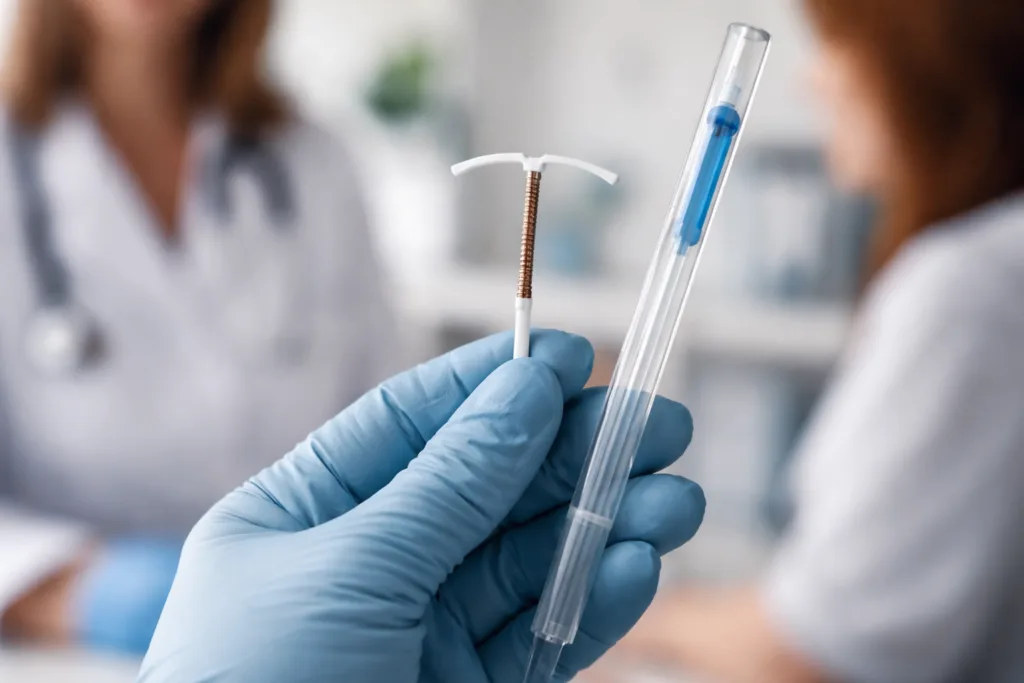
For Organon & Co., the license gives access to a differentiated physical design rather than a differentiated pharmacology. That is important because women’s health portfolios increasingly depend on incremental engineering improvements that address real-world barriers such as insertion difficulty and patient discomfort.
How MIUDELLA’s REMS restriction and training requirements could shape early adoption curves
Unlike many hormonal intrauterine systems, MIUDELLA is subject to a Risk Evaluation and Mitigation Strategy that restricts distribution to trained providers. The REMS program requires certification of healthcare providers and dispensing sites, with training prior to first use
From a safety standpoint, this aligns with broader regulatory caution around device insertion complications. Improper insertion is associated with perforation, infection, expulsion, and pregnancy-related risks
Regulatory watchers suggest that the U.S. Food and Drug Administration’s decision to require a REMS reflects concern about training consistency rather than a signal of unique device risk.
Commercially, however, REMS programs introduce friction. Organon & Co. will need to invest in provider education, certification infrastructure, and field force alignment. Early adoption curves may therefore be slower than those for non-restricted contraceptives. The upside is that structured training may improve insertion outcomes and build provider loyalty if the device performs as intended.
What is genuinely new versus incremental in MIUDELLA’s three-year hormone-free positioning
MIUDELLA is approved for up to three years of pregnancy prevention
That duration is shorter than some hormonal intrauterine systems that extend to five or more years, and shorter than the current copper benchmark. Industry observers note that a three-year time horizon may appeal to younger patients or those desiring mid-term contraception flexibility.
The novelty claim centers on being the first new U.S.-approved copper intrauterine system in decades. However, the core contraceptive principle remains copper-mediated spermicidal activity. Thus, the innovation lies in engineering refinement and insertion mechanics rather than mechanistic breakthrough.
Clinically, the absence of systemic hormones remains the most durable differentiator. In a post-Dobbs environment where contraceptive autonomy and access are politically charged, a hormone-free option provides strategic diversification. Women who cannot tolerate hormonal side effects or prefer non-hormonal methods represent a stable demand segment.
Regulatory and transactional contingencies that still stand between agreement and commercial execution
The licensing agreement is subject to Hart-Scott-Rodino antitrust review and to U.S. Food and Drug Administration approval of alternate supply chain entities
This indicates that while MIUDELLA itself is approved, commercial readiness depends on manufacturing and distribution validation.
Supply chain approval is not trivial in device-based contraception. Copper sourcing, nitinol components, and sterile manufacturing environments must meet quality standards. Industry analysts have observed that scaling intrauterine device production can present yield challenges, especially when transitioning to new contract manufacturers.
In addition, Organon & Co. will pay $27.5 million upfront with up to $505 million in potential sales-based milestones and tiered royalties
That structure suggests a risk-sharing arrangement where Sebela Pharmaceuticals retains upside but shifts commercialization risk. For Organon & Co., the milestone-heavy structure preserves capital flexibility while testing market uptake.
Safety profile considerations and real-world bleeding patterns that clinicians will monitor closely
Copper intrauterine systems are known for altering menstrual bleeding patterns, often increasing heaviness and duration. MIUDELLA’s safety information indicates common adverse reactions including heavy menstrual bleeding, dysmenorrhea, and intermenstrual bleeding
These are consistent with class effects rather than device-specific anomalies.
The contraindication profile includes Wilson’s disease, copper hypersensitivity, and various pelvic infection risks
None of these are unexpected for a copper-containing device, but they reinforce the importance of patient selection.
Clinicians tracking the rollout will likely focus on real-world expulsion rates, insertion pain metrics, and comparative bleeding tolerability versus legacy copper systems. Post-marketing surveillance data will determine whether the smaller insertion diameter translates into measurable reductions in procedural complications.
Competitive implications for CooperSurgical and the broader non-hormonal contraception segment
The entry of a second copper intrauterine system into the U.S. market alters a long-standing single-product dynamic. CooperSurgical’s Paragard has operated without direct copper competition. A new entrant backed by Organon & Co.’s commercial infrastructure introduces pricing and contracting pressure.
Payers may welcome competitive leverage, particularly in Medicaid-dominated contraceptive markets. Organon & Co.’s presence in over 140 markets provides a global scaling platform that Sebela Pharmaceuticals may not have achieved independently.
At the same time, entrenched provider familiarity with existing copper systems should not be underestimated. Device switching often requires retraining, formulary adjustments, and workflow changes. Organon & Co.’s ability to embed MIUDELLA into obstetrics and gynecology practice patterns will determine whether the product gains share or remains niche.
Financial and strategic implications for Organon & Co. as it deepens its women’s health identity
For Organon & Co., the license is consistent with its identity as a women’s health–focused pharmaceutical company. The portfolio already spans fertility, contraception, and general medicines. Adding a differentiated intrauterine system reinforces its claim to comprehensive reproductive health coverage.
Investors may interpret the deal as incremental rather than transformative. The upfront payment is modest relative to large pharmaceutical acquisitions, but the milestone ceiling of $505 million signals belief in meaningful commercial potential
Ultimately, the success of MIUDELLA under Organon & Co.’s stewardship will depend on execution across regulatory clearance of supply chains, provider training under REMS, payer access negotiations, and real-world clinical performance.
What this agreement changes is not the science of copper contraception but the competitive landscape around it. What remains unresolved is whether a three-year hormone-free device with improved insertion design can meaningfully disrupt a market defined by habit, reimbursement contracts, and established brand familiarity.
For clinicians, regulators, and industry observers, the next signals to watch include supply chain approval timing, REMS enrollment velocity, early insertion outcomes, and payer coverage decisions. For Organon & Co., MIUDELLA represents both an opportunity to strengthen its women’s health franchise and a test of its ability to translate licensing agreements into durable commercial platforms.