Reflow Medical, Inc. has launched its next-generation Cora Flex and Cora Force Torqueable Microcatheters in the United States, expanding its coronary device portfolio for complex cardiovascular procedures. The commercially available devices are designed to improve torque transmission, spinning freedom, pushability, and controlled lesion crossing in challenging coronary anatomies where device handling can directly affect procedural confidence.
Why Reflow Medical’s Cora microcatheter launch matters for complex coronary intervention workflows
Reflow Medical’s U.S. launch of the next-generation Cora Flex and Cora Force Torqueable Microcatheters lands in a part of cardiovascular intervention where incremental engineering can carry meaningful clinical and commercial weight. Microcatheters are not usually the most visible devices in interventional cardiology, but they are often central to whether an operator can navigate tortuous anatomy, support guidewire advancement, cross resistant lesions, and maintain control during complex percutaneous coronary intervention. The launch therefore matters less because it creates an entirely new device category and more because it targets a practical procedural bottleneck that clinicians face repeatedly in difficult coronary cases.
The genuinely new element is the refinement of the Cora platform around spinning freedom, torque transmission, hub design, shaft construction, and distal profile. That makes the update more than a routine product refresh, although it should still be viewed as an engineering-led platform enhancement rather than a disruptive therapeutic breakthrough. For cath labs, that distinction is important. Devices that fit into existing workflows can sometimes gain traction faster than products that require new treatment algorithms, provided physicians can feel a clear performance difference in demanding cases.
The unresolved question is whether the handling advantages described by Reflow Medical will translate into broader adoption beyond early supportive users. Coronary intervention remains a conservative, experience-driven field. Operators tend to rely heavily on devices they already know, especially when treating complex lesions. For Reflow Medical, the commercial test will be whether the Cora Flex and Cora Force microcatheters become routine tools in challenging coronary work rather than specialist devices used only in selected cases.
How Cora Flex and Cora Force create a more segmented approach to coronary lesion crossing
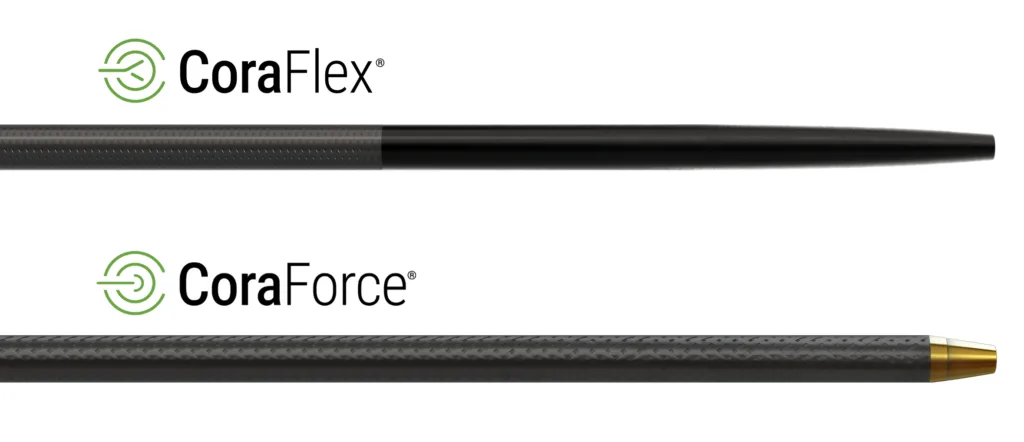
The two-device structure gives Reflow Medical a more deliberate coronary access and crossing strategy. Cora Flex is positioned for navigation in tortuous vessels, septals, and microchannels, where flexibility, trackability, and controlled movement are central to performance. Cora Force, which features a metal tip, is aimed at more resistant, calcified, and fibrotic lesions where added pushability and tip force may help operators engage anatomy that is harder to cross.
That segmentation is commercially useful because complex coronary intervention is not a single technical problem. A device that performs well in a tortuous microchannel may not be the same device an operator wants when facing dense calcium or fibrotic resistance. By separating the roles of Cora Flex and Cora Force, Reflow Medical is trying to give clinicians a more tailored toolkit rather than presenting one microcatheter as a universal solution.
The risk is that this distinction must be obvious in live cases. If physicians do not see a clear performance difference between the two versions, the product architecture could become harder to explain at the point of use. If the distinction is meaningful, however, the platform could support more intentional device selection and give Reflow Medical a stronger foothold in complex coronary workflows.
What the no-liner Cora Tech design could change for torque control in difficult coronary anatomy
The devices are built on Cora Tech, a proprietary construction that uses a no-liner design with PTFE-coated coils and a stainless-steel braid. Reflow Medical says this design is intended to support unrestricted torque rotation, controlled torque transmission, and catheter stability. In practical terms, the medical device manufacturer is targeting a problem that interventional cardiologists understand well: the loss of control between the operator’s hand movement and the device response at the distal end.
Torque behaviour matters because complex coronary procedures often involve long, curved, resistant, or unstable pathways. If the catheter does not rotate predictably, the operator may lose efficiency or control. If guidewire interaction creates lock-up, the procedure can become more frustrating and potentially more time-consuming. By focusing on spinning freedom, Reflow Medical is addressing a workflow issue that may not always appear in headline clinical endpoints but can strongly influence physician preference.
The limitation is that launch-stage engineering claims need broader procedural validation. The announcement includes physician feedback and design rationale, but it does not disclose formal comparative data against rival microcatheters or earlier Cora models. Hospitals and clinicians may therefore treat the launch as promising, but they will likely watch for real-world consistency, case performance, and repeat operator demand before viewing the platform as a standard choice.
Why this launch strengthens Reflow Medical’s broader coronary device portfolio strategy
The Cora launch also fits into Reflow Medical’s wider move to deepen its presence in coronary artery disease technologies. The medical device manufacturer has recently expanded its coronary segment, including activity around the Spur Elute Coronary Sirolimus-Eluting Retrievable Stent System for coronary in-stent restenosis. That context matters because companies competing in complex cardiovascular disease often gain strategic relevance by building procedural ecosystems rather than relying on one isolated device.
Microcatheters sit near the front end of many complex interventions, helping physicians reach and cross difficult anatomy. Stent, scaffold, or drug-eluting technologies operate later in the therapeutic pathway. If Reflow Medical can build credibility across access, crossing, and lesion-treatment tools, it may become more visible to operators managing advanced coronary disease rather than being seen only as a niche catheter developer.
However, the coronary device market is crowded and highly relationship-driven. Larger cardiovascular device manufacturers have established sales channels, physician training infrastructure, hospital contracts, and brand familiarity. Reflow Medical’s opportunity lies in specialist innovation, but its challenge lies in proving that its devices offer enough performance benefit to overcome switching inertia.
What clinicians, hospitals, and industry observers will watch after the U.S. launch
Clinicians will likely watch whether Cora Flex and Cora Force perform consistently across a range of complex cases, especially tortuous vessels, calcified lesions, fibrotic resistance, septals, and microchannels. A device can perform impressively in selected early cases, but adoption depends on whether it remains predictable when anatomy, operator style, guidewire choice, and lesion complexity vary.
Hospitals may focus on different questions. Cath lab administrators and procurement teams will want to know whether the devices improve procedural efficiency, reduce device exchanges, support physician preference, and fit within existing inventory economics. A microcatheter does not need to transform clinical outcomes single-handedly to justify adoption, but it does need to show a practical value proposition in a cost-conscious procedural environment.
The industry will also watch whether Reflow Medical can generate stronger evidence around the platform. Real-world procedural feedback can support early interest, but broader credibility often comes from registry data, case series, conference visibility, and repeat usage by experienced operators. For a privately held medical device manufacturer, sustained physician engagement may matter as much as the launch itself.
Why incremental catheter innovation still matters in cardiovascular device markets
The Reflow Medical launch shows why incremental cardiovascular device innovation remains commercially important. Not every device update needs to redefine therapy to matter. In complex coronary intervention, small improvements in torque response, distal control, guidewire interaction, and pushability can influence how confidently physicians approach difficult anatomy.
This is especially relevant as coronary disease treatment increasingly involves older patients, more calcified lesions, more repeat interventions, and more anatomically complex cases. The harder the case mix becomes, the more valuable reliable support tools become. Microcatheters therefore occupy a quiet but important role in the broader percutaneous coronary intervention ecosystem.
For Reflow Medical, the next-generation Cora platform gives it a sharper coronary story. The launch strengthens the portfolio, reinforces its engineering identity, and gives physicians another option for challenging coronary procedures. The harder part begins now: converting design credibility into routine clinical preference.

Could Reflow Medical’s new Cora microcatheters fix a hidden pain point in complex PCI? added by Pallavi Madhiraju on
View all posts by Pallavi Madhiraju →