Hammes has completed the new Boca Grande Health Clinic in Boca Grande, Florida, marking a significant healthcare infrastructure milestone for Gasparilla Island. The healthcare real estate and project management firm served as project manager for the multi-phase program, which adds primary care, same-day urgent care, expanded laboratory and imaging services, a retail pharmacy, negative pressure rooms, and outpatient rehabilitation capacity to the island’s community clinic model.
The bigger story is not just the opening of another outpatient facility. It is the way the project reflects a broader healthcare delivery challenge in small, seasonal, and geographically constrained communities, where access to diagnostics, urgent care, infection-ready rooms, and rehabilitation services can determine whether patients receive timely care locally or must travel off-island for services that larger suburban populations often take for granted. For Boca Grande Health Clinic, the new facility strengthens its ability to operate as a more complete front door to care rather than a limited community outpost.
Why Boca Grande Health Clinic’s new facility matters for local healthcare access
Boca Grande Health Clinic has long served residents, workers, and visitors on Gasparilla Island, but the newly completed facility changes the scope of what that role can mean. By combining primary care with same-day urgent care, laboratory support, imaging services, pharmacy access, infection-control-ready negative pressure rooms, and rehabilitation-oriented renovation work, the clinic is moving closer to a compact community healthcare campus model.
That matters because island healthcare has a different operating logic from urban healthcare. In a large city, a patient can usually move between urgent care, imaging, pharmacy, physical therapy, and hospital-linked specialists within a fairly dense network. On a barrier island, the friction is higher. Travel time, bridge access, seasonal population shifts, older residents, visiting workers, and weather risks can all turn routine healthcare logistics into a real access problem.
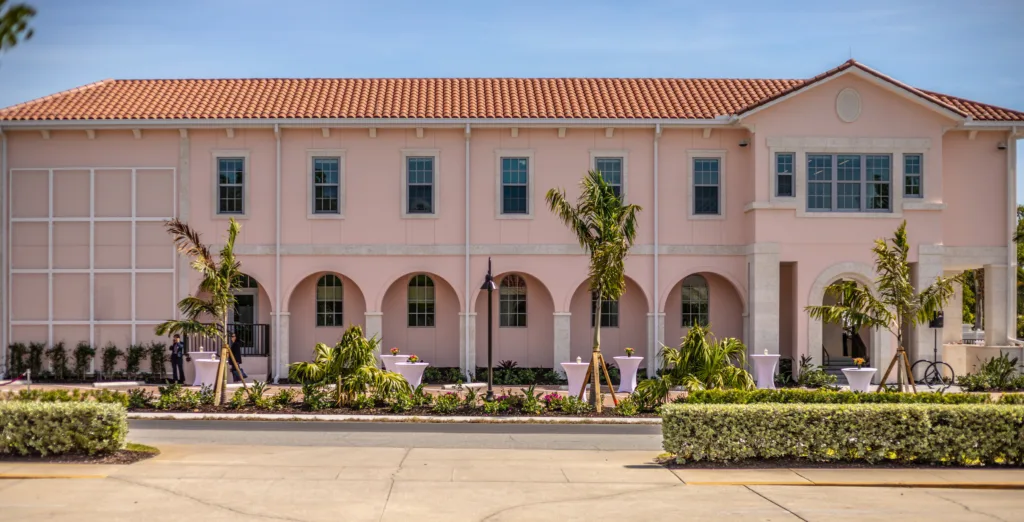
The new Boca Grande Health Clinic does not eliminate every dependency on mainland hospitals or specialist networks. It is still an outpatient-oriented platform, not an acute-care hospital. However, it does narrow the gap between what can be handled locally and what must be referred elsewhere. That is the strategic significance. The facility gives the clinic more diagnostic and operational depth, which could improve triage, reduce avoidable travel, and support earlier care decisions.
How Hammes’ project-management role reflects the growing complexity of outpatient healthcare real estate
Hammes’ role as project manager is important because healthcare construction is no longer simply about delivering a building. Outpatient projects now have to integrate clinical workflow, infection control, diagnostic infrastructure, patient movement, staffing continuity, donor expectations, future renovation sequencing, and budget discipline. In Boca Grande, the program also involved construction of the new facility alongside renovation and expansion of the existing clinic, which required a phased strategy to reduce disruption for patients and staff.
This is exactly where healthcare real estate has become more specialized. A community clinic may look modest compared with a large hospital tower, but the execution risk can still be high. Imaging suites require technical planning. Negative pressure rooms require mechanical and infection-control coordination. Rehabilitation spaces have equipment, accessibility, and patient-flow requirements. A retail pharmacy adds operational and compliance considerations. When these capabilities are placed into a small island setting, the margin for planning error becomes thinner.
For Hammes, the project reinforces its positioning in healthcare-focused real estate services rather than general development. For Boca Grande Health Clinic, the benefit is more practical. A disciplined project-management structure helps convert a community-funded healthcare vision into a usable care environment. The unresolved question is how quickly the clinic can translate the physical upgrade into measurable operating gains, including patient throughput, care continuity, reduced off-island referrals, and stronger seasonal readiness.
What the new clinic changes for diagnostics, urgent care, and outpatient rehabilitation
The most visible change is the broader range of services that can now be delivered locally. Same-day urgent care gives the clinic a more responsive role for non-emergency medical needs. Expanded laboratory and imaging services create faster diagnostic pathways. A retail pharmacy closes one more link in the care journey. Negative pressure rooms add preparedness for infectious disease scenarios. Renovation work tied to outpatient rehabilitation supports a more comprehensive recovery and therapy program.
This mix is significant because outpatient healthcare demand is increasingly shifting away from centralized hospital settings where clinically appropriate. Patients, payers, and providers all have reasons to support that shift. Patients want convenience. Payers want lower-cost settings. Providers want more efficient care pathways. Communities want resilience when access to larger systems is inconvenient. Boca Grande Health Clinic’s new facility fits that trend, though in a highly localized form.
The limitation is that expanded capability also raises execution expectations. Imaging services require staffing, maintenance, scheduling efficiency, referral coordination, and quality systems. Rehabilitation programs require continuity and patient volume. Same-day care must balance walk-in demand with primary care continuity. A pharmacy adds inventory, compliance, and integration demands. In other words, the facility creates capacity, but capacity only becomes value when the operating model keeps pace.
Why community-funded healthcare infrastructure is becoming more strategically important
The Boca Grande Health Clinic project was enabled by community donations through the Boca Grande Health Clinic Foundation’s capital campaign. That donor-backed model is particularly relevant in smaller markets where conventional healthcare investment logic may not always support the level of local infrastructure the community wants or needs. In that sense, the project is not just a construction milestone. It is an example of philanthropy filling a healthcare access gap.
This approach has clear advantages. Local donors often understand the consequences of limited access more directly than remote capital allocators. They may also be willing to support facilities that protect community resilience rather than maximize near-term financial returns. For a place like Boca Grande, where the clinic has served as a trusted healthcare access point for decades, that alignment can be powerful.
However, philanthropy can fund buildings more easily than it can guarantee long-term operating sustainability. The real test comes after the dedication ceremony. Staffing, reimbursement, maintenance, seasonal demand swings, technology upgrades, and clinical governance all require recurring resources. Community support may have delivered the infrastructure, but the clinic’s long-term success will depend on whether the operating model remains financially and clinically durable.
What this reveals about the future of smaller outpatient care campuses
The Boca Grande Health Clinic project points to a wider pattern in healthcare infrastructure. Smaller outpatient campuses are being asked to do more. They are no longer just basic consultation points. Increasingly, they are expected to support diagnostics, urgent care, chronic care management, rehabilitation, pharmacy access, and public health readiness. That is especially true in communities where distance from larger medical centers creates access risk.
For healthcare real estate firms, this creates a growing niche. The most valuable outpatient projects are not necessarily the biggest. They are the projects that solve a real access bottleneck with the right clinical mix, the right sequencing, and the right long-term operating plan. Boca Grande Health Clinic’s new facility fits that description because it was designed around specific island needs rather than generic outpatient expansion.
The risk is overextension. A smaller clinic can gain new capabilities, but it cannot become everything at once. The best outcome would be a balanced model in which the clinic handles more primary, urgent, diagnostic, pharmacy, and rehabilitation needs locally while maintaining clear referral relationships for higher-acuity care. That kind of role could make Boca Grande Health Clinic more valuable to patients without pushing it beyond its outpatient mandate.
What clinicians, healthcare planners, and community leaders will watch next
The next phase will be less about the building and more about performance. Clinicians will watch whether expanded diagnostics improve speed and confidence in care decisions. Community leaders will watch whether residents, workers, and visitors experience more reliable local access. Healthcare planners will watch whether the phased renovation strategy successfully converts the existing clinic into a stronger rehabilitation and support platform.
Industry observers are also likely to view the project as a useful case study in community-scale healthcare real estate. It shows how a local clinic can use donor support, specialist project management, and phased implementation to upgrade its role without becoming a hospital. That model could be relevant for other affluent or geographically constrained communities, but it may be harder to replicate in markets without a strong donor base.
For Hammes, the project adds another example to its healthcare real estate portfolio at a time when outpatient infrastructure continues to gain strategic importance. For Boca Grande Health Clinic, the completion marks the start of a more demanding chapter. The facility gives the island a stronger healthcare platform. The real measure of success will be whether that platform improves access, continuity, and patient experience in ways that remain sustainable long after the ribbon-cutting moment fades.