Charles River Laboratories International, Inc. and MEDIPOST Co., Ltd. have signed a non-exclusive memorandum of understanding to collaborate on GMP-compliant testing and related commercial support for cell therapy development. The agreement is aimed at supporting MEDIPOST’s global cell therapy pipeline, initially across Asia-Pacific and North America, with possible expansion into the Middle East and Europe.
Why the Charles River and MEDIPOST MOU matters for cell therapy commercialization beyond routine outsourcing
The agreement is not a licensing deal, acquisition, or product approval, which means it should not be overread as a direct clinical inflection point. Its significance sits elsewhere. For cell therapy developers, especially those moving from national or regional programs toward late-stage global development, GMP testing infrastructure can become as important as trial design, manufacturing yield, or regulatory engagement.
MEDIPOST is operating in a field where scientific differentiation alone is not enough. Regenerative medicine programs must prove that complex biological products can be manufactured, tested, released, transported, and monitored with the consistency expected by regulators and clinicians. That makes the Charles River Laboratories collaboration strategically useful because it brings in a testing partner with capabilities across biologics quality control, viral testing, release testing, and broader GMP-compliant services.
The non-exclusive nature of the MOU is important. It gives both parties flexibility, but it also means this is not a fully locked operational architecture. MEDIPOST may still use other partners, Charles River Laboratories may support other cell therapy developers, and the ultimate commercial value will depend on how deeply the collaboration becomes embedded in actual development and commercialization workflows. For industry observers, the key question is whether this becomes a practical execution layer for MEDIPOST’s late-stage ambitions or remains a useful but limited testing framework.
How GMP testing has become a strategic bottleneck for advanced biologics and regenerative medicine
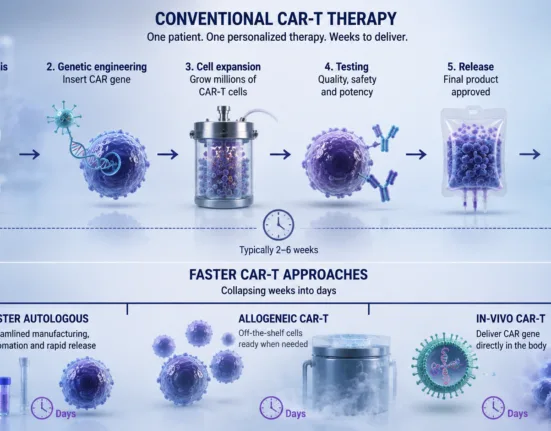
Cell therapies carry a different operational burden from conventional small molecules and many traditional biologics. Testing is not merely a box-checking exercise before release. It is central to identity, safety, potency, contamination control, viral risk management, batch comparability, and regulatory confidence. In a therapy class where living cells are the product, every analytical step can influence whether a candidate is viewed as scalable or fragile.
That context explains why a testing-focused MOU can matter even without a new clinical data readout. As more cell and gene therapy developers move toward pivotal trials or commercial launches, the industry is encountering a familiar tension: innovation is advancing faster than global testing capacity, standardized analytical methods, and regional regulatory alignment. A developer can have promising clinical rationale and still face delays if release testing timelines, assay validation, or quality control workflows cannot support broader deployment.
For MEDIPOST, the testing partnership may help reduce some of that execution risk as it pushes beyond its South Korean base and builds a wider international presence. However, GMP testing does not solve all scale-up constraints. Manufacturing reproducibility, product characterization, clinical endpoint durability, payer acceptance, and physician adoption remain separate hurdles. The MOU strengthens one part of the development chain, but it does not remove the need for convincing clinical evidence and regulatory-grade manufacturing data.
Why MEDIPOST’s regenerative medicine strategy needs global-quality infrastructure now
MEDIPOST’s profile is tied to allogeneic, umbilical cord blood-derived stem cell therapies, a category that offers the promise of off-the-shelf regenerative medicine but also attracts high scrutiny around consistency, mechanism, and durability. The South Korean biotech has already signaled a push toward U.S. late-stage development, including plans around a Phase III clinical trial for an investigational mesenchymal stem cell therapy in knee osteoarthritis.
That late-stage direction changes the operational bar. Earlier clinical programs can often rely on more contained infrastructure, narrower patient recruitment, and region-specific support systems. A Phase III or commercialization-oriented strategy requires something more robust: validated testing processes, cross-border quality systems, harmonized documentation, and confidence that product release can be managed across multiple regulatory environments.
The Charles River Laboratories MOU therefore fits MEDIPOST’s broader transition from regenerative medicine developer to potentially global cell therapy operator. The unresolved question is whether the clinical profile of MEDIPOST’s programs will justify that infrastructure buildout. Knee osteoarthritis remains a large and commercially attractive field, but it is also clinically demanding because regulators and payers will look for evidence that goes beyond symptomatic improvement. Durability, functional benefit, structural outcomes, safety, and comparability across patient groups are likely to shape the eventual value proposition.
What Charles River Laboratories gains from deeper exposure to cell therapy GMP testing
For Charles River Laboratories, the collaboration reinforces a shift toward higher-value biologics and advanced therapy support services at a time when drug development service providers are under pressure to show differentiated growth. Traditional contract research and testing demand can fluctuate with biotech funding cycles, but advanced biologics create recurring needs across preclinical, clinical, and commercial stages.
The strategic appeal is clear. Cell therapy developers need specialized testing partners earlier and for longer than many conventional drug developers. If Charles River Laboratories becomes embedded in quality control and release testing workflows, the relationship can extend across development milestones and potentially into commercial supply support. That is more durable than one-off testing work and better aligned with the industry’s migration toward complex modalities.
The risk is that advanced therapy demand is still uneven. Many cell therapy programs remain expensive to develop, difficult to manufacture, and vulnerable to clinical or reimbursement setbacks. Charles River Laboratories may gain visibility and technical relevance through partnerships such as MEDIPOST, but revenue conversion depends on program progression, regional expansion, and the scale of actual testing volumes. The market will likely watch whether these collaborations translate into measurable growth in biologics testing rather than simply reinforcing strategic positioning.
How investors may read the Charles River and MEDIPOST partnership after recent stock volatility
Investor reaction to this type of announcement is likely to be measured because an MOU is not a revenue contract with disclosed economics. Charles River Laboratories shares remain under scrutiny after a difficult stretch for parts of the life sciences tools and services sector, with investors focused on customer spending, biotech funding stability, margin protection, and the pace of recovery in outsourced research demand.
For MEDIPOST, the market context is more volatile. The KOSDAQ-listed biotech has seen sharp moves around recent developments, including strong swings in May trading. That volatility suggests investors are not simply pricing the company as a steady commercial-stage operator. They are reacting to a combination of regenerative medicine optionality, funding expectations, clinical-stage risk, and uncertainty around how global expansion will be financed and executed.
The MOU could support sentiment by showing that MEDIPOST is building external infrastructure around late-stage development. However, it is unlikely to settle valuation debates on its own. Investors will still need clearer evidence on U.S. trial execution, regulatory feedback, manufacturing readiness, and the timeline for any meaningful commercial pathway outside South Korea. In that sense, the partnership is best viewed as a de-risking signal, not a valuation reset.
Why APAC and North America are the right first markets for this testing collaboration
The initial focus on Asia-Pacific and North America is strategically logical. Asia-Pacific offers a strong base for regenerative medicine innovation, hospital-linked development networks, and regional manufacturing capacity. North America brings the regulatory and commercial prize that many cell therapy developers need to validate global relevance. Together, the regions represent both operational foundation and high-value expansion.
For MEDIPOST, this regional sequencing matters because it avoids trying to globalize all at once. A testing collaboration that starts across Asia-Pacific and North America can help build processes that are relevant to both home-region development and U.S. regulatory expectations. If the model works, expansion into the Middle East and Europe could follow with stronger documentation and more mature quality systems.
The limitation is that regional expansion in advanced therapies is rarely linear. Regulators may differ in how they evaluate potency assays, cell source controls, comparability, and post-approval commitments. Commercial environments may also differ sharply, especially when therapies target chronic degenerative conditions rather than rare diseases or oncology settings. Testing infrastructure can support expansion, but it cannot eliminate regional evidence requirements or payer skepticism.
What clinicians, regulators, and industry observers will watch next
The most important next marker will be whether the MOU becomes visible in MEDIPOST’s clinical and operational progress. Clinicians will care less about the partnership itself and more about whether it supports reliable product quality, trial continuity, and interpretable clinical evidence. Regulators will focus on assay validation, manufacturing controls, safety testing, and whether data packages are strong enough for late-stage review.
Industry observers will also watch how Charles River Laboratories positions the partnership within its broader advanced therapies strategy. If similar collaborations multiply, it would suggest that GMP testing is becoming a more competitive frontier for contract research and development service providers. If the partnership remains narrow, it may be remembered as a useful but incremental support arrangement.
For now, the Charles River Laboratories and MEDIPOST MOU is best understood as a practical response to a growing pressure point in regenerative medicine. The science of cell therapy often attracts the headlines, but the less glamorous infrastructure around testing, release, and compliance may determine which programs can actually cross from clinical promise into commercial reality. That is where this agreement earns its relevance.