Resbiotic Nutrition, Inc. has launched an at-home gut health test in partnership with Tiny Health, expanding its microbiome-focused health platform beyond supplements and into consumer-facing testing as demand grows for personalised insights into digestion, inflammation, immune function and metabolic wellness.
The new resbiotic Gut Health Test uses shotgun metagenomics sequencing to analyse the gut microbiome from an at-home stool sample. The company said samples are processed in a CLIA- and CAP-certified laboratory, with results delivered in about three to four weeks through a personalised gut health report. The test is designed to provide insights into microbiome diversity, gut inflammation markers, leaky gut indicators, key bacteria such as Akkermansia and Bifidobacterium, and signals linked to metabolic and immune function.
The launch gives Resbiotic a stronger position in the fast-growing microbiome testing market, where companies are trying to move beyond broad probiotic messaging and toward data-led, personalised health guidance. Tiny Health brings microbiome testing infrastructure and consumer analytics experience, while Resbiotic contributes its physician-developed positioning around the gut-lung axis and broader microbiome health.
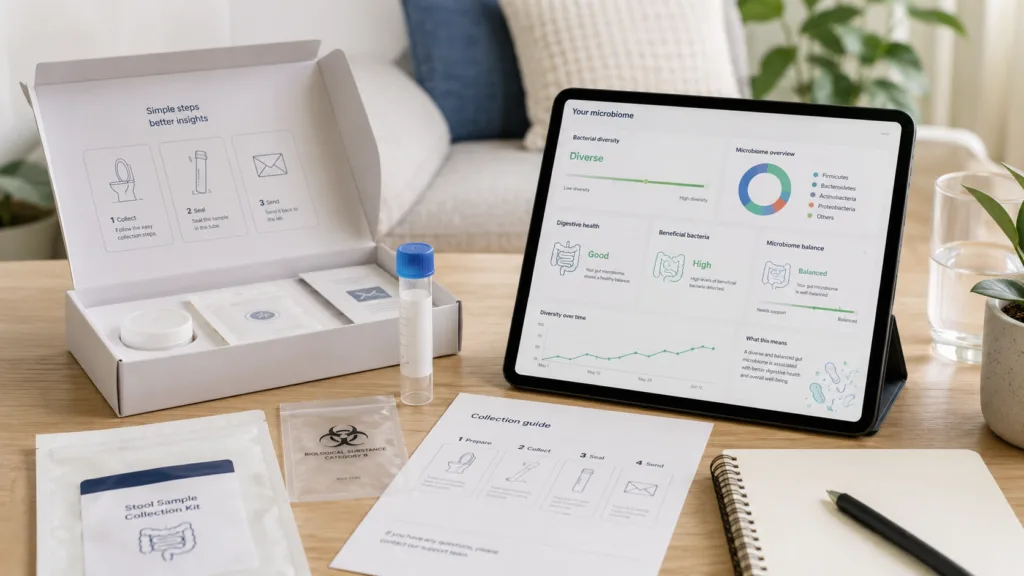
The result is a product that reflects where the consumer diagnostics market appears to be heading. Gut health companies are no longer competing only on probiotic strains, supplement labels or broad wellness claims. They are increasingly competing on data, personalised reports and the promise of more targeted health recommendations.
Why Resbiotic’s move from supplements to microbiome testing matters
Resbiotic has built its positioning around microbiome health, including products tied to the gut-lung axis. The new gut health test extends that positioning into personalised data generation. Instead of selling only microbiome-support products, the company is now offering consumers a way to measure parts of the microbial ecosystem that may influence digestive, immune, inflammatory and metabolic health.
That matters because the microbiome market is becoming more sophisticated. Early consumer probiotic products often relied on broad claims around digestion, immunity or general wellness. Newer players are trying to differentiate themselves through sequencing, reports, personalised recommendations and disease-adjacent education.
In that environment, testing can become both a consumer engagement tool and a gateway into a larger product ecosystem. A user who takes a microbiome test may be more likely to follow personalised dietary guidance, consider supplements, retest later or remain connected to a brand over time. That makes testing commercially attractive for microbiome companies trying to build recurring engagement rather than one-off transactions.
Tiny Health’s role is also important. By partnering with an established microbiome testing platform, Resbiotic can enter the diagnostics-adjacent space without building the full laboratory, sequencing and reporting infrastructure alone. That gives the launch a more credible operational foundation than a basic wellness questionnaire or generic gut-health screen.
How the Resbiotic Gut Health Test works and what it claims to measure
The Resbiotic Gut Health Test uses shotgun metagenomics sequencing, a method that can provide broader microbial information than older targeted sequencing approaches. In simple consumer terms, the process allows users to collect a stool sample at home and receive a report that maps the gut microbiome in greater detail than many basic wellness tests.
The company said the test evaluates microbiome diversity, inflammation-related markers, leaky gut indicators, and key bacteria including Akkermansia and Bifidobacterium. These bacteria are often discussed in relation to gut barrier function, metabolic health, immune regulation and broader microbiome balance.
The test is also framed through Resbiotic’s Gut-X Axis model, which links gut health with other body systems. That positioning pushes the product beyond digestion alone and into a wider wellness conversation involving inflammation, metabolism, immunity and respiratory health.
This is commercially smart because consumers increasingly connect gut health with fatigue, skin health, bloating, immune resilience, food sensitivity concerns and overall wellbeing. However, it also creates a scientific responsibility. Microbiome testing can reveal patterns, but those patterns are not always equivalent to a clinical diagnosis. A report can be informative without being definitive.
Why at-home microbiome testing is attracting consumers
Consumer interest in gut health has surged because many people struggle with chronic symptoms that do not always produce clear answers through routine healthcare visits. Bloating, irregular digestion, fatigue, food sensitivity concerns and general wellness optimisation have created a large audience for at-home microbiome products.
At-home testing also fits a broader healthcare trend. Consumers are increasingly comfortable with remote sample collection, digital reports and personalised recommendations. The pandemic years normalised home-based testing workflows, while direct-to-consumer diagnostics have expanded into hormones, fertility, nutrition, genetics and metabolic health.
Microbiome testing sits neatly inside that shift. It gives consumers a sense of personal data, offers a tangible explanation for symptoms that can otherwise feel vague, and supports the appeal of targeted lifestyle changes. For companies, it creates a bridge between diagnostics, wellness, supplements and digital health engagement.
The challenge is that the microbiome remains complex, dynamic and highly individual. The bacterial composition of the gut can vary based on diet, medication, age, illness, geography, stress and many other factors. That makes interpretation difficult. A consumer may receive a precise-looking report, but the clinical meaning of many microbial patterns is still evolving.
Where the clinical caution begins
The biggest risk for at-home microbiome testing is overinterpretation. A low or high level of a particular microbe may look alarming on a report, but it may not necessarily indicate disease. Likewise, improving a score on a consumer report does not automatically prove that a clinically meaningful health outcome has improved.
This is why the test should be understood as a personalised wellness and microbiome insight tool rather than a replacement for medical diagnosis. Consumers with persistent abdominal pain, blood in stool, severe diarrhoea, chronic constipation, unexplained weight loss, fever or other red-flag symptoms should seek medical evaluation rather than relying on a consumer gut health report.
Another risk is the link between testing and product recommendations. When microbiome tests are tied to supplements or wellness products, companies must be careful to avoid the perception that the test is designed mainly to drive product sales. Trust in this category will depend on transparent interpretation, responsible claims and clear boundaries between education and medical advice.
The companies that succeed in microbiome testing will likely be those that treat consumers as intelligent but not invincible. The best reports will explain uncertainty, highlight practical next steps, avoid unnecessary alarm and encourage medical consultation when symptoms warrant it.
What makes the Resbiotic and Tiny Health partnership commercially interesting
The partnership is commercially interesting because it combines two parts of the microbiome value chain. Resbiotic brings a brand built around physician-developed microbiome health and gut-axis education. Tiny Health brings microbiome testing infrastructure, sequencing interpretation and consumer-reporting experience.
This model could become more common as microbiome companies try to avoid being boxed into one category. Supplement brands may add testing. Testing companies may add coaching. Digital health platforms may add microbiome tracking. Consumer health companies may use longitudinal microbiome data to refine personalised interventions.
The stronger business model may not come from a single test purchase. It may come from retesting, longitudinal tracking, personalised guidance, subscription-based engagement and companion products. In that sense, the Resbiotic Gut Health Test could become more than a standalone diagnostic-adjacent product. It could become the front door to a broader microbiome health ecosystem.
The market opportunity is clear, but so is the evidence challenge. Consumers want personalisation. Healthcare providers want clinical validity. Regulators want responsible claims. Companies want recurring engagement. The winners will need to satisfy all four without turning science into marketing fog. And yes, gut-health marketing fog is somehow worse than regular fog.
Why this launch matters for the microbiome diagnostics market
The launch matters because it reflects a broader shift from general wellness products toward data-led consumer health tools. Gut health is no longer being marketed only through capsules, powders and broad claims about digestive comfort. It is increasingly being framed through sequencing, biomarkers, microbial diversity and personalised reports.
That gives the microbiome sector a more sophisticated growth pathway, but also raises the bar. If companies want consumers and clinicians to take these tests seriously, they must show that results are understandable, responsible and useful. A report that overwhelms users with microbial names without clear context may create anxiety rather than value.
For Resbiotic and Tiny Health, the opportunity is to position the test as an accessible but credible entry point into microbiome insight. The CLIA- and CAP-certified laboratory processing helps support trust in the testing workflow, while shotgun metagenomics gives the product a more advanced scientific foundation than simpler approaches.
Still, the real question is not whether the test can generate data. The real question is whether consumers can act on that data in ways that are safe, practical and meaningful.
Can microbiome testing move from curiosity to credible health guidance?
Resbiotic’s partnership with Tiny Health signals a broader shift in the consumer microbiome market. Gut health companies are increasingly moving toward personalised data, digital reporting and test-guided recommendations rather than relying only on broad supplement claims.
The Resbiotic Gut Health Test gives consumers a deeper look at their microbiome through an at-home workflow and personalised reporting. That could appeal to people seeking more insight into digestive health, inflammation, immune function and metabolic wellness. It could also help Resbiotic strengthen its position beyond supplements and into the diagnostics-adjacent consumer health market.
However, the credibility of this category will depend on restraint. At-home microbiome tests can be useful educational tools, but they should not be treated as replacements for clinical diagnosis or medical care. The strongest companies in this market will be those that make microbiome science easier to understand without pretending it is more settled than it really is.
For now, Resbiotic and Tiny Health have launched into a market with genuine demand and genuine scientific caution. That tension is exactly why the story matters. The gut health boom is no longer just about what probiotic to take. It is increasingly about who controls the data, how that data is interpreted, and whether personalised microbiome insights can become useful enough to earn a permanent place in consumer healthcare.