Minghui Pharmaceutical and Qilu Pharmaceutical disclosed updated clinical data for MHB088C, also known as QLC5508, from a Phase I/II study in heavily pretreated metastatic castration-resistant prostate cancer patients at the 2026 American Society of Clinical Oncology Annual Meeting. The investigational B7-H3-targeted antibody-drug conjugate showed durable anti-tumor activity and manageable safety in a population that had already received multiple prior therapies, including androgen receptor pathway inhibitors and taxane-based chemotherapy.
Why does the MHB088C prostate cancer update matter for the next wave of B7-H3 antibody-drug conjugates?
The significance of the update lies less in a single efficacy snapshot and more in the patient population where the signal emerged. Metastatic castration-resistant prostate cancer is already a difficult treatment setting, but heavily pretreated metastatic castration-resistant prostate cancer is where therapeutic optionality becomes especially thin. Patients who have moved through androgen receptor pathway inhibitors, chemotherapy, radioligand therapy eligibility questions, and biomarker-limited precision options often represent the hardest part of the prostate cancer treatment continuum. A radiographic progression-free survival median that had not been reached at the data cutoff therefore gives clinicians and industry watchers a reason to look more closely at MHB088C, even if the study remains early and non-comparative.
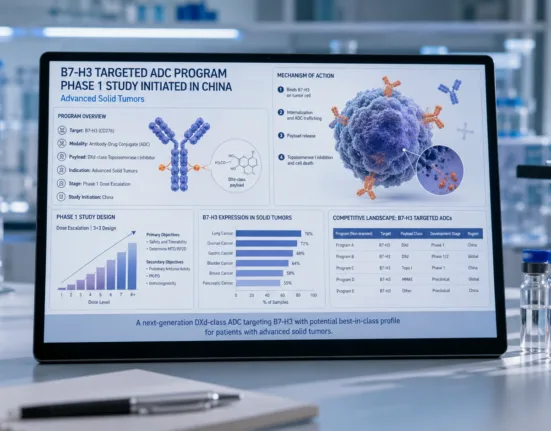
B7-H3 has become one of the more closely watched oncology targets because it is broadly expressed across several solid tumors and has limited expression in many normal tissues. That makes it attractive for antibody-drug conjugate development, where the commercial and clinical challenge is not only finding a target but delivering a payload with enough selectivity to widen the therapeutic window. In prostate cancer, this matters because late-line disease does not simply need another modestly active treatment. It needs therapies that can provide meaningful disease control without adding toxicity that frail, heavily treated patients cannot tolerate.
The unresolved question is whether MHB088C’s signal can hold up when tested against clearer benchmarks. A Phase I/II dataset can suggest durability, but it cannot establish comparative value on its own. The absence of a randomized control arm means the results must be interpreted cautiously, especially in a disease where patient selection, prior treatment sequence, bone-dominant disease burden, visceral metastases, and prostate-specific antigen kinetics can influence apparent benefit. The update improves the rationale for further development, but it does not yet answer whether MHB088C can displace, sequence after, or combine with existing prostate cancer standards.
What does durable radiographic progression-free survival suggest in heavily pretreated mCRPC?
The central clinical signal is disease control. In the 59-patient dataset, median radiographic progression-free survival had not been reached, while the reported 12-month radiographic progression-free survival rate was 71.7%. Among patients treated at the 2.0 mg/kg every two weeks dose, median radiographic progression-free survival also had not been reached, with a 12-month rate of 78.6%. For an early study in heavily treated metastatic castration-resistant prostate cancer, that points to a potentially meaningful duration of benefit rather than a short-lived response.
The context is important because metastatic castration-resistant prostate cancer becomes increasingly resistant after exposure to androgen receptor pathway inhibitors and taxanes. Sequential use of androgen receptor-targeted agents can be constrained by cross-resistance, while chemotherapy tolerability can become harder after prior docetaxel or cabazitaxel exposure. Radioligand therapy and PARP inhibitors have changed the field, but they do not solve every late-line scenario. PARP inhibitors are most relevant for biomarker-defined populations, while radioligand approaches depend on target expression, access, eligibility, and treatment infrastructure. An antibody-drug conjugate with activity across a broader B7-H3-expressing population could therefore become clinically interesting if the benefit is reproducible.
However, radiographic progression-free survival is not the same as overall survival, quality of life, pain control, skeletal event reduction, or durable symptomatic benefit. In prostate cancer, especially late-line disease, clinicians will want to know whether radiographic disease control translates into outcomes that matter to patients with bone pain, anemia, fatigue, and cumulative treatment burden. The MHB088C update strengthens the case for additional testing, but later trials will need to define whether disease stabilization is accompanied by survival advantage, improved symptoms, or meaningful treatment sequencing value.
How does MHB088C compare with existing late-line prostate cancer treatment logic?
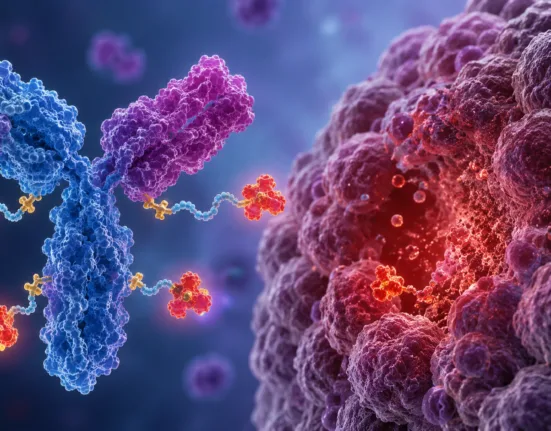
MHB088C is not trying to replicate the mechanism of standard androgen receptor pathway inhibitors, taxanes, PARP inhibitors, or radioligand therapy. Its value proposition is different. As a B7-H3-targeted antibody-drug conjugate, it aims to use target-directed delivery to bring a cytotoxic payload to tumor cells more selectively than conventional chemotherapy. That gives it a potentially distinct place in treatment sequencing, particularly for patients whose disease has moved beyond hormone-driven vulnerability.
This matters because late-stage prostate cancer has become increasingly segmented. Some patients are candidates for PARP inhibition based on homologous recombination repair alterations. Some are candidates for prostate-specific membrane antigen-targeted radioligand therapy. Others continue to receive chemotherapy or rechallenge strategies depending on performance status and prior response. A B7-H3 antibody-drug conjugate could potentially fit into this landscape as a post-taxane or post-ARPI option, but only if future data show that B7-H3 expression is sufficiently prevalent, clinically actionable, and linked to response.
The risk is that prostate cancer is not one biological state. Metastatic castration-resistant prostate cancer includes androgen receptor-driven disease, neuroendocrine transformation, aggressive variant biology, bone-predominant disease, and heterogeneous target expression. If MHB088C activity depends heavily on target density or tumor phenotype, future development may require biomarker selection rather than broad late-line use. That would not necessarily weaken the asset, but it would change its commercial and clinical path. A biomarker-directed approach can improve response probability, yet it can also narrow the addressable patient population and add diagnostic complexity.
Why is the safety profile just as important as the efficacy signal for MHB088C?
The safety profile will be watched closely because antibody-drug conjugates often live or die by tolerability. MHB088C’s most common Grade 3 or higher treatment-emergent adverse events included neutrophil count decrease, anemia, and white blood cell count decrease. Those events are not surprising for a cytotoxic payload-based therapy, but they are especially relevant in metastatic castration-resistant prostate cancer, where many patients may already have marrow compromise from bone metastases or prior chemotherapy.
The clinical context is that heavily pretreated prostate cancer patients can have limited reserve. Hematologic adverse events may be manageable in a trial setting through monitoring, dose delays, growth factor support, or transfusion strategies, but real-world use can be less forgiving. If MHB088C advances into later-stage studies, regulators and clinicians will look beyond whether adverse events are manageable in principle. They will assess discontinuation rates, dose reductions, infection risk, cumulative cytopenias, and whether efficacy is preserved at tolerable doses.
The unresolved issue is how MHB088C’s safety compares with both existing prostate cancer options and other B7-H3 antibody-drug conjugates. The absence of a major safety red flag in this update is helpful, but small datasets can miss less common toxicities. Antibody-drug conjugate development has also shown that ocular toxicity, pneumonitis, neuropathy, liver injury, and interstitial lung disease risks can vary significantly depending on target, linker, payload, and dosing schedule. MHB088C will need a larger safety database before its therapeutic window can be judged with confidence.
What does the Minghui and Qilu partnership reveal about China’s oncology development strategy?
The collaboration between Minghui Pharmaceutical and Qilu Pharmaceutical reflects a broader pattern in China’s oncology sector. Chinese biopharmaceutical developers are no longer only competing on speed or cost. They are building antibody-drug conjugate platforms, bispecific antibodies, and combination regimens aimed at global therapeutic categories. In this case, Minghui retains rights outside Greater China and certain combination-study rights in China, while Qilu holds rights for development, manufacturing, and commercialization in Greater China.
That structure matters because MHB088C is not being positioned as a single-indication asset. The program is already being evaluated across multiple tumor types, including small cell lung cancer and esophageal squamous cell carcinoma, while Minghui is also studying combinations involving its investigational PD-1/VEGF bispecific antibody, MHB039A. The prostate cancer data therefore sit inside a broader attempt to turn B7-H3 targeting into a multi-tumor oncology platform rather than a narrow late-line experiment.
The risk is operational complexity. Multi-indication antibody-drug conjugate development can create strategic value, but it can also stretch resources across competing trial priorities. Different tumor types require different endpoints, comparators, regulatory strategies, biomarker assumptions, and commercial plans. If MHB088C is to become more than a promising regional ADC, Minghui Pharmaceutical and Qilu Pharmaceutical will need to decide where the strongest registration path lies. Prostate cancer may be clinically compelling, but small cell lung cancer or esophageal squamous cell carcinoma could offer different speed, competition, and regulatory dynamics.
What could regulators and clinicians want to see next from MHB088C in prostate cancer?
The next major question is trial design. For metastatic castration-resistant prostate cancer, a later-stage study would need a clear comparator, a defined line of therapy, and a treatment population that reflects real clinical decision-making. Regulators will likely care about whether MHB088C improves radiographic progression-free survival, overall survival, objective response where measurable disease exists, prostate-specific antigen response, pain outcomes, and patient-reported outcomes. In bone-dominant prostate cancer, conventional response measures can be difficult, which makes endpoint selection especially important.
Clinicians will also want clarity on sequencing. If MHB088C is used after androgen receptor pathway inhibitors and taxanes, where does it sit relative to cabazitaxel, radioligand therapy, PARP inhibitors, or clinical-trial enrollment? If it performs best in patients with high B7-H3 expression, should testing become mandatory? If B7-H3 expression is dynamic after prior therapy, when should tissue be collected? These questions may sound technical, but they often determine whether a drug becomes easy to adopt or remains confined to specialized centers.
The limitation is that enthusiasm around antibody-drug conjugates can sometimes run ahead of practical evidence. A promising Phase I/II signal needs to survive larger, more diverse patient populations, longer follow-up, and more rigorous comparisons. It must also show that manufacturing scale, batch consistency, dose optimization, and clinical monitoring can support broader use. For now, MHB088C has moved from interesting ADC candidate to a more serious prostate cancer asset. The next step is proving that the signal is not only durable but also clinically decisive.
Why could MHB088C become strategically important even before a prostate cancer approval path is clear?
MHB088C’s broader importance is that it adds to the competitive validation of B7-H3 as an oncology target. If the prostate cancer signal continues to mature, it could support the idea that B7-H3-directed antibody-drug conjugates have utility beyond the tumor types where ADCs have already gained stronger commercial recognition. That would be meaningful for drug developers because prostate cancer remains a large market with significant unmet need in later lines, but also a market where new therapies must show clear value against a growing set of options.
For Minghui Pharmaceutical, the data could help strengthen the profile of its proprietary platform and support global partnering optionality outside Greater China. For Qilu Pharmaceutical, the program could add a differentiated oncology asset to a Greater China development and commercialization strategy. For the wider ADC field, the update adds another data point in the shift from target discovery to target validation, where the real test is no longer whether B7-H3 can be hit, but whether hitting it improves outcomes safely and consistently.
The caution is that the ADC race is getting crowded. Differentiation will not come from target language alone. It will come from response depth, durability, tolerability, dosing convenience, biomarker strategy, and evidence quality. MHB088C now has enough clinical signal in heavily pretreated metastatic castration-resistant prostate cancer to merit attention. Whether it becomes a meaningful treatment contender will depend on whether the next studies can convert that signal into a regulatory-grade case.