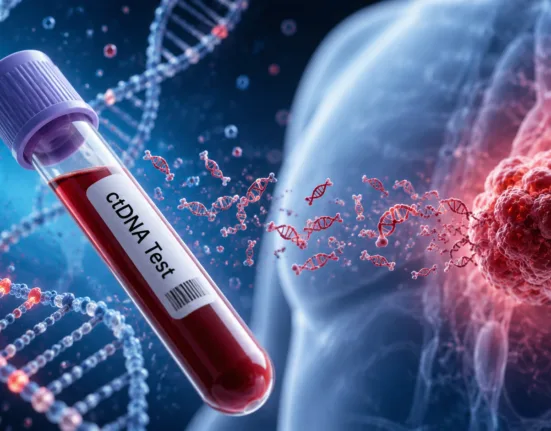
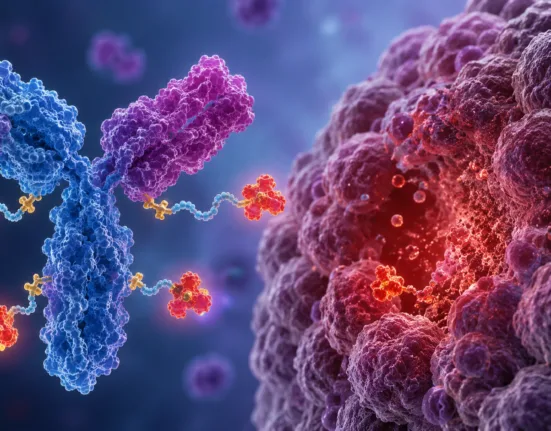
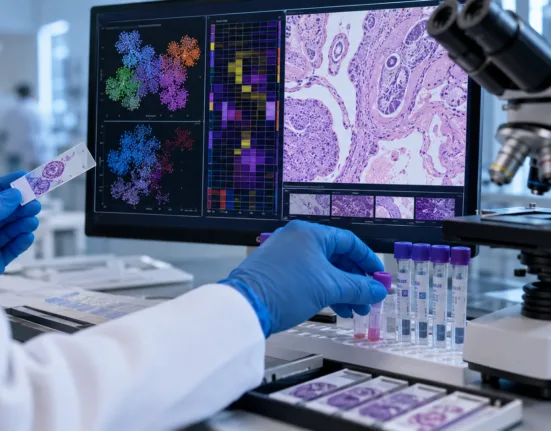
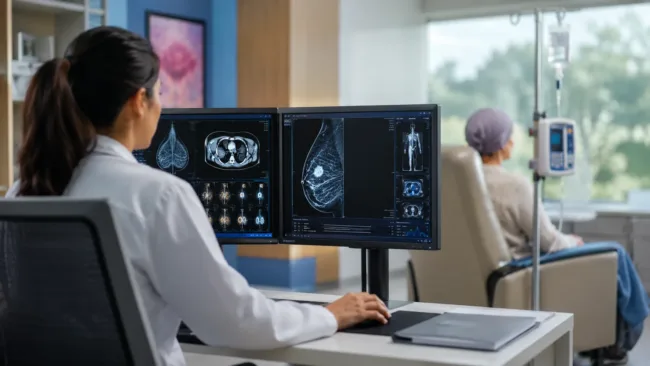
One Biosciences has received BOOST funding from Paris-Saclay Cancer Cluster to develop a dedicated single-cell assay for antibody-drug conjugate therapies using its OneMap tumor-profiling platform. The project will be conducted with clinical-stage antibody-drug conjugate developer Adcytherix and will analyze tumor samples for cellular and molecular signatures associated with treatment response. The work is intended to support biomarker discovery and patient selection while establishing an early foundation for a future companion diagnostic.
The strategic importance of the project lies in a persistent problem across antibody-drug conjugate development. Measuring whether a tumor expresses the intended target is useful, but it does not fully explain whether the drug will reach enough cancer cells, enter those cells, release its payload, overcome resistance mechanisms and produce a durable response. A single-cell assay could provide a more detailed view of those variables by separating malignant cells from immune and stromal populations rather than treating the biopsy as one averaged molecular signal.
That distinction is particularly relevant as the antibody-drug conjugate field expands beyond clearly defined high-expression populations. Developers are increasingly attempting to treat tumors with lower, variable or spatially uneven target expression. This creates demand for biomarkers that can identify not only whether a target is present, but also which cellular populations carry it, how those populations differ and whether resistant subclones may survive treatment.
Why single-cell profiling could expose ADC response biology that conventional biomarkers miss
Many current antibody-drug conjugate development strategies rely on immunohistochemistry, in situ hybridization, genomic testing or bulk RNA analysis to classify tumors. These methods can be clinically useful and are already embedded in regulatory pathways for several targeted therapies. However, a bulk result compresses signals from malignant cells, fibroblasts, endothelial cells and immune populations into a common measurement, potentially obscuring biologically important minorities.
For an antibody-drug conjugate, that loss of detail can matter. A biopsy may show an acceptable average level of target expression even when only a subset of cancer cells expresses the target strongly. Another tumor may contain a smaller target-positive population surrounded by cells that could still be affected through payload diffusion or a bystander effect. Two samples with similar average expression could therefore respond differently because the distribution of target-positive cells, the composition of the tumor microenvironment and the payload sensitivity of each cell state are not equivalent.
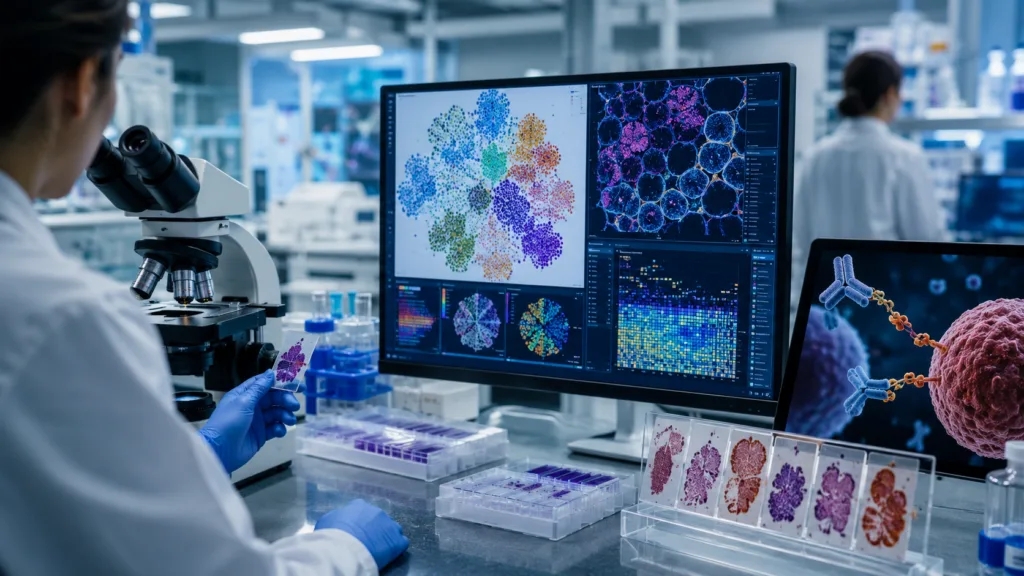
OneMap is designed to generate single-cell profiles of tumor, immune and stromal compartments from formalin-fixed paraffin-embedded or frozen specimens. The ability to work with formalin-fixed tissue is commercially important because clinical trials and pathology archives contain large collections of these samples. Access to archived material could allow developers to retrospectively compare molecular patterns with treatment outcomes before committing to expensive prospective studies.
The analytical opportunity is to identify combinations of signals rather than search for one universal marker. A useful ADC response signature might include target expression within malignant cells, genes associated with internalization and lysosomal processing, payload sensitivity, DNA damage response, drug efflux, immune activation and stromal barriers. Single-cell resolution could also reveal small resistant populations that remain invisible in an average tumor measurement.
The limitation is that biological detail does not automatically create a clinically useful biomarker. The platform must distinguish reproducible response-associated signals from correlations created by tumor type, treatment history, specimen quality or sampling location. Without sufficiently diverse samples and external validation, an apparently powerful classifier could perform well in the development dataset but fail when tested across new hospitals, indications or antibody-drug conjugate designs.
What makes this project more than an incremental extension of tumor sequencing services
The project is not simply another application of single-cell transcriptomics. Its stated ambition is to turn an advanced research workflow into an assay that can support industrial drug development and eventually inform a companion diagnostic strategy. That transition requires a different level of standardization, speed and reproducibility from the exploratory studies commonly conducted in academic laboratories.
One Biosciences says its platform combines sample preparation, single-nucleus RNA sequencing and automated computational analysis, with reports generated within a timeframe intended to be compatible with clinical decision-making. For pharmaceutical partners, the value proposition is broader than sequencing alone. It includes sample processing, cell-type annotation, biological interpretation and the conversion of high-dimensional data into a result that can be used in trial design or patient stratification.
This could give the diagnostics-focused technology firm several possible commercial routes. OneMap could initially operate as a translational research service for early clinical trials, helping sponsors understand response and resistance after data have been collected. It could then support the development of trial-enrichment signatures or exploratory biomarkers. The most demanding route would be a regulated companion diagnostic tied to the use of a specific antibody-drug conjugate.
The BOOST award is therefore best understood as milestone funding rather than validation of a finished product. Paris-Saclay Cancer Cluster designed the funding scheme to help oncology ventures generate evidence required for investment, partnerships, clinical progression or market access. The wider program provides grants ranging from €120,000 to €250,000, although the specific amount allocated to One Biosciences was not disclosed.
That scale of financing can fund a focused demonstration, but it is unlikely to cover the entire path to a validated companion diagnostic. The immediate objective will probably be to prove that the assay produces interpretable, reproducible and treatment-relevant signals in a defined set of tumor samples. A positive result could support a larger pharmaceutical collaboration or follow-on financing, while an inconclusive result could expose limitations in sample quality, cohort design or the biological hypothesis.
Why RNA-level resolution alone may not be enough to predict antibody-drug conjugate benefit
Single-cell transcriptomics provides detailed information about gene activity and cellular state, but an antibody-drug conjugate is governed by several processes that RNA measurements do not directly capture. These include surface-protein abundance, receptor localization, internalization rate, intracellular trafficking, linker stability, payload release, drug concentration and spatial penetration through tumor tissue.
Messenger RNA expression and surface-protein availability are related, but they are not interchangeable. A cell may produce target RNA without displaying enough accessible protein on its membrane. Conversely, protein may remain detectable after RNA levels have changed. Any assay intended to influence antibody-drug conjugate patient selection will therefore need to demonstrate that transcriptomic patterns add predictive value beyond established protein-based testing.
Spatial context is another potential blind spot. Single-cell or single-nucleus sequencing can identify which cells are present, but conventional workflows generally lose information about where those cells were located within the tissue. Antibody penetration can be restricted by dense extracellular matrix, abnormal vasculature, high interstitial pressure and fibroblast-rich compartments. A tumor may contain target-positive cells that are biologically suitable yet physically difficult for a large antibody molecule to reach.
The strongest development strategy would therefore combine OneMap data with complementary measurements. Immunohistochemistry could confirm protein distribution, spatial assays could show cellular neighborhoods, pathology review could assess tumor content and pharmacodynamic sampling could determine whether the ADC reached and affected its intended cells. Clinical outcome data would then be required to establish whether the combined signature predicts response rather than merely describing tumor complexity.
This requirement does not weaken the rationale for the One Biosciences project. It clarifies where the platform may deliver the most value. Single-cell transcriptomics is unlikely to replace every existing ADC biomarker method, but it could become an additional layer that explains ambiguous cases, refines patient subgroups and reveals resistance mechanisms that protein staining alone cannot capture.
How the Adcytherix collaboration could determine whether the assay has industrial value
Adcytherix gives the project access to an active antibody-drug conjugate development environment rather than a purely retrospective academic dataset. The French biopharmaceutical company is developing antibody-drug conjugates built around clinically validated targets and differentiated payload strategies. Its lead candidate, ADCX-020, entered a Phase 1 study in advanced solid tumors in March 2026.
The partners have not identified which Adcytherix program, tumor type or clinical cohort will be used in the funded project. They have also not disclosed the number of samples, whether specimens will come from treated patients, or whether the analysis will be retrospective or prospective. These omissions prevent conclusions about the strength of the planned evidence and will become important when the first project data are released.
A collaboration linked to longitudinal clinical samples would be particularly informative. Baseline biopsies could identify cellular states associated with later response, while samples obtained during or after treatment could expose mechanisms of resistance. However, serial tumor biopsies are operationally difficult, may not be available from every patient and can introduce bias when only healthier or more accessible patients provide repeated tissue.
The heterogeneity of Adcytherix’s wider pipeline also creates both opportunity and complexity. A signature associated with response to one target, linker or payload may not transfer to another ADC. Topoisomerase I inhibitor payloads, microtubule inhibitors and other cytotoxic mechanisms can encounter different resistance pathways. A commercially scalable platform must separate universal ADC biology from features that are specific to an individual molecule or tumor indication.
The initial project does not need to solve every part of that problem. It must show that OneMap can generate information that changes development decisions. That could mean identifying a subgroup for cohort expansion, rejecting an ineffective expression cutoff, revealing a resistance-associated cell state or providing a clearer rationale for combination therapy. Data that are scientifically interesting but do not influence trial design would offer less commercial differentiation.
What a credible companion diagnostic pathway would require before clinical adoption
A future companion diagnostic would need a clearly defined intended use. One Biosciences and a therapeutic partner would have to specify the drug, indication, specimen type, patient population and decision produced by the assay. A broad platform that generates hundreds of molecular observations must ultimately be converted into a locked and reproducible classification rule.
Analytical validation would need to demonstrate that different laboratories, operators, reagent lots, sequencing runs and computational environments produce consistent results. Formalin-fixed specimens introduce additional challenges because fixation time, tissue age, tumor content and RNA degradation can affect data quality. Pre-analytical controls and sample-rejection criteria would therefore become as important as the artificial intelligence model used to interpret the data.
Clinical validation would require evidence that the assay accurately identifies patients with different probabilities of benefiting from the associated antibody-drug conjugate. Ideally, the biomarker hypothesis would be prespecified and tested in an independent cohort. Prospective use within a therapeutic trial would provide stronger evidence than a retrospective analysis assembled after clinical outcomes were known.
The regulatory path would also depend on how the output is used. An exploratory translational assay can evolve during drug development, while a companion diagnostic requires tighter change control and documented performance. Any modification to sample preparation, sequencing chemistry, annotation models or decision algorithms could require additional bridging studies once the assay is locked.
Cost and turnaround time will shape adoption even if the technology is clinically valid. Comprehensive single-cell sequencing is more complex than a routine stain performed by a pathology laboratory. The assay will need to show that its additional information improves patient selection, prevents ineffective treatment, strengthens trial success or generates another measurable benefit that justifies the operational burden.
Which data points will show whether BOOST funding creates a scalable precision oncology product
The first important indicator will be the composition of the study cohort. A small set of highly selected samples may demonstrate technical feasibility, but it will not establish broad predictive performance. Industry observers will look for adequate numbers of responders and non-responders, representation of relevant tumor subtypes and evidence that samples reflect the real clinical population.
The second indicator will be whether the project compares OneMap with existing biomarker methods. A new assay must demonstrate incremental value over immunohistochemistry, conventional sequencing and routine clinical variables. An improvement that disappears after accounting for target expression, tumor type or prior therapy would weaken the commercial case.
The third indicator will be external reproducibility. A classifier created from one ADC program or one institution needs validation in an independent dataset. Multi-center performance will be particularly important because sample handling and pathology practices vary between hospitals. The platform must work outside the controlled environment in which its algorithm was developed.
The fourth indicator will be evidence that the findings influence Adcytherix’s development strategy. A biomarker that changes cohort selection, dose optimization, indication prioritization or combination planning would demonstrate clear industrial relevance. The eventual inclusion of a single-cell signature in a prospective protocol would be a more meaningful milestone than another descriptive research publication.
The One Biosciences project addresses a genuine weakness in antibody-drug conjugate development. Target expression remains important, but the expanding ADC landscape increasingly requires an understanding of cellular heterogeneity, payload sensitivity, resistance and the tumor microenvironment. Single-cell profiling is well positioned to reveal that complexity, although it must still prove that deeper biological resolution produces better decisions.
The most credible near-term outcome is not an immediately deployable companion diagnostic. It is a validated translational assay that helps antibody-drug conjugate developers interpret early clinical data and design stronger subsequent trials. If One Biosciences can demonstrate that value with Adcytherix, the BOOST-funded project could become an important bridge between research-grade single-cell analysis and practical precision oncology development.