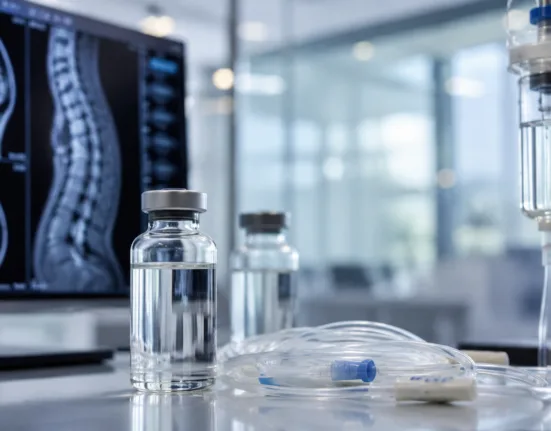
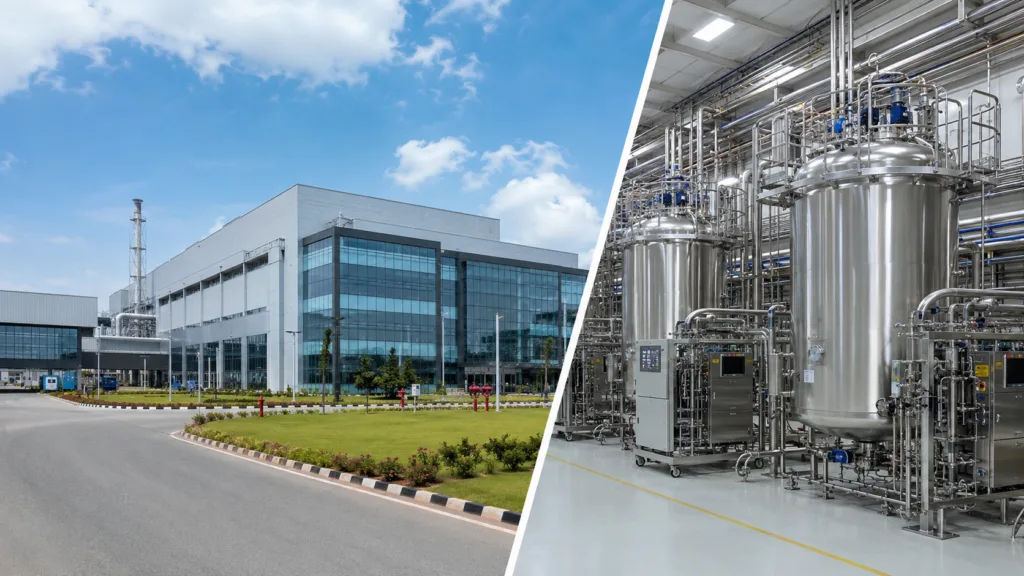
Aurobindo Pharma Limited has inaugurated TheraNym Biologics, a large-scale biologics contract manufacturing facility near Hyderabad, with MSD named as the anchor customer. The facility marks Aurobindo Pharma Limited’s deeper move into biologics manufacturing and gives the Indian pharmaceutical group a new platform in a segment increasingly shaped by global outsourcing, biosimilar demand, and high-complexity production capacity.
Why does Aurobindo Pharma’s TheraNym launch matter for India’s biologics CDMO ambitions?
The strategic importance of TheraNym lies less in the ceremonial opening of another pharma plant and more in what it says about the next phase of Indian pharmaceutical manufacturing. India has long been associated with scale, chemistry-led manufacturing, generic medicines, active pharmaceutical ingredients, and cost-efficient supply chains. Biologics contract manufacturing is a very different game. It requires mammalian cell culture expertise, advanced downstream purification, strict contamination control, regulatory-grade quality systems, and the ability to satisfy multinational customers that cannot afford supply failures.
For Aurobindo Pharma Limited, this is a move away from the most crowded parts of the generic drug market and toward a more defensible manufacturing niche. Traditional oral solids and commodity generics remain important cash generators, but pricing pressure in the United States and recurring regulatory scrutiny have pushed Indian drugmakers to look for higher-value growth engines. TheraNym gives Aurobindo Pharma Limited a chance to participate in biologics outsourcing, where barriers to entry are higher and customer relationships tend to be stickier once quality, scale, and regulatory reliability are demonstrated.
The risk is that biologics CDMO economics are attractive only when capacity is meaningfully utilised. Building stainless steel or single-use bioreactor infrastructure is capital intensive, and the commercial payoff depends on validation, technology transfer, regulatory acceptance, customer audits, and repeat manufacturing volumes. A plant can look impressive on inauguration day, but biologics clients usually move cautiously. They prefer proven execution over headline capacity. That makes the MSD relationship important, but also places pressure on TheraNym to convert anchor-customer credibility into broader commercial traction.
How does the MSD anchor customer relationship change the investment case for TheraNym?
The presence of MSD as an anchor customer changes the optics of TheraNym from speculative capacity creation to capacity tied to an identifiable global supply-chain relationship. In biologics manufacturing, an anchor customer can do more than fill initial capacity. It can validate process standards, deepen operational discipline, and help a new CDMO facility build credibility with other multinational pharmaceutical clients. For Aurobindo Pharma Limited, that is the real prize: not just manufacturing for one customer, but proving that an Indian facility can become a trusted node in global biologics supply.
This is particularly relevant because large pharmaceutical companies are reassessing supply-chain geography. The biologics outsourcing market has been shaped by established global players, including large CDMOs in Europe, the United States, South Korea, and China. India has strong pharmaceutical credentials, but its biologics manufacturing footprint is still less mature than its small-molecule base. TheraNym gives Aurobindo Pharma Limited a route to participate in the “China plus one” and supply-chain diversification narrative without relying only on price as the selling point.
The unresolved question is whether one anchor relationship can evolve into a diversified CDMO book. Customer concentration can be useful during the ramp-up phase, but overdependence on a single client may limit negotiating leverage and leave the facility exposed to product-specific delays. If MSD-linked volumes scale steadily and additional customers are added, TheraNym could become a strategic growth platform. If utilisation remains narrow, investors may treat the facility as a long-cycle capital project rather than an immediate earnings catalyst.
What does TheraNym reveal about Aurobindo Pharma’s shift from generics to complex biologics?
Aurobindo Pharma Limited has spent years building its reputation in generics, injectables, and regulated-market supply. TheraNym suggests that the Hyderabad-based pharmaceutical manufacturer now wants a bigger role in high-complexity biologics infrastructure rather than remaining primarily a volume-led generics supplier. That shift matters because the economics, scientific capabilities, and investor expectations around biologics are fundamentally different from conventional generics.
Biologics manufacturing requires process consistency at a level where small deviations can affect product quality. Unlike synthetic small molecules, biologics are produced through living systems, making scale-up more complex and validation more demanding. This gives experienced biologics manufacturers an advantage, but it also creates opportunity for companies willing to invest patiently in infrastructure, talent, and regulatory systems. Aurobindo Pharma Limited is effectively betting that its manufacturing discipline and balance-sheet capacity can be extended into a more technically demanding segment.
However, the transition is not automatic. Investors have seen several pharmaceutical companies announce pivots into complex products, biosimilars, injectables, or CDMO services, only to face long gestation periods before meaningful earnings contribution emerged. TheraNym will need to prove not only that it can manufacture biologics, but that it can do so repeatedly, profitably, and in line with stringent customer and regulator expectations. The biologics CDMO story is therefore promising, but it remains execution-heavy.
Could TheraNym strengthen India’s position in global biologics outsourcing?
TheraNym arrives at a time when global demand for biologics manufacturing capacity is being shaped by three forces: the growth of biologic therapies, the biosimilar opportunity created by patent expiries, and the desire of multinational pharmaceutical companies to diversify manufacturing networks. India already has cost advantages, scientific talent, and a large pharmaceutical export base. What it needs in biologics is more globally credible, inspection-ready, commercial-scale infrastructure.
Aurobindo Pharma Limited’s facility could help close that gap if it demonstrates strong regulatory performance and sustained customer confidence. Large-scale mammalian cell culture capacity is not easy to create quickly, and companies that can offer reliable drug substance and drug product capabilities may benefit from long-term outsourcing decisions. For India, the strategic value is not only export revenue. It is the possibility of moving from low-cost pharmaceutical supplier to high-complexity biologics manufacturing partner.
Still, global competition is intense. Established CDMOs have deeper biologics track records, broader technology platforms, and longstanding relationships with multinational innovators. Indian companies will have to compete on more than lower operating cost. They must demonstrate quality maturity, regulatory transparency, data integrity, robust contamination control, and dependable timelines. TheraNym therefore strengthens the narrative around India’s biologics ambitions, but the market will judge the facility by audit outcomes, customer additions, and commercial utilisation rather than patriotic manufacturing enthusiasm.
What are investors likely to watch after Aurobindo Pharma’s biologics CDMO expansion?
For public-market investors, the TheraNym launch adds a strategic layer to Aurobindo Pharma Limited’s investment story. The stock has already been trading near the upper part of its 52-week range, with market data showing the share price around the mid-₹1,400 level and a 52-week range of about ₹1,016 to ₹1,550. That suggests the market is not discovering Aurobindo Pharma Limited from scratch. Instead, investors are likely to ask whether biologics CDMO can justify a stronger long-term valuation multiple than the company’s traditional generics-heavy profile.
The sentiment setup is constructive but not risk-free. Aurobindo Pharma Limited has also approved an ₹800 crore share buyback, which signals confidence in capital allocation and shareholder returns. At the same time, the company is committing meaningful capital to biologics infrastructure. That creates a dual message: management is returning cash while also investing in a higher-value manufacturing platform. Investors generally like that combination when the balance sheet can support it, but they will expect evidence that the biologics bet is not simply a prestige project.
The next watch points are clear. Market participants will track customer onboarding beyond MSD, regulatory inspection outcomes, timelines for Unit 2 expansion, capacity utilisation, margin contribution, and whether TheraNym can create recurring CDMO revenue rather than episodic project income. Aurobindo Pharma Limited’s near-term stock reaction may remain modest because biologics manufacturing ramps slowly. The long-term re-rating potential depends on whether TheraNym becomes a platform business rather than a standalone plant.
Why is scalability the hardest test for Aurobindo Pharma’s biologics manufacturing strategy?
Scalability in biologics does not simply mean adding bioreactors. It means transferring processes without compromising quality, maintaining batch consistency, training specialised teams, passing customer audits, and meeting regulatory requirements across multiple markets. TheraNym’s reported large-scale infrastructure gives Aurobindo Pharma Limited the physical base to compete, but the operating model will determine whether the investment becomes a durable CDMO franchise.
The planned expansion pathway also raises the stakes. Aurobindo Pharma Limited’s filings indicate that TheraNym is linked to additional biologics manufacturing capacity under the MSD relationship, including a planned Unit 2 drug substance facility with mammalian cell culture bioreactors and downstream purification infrastructure. This suggests that the company is not treating TheraNym as a one-off project. It is building a biologics manufacturing platform with potential domestic and international relevance.
The limitation is timing. Biologics CDMO revenue does not ramp like a commodity product line. Technology transfer, validation batches, commercial supply agreements, regulatory filings, and quality inspections can stretch timelines. Any delay in approvals, customer demand, or inspection readiness can push back returns. That is why investors should see TheraNym as a medium-term strategic asset rather than a near-term earnings switch. The plant improves Aurobindo Pharma Limited’s positioning, but the financial story will unfold over several years.
What could go wrong as Aurobindo Pharma enters the biologics CDMO market?
The biggest risk is execution complexity. Biologics manufacturing leaves little room for operational shortcuts. Any quality lapse, data integrity concern, contamination issue, or inspection setback could slow customer adoption and damage confidence. Aurobindo Pharma Limited has experience in regulated manufacturing, but biologics CDMO customers apply a high bar because supply disruption can affect critical therapies and global product launches.
The second risk is commercial concentration. MSD’s role as anchor customer is strategically valuable, but TheraNym must eventually show that it can attract a broader customer base. CDMO platforms become more resilient when they serve multiple clients, technologies, and product lifecycles. If TheraNym remains heavily dependent on a narrow set of arrangements, investor enthusiasm may be capped until diversification becomes visible.
The third risk is industry competition. Global biologics CDMO capacity has expanded aggressively, and customers have choices. Aurobindo Pharma Limited will need to demonstrate not only cost competitiveness, but also reliability, regulatory credibility, and project-management discipline. The market will not reward capacity alone. It will reward capacity that can be filled, audited, validated, and monetised at attractive margins.
Why TheraNym could still become a defining platform for Aurobindo Pharma
TheraNym gives Aurobindo Pharma Limited something strategically valuable: a credible entry point into the biologics manufacturing value chain at a time when global pharmaceutical outsourcing is being reshaped. The facility strengthens the company’s ability to talk to multinational clients about complex manufacturing, not just generic supply. It also gives India’s pharma ecosystem another large-scale biologics asset at a time when domestic policy and global procurement trends both favour supply-chain diversification.
The expert view here is straightforward. TheraNym is not just about capacity, and it is not just about one customer. It is a test of whether a leading Indian pharmaceutical manufacturer can convert manufacturing credibility into a higher-value biologics CDMO business. If Aurobindo Pharma Limited executes well, TheraNym could become a long-duration growth platform that reduces dependence on volatile generics and improves the group’s strategic relevance in global pharma supply chains.
For now, the launch should be seen as an important opening move rather than a finished transformation. The real story begins after inauguration, when customer audits, process validation, regulatory scrutiny, utilisation, and repeat orders decide whether TheraNym becomes a headline facility or a genuine biologics CDMO franchise.