Shantha Biologics has entered into an outsourcing agreement with Novo Nordisk to provide cartridge fill-finish manufacturing services in India. The specific medicine, cartridge format and intended markets have not been disclosed, but the collaboration places the Hyderabad-based manufacturer within the sterile production network of one of the world’s largest injectable medicine developers.
The significance of the agreement lies less in the limited commercial information released and more in the manufacturing responsibilities being transferred. Cartridge fill-finish is one of the final and most quality-sensitive stages in the production of injectable medicines, where a formulated drug is aseptically filled into a delivery container, sealed, inspected and prepared for integration with a pen, pump or another administration system.
Why does the Novo Nordisk agreement represent an important validation for Shantha Biologics?
For Shantha Biologics, the collaboration provides external validation of a manufacturing platform that has been repositioned under new ownership. The pharmaceutical manufacturer became part of the Gland family office after the acquisition of the Medchal and Muppireddypally manufacturing facilities from Sanofi in April 2024, bringing together an established vaccine legacy and experience in large-scale injectable manufacturing.
That industrial history matters because international pharmaceutical groups do not ordinarily allocate sterile fill-finish work solely on the basis of available equipment. A prospective manufacturing partner must demonstrate acceptable quality systems, process controls, contamination prevention measures, data integrity, technical transfer capabilities and supply continuity planning before commercial production can begin.
Novo Nordisk’s involvement therefore signals that Shantha Biologics has moved beyond presenting its cartridge facility as an available asset and has secured a programme with a major global customer. The agreement could also strengthen the Indian manufacturer’s credibility when pursuing additional contract manufacturing work involving insulin, peptides, biologics or other cartridge-based injectable products.
However, the announcement does not reveal whether Shantha Biologics has completed all required technical transfer, process qualification or regulatory steps. It also remains unclear whether the agreement covers validation batches, routine commercial production, secondary sourcing or a longer-term capacity reservation.
The absence of these details means the agreement should be viewed as an important commercial entry point rather than proof that substantial production revenue or high facility utilisation has already been secured.
What makes sterile cartridge filling more demanding than conventional drug packaging?
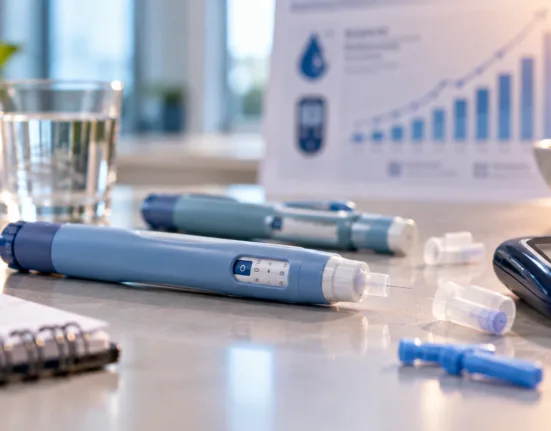
Cartridge manufacturing occupies a technically difficult position between pharmaceutical production and drug-delivery device engineering. The cartridge must contain the correct quantity and concentration of the medicine while remaining sterile, stable and mechanically compatible with the pen or injection system in which it will be used.
The filling process can involve cartridge washing, siliconisation, depyrogenation, aseptic filling, stoppering, sealing and automated visual inspection. Each operation introduces variables that can influence sterility, dose delivery, particulate formation, container integrity and long-term product stability.
Minor inconsistencies that might appear manageable in less complex packaging can become significant in a cartridge-based product. Variations in stopper placement, silicone distribution, fill volume, plunger movement or glass quality can affect how accurately the medicine is delivered through a reusable pen or another dosing device.
Shantha Biologics operates isolator-based aseptic fill-finish lines supported by automated component handling and visual inspection systems. Its stated manufacturing configuration also includes cold-chain logistics, serialization-ready packaging and digital systems designed to manage production records, environmental monitoring, deviations, corrective actions and batch release.
The presence of these systems is necessary, but equipment specifications alone do not determine manufacturing reliability. Consistent execution depends on operator training, preventive maintenance, environmental controls, contamination investigations, supplier quality and the ability to reproduce a validated process over repeated commercial batches.
Novo Nordisk will therefore be assessing not only whether Shantha Biologics can fill cartridges, but whether the Indian manufacturer can maintain performance within tightly controlled parameters while meeting delivery schedules and responding to deviations without disrupting supply.
Could this collaboration strengthen Novo Nordisk’s wider manufacturing network?
Novo Nordisk has been expanding fill-finish and packaging capacity across multiple markets while investing in additional internal production lines and integrating acquired manufacturing sites into its global network. The Shantha Biologics agreement adds an external manufacturing relationship in India to that broader capacity strategy.
A geographically distributed network can provide flexibility when demand changes, individual production lines undergo maintenance or regulatory issues affect a particular facility. External partners can also support regional production requirements without requiring the originator to build a wholly owned site for every product, format or market.
Cartridge capacity is particularly relevant to Novo Nordisk because the group markets multiple injectable therapies through durable pens, prefilled systems and cartridge-based delivery platforms. Its portfolio includes insulin cartridges and pump cartridges, although the parties have not identified which product or therapeutic franchise is covered by the Shantha Biologics agreement.
Connecting the collaboration directly to Ozempic, Wegovy, a particular insulin or any other named Novo Nordisk medicine would therefore be premature. The word “cartridge” narrows the type of manufacturing activity, but it does not establish the active pharmaceutical ingredient or commercial brand involved.
The agreement may initially be intended to create additional supply redundancy rather than support a major increase in total production. Pharmaceutical manufacturers frequently qualify more than one site so that production can be transferred or balanced when demand, capacity or operational conditions change.
Whether Shantha Biologics becomes a strategically important supplier will depend on the volume allocated, the duration of the agreement and whether the Hyderabad manufacturer is approved to supply one market or several regulated jurisdictions.
How could the agreement advance India’s position in complex injectable manufacturing?
India’s pharmaceutical manufacturing base has traditionally been recognised for active pharmaceutical ingredients, generic medicines and large-volume formulations. Complex sterile products and device-integrated biologics require a different combination of capabilities, including aseptic process control, specialised equipment, advanced analytical testing and close coordination with international regulatory teams.
The Novo Nordisk collaboration gives Shantha Biologics an opportunity to demonstrate that an Indian manufacturing site can support a tightly controlled cartridge programme for a global innovator. Successful execution could help shift perceptions of India from a predominantly cost-oriented outsourcing destination toward a more diversified base for technically demanding injectable production.
This development also comes as demand for injectable diabetes therapies continues to place pressure on global manufacturing networks. India itself has an estimated 77 million adults living with type 2 diabetes, creating a substantial long-term need for reliable supplies of diabetes medicines and delivery devices.
The agreement does not state that products filled by Shantha Biologics will be sold in India. It also does not establish that local manufacturing will reduce prices, accelerate patient access or resolve supply limitations in the domestic market.
Those outcomes would depend on the selected product, marketing authorisations, distribution arrangements, import and export structures, production economics and Novo Nordisk’s commercial allocation decisions. Local fill-finish can create the operational conditions for regional supply, but it does not automatically translate into local market availability.
Even so, the collaboration may encourage greater investment in sterile injectable infrastructure, workforce training and pharmaceutical engineering around Hyderabad. It could also increase competition among Indian contract manufacturers seeking programmes involving cartridges, prefilled syringes, auto-injectors and other combination products.
Which regulatory and technical milestones must be cleared before routine supply begins?
A manufacturing agreement is only one stage in the transfer of a pharmaceutical product to a new fill-finish site. Shantha Biologics and Novo Nordisk will need to align the facility, process and analytical controls with the requirements of each market in which the finished product is intended to be supplied.
The programme may involve equipment qualification, engineering batches, aseptic process simulations, analytical method transfer, container-closure studies, process performance qualification and stability work. Regulators may also require filings that add the facility as an approved manufacturing site or amend an existing product authorisation.
The level of regulatory work will depend on the medicine, the markets covered and whether the process is being transferred from an existing site or established as an additional source. Any difference in equipment, formulation handling, cartridge components or inspection methods must be assessed to ensure that product quality remains comparable.
Inspection readiness will be another critical factor. Shantha Biologics states that its facility and systems are aligned with European Union Annex 1, United States Food and Drug Administration expectations, World Health Organization good manufacturing practices and India’s revised Schedule M requirements.
Alignment does not eliminate the possibility of regulatory observations. Sterile manufacturing facilities remain vulnerable to findings involving environmental monitoring, contamination controls, equipment maintenance, data governance, media fill design and deviation investigations.
A single unresolved observation can delay production approval or restrict the markets served by a facility. For Novo Nordisk, the value of the partnership will therefore depend on Shantha Biologics maintaining inspection-ready operations throughout the contract rather than only during initial qualification.
What commercial uncertainties remain hidden behind the undisclosed contract terms?
Neither Shantha Biologics nor Novo Nordisk has disclosed the financial value, minimum production commitment, duration or expected start of commercial manufacturing. There is also no information on whether Novo Nordisk will supply the formulated bulk medicine, cartridge components or proprietary production equipment.
These omissions make it impossible to estimate the immediate revenue contribution for Shantha Biologics. Fill-finish contracts can range from limited technical transfer assignments to multi-year commercial programmes involving dedicated capacity and substantial recurring volumes.
The financial impact will also depend on the scope of services. A contract covering only aseptic filling may have a different commercial profile from one that includes formulation, component preparation, testing, packaging, serialization, storage and distribution.
Capacity utilisation will be particularly important for the Indian manufacturer. Sterile facilities require high fixed investment and continuing expenditure on utilities, validation, quality assurance, maintenance and specialised staff. Profitability usually improves when production lines secure predictable commercial volumes across multiple programmes.
The Novo Nordisk agreement could become an anchor contract that improves utilisation and helps Shantha Biologics attract additional clients. It could equally remain a relatively contained programme if the initial volume is small or if regulatory approvals are limited to selected markets.
Commercial expectations should therefore remain measured until either party discloses production milestones, shipment activity or an expansion of the relationship.
What operational risks could determine whether the collaboration delivers lasting value?
The greatest risk is execution. Cartridge fill-finish must combine speed, sterility and precision without allowing production pressure to weaken quality controls. Unexpected contamination events, component shortages, equipment failures or unsuccessful qualification batches could delay supply and increase costs.
Technology transfer is another potential pressure point. Processes that perform consistently at one manufacturing site do not always translate immediately to different equipment, utilities and operating teams. Additional development work may be required to adapt filling parameters, inspection settings and analytical methods.
Supply-chain dependence also extends beyond the facility. Pharmaceutical cartridges rely on specialised glass, stoppers, seals and other components that must remain compatible with the drug and delivery device. Shortages or quality changes at component suppliers can interrupt production even when the filling line itself is functioning correctly.
There is also a customer-concentration risk for Shantha Biologics if a large portion of the cartridge facility becomes dependent on one Novo Nordisk programme. Demand reductions, portfolio changes or a transfer to another supplier could leave expensive capacity underused.
Conversely, taking on too many programmes too quickly could strain technical and quality resources. Shantha Biologics will need to balance the commercial benefit of new contracts with the operational discipline required to protect existing production.
What should pharmaceutical industry observers watch as the partnership progresses?
The first meaningful indicator will be evidence that the programme has progressed from contractual agreement into validated manufacturing. This may emerge through regulatory filings, inspection activity, commercial batch releases, export records or subsequent announcements confirming production milestones.
The identity of the product will be equally important. Disclosure of the medicine and intended markets would clarify whether Shantha Biologics is supporting a mature insulin franchise, a newer injectable product, a regional supply programme or a broader network diversification initiative.
Capacity expansion would provide another signal. New filling lines, packaging equipment, quality-control laboratories or recruitment for specialised sterile manufacturing roles could indicate that the agreement involves significant expected volumes or is being used to establish a larger cartridge manufacturing platform.
Additional contracts would show whether Novo Nordisk’s selection has helped Shantha Biologics gain wider acceptance as a contract manufacturing partner. A single high-profile customer provides credibility, but a diversified programme base is usually required to build a durable sterile manufacturing business.
The collaboration is therefore best understood as a strategically meaningful manufacturing validation with substantial details still unresolved. Shantha Biologics has secured access to a globally important pharmaceutical customer, while Novo Nordisk has added another potential source of cartridge fill-finish capacity.
The lasting value of the agreement will be determined by what follows the announcement: successful technology transfer, regulatory acceptance, dependable batch execution and the conversion of installed capacity into sustained commercial supply.