Elixiron Immunotherapeutics has reported positive interim Phase 2 proof-of-concept results for enrupatinib, an investigational oral brain-penetrant colony-stimulating factor 1 receptor inhibitor being studied in Alzheimer’s disease. The interim data showed early evidence of neuroinflammation modulation, target engagement on TSPO-PET imaging, and preliminary cognitive signals in a small ongoing study, placing the program in a high-interest but still clinically unproven area of Alzheimer’s drug development.
Why does Elixiron’s enrupatinib update matter as Alzheimer’s treatment moves beyond amyloid?
The significance of Elixiron Immunotherapeutics’ update is that it adds clinical momentum to a non-amyloid Alzheimer’s strategy at a time when the field is reassessing what disease modification should look like. Recent Alzheimer’s drug development has been dominated by anti-amyloid antibodies, particularly lecanemab and donanemab, which are approved for early Alzheimer’s disease but remain constrained by infusion burden, biomarker requirements, safety monitoring, and debate over the clinical magnitude of benefit. Enrupatinib is different because it targets microglial-driven neuroinflammation through colony-stimulating factor 1 receptor inhibition rather than directly removing amyloid plaque.
That distinction matters because Alzheimer’s disease is increasingly understood as a complex biological disorder involving amyloid, tau, inflammation, vascular factors, synaptic dysfunction, and immune activation. A therapy that can modulate inflammatory processes in the brain could become relevant either as a standalone treatment for selected patients or as part of a future combination strategy. The interim result therefore speaks to a broader industry question: can Alzheimer’s treatment expand from plaque clearance to immune pathway modulation without repeating the same challenges around surrogate markers and uncertain clinical translation?
The limitation is equally important. Elixiron Immunotherapeutics is not presenting definitive efficacy data. The interim analysis comes from a very small open-label study, and the cognitive findings are exploratory. The field has seen many Alzheimer’s programs show early biomarker or subgroup promise before failing in larger controlled trials. Enrupatinib’s update is encouraging because it shows biological activity in humans, but it does not yet prove that reducing neuroinflammation will slow Alzheimer’s disease progression in a clinically durable way.

What does CSF-1R inhibition reveal about the next phase of Alzheimer’s drug discovery?
Enrupatinib is designed to inhibit colony-stimulating factor 1 receptor, a pathway involved in microglial biology and neuroimmune activity. In Alzheimer’s disease, microglia can play a complicated dual role. They may help clear harmful protein aggregates and cellular debris, yet chronic activation can also contribute to synaptic injury, neuroinflammation, and disease progression. A brain-penetrant oral therapy that can tune this biology could offer a mechanistically distinct path from antibody-based amyloid removal.
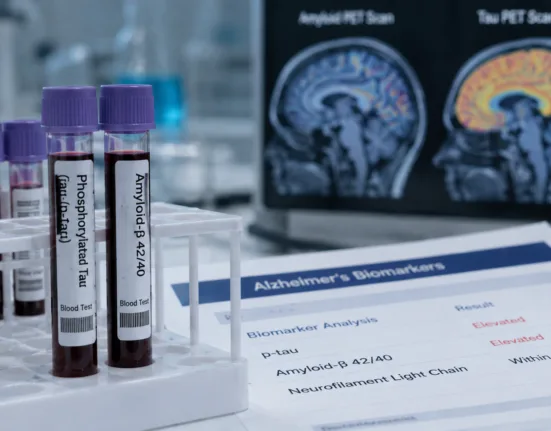
This is why the TSPO-PET signal is central to the story. TSPO-PET imaging is used as a marker of neuroinflammatory activity, and Elixiron Immunotherapeutics’ interim data suggest that enrupatinib produced measurable reductions in neuroinflammation signal in some participants after 28 days of dosing. For a Phase 2 proof-of-concept study, that kind of pharmacodynamic evidence is useful because it shows the drug is doing something measurable in the brain rather than merely circulating systemically.
However, target engagement is not the same as patient benefit. Alzheimer’s trials must ultimately show meaningful effects on cognition, function, disease progression, or a validated clinical endpoint that regulators and clinicians accept. A reduction in TSPO-PET signal may support biological plausibility, but the field will need to know whether the direction, magnitude, and regional pattern of change correlate with clinical outcomes. If a biomarker moves without durable cognitive benefit, the program could face the same skepticism that has surrounded other surrogate-driven neurodegeneration strategies.
How should clinicians interpret the small Phase 2 interim dataset in Alzheimer’s disease?
The interim dataset is best read as a signal-generating result, not as evidence that enrupatinib is clinically effective. Elixiron Immunotherapeutics reported no drug-related serious adverse events across seven evaluable participants and highlighted the absence of clinically significant hepatotoxicity to date. It also reported that four of five participants in a biomarker-defined subgroup showed TSPO-PET signal reductions of more than 30 percent on average across multiple prespecified brain regions, while four of seven participants in the broader PET-evaluable group showed reductions from baseline after 28 days.
Those data are relevant because Alzheimer’s drug development is notoriously difficult, and early confirmation of target engagement can help justify the cost and complexity of larger controlled studies. The biomarker-selected subgroup is particularly important because Alzheimer’s disease is biologically heterogeneous. If Elixiron Immunotherapeutics can identify patients whose inflammatory profile makes them more likely to respond, enrupatinib could follow a precision medicine path rather than a broad, all-comer Alzheimer’s model.
The risk is that the same subgroup logic can also magnify uncertainty. Five biomarker-selected participants cannot establish a reliable response pattern. One participant showing an eight-point improvement on the Mini-Mental State Examination is notable, but a single-patient cognitive signal in an open-label study can be affected by measurement variability, practice effects, baseline fluctuation, selection bias, or other confounders. Clinicians tracking the field will want to see whether the planned placebo-controlled study preserves the biomarker signal while also showing a consistent clinical effect across a larger and prospectively defined population.
Why could an oral Alzheimer’s therapy be commercially attractive but scientifically difficult?
An oral Alzheimer’s therapy would have obvious commercial and clinical appeal. Approved anti-amyloid antibodies require intravenous administration, amyloid confirmation, imaging infrastructure, and safety monitoring for amyloid-related imaging abnormalities. Those operational demands can limit uptake even when a therapy is approved. An oral therapy that targets a different disease mechanism could potentially reduce treatment burden and broaden interest among neurologists, memory clinics, and patients who are not ideal candidates for infusion-based antibody treatment.
For Elixiron Immunotherapeutics, that creates a strategic opening. Enrupatinib could become attractive if it shows durable benefit, tolerability suitable for chronic use, and biomarker-defined patient selection that improves trial efficiency. The company’s focus on neuroinflammation also aligns with a broader shift in Alzheimer’s research toward immune, inflammatory, metabolic, and synaptic mechanisms. The sector is no longer asking only whether amyloid can be cleared. It is asking whether upstream or parallel biology can be modified in ways that preserve cognition and function.
The scientific difficulty is that Alzheimer’s disease is slow-moving, heterogeneous, and hard to measure over short periods. A 28-day pharmacodynamic study can show whether the drug engages the intended biology, but it cannot establish whether long-term disease progression changes. Oral delivery also does not automatically solve safety concerns. A chronic neuroimmune therapy must demonstrate that it can modulate inflammation without impairing beneficial microglial functions, causing systemic immune effects, or producing cumulative toxicities over months or years.
What safety questions could shape enrupatinib’s path into larger controlled trials?
Safety will be a decisive issue because any Alzheimer’s therapy is likely to be used chronically and often in older patients with comorbidities. Elixiron Immunotherapeutics’ interim report of no drug-related serious adverse events and no clinically significant hepatotoxicity is encouraging at this early stage. The absence of liver safety signals is particularly relevant because kinase-targeting and immune-modulating therapies can face tolerability questions when moved into long-duration treatment settings.
The challenge is that seven evaluable participants do not provide a robust safety database. Alzheimer’s patients may have frailty, cardiovascular disease, diabetes, renal impairment, polypharmacy, and variable ability to report symptoms. A larger placebo-controlled study will need to examine adverse events, laboratory changes, discontinuations, drug-drug interactions, neuropsychiatric effects, infection risk, and any signal that excessive microglial modulation could create unintended neurological consequences.
Regulators will also look closely at dose rationale. The current study uses oral enrupatinib 448.2 mg twice daily for 28 days. A future efficacy trial will need to show why this dose is optimal, whether longer treatment maintains biomarker modulation, and whether lower or adjusted dosing could preserve activity while improving tolerability. In Alzheimer’s disease, a drug that works only under short-term experimental conditions may not be commercially or clinically viable. The safety profile must support repeated dosing over a timeframe that matches disease biology.
How could biomarker selection become the most important part of Elixiron’s Alzheimer’s strategy?
The candidate predictive biomarker identified in the interim analysis may become the most important element of the program if it can be validated prospectively. Alzheimer’s drug development has been transformed by amyloid and tau biomarkers because they help define biological disease rather than relying only on clinical symptoms. A neuroinflammation biomarker that identifies likely responders could give Elixiron Immunotherapeutics a way to enrich trials, reduce noise, and avoid testing enrupatinib in patients whose disease biology is unlikely to respond to CSF-1R modulation.
That would be commercially meaningful because precision selection can make a small biotech program more efficient. Instead of funding a broad, expensive Alzheimer’s trial with heterogeneous participants, Elixiron Immunotherapeutics could design a controlled study around patients with a defined inflammatory signature. If successful, that could support a differentiated regulatory and clinical narrative, especially if the drug eventually complements amyloid or tau-directed therapies.
The unresolved question is whether the biomarker is reproducible, accessible, and clinically practical. If patient selection depends on specialised imaging or complex assays that are difficult to standardise, adoption could become constrained. If the biomarker is not stable over time or does not predict clinical benefit, it may remain useful for research but weak for regulatory decision-making. The next study will therefore need to test not only enrupatinib, but also the entire precision medicine hypothesis behind the program.
What could go wrong as Elixiron moves toward a placebo-controlled Alzheimer’s study?
The most obvious risk is that the signal does not replicate. Open-label Alzheimer’s studies can generate encouraging biomarker and cognitive observations, but controlled trials often expose the influence of placebo response, regression to the mean, measurement variability, and participant heterogeneity. Elixiron Immunotherapeutics’ planned placebo-controlled study will be the first real test of whether enrupatinib’s neuroinflammation signal translates into a measurable clinical effect.
A second risk is endpoint selection. If the study is too short, it may miss meaningful disease-modifying effects. If it is too long or too broad, it may become expensive and harder to execute. The company will need to choose endpoints that are sensitive enough to detect change, clinically meaningful enough to influence regulators, and practical enough for trial sites. Cognitive scales, functional measures, TSPO-PET, amyloid and tau biomarkers, and patient selection tools may all play roles, but too many exploratory measures can dilute interpretability.
A third risk is competitive positioning. Enrupatinib must enter an Alzheimer’s landscape where anti-amyloid antibodies have already defined the regulatory precedent for disease-modifying treatment, even as reimbursement and adoption debates continue. If enrupatinib is eventually positioned as monotherapy, it must prove that inflammation modulation can stand on its own. If it is positioned as combination therapy, it may face more complex trials and safety questions. Either way, the next phase must convert biological plausibility into clinical credibility.
What should clinicians, regulators, and industry observers watch next?
The next major watch point is the design of Elixiron Immunotherapeutics’ placebo-controlled study. The company’s ability to prospectively define likely responders, lock in an appropriate biomarker strategy, select clinically meaningful endpoints, and maintain safety over longer treatment will determine whether enrupatinib moves from an intriguing neuroinflammation signal to a serious Alzheimer’s development program.
Clinicians will watch for evidence that biomarker changes correlate with cognition and function, not just imaging movement. Regulators will look for a controlled dataset that can separate drug effect from noise. Industry observers will focus on whether an oral CSF-1R inhibitor can carve out a differentiated place in Alzheimer’s disease at a time when the market is hungry for alternatives to infusion-based antibody therapies but skeptical of weak early signals.
For now, Elixiron Immunotherapeutics has produced a potentially important early readout in a field that badly needs mechanistic diversity. The result supports continued development, but it does not settle the therapeutic question. Enrupatinib’s real test begins with the next controlled trial, where the program must prove that reducing neuroinflammation is not just biologically visible, but clinically meaningful.