Grey Matters Health Inc. has taken delivery of an FDA-cleared CareMiBrain dedicated brain positron emission tomography system for its planned NovaScan Neuroimaging clinic in Davie, Florida. The facility is being developed to provide beta-amyloid imaging for Alzheimer’s disease assessment alongside selected imaging applications in other neurodegenerative disorders and neuro-oncology, although Grey Matters Health has not yet disclosed a confirmed opening date.
Why a brain-dedicated PET clinic could address a growing bottleneck in Alzheimer’s care
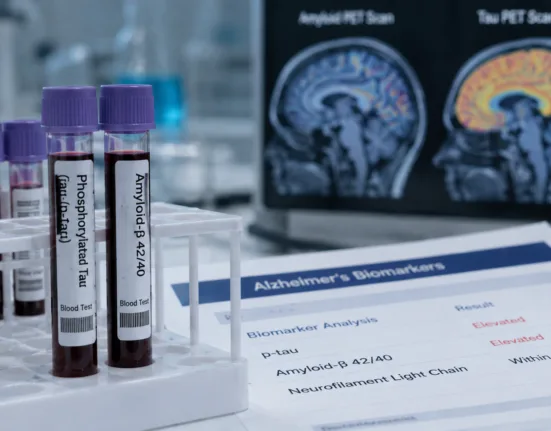
The delivery matters because the commercial introduction of anti-amyloid therapies is placing new pressure on diagnostic imaging infrastructure. Patients being considered for lecanemab or donanemab require confirmation of amyloid beta pathology before treatment begins, and amyloid PET is one of the principal methods available alongside cerebrospinal fluid testing and emerging blood-based biomarker pathways.
Traditional PET and PET/CT systems are multipurpose capital assets used heavily for oncology, cardiac imaging and other nuclear medicine procedures. Neurology referrals must compete for scanner time within those broader workflows, which can complicate scheduling when patients also need specialist assessment, radiotracer coordination and a qualified interpretation of the resulting images. A dedicated brain PET clinic attempts to separate neurological demand from the oncology-led capacity constraints affecting many hospital imaging departments.
Grey Matters Health is effectively testing whether a specialised outpatient model can turn brain PET from a limited hospital service into a more accessible diagnostic pathway. That model could become increasingly relevant as memory clinics identify more patients with mild cognitive impairment or mild dementia who require biomarker confirmation before a treatment decision can be made.
The opportunity is substantial, but scanner installation alone will not solve the access problem. The clinic will need a consistent referral network, reliable radiopharmaceutical supply, trained nuclear medicine personnel, reimbursement expertise and integration with neurologists who can determine whether imaging is clinically appropriate. A dedicated system creates capacity, but the surrounding care pathway will determine whether that capacity is used efficiently.
What CareMiBrain changes compared with conventional whole-body PET and PET/CT systems
CareMiBrain was developed by Oncovision as a compact PET system designed specifically for imaging the brain. Its smaller field of view allows the detector geometry to be optimised around the head rather than the entire body, potentially supporting higher spatial resolution and sensitivity for neurological applications within a more compact physical footprint.
The system uses continuous scintillation crystals coupled with silicon photomultipliers and positions patients in a seated or reclined posture. This configuration may be more comfortable for some individuals than lying inside a conventional scanner, particularly patients who experience anxiety, dizziness, limited mobility or difficulty remaining flat for an extended period.
CareMiBrain does not include the integrated computed tomography component found in a PET/CT system. Removing computed tomography may reduce radiation exposure associated with the imaging session and lower some infrastructure requirements. However, PET/CT provides anatomical localisation and attenuation correction within a combined examination, so a PET-only workflow must rely on validated alternative correction methods and, where clinically required, separate anatomical imaging.
This distinction limits the value of simple comparisons based on footprint or radiation dose. A dedicated brain system may perform the neurological PET component efficiently, but it does not replace magnetic resonance imaging or computed tomography when structural information is required. Many patients being evaluated for Alzheimer’s disease will still need magnetic resonance imaging to assess other causes of cognitive impairment and to evaluate eligibility or safety considerations associated with anti-amyloid treatment.
The CareMiBrain model is therefore best understood as a specialised addition to the diagnostic pathway rather than a universal replacement for existing scanners. Its commercial case depends on whether the benefits of higher neurological throughput, compact installation and patient-focused positioning outweigh the operational simplicity of using an established multipurpose PET/CT department.
How anti-amyloid therapies are changing demand for beta-amyloid imaging services
Leqembi, developed by Eisai Co., Ltd. and Biogen Inc., and Kisunla, developed by Eli Lilly and Company, are indicated for patients in the mild cognitive impairment or mild dementia stages of Alzheimer’s disease. Both treatment pathways require confirmation that amyloid beta pathology is present before therapy begins because the medicines target aggregated forms of amyloid in the brain.
This requirement has transformed amyloid imaging from a primarily diagnostic or research-oriented procedure into a potential gateway to disease-modifying treatment. A positive scan can help establish whether a patient has the biological target addressed by the therapy, while a negative scan can prevent exposure to a medicine unlikely to provide the intended mechanism of benefit.
That change creates a clearer commercial rationale for dedicated neurological PET capacity. Imaging providers are no longer serving only patients with unresolved diagnostic questions. They are becoming part of a treatment eligibility pathway involving neurologists, infusion centres, pharmacies, insurers and safety-monitoring services.
The increase in demand should not be overstated, however. Only a subset of people with cognitive symptoms will be suitable candidates for anti-amyloid therapy. Clinical stage, comorbidities, magnetic resonance imaging findings, genetic risk factors, concomitant medicines and the ability to complete ongoing monitoring can all affect treatment eligibility.
Blood-based Alzheimer’s biomarkers could also change the number and type of patients referred for PET. As validated blood tests become more widely adopted, they may be used to rule out amyloid pathology or identify patients most likely to benefit from confirmatory imaging. That development could reduce unnecessary scans while concentrating PET demand among patients with a higher pre-test probability of Alzheimer’s pathology.
Why Medicare policy helps the commercial model but does not remove reimbursement risk
The reimbursement environment for beta-amyloid PET improved after the Centers for Medicare and Medicaid Services removed the former national coverage restriction that had generally limited coverage to one scan per patient under coverage-with-evidence-development conditions. Coverage decisions can now be made by regional Medicare Administrative Contractors based on whether the service is reasonable and necessary.
The policy shift supports wider clinical use and creates the possibility of repeat imaging when justified. It does not mean every amyloid PET scan is automatically covered, nor does it guarantee identical billing outcomes across regions, indications or patient circumstances.
Grey Matters Health will need to demonstrate that each examination meets applicable medical necessity requirements and that documentation supports the submitted claim. Prior authorisation practices, radiopharmaceutical reimbursement, professional interpretation fees and patient cost-sharing can all affect whether a referral converts into a completed scan.
Private insurance coverage may be even more variable. Some payers may require cognitive testing, specialist evaluation, laboratory results or evidence that the result will change management before authorising imaging. Others may prefer cerebrospinal fluid or blood-based testing when those approaches are available and considered clinically appropriate.
The NovaScan model must therefore be built around reimbursement operations as much as imaging technology. A clinic with strong referral demand but weak benefit verification or claims management could face delayed payments, denied claims and patient cancellations. Dedicated neurological positioning may improve clinical focus, but it does not eliminate the complexity of the United States reimbursement system.
What must happen before the Florida clinic becomes a functioning diagnostic service
Taking delivery of the scanner represents a tangible development milestone, but it is not equivalent to beginning clinical operations. Grey Matters Health still needs to complete installation, equipment acceptance testing, radiation safety requirements, facility licensing, personnel credentialing, information-system integration and operating procedures for radiopharmaceutical handling.
The clinic must also establish a dependable supply chain for the PET tracers used in amyloid imaging. These radiopharmaceuticals have short physical half-lives, making production location, transportation timing and appointment coordination critical. A late delivery or cancelled patient appointment can waste an expensive dose that cannot simply be stored for another day.
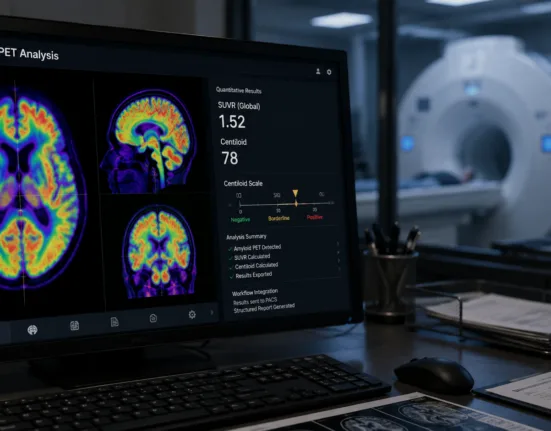
Throughput will depend on more than the scanner’s acquisition speed. Patients require preparation, tracer administration, an uptake period, imaging and post-scan procedures. The clinic must synchronise these stages to prevent delays and ensure that radiotracer activity remains within the required parameters when imaging begins.
Image interpretation is another essential layer. The value of high-resolution equipment depends on consistent acquisition protocols, quantitative analysis and qualified physicians capable of distinguishing positive and negative amyloid patterns. Standardisation becomes particularly important when results are used to support treatment decisions or compared across repeat examinations.
Grey Matters Health has indicated that the clinic will also support imaging related to frontotemporal dementia, Parkinson’s disease, Lewy body dementia and selected neuro-oncology applications. These services could diversify revenue and improve scanner utilisation, but each indication involves different tracers, interpretation requirements and reimbursement conditions. Expanding too quickly across multiple applications could add operational complexity before the core Alzheimer’s pathway has been established.
Why compact brain PET systems could change medical imaging investment decisions
Conventional PET/CT installations require substantial capital expenditure, shielding, floor space and supporting infrastructure. Hospitals often justify that investment through high oncology volumes and a broad mix of reimbursed examinations. A dedicated brain PET system offers a different economic proposition based on lower space requirements and a narrower clinical focus.
This may allow outpatient neurology groups, specialist imaging centres and memory-care networks to consider PET capacity without purchasing a whole-body system. The ability to operate within a smaller site could also support placement closer to referring physicians and patients rather than concentrating scanning in major tertiary hospitals.
The specialised model carries concentration risk. A whole-body scanner can redirect capacity across oncology, cardiology and neurology as demand changes. A brain-only system depends on a sustained neurological imaging market and cannot easily compensate for weak Alzheimer’s referrals by absorbing unrelated whole-body studies.
Commercial success will therefore depend on local market selection. Clinics need sufficient numbers of neurologists, memory specialists, eligible patients and payer-covered procedures within a practical referral radius. Radiotracer availability must also be reliable enough to support the planned schedule.
If Grey Matters Health demonstrates attractive utilisation and reimbursement at the Davie clinic, the model could support additional locations and broader adoption of dedicated brain PET systems. If volumes develop slowly, the fixed costs of specialised equipment, staff and facility operations could make expansion difficult despite the technological advantages of the scanner.
What the NovaScan launch will reveal about the scalability of specialist neuroimaging clinics
The first NovaScan clinic will serve as an operational test of whether dedicated neurological PET can function as a repeatable outpatient service rather than a niche research or hospital capability. Investors and medical imaging operators will be watching referral conversion, scanner utilisation, reimbursement timing and the mix of Alzheimer’s versus other neurological procedures.
Grey Matters Health will also need to show that its clinic model can be replicated without depending excessively on one hospital campus, one radiotracer supplier or a small group of referring physicians. A scalable network requires standardised site development, equipment installation, staffing, regulatory compliance and payer contracting.
The location at the HCA Florida University Medical Office Building may help place the service near hospital-based specialists and supporting infrastructure. Proximity alone does not establish a formal referral relationship or guarantee sufficient volume, so the clinic’s early performance will depend on how effectively Grey Matters Health builds clinical partnerships across the surrounding market.
The planned launch also arrives while Alzheimer’s diagnostics are evolving rapidly. Blood-based biomarker tests may simplify initial screening, new anti-amyloid medicines could expand treatment demand, and safety concerns may narrow the eligible population. PET imaging could become more important as a confirmatory and quantitative tool even if it is used less frequently as the first diagnostic test.
CareMiBrain gives Grey Matters Health a differentiated platform around which to build that service. The device offers a focused neurological workflow, compact installation and a patient-positioning design that may improve the scanning experience. The unresolved issue is whether those advantages translate into sustainable clinical volumes and reliable reimbursement outside established hospital imaging departments.
What clinicians and imaging providers should watch after the scanner installation
The most important near-term milestone is the clinic’s confirmed opening and readiness to accept referrals. That will show whether Grey Matters Health has completed the licensing, construction, installation and operational requirements needed to move from equipment delivery to patient imaging.
Clinicians will then look for evidence that scan quality, interpretation and reporting integrate effectively with existing Alzheimer’s assessment pathways. Turnaround time will matter because delayed biomarker confirmation can postpone specialist decisions and treatment initiation.
Imaging providers will focus on utilisation and economics. The central questions are how many scans can be completed each day, how frequently appointments are disrupted by radiotracer logistics, what proportion of claims are reimbursed and whether the clinic can maintain sufficient volume across neurological indications.
The broader medical device industry will be watching whether dedicated organ-specific PET systems can establish a viable category alongside multipurpose PET/CT and PET/MRI platforms. Brain PET is a logical early market because neurological imaging benefits from high spatial resolution and because Alzheimer’s therapies are creating a defined need for biomarker confirmation.
Grey Matters Health’s scanner delivery is therefore more than an equipment procurement announcement, but it remains an early commercial milestone. The NovaScan clinic could demonstrate how specialised PET capacity supports a changing Alzheimer’s treatment pathway. Its real significance will depend on whether the Florida facility converts a technically differentiated scanner into a clinically integrated, reimbursable and scalable diagnostic service.