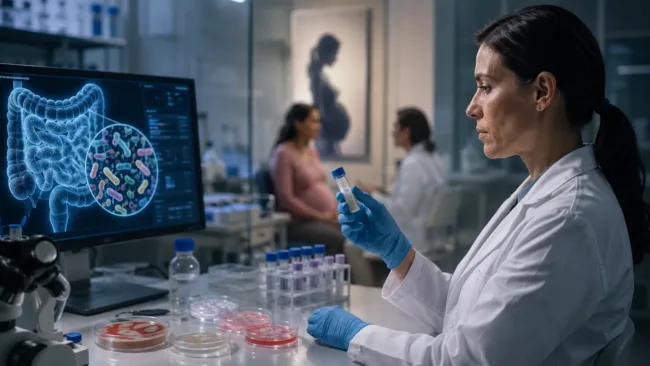
Replicate Bioscience has received an approximately $3 million grant from the Gates Foundation to develop self-replicating RNA vaccine candidates for tuberculosis under humanitarian licensing terms. The funding gives the San Diego biotechnology company a third Gates Foundation-backed infectious-disease programme, following earlier grants for HIV and malaria vaccines, while extending a platform already tested clinically through its RBI-4000 rabies candidate.
Why a relatively modest grant could still carry strategic value for Replicate Bioscience
A $3 million award is small compared with the capital eventually required to bring a global tuberculosis vaccine through clinical development, manufacturing validation and regulatory review. Large vaccine efficacy trials can involve thousands of participants across several countries and may require years of follow-up before investigators accumulate enough tuberculosis cases to establish whether vaccination prevents disease.
The immediate strategic value lies earlier in the process. The grant can support antigen selection, construct optimisation, formulation, immunological testing and manufacturing work needed to determine whether Replicate Bioscience has a credible tuberculosis candidate worth advancing into humans. These steps are less visible than a Phase 3 trial but often decide whether a platform can move from an attractive scientific idea to a practical product.
The award is also non-dilutive. Replicate Bioscience does not need to issue equity or surrender ordinary commercial ownership simply to complete early tuberculosis research. For a private clinical-stage company, that preserves investor capital for programmes that may be closer to development milestones while allowing a high-risk global-health project to progress.
Humanitarian licensing terms introduce a second layer of significance. Tuberculosis is concentrated heavily in lower-income and middle-income countries, where a vaccine cannot succeed as a public-health intervention if manufacturing costs, intellectual-property restrictions or pricing prevent widespread use. The agreement therefore connects scientific funding with an access obligation from the beginning rather than postponing affordability questions until after approval.
The limitation is that early grant support does not guarantee continued financing. Replicate Bioscience will eventually need substantially larger public, philanthropic, industrial or government partnerships if the programme advances. The $3 million award should be viewed as a platform-testing investment rather than a complete development budget.
Why tuberculosis remains one of the hardest infectious diseases for vaccine developers
Tuberculosis is caused by Mycobacterium tuberculosis, a bacterium capable of surviving inside immune cells and remaining dormant for years before progressing to active disease. This biology is more difficult to control through vaccination than an infection in which circulating antibodies can quickly neutralise an exposed virus.
Protection against tuberculosis is expected to require a coordinated cellular immune response, including T-cell activity capable of recognising infected cells and controlling bacteria within lung tissue. The immune markers that reliably predict protection remain less clearly defined than those used for many established vaccines.
This uncertainty affects development at every stage. A candidate may generate strong laboratory immune responses without preventing pulmonary disease. Developers must decide which antigens to include, how long expression should continue, which immune-cell populations should be activated and whether the vaccine is intended to prevent infection, prevent progression to disease or stop recurrence after treatment.
The disease also progresses slowly in many individuals. This means efficacy trials often need large enrolment numbers and extended observation to distinguish vaccinated and control groups. Differences in age, previous Bacillus Calmette-Guérin vaccination, latent infection, HIV status, nutrition and exposure intensity can further influence outcomes.

Replicate Bioscience is therefore not entering a field where the main problem is simply producing enough antigen. It must demonstrate that self-replicating RNA can generate the right type of immunity in the right tissues and maintain it long enough to prevent a complex bacterial disease.
How self-replicating RNA attempts to improve on conventional messenger RNA vaccines
Conventional messenger RNA vaccines deliver genetic instructions that cells use to produce an antigen for a limited period. Self-replicating RNA includes additional machinery that allows the RNA to amplify inside the cell, potentially generating more antigen from a smaller initial dose and extending the period of antigen expression.
The dose-sparing possibility is especially relevant to global vaccination. Lower RNA quantities per injection could allow a manufacturing facility to produce more doses from the same amount of material, potentially improving supply and reducing cost.
Longer antigen expression may also strengthen immune priming and durability. A tuberculosis vaccine may need to stimulate sustained cellular immunity rather than create only a rapid antibody response. Self-replicating RNA could theoretically provide a more prolonged signal without requiring a large dose of synthetic RNA.
The same mechanism creates development questions. Replication must remain controlled, and the platform must avoid excessive innate immune activation that could reduce protein production or increase reactogenicity. Longer expression is valuable only when the antigen and immune response are appropriate for the disease.
Replicate Bioscience has developed a library of customised viral replicon vectors intended to adjust expression, potency and tolerability. The tuberculosis programme will test whether these platform controls can be applied to a pathogen with substantially different immunological requirements from rabies.
What the RBI-4000 rabies study validates and what it cannot predict about tuberculosis
Replicate Bioscience’s strongest clinical support comes from RBI-4000, its self-replicating RNA rabies vaccine. In a Phase 1 study involving 89 healthy adults, low-dose and single-dose regimens generated neutralising antibody responses associated with protection against rabies.
Published follow-up indicated that vaccine-induced neutralising antibodies remained detectable for up to eight months across the study cohorts. The programme showed that the platform could generate durable activity at doses as low as fractions of those typically associated with conventional messenger RNA approaches.
That evidence validates several important elements. Replicate Bioscience has delivered a self-replicating RNA product to humans, established manufacturing material suitable for clinical testing and shown that the platform can produce a measurable immune response without requiring a high dose.
Tuberculosis presents a fundamentally different challenge. Rabies protection is strongly associated with neutralising antibodies, giving developers a recognised laboratory benchmark. Tuberculosis prevention depends more heavily on cellular immunity, and no single blood test can yet substitute confidently for a clinical efficacy trial.
A platform that performs well with a rabies antigen may still struggle to generate the breadth, tissue distribution or T-cell profile required against Mycobacterium tuberculosis. The rabies programme reduces uncertainty surrounding delivery and tolerability, but it does not de-risk the selection of tuberculosis antigens or establish disease prevention.
Replicate Bioscience must therefore avoid treating clinical platform validation as tuberculosis validation. The grant supports the experiments needed to bridge that gap.
Why Bacillus Calmette-Guérin leaves a major adolescent and adult vaccine opportunity
Bacillus Calmette-Guérin has been used for more than a century and remains an important component of childhood immunisation in countries with a high tuberculosis burden. It provides valuable protection against severe forms of childhood tuberculosis, including disseminated disease and tuberculosis meningitis.
Its performance against pulmonary tuberculosis in adolescents and adults is inconsistent. This is a major limitation because adolescents and adults with pulmonary disease drive much of community transmission through coughing and prolonged contact.
A vaccine that prevents pulmonary disease in these age groups could have a more immediate effect on transmission than another product focused only on infancy. It could protect vaccinated individuals while reducing the number of infectious people spreading bacteria within households, workplaces and communities.
Replicate Bioscience could develop its candidate as a booster after childhood Bacillus Calmette-Guérin vaccination, as a vaccine for adolescents and adults with no evidence of infection, or potentially for people with latent tuberculosis infection who have not developed active disease.
Each use case requires different evidence. A prevention-of-disease vaccine may need to be tested in people already infected but clinically healthy, while a prevention-of-infection strategy would require repeated testing to detect new bacterial exposure.
The company has not yet disclosed its antigen design, target population or eventual clinical pathway. Those decisions will determine the programme’s scientific difficulty and market relevance.
How late-stage tuberculosis vaccine competition changes the standard for a new RNA entrant
Replicate Bioscience is entering a tuberculosis vaccine pipeline that is more advanced than it was a decade ago. The World Health Organization reported that at least 16 candidates were in clinical development by September 2025, including six in Phase 3 trials.
The most advanced programmes include protein-adjuvant vaccines, live attenuated candidates, recombinant Bacillus Calmette-Guérin approaches and whole-cell platforms. Several already have extensive clinical datasets and manufacturing partnerships.
This competition validates the global need but raises the threshold for a new entrant. A self-replicating RNA vaccine may reach early testing faster than some traditional platforms, yet it will begin far behind candidates already undergoing pivotal efficacy evaluation.
Replicate Bioscience will need differentiation rather than novelty alone. A successful candidate could offer stronger efficacy, fewer doses, easier manufacturing, broader antigen coverage or better protection across geographically diverse strains and populations.
The platform may also have strategic value as a rapid-response tool. RNA constructs can be redesigned more quickly than many conventional vaccine platforms, allowing developers to test combinations of tuberculosis antigens without rebuilding an entire production process.
Speed at the preclinical stage will not eliminate the need for long efficacy trials. Tuberculosis incidence, rather than manufacturing speed, ultimately controls how quickly a prevention study can accumulate results.
Why immune durability and dose sparing will matter only if distribution is practical
Low-dose vaccination could improve manufacturing economics, but the final product must still remain stable, transportable and usable within national immunisation programmes.
Many high-burden countries face cold-chain constraints, rural distribution challenges and shortages of trained healthcare workers. An RNA vaccine requiring ultra-cold storage or complex preparation could lose the access advantage created by dose sparing.
Replicate Bioscience has not yet disclosed the expected storage profile or final formulation for its tuberculosis candidates. Formulation development will be central because self-replicating RNA must remain intact and capable of entering cells after transport through variable climates.
A single-dose or infrequent booster regimen could provide substantial operational value. Multi-dose schedules are harder to complete, particularly for adolescents and adults who do not routinely attend childhood vaccination clinics.
Reactogenicity will also influence programme feasibility. Short-term fever, fatigue or injection-site effects may be acceptable in an emergency vaccination campaign, but population-wide tuberculosis prevention requires high public confidence and tolerability.
The ideal profile therefore combines low dose, durable immunity, manageable storage and a simple schedule. Achieving only one of these characteristics would not be enough to create a scalable global product.
How humanitarian licensing could shape future pricing and manufacturing partnerships
The humanitarian licensing terms attached to the Gates Foundation grant are intended to ensure that resulting technology can be made available to populations most affected by tuberculosis.
Such conditions may require commitments around affordable supply, licensing to regional manufacturers or access in designated lower-income markets. The exact commercial structure has not been disclosed, but the principle is important because tuberculosis vaccine demand will be driven heavily by public procurement rather than conventional private-market prescribing.
Replicate Bioscience may ultimately need partnerships with large vaccine manufacturers, public-health agencies or regional producers capable of supplying hundreds of millions of doses. Its agreement with Instituto Butantan for the RBI-4000 rabies vaccine provides an early example of this type of model.
Under that collaboration, Instituto Butantan is expected to support registrational development and regional commercialisation while receiving manufacturing-process transfer for Latin America. A similar approach could be relevant to tuberculosis, where production close to high-burden markets may improve supply security and affordability.
Technology transfer for self-replicating RNA may be more complicated than shipping a finished vaccine. Regional partners need equipment, quality systems, raw materials and analytical capabilities capable of producing consistent RNA and delivery components.
Humanitarian access obligations can therefore encourage partnership, but they do not automatically create manufacturing capacity. Replicate Bioscience and future collaborators would need to invest well before approval.
What the programme must prove before it can become a clinically credible TB vaccine
The first requirement is antigen selection. Replicate Bioscience must show that its chosen tuberculosis proteins are expressed correctly and recognised by immune cells relevant to protection.
The next requirement is evidence in preclinical models demonstrating that vaccination reduces bacterial burden, prevents lung pathology or delays disease progression. Animal models cannot perfectly predict human tuberculosis, but they can eliminate constructs that fail to produce meaningful activity.
The programme must then establish human safety and immunogenicity. Early trials should examine dose, reactogenicity, T-cell responses, antibody activity and the persistence of immunity across different age groups.
A major decision will involve participants with or without latent tuberculosis infection. Vaccines can behave differently when the immune system has already encountered the bacterium, and safety must be assessed carefully in high-burden settings.
Clinical efficacy will remain the decisive test. Replicate Bioscience must eventually demonstrate fewer cases of microbiologically confirmed pulmonary tuberculosis, not merely stronger immune markers.
The pathway will be long and expensive. The $3 million grant moves the programme toward candidate selection, but substantial development risk remains before a human efficacy study becomes realistic.
What the tuberculosis grant reveals about Replicate Bioscience’s broader business model
Replicate Bioscience is building a portfolio around infectious diseases that carry large public-health needs but uncertain conventional commercial returns. Its Gates Foundation-supported programmes now span tuberculosis, HIV and malaria, while the rabies programme is moving through a regional partnership model.
This strategy allows the private biotechnology company to apply one technology across several pathogens while relying on grants and collaborations to reduce the capital burden. The approach can generate platform evidence without requiring each programme to be funded through venture equity.
The risk is operational breadth. Tuberculosis, HIV, malaria and rabies require different antigens, clinical endpoints, trial populations and regulatory strategies. A small organisation can become stretched when multiple grant-backed programmes progress simultaneously.
The commercial opportunity may also vary widely. Some products could be procured mainly by governments and international agencies at access-oriented prices, while other uses may support higher-value travel or private markets.
Replicate Bioscience’s long-term value will depend on whether it remains a technology provider, becomes a fully integrated vaccine company or licenses programmes after early clinical validation. Its Instituto Butantan agreement suggests that regional partnership and manufacturing transfer may become an important part of the model.
Why this $3 million award is a platform test rather than a tuberculosis breakthrough
The Gates Foundation grant is meaningful because it places another globally important disease behind Replicate Bioscience’s self-replicating RNA platform. It also links scientific development to affordability and access from the beginning.
The award should not be interpreted as evidence that an effective tuberculosis vaccine has been identified. The programme remains early, its antigen strategy has not been publicly detailed and clinical efficacy is years away.
The most important near-term question is whether self-replicating RNA can generate tuberculosis-specific cellular immunity at a low and tolerable dose. Positive preclinical results could justify a larger funding commitment and create a new RNA-based entrant in a field dominated by protein, viral-vector and live-vaccine approaches.
Failure would still provide useful information about the limits of applying one platform across very different pathogens. Platform companies often discover that delivery technology is transferable while immune biology remains disease specific.
Replicate Bioscience has gained the resources to test a credible hypothesis. Turning that hypothesis into a practical vaccine will require stronger immunological evidence, much greater financing and a manufacturing strategy designed around the countries where tuberculosis continues to cause the greatest harm.