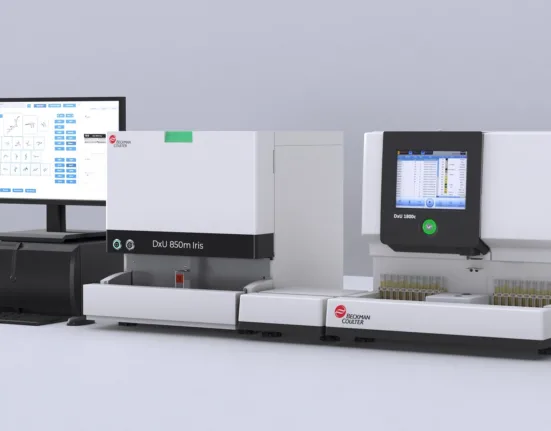
Cepheid, a Danaher Corporation diagnostics business, has delivered an initial shipment of Xpert Hemorrhagic Fever panel tests to Africa to support the diagnostic response to the Ebola Bundibugyo outbreak in the Democratic Republic of the Congo and Uganda. The molecular diagnostic panel is being deployed in the context of a fast-moving public health emergency where rapid case confirmation, decentralized testing, and cross-border surveillance have become critical containment issues.
Why does Cepheid’s Xpert Hemorrhagic Fever panel matter in an Ebola Bundibugyo outbreak where speed changes containment economics?
The strategic significance of Cepheid’s deployment is not that Africa is receiving another Ebola test. It is that the Ebola Bundibugyo outbreak has exposed the fragility of variant-specific preparedness when diagnostic infrastructure is optimized around the pathogens and strains that dominated previous emergencies. The Xpert Hemorrhagic Fever panel is designed to detect Ebola virus, including Bundibugyo, alongside Crimean-Congo hemorrhagic fever virus, Marburg virus, and Lassa virus, making it a broader outbreak-response tool rather than a single-strain diagnostic asset.
That distinction matters because the early operational problem in this outbreak was not simply insufficient testing capacity. It was a mismatch between what existing tools were built to detect and what was actually circulating. Earlier Ebola testing infrastructure in affected regions had been shaped by past outbreaks, especially those involving Ebola Zaire, where vaccines, therapeutics, and diagnostic pathways are more mature. Bundibugyo changes the operating environment. When the diagnostic target shifts, even a country with experience managing Ebola can face delays, backlogs, and uncertainty at precisely the moment when speed is most valuable.
The limitation is that a faster test is only one part of outbreak control. A one-hour molecular result can shorten the time between suspected infection and public health action, but it does not automatically solve contact tracing, safe isolation, clinician staffing, infection prevention, community trust, or secure access to conflict-affected health zones. In that sense, Cepheid’s move is meaningful, but it should be read as a diagnostic infrastructure intervention rather than a complete outbreak solution.
What is genuinely new about the Cepheid deployment compared with earlier Ebola testing models in Africa?
The genuinely new element is the alignment of a multiplex hemorrhagic fever panel with the Bundibugyo-specific diagnostic challenge in an active African outbreak. Cepheid already has a long history in molecular diagnostics, and GeneXpert systems have been widely used for tuberculosis, respiratory infections, viral testing, and earlier outbreak responses. The novelty here lies in using an existing distributed testing footprint to address a rare Ebola species that does not fit neatly into the most familiar countermeasure playbook.
This is not the same as building a new laboratory network from scratch. That is the commercial and operational point. GeneXpert’s installed base across African markets gives public health agencies a potential route to decentralize molecular testing more quickly than would be possible through a purely reference-laboratory model. In an outbreak affecting remote, mobile, and insecure regions, the ability to move testing closer to suspected cases can reduce sample-transport delays and improve the tempo of isolation and surveillance decisions.
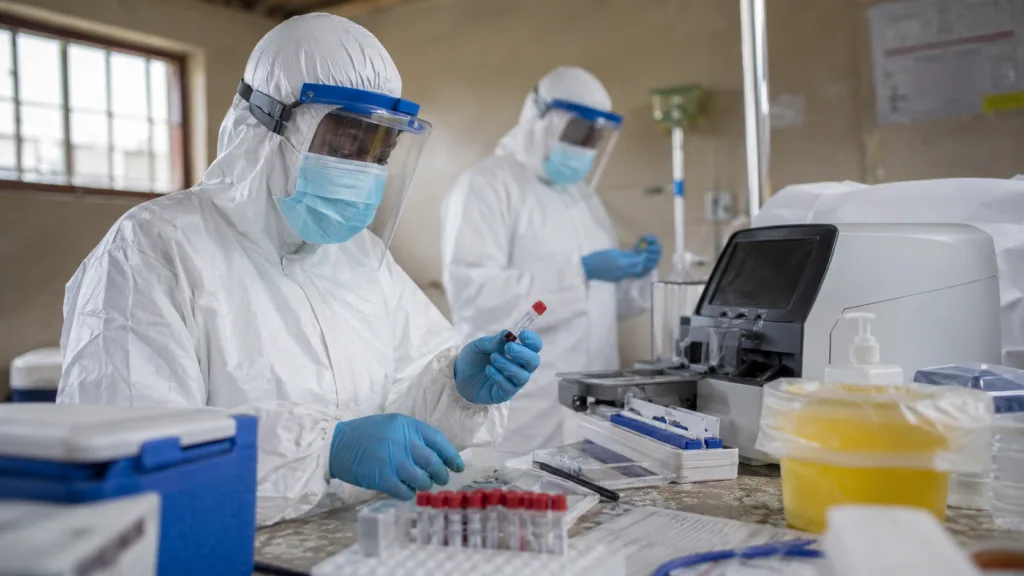
However, installed instruments do not automatically equal deployable outbreak capacity. Compatibility, cartridge supply, staff training, biosafety protocols, specimen handling, reporting workflows, power reliability, maintenance support, and country-specific regulatory clearance all determine whether the theoretical advantage becomes a field-level advantage. This is where the story becomes less about a donated shipment and more about whether diagnostic networks can be activated rapidly under emergency pressure.
How could decentralized molecular testing change clinical and public health decisions in the field?
For clinicians and outbreak responders, the most important value of the Xpert Hemorrhagic Fever panel is decision compression. A faster molecular result can help determine whether a suspected case needs Ebola-level isolation, whether exposure lists need urgent expansion, whether health workers require heightened monitoring, and whether a treatment center should escalate infection-control measures. In high-consequence infectious disease outbreaks, the difference between same-day confirmation and delayed confirmation can reshape both clinical triage and public health resource allocation.
The clinical context is especially important because Bundibugyo virus disease lacks the same level of approved countermeasures available for Ebola Zaire. That means diagnosis carries a different burden. It is not merely a gateway to a validated strain-specific therapeutic pathway. It becomes a trigger for containment, supportive clinical management, occupational safety measures, and community-level interventions. Diagnostics are therefore not just a laboratory function. They become the first operational lever in a response where treatment options remain limited.
The unresolved question is how much a decentralized result can improve outcomes when the surrounding system is under stress. If treatment centers are overstretched, if contact tracing is incomplete, if communities distrust response teams, or if laboratories face cartridge and reagent shortages, faster molecular confirmation may improve visibility without fully controlling transmission. The test can shorten the diagnostic loop, but the broader response must still close the behavioral, logistical, and health-system loops that follow.
What does the FDA-cleared defense pathway reveal about regulatory readiness and real-world access?
The Xpert Hemorrhagic Fever panel carries a specialized regulatory profile. Its clearance for United States Department of Defense use reflects its role in high-consequence pathogen preparedness and biothreat response rather than conventional broad commercial diagnostics. That matters because regulatory readiness in one jurisdiction or user setting does not automatically translate into unrestricted use across all affected countries.
The advantage of this pathway is that the assay has already passed through a formal evaluation process for defined use conditions. That gives public health partners a stronger technical basis for emergency deployment than an entirely investigational tool would have. The panel’s multiplex design also fits the reality of febrile illness in outbreak-prone regions, where symptoms can overlap across Ebola, Marburg, Lassa fever, and other severe infections.
The limitation is equally important. The test provides presumptive identification and must be interpreted with clinical, epidemiological, and public health data. Negative results cannot be treated as the sole basis for ruling out infection, and positive results may still require confirmatory procedures or public health coordination. For regulators and ministries of health, the key issue will be how to balance emergency speed with diagnostic governance, quality assurance, and reporting discipline.
Why does the GeneXpert installed base give Cepheid an advantage, and where could that advantage break down?
Cepheid’s strongest operational asset is not just the assay. It is the installed GeneXpert ecosystem. A test that can run on an established platform has a clearer route to scale than a new device requiring fresh procurement, infrastructure buildout, software training, and service networks. This is the same logic that helped molecular point-of-care and near-patient testing expand during tuberculosis, COVID-19, and mpox response periods.
For health systems, this lowers the activation barrier. Existing platforms can potentially be repurposed or extended during emergencies, allowing countries and partners to redeploy familiar infrastructure rather than wait for centralized laboratories to absorb every suspected case. For Cepheid, it reinforces the strategic value of platform density. Every installed instrument becomes more valuable when the menu of high-priority tests expands.
The risk is that platform ubiquity can mask field constraints. A country may have GeneXpert systems on paper, but not necessarily in the right health zones, with the right modules, biosafety conditions, trained operators, cartridge inventory, data connectivity, or maintenance uptime. In outbreak settings, the bottleneck often shifts quickly from device availability to cartridge logistics, specimen transport, human resources, and coordination between laboratory results and response teams.
How does the test compare with broader hemorrhagic fever and special pathogen diagnostics?
The Xpert Hemorrhagic Fever panel sits in a specialized category of multiplex molecular diagnostics designed for dangerous pathogens rather than routine infectious disease testing. Compared with single-pathogen tests, the panel offers broader differential value because it can identify multiple viral hemorrhagic fever threats from compatible blood specimens. That is clinically relevant in regions where febrile illness can present ambiguously and where delayed differentiation can expose health workers and communities to unnecessary risk.
The competitive and operational comparison is not just about analytical performance. It is about workflow. In an outbreak, cartridge-based molecular testing can reduce complexity by integrating sample processing, amplification, and detection into a more automated format. That can be attractive in decentralized settings where conventional molecular laboratory capacity may be limited.
However, multiplex testing also raises interpretation and deployment questions. A broader panel is not a substitute for surveillance strategy. It does not remove the need for case definitions, epidemiological linkage, confirmatory processes, or public health reporting. It also does not cover every possible cause of severe febrile illness. Clinicians and laboratories must still guard against false reassurance from a negative result and against overinterpreting a positive result outside the full clinical context.
What does this reveal about the commercial role of diagnostics in outbreak preparedness?
For Danaher Corporation, the Cepheid shipment is unlikely to be financially material on its own, particularly because the initial deployment has been framed as a donated shipment. Danaher Corporation recently traded around $180 per share, with the stock still well below its 52-week high, suggesting investors remain focused on broader life sciences and diagnostics growth pressures rather than a single emergency-response announcement. The market sentiment around Danaher Corporation remains more tied to instrument demand, bioprocessing recovery, margins, and diagnostics utilization than to one outbreak intervention.
Still, the strategic signal is not trivial. Outbreak diagnostics can strengthen the value proposition of platform-based testing networks, especially when governments and global health agencies are reassessing preparedness for rare but high-impact pathogens. Cepheid’s ability to respond through an existing platform reinforces a commercial model where recurring test menu expansion, installed-base utilization, and public health partnerships support long-term relevance.
The commercial risk is that outbreak-response diagnostics do not always translate into predictable revenue. Demand can surge during emergencies and then fade. Procurement depends on donors, governments, multilateral agencies, and emergency budgets. Donations can build trust and demonstrate capability, but sustainable access requires funded procurement channels, replenishment planning, and integration into preparedness stockpiles. For investors, the value is reputational and strategic before it is immediately financial.
Why could diagnostic speed still fall short if community trust and surveillance remain weak?
The strongest diagnostic system can still underperform if communities delay reporting symptoms, avoid treatment centers, resist burial teams, or distrust public health workers. Ebola responses are not won in laboratories alone. They depend on whether affected communities believe that testing, isolation, and treatment pathways are safe, credible, and worth engaging with.
This is particularly relevant in the Democratic Republic of the Congo’s eastern provinces, where insecurity, displacement, informal movement, and cross-border travel complicate surveillance. Rapid tests may improve laboratory turnaround, but outbreak control also requires case finding, contact monitoring, infection prevention in health facilities, safe transport, and communication that does not alienate communities. Diagnostics make hidden transmission more visible, but visibility only helps if response teams can act on it.
The unresolved concern is whether the public health system can convert faster testing into faster containment. If contact tracing remains incomplete or if results do not flow quickly into field operations, the benefit of molecular testing is diluted. Cepheid’s panel may close one diagnostic gap, but the outbreak will still test the capacity of ministries, responders, donors, and local health systems to coordinate at the same speed as the virus spreads.
What will clinicians, regulators, and industry observers watch next after Cepheid’s initial shipment?
Clinicians will watch whether Xpert Hemorrhagic Fever testing improves turnaround times in affected and high-risk regions, particularly outside major reference laboratories. Faster results would be most valuable if they reduce unnecessary delays in isolation decisions and help frontline teams distinguish Ebola Bundibugyo from other severe febrile illnesses. The real measure will not be laboratory speed in isolation, but whether testing changes field behavior and outbreak trajectories.
Regulators and public health authorities will watch authorization pathways, quality controls, confirmatory testing protocols, and reporting integration. In emergency settings, diagnostic decentralization can be powerful, but it also creates governance challenges. Countries need confidence that test results are reliable, operators are trained, specimens are handled safely, and data are rapidly incorporated into surveillance systems.
Industry observers will watch whether Cepheid can move from initial donation to sustained supply. The next phase will likely depend on cartridge availability, manufacturing prioritization, partner funding, and deployment logistics across affected and border regions. The company’s long-term opportunity lies in proving that platform-based diagnostics can be emergency-ready without needing a fresh infrastructure build each time a rare pathogen emerges.
Cepheid’s move is important because it treats diagnostics as outbreak infrastructure, not a support function
The most important read-through from Cepheid’s announcement is that diagnostics are becoming core outbreak infrastructure. In Ebola Bundibugyo, the absence of mature strain-specific vaccines and treatments raises the value of early confirmation, isolation, and surveillance. That makes molecular testing a first-order intervention rather than a back-office laboratory service.
The announcement is also a reminder that preparedness is increasingly platform-based. Companies with broad installed diagnostic systems can respond faster when new assays are available, but only if cartridge supply, local authorization, operator training, biosafety, and public health coordination are already in place or can be activated quickly. The platform is the runway. The assay is the aircraft. The outbreak response still needs air traffic control.
Cepheid’s initial shipment should therefore be viewed as a meaningful diagnostic step, not a containment guarantee. If additional production, regulatory coordination, and field deployment keep pace, the Xpert Hemorrhagic Fever panel could help reduce one of the most dangerous delays in Ebola Bundibugyo response. If supply chains, trust, and surveillance lag behind, the outbreak will again show that a good test can reveal a crisis faster than health systems can contain it