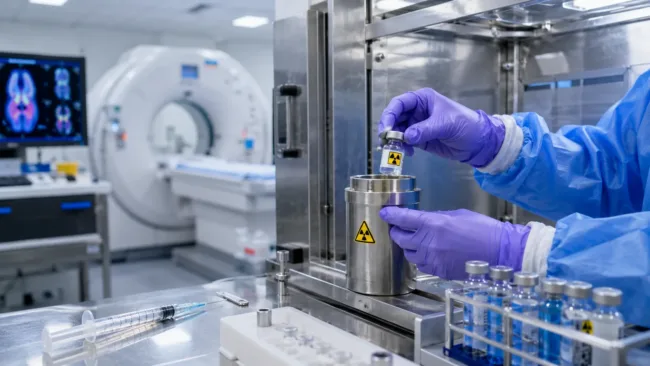
LenioBio GmbH and Twist Bioscience Corporation have entered into a collaboration that brings LenioBio’s ALiCE cell-free protein expression platform into Twist Bioscience Corporation’s DNA manufacturing and automation infrastructure. The agreement is aimed at accelerating protein expression services for AI-enabled drug discovery, where computationally designed protein and antibody candidates still need rapid wet-lab validation before they can influence therapeutic development decisions.
Why this collaboration matters for AI drug discovery beyond another platform partnership
The LenioBio GmbH and Twist Bioscience Corporation collaboration lands at a critical point for AI drug discovery, where the bottleneck is shifting from computational design to experimental confirmation. Generative and predictive models can now produce large volumes of candidate protein, antibody, and biologic designs, but the value of those models depends on how quickly real molecules can be manufactured, expressed, characterized, and fed back into the next design cycle. That makes this partnership less about a single service addition and more about the industrialization of the design, build, test, and learn loop.
For AI-first biotech companies and pharmaceutical discovery groups, the hard question is no longer whether algorithms can propose novel candidates. The harder question is whether laboratory systems can keep pace with the volume and complexity of those proposals. If physical validation takes weeks, AI models risk being trained on stale, incomplete, or low-throughput experimental feedback. By combining Twist Bioscience Corporation’s DNA synthesis, automation, and characterization workflows with LenioBio GmbH’s eukaryotic cell-free protein expression capabilities, the partners are targeting one of the least glamorous but most commercially important parts of AI-driven biologics discovery.

The main limitation is that faster expression does not automatically translate into better drug candidates. Experimental feedback can improve model ranking and candidate selection, but downstream success still depends on binding quality, functional activity, developability, manufacturability, safety, and eventual clinical performance. The collaboration strengthens an upstream discovery workflow, but it does not remove the biological uncertainty that has historically made drug development a high-attrition business.
How LenioBio’s ALiCE platform could change the pace of protein expression workflows
LenioBio GmbH’s ALiCE platform is positioned around cell-free protein expression, a field that has gained attention because it can shorten the time between genetic sequence design and functional protein output. Unlike traditional cell-based production systems, cell-free approaches do not require researchers to engineer, grow, and maintain living production cells for every candidate molecule. That can make the workflow more flexible when teams need to test many designs quickly, especially during early-stage discovery.
The strategic relevance for AI drug discovery is clear. AI models often produce far more candidate sequences than conventional wet-lab workflows can reasonably evaluate. A faster expression layer can help discovery teams test more variants, reject weak designs earlier, and generate richer datasets for model refinement. In biologics discovery, where antibody candidates can fail because of folding, aggregation, poor expression, weak binding, or developability problems, a faster translation from sequence to experimental readout can materially affect decision quality.
However, the unresolved question is how broadly the workflow can perform across complex biologic formats. Cell-free systems can be powerful, but protein class, folding requirements, post-translational characteristics, and assay context all matter. For industry users, the deciding factor will not be whether the platform can express proteins quickly in principle, but whether it can generate data that reliably predicts later-stage manufacturability and functional behavior. Speed matters only if the data remain decision-grade.
What Twist Bioscience gains by extending its AI drug discovery infrastructure
For Twist Bioscience Corporation, the collaboration adds another layer to a business model already built around synthetic biology infrastructure, DNA manufacturing, antibody services, and data generation for drug discovery customers. The U.S.-based synthetic biology firm has been positioning itself as an enabling platform for AI and machine learning teams that want to move from digital designs to physical characterization without building every wet-lab capability internally. Adding cell-free protein expression expands that offering at a time when AI drug discovery companies are increasingly judged by the quality of their experimental validation, not just the sophistication of their algorithms.
This is commercially important because AI-enabled discovery companies often need scalable external infrastructure to convert computational throughput into laboratory evidence. Twist Bioscience Corporation’s appeal lies in its ability to handle DNA synthesis, antibody generation, and characterization workflows in a repeatable, automation-heavy environment. LenioBio GmbH’s platform could complement that by reducing the latency between sequence submission and protein-level testing, especially for customers iterating across large design spaces.
The challenge is competitive differentiation. The market for AI drug discovery infrastructure is becoming crowded, with contract research organizations, synthetic biology specialists, cloud-linked lab automation providers, and platform biotechs all claiming faster model-to-lab cycles. Twist Bioscience Corporation will need to show that this added capability produces measurable advantages in turnaround time, assay consistency, data quality, and customer retention. Otherwise, the collaboration risks being seen as another incremental service expansion in a field already full of platform announcements.
Why wet-lab feedback is becoming the real currency in AI-enabled biologics discovery
AI models in drug discovery are only as useful as the experimental data that train, test, and correct them. In biologics, model confidence can be especially fragile because protein behavior is shaped by folding, structure, binding kinetics, stability, expression yield, aggregation risk, and cellular context. A candidate that looks attractive in silico may fail quickly once expressed and tested. That gap between digital prediction and biological reality is exactly where wet-lab feedback becomes the currency of progress.
The LenioBio GmbH and Twist Bioscience Corporation collaboration reflects a wider industry shift from AI as a standalone discovery engine to AI as part of a closed-loop experimental system. The strongest platforms are likely to be those that combine computational design with fast, high-quality, reproducible biological data. For pharmaceutical partners, the appeal is not simply faster screening. It is the possibility of creating learning systems in which each round of experiments improves the next round of computational design.
The risk is that the industry may overstate how much lab-in-the-loop acceleration can solve. Better feedback loops can improve prioritization, but they cannot guarantee translation into clinical efficacy. Many biologic programs fail after early technical success because target biology, patient selection, immune effects, dosing, tissue penetration, or safety margins do not hold up. AI drug discovery infrastructure can compress early cycles, but it does not eliminate the long clinical and regulatory path that follows.
How this partnership fits into the broader race to industrialize AI drug discovery
The collaboration also points to a broader competitive theme: the industrialization of AI drug discovery will depend on infrastructure companies as much as algorithm companies. The first wave of excitement centered on model builders and AI-native biotech firms. The next phase is increasingly focused on the laboratories, synthesis platforms, assay systems, data standards, and automation layers that determine whether those models can learn quickly from real-world biology.
This is where synthetic biology and cell-free expression platforms could become strategically important. AI-generated molecules need to be built and tested at a scale that conventional manual workflows were not designed to support. Companies that can convert digital designs into standardized experimental datasets may become essential partners for both emerging AI biotechs and large pharmaceutical companies trying to modernize discovery operations without rebuilding internal infrastructure from scratch.
The open question is whether customers will prefer integrated external platforms or continue assembling modular workflows across multiple providers. External platforms can reduce operational burden, but pharmaceutical companies may be cautious about data control, workflow transparency, intellectual property exposure, and reproducibility across service providers. For LenioBio GmbH and Twist Bioscience Corporation, adoption will depend not only on technical speed, but also on trust, data portability, and the ability to fit into existing discovery governance systems.
What investors may read into Twist Bioscience Corporation’s AI drug discovery positioning
Twist Bioscience Corporation is publicly traded, which gives this collaboration an added investor angle. The company’s shares recently traded around $56.85, giving the synthetic biology specialist a market capitalization of roughly $3.31 billion. That market positioning reflects investor interest in synthetic biology infrastructure, but also continued scrutiny around growth quality, profitability timelines, and the durability of demand from biopharma customers.
The LenioBio GmbH collaboration may support sentiment around Twist Bioscience Corporation’s move deeper into AI drug discovery services, a market that investors see as attractive because it sits at the intersection of biologics, automation, data generation, and outsourced research infrastructure. If the partnership helps Twist Bioscience Corporation capture more AI-native discovery customers or expand wallet share with existing biopharma partners, it could strengthen the commercial narrative around higher-value services beyond core DNA synthesis.
However, investors are likely to treat the agreement as strategically useful rather than financially transformative until there is evidence of revenue contribution, customer uptake, margin impact, or pipeline-scale adoption. Platform partnerships can improve market perception, but public-market sentiment usually turns on execution. The next proof points will be whether Twist Bioscience Corporation can translate AI drug discovery demand into recurring revenue, differentiated datasets, and improved operating leverage.
What clinicians, regulators, and biopharma partners will watch next
Clinicians are unlikely to see immediate practice-level implications from this collaboration because it sits far upstream in discovery. The more relevant audience is the research and development organization trying to improve early candidate selection before assets enter preclinical or clinical development. For clinicians tracking biologics innovation, the long-term significance would come only if faster AI-guided discovery produces better validated therapeutic candidates, more diverse antibody formats, or improved success rates in areas where conventional discovery has struggled.
Regulators will not evaluate the platform partnership itself, but they will ultimately care about the evidence packages attached to any candidate that emerges from AI-enabled discovery workflows. If AI-generated biologics advance toward the clinic, sponsors will still need conventional evidence on quality, safety, pharmacology, manufacturing control, and clinical rationale. Faster discovery infrastructure may create more candidates, but it also increases the need for disciplined selection and documentation.
Biopharma partners will watch whether the LenioBio GmbH and Twist Bioscience Corporation workflow can deliver reliable experimental data quickly enough to change program design. The strongest signal would be customer use cases showing shorter iteration cycles, improved candidate ranking, reduced expression bottlenecks, or better early developability decisions. The weakest signal would be speed without downstream confidence. In AI drug discovery, faster wrong answers are not a business model. Faster useful answers might be.
Why the real test is whether AI discovery platforms can move from speed to evidence quality
The LenioBio GmbH and Twist Bioscience Corporation partnership is best understood as part of a deeper reset in drug discovery infrastructure. AI has increased the volume of possible molecules. The industry now needs wet-lab systems that can turn that volume into evidence without overwhelming researchers or generating noisy data that models cannot use effectively.
The collaboration is genuinely new in the way it brings cell-free protein expression into Twist Bioscience Corporation’s broader AI-oriented discovery workflow, but it is also incremental in the sense that it strengthens an existing industry direction rather than creating an entirely new category. The strategic value lies in reducing latency between computational design and biological validation. The commercial value will depend on whether customers see enough improvement in throughput, reliability, and decision-making to shift more discovery work onto the platform.
For the AI drug discovery field, the message is blunt but useful: models may design the future of biologics, but labs still decide which designs survive first contact with biology. LenioBio GmbH and Twist Bioscience Corporation are betting that the companies that control that feedback loop will have a larger role in the next phase of therapeutic discovery.