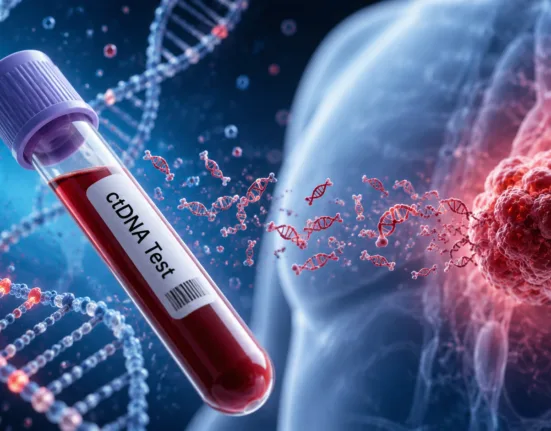
Sanyou Biopharmaceutical Co., Ltd. and Guangzhou Baiyunshan Xihe Health Pharmaceutical Co., Ltd. have signed a strategic agreement to co-develop radiopharmaceutical and radiodiagnostic products for precision oncology. The collaboration will combine Sanyou Bio’s AI-STAL and SAI-DA molecular discovery systems with Baiyunshan Xihe’s radionuclide production, GMP manufacturing, radiolabeling, preclinical evaluation and clinical translation capabilities, including work involving gallium-68, zirconium-89, copper-64 and rhenium-186.
Why could this collaboration close the gap between targeting biology and nuclear medicine execution?
The most important feature of the agreement is not simply that two Chinese biopharmaceutical businesses have entered radiopharmaceutical research. Its strategic value lies in connecting two development functions that often progress separately: finding a highly selective biological targeting molecule and converting that molecule into a manufacturable radioactive product with acceptable stability, biodistribution and dosimetry.
That distinction matters because radiopharmaceutical development is not a conventional drug-discovery exercise with an isotope attached near the end. A candidate can show strong binding in laboratory assays and still fail after radiolabeling because the conjugation process changes affinity, the chelator proves unstable, the molecule clears too quickly or too slowly, or radioactive material accumulates in healthy organs. Combining discovery and translation earlier could allow Sanyou Bio and Baiyunshan Xihe to reject unsuitable molecules before they consume substantial preclinical resources.
The unresolved issue is whether the operating model will be sufficiently integrated to produce that benefit. The partners have described an end-to-end development chain, but they have not identified the first oncology targets, disclosed candidate-selection criteria or provided timelines for lead nomination. No financial structure or ownership model for resulting products has been revealed either.
The agreement therefore remains a platform proposition rather than an asset-level development programme. Its significance will depend on whether the two research systems produce candidates that are measurably better, faster to develop or easier to manufacture than molecules generated through conventional radiopharmaceutical partnerships.
How could antibody and nanobody engineering determine whether useful candidates emerge?
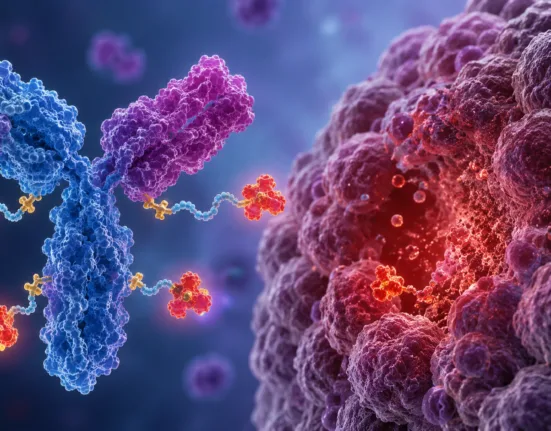
Sanyou Bio’s role appears centred on generating and optimizing antibodies and other targeting molecules with the affinity, specificity and developability needed for radiopharmaceutical use. That is a meaningful upstream contribution because the targeting vector determines where radioactivity travels, how long it remains in circulation and which normal tissues receive unintended exposure.
Full-length antibodies can provide high target affinity and prolonged tumour retention. Those characteristics can support imaging and therapy when the antibody is matched with a radionuclide whose physical half-life accommodates slower pharmacokinetics. The trade-off is that prolonged circulation can delay imaging, increase background activity in the bloodstream and expose healthy tissues for longer periods.
Smaller antibody fragments and nanobodies can penetrate tumours and clear from the bloodstream more rapidly, potentially enabling earlier imaging and sharper contrast. Baiyunshan Xihe’s existing interest in nanobody-based radionuclide conjugates could make smaller targeting formats an important part of the collaboration.
However, smaller does not automatically mean safer or more effective. Rapid renal clearance may increase kidney exposure, while very fast elimination can reduce tumour residence time and weaken therapeutic radiation delivery. The partners therefore need more than a large antibody library. They need engineering rules that optimize affinity, internalization, serum stability, organ distribution and isotope compatibility as one connected design problem.
The announcement does not clarify whether the collaboration will pursue entirely new oncology targets, improve targeting molecules against validated antigens or create diagnostic versions of existing therapeutic concepts. Each strategy carries a different development timeline, scientific risk and competitive burden.
Why does the isotope portfolio offer flexibility while creating difficult design choices?
The radionuclides identified by the partners suggest a portfolio capable of supporting both molecular imaging and targeted therapy. Gallium-68, zirconium-89 and copper-64 are associated primarily with positron emission tomography applications, while rhenium-186 has potential as a therapeutic beta-emitting radionuclide.
Access to several radionuclides could allow the collaboration to match the isotope with the biological behaviour of each targeting molecule. Gallium-68 can support relatively rapid imaging workflows, which may suit smaller molecules that reach their targets and clear from circulation quickly. Zirconium-89 has a longer physical half-life and can be used for immuno-PET approaches involving slower-moving antibodies.
Copper-64 offers a longer imaging window than gallium-68 and may support transportation beyond facilities located directly beside a production site. Its broader use can still be limited by production access, cyclotron requirements, chelation chemistry and distribution logistics.
Selecting an isotope is therefore not a menu choice made after a targeting molecule has been discovered. The molecule’s circulation time, internalization behaviour and organ-clearance profile must align with the isotope’s radioactive decay. A mismatch can lead to poor image quality, unnecessary radiation exposure or inadequate radiation delivery to tumours.
The presence of several isotopes also does not automatically establish a coherent theranostic pipeline. A diagnostic agent and therapeutic agent must provide sufficiently aligned target biology and biodistribution for imaging to predict treatment suitability. Differences in molecular structure, chelators or isotope chemistry can weaken that relationship even when both products bind the same antigen.
Rhenium-186 introduces another translational challenge. Its eventual value will depend on isotope availability, specific activity, labeling efficiency, product stability and tumour dosimetry. These are manufacturing and clinical-development variables, not merely discovery questions, which reinforces why Baiyunshan Xihe’s operational capabilities are central to the partnership.
What can the AI discovery layer accelerate, and where will experiments still control progress?
Sanyou Bio is positioning its AI-STAL antibody and molecule libraries, together with the SAI-DA accelerator, as a way to expand the search space for high-performance targeting molecules. Computationally supported discovery systems can improve the speed at which researchers identify binders, compare sequences and optimize properties such as affinity, specificity and developability.
That acceleration could be particularly valuable when the platform is trained to select for more than binding strength. An effective radiopharmaceutical targeting molecule must retain function after conjugation, show adequate selectivity between tumours and healthy tissues, avoid problematic normal-organ binding and maintain a pharmacokinetic profile compatible with the selected radionuclide.
This is also where claims surrounding artificial intelligence require caution. Library scale can increase the number of molecules available for testing, but it does not remove the need for radiochemistry, cell assays, animal biodistribution studies, dosimetry and toxicology.
Some of the most consequential failures emerge only after a radiolabeled molecule enters a biological system. Tumour heterogeneity, antigen shedding, internalization, metabolism and organ clearance can materially alter performance even when the original molecule appears highly promising in screening assays.
The collaboration will become more credible if it demonstrates a repeatable feedback loop in which radiolabeling, imaging and biodistribution data inform the next round of molecule engineering. That would indicate that artificial intelligence is functioning as part of a learning development system rather than as a screening label attached to a conventional programme.
Why could radiopharmaceutical manufacturing capacity matter as much as molecular novelty?
Radiopharmaceutical manufacturing is unusually sensitive to time, infrastructure and quality control. Products must be prepared under pharmaceutical manufacturing standards while meeting radiation-safety requirements, radionuclidic purity specifications and compressed release-testing schedules.
Short physical half-lives can turn production, quality control, transport and administration into a tightly coordinated operation. A delay that would be manageable for a conventional biologic can materially reduce the usable activity of a radiopharmaceutical dose.
Baiyunshan Xihe’s stated ability to connect radionuclide production, GMP manufacturing, radiolabeling and clinical translation could reduce handoffs between organizations. Fewer handoffs may improve scheduling, process development and troubleshooting, particularly during the transition from research batches to reproducible clinical material.
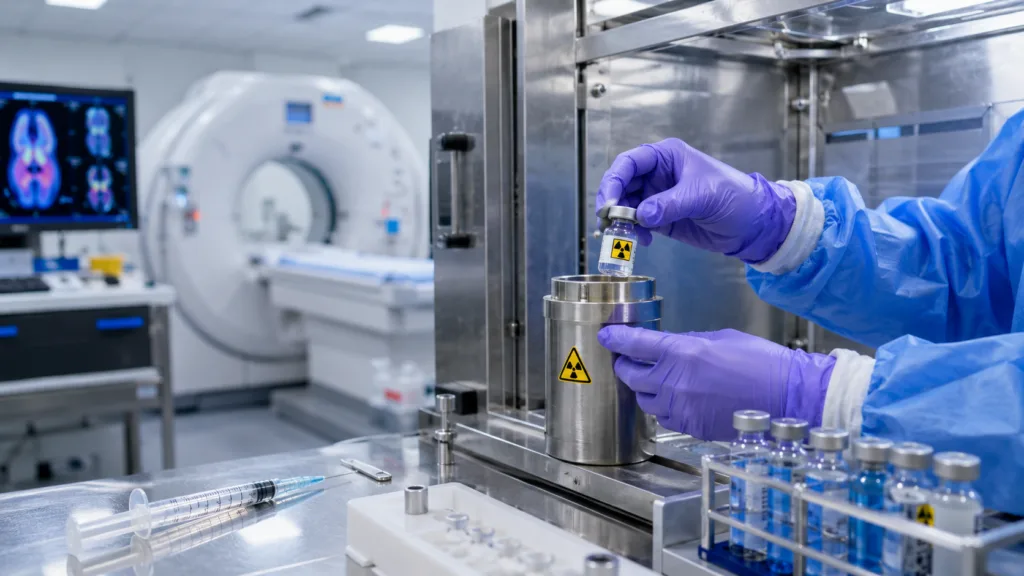
This could become a meaningful competitive advantage if the platform produces candidates requiring tightly controlled isotope supply and specialized preparation. However, integrated infrastructure can still become a bottleneck when several programmes advance simultaneously.
Each radionuclide may require different production equipment, quality-control methods, shielding, waste-management procedures and transportation arrangements. Scaling the pipeline will therefore require capacity planning, regulatory documentation, trained personnel and reliable access to precursor materials.
Manufacturing consistency will also shape the quality of clinical evidence. A promising targeting molecule cannot produce interpretable trial results if batch variability changes radiochemical purity, administered activity or biological performance. Future milestones should therefore include validated manufacturing methods and reproducible release specifications, not only announcements of new candidates.
How could the theranostic strategy improve patient selection without guaranteeing efficacy?
The broader attraction of theranostics is the possibility of using molecular imaging to identify patients whose tumours express a target before administering a therapeutic radiopharmaceutical directed at the same biology. This approach can reduce blind treatment by showing whether the candidate reaches disease sites throughout the body and whether important healthy organs are exposed.
The clinical progress of targeted radiopharmaceuticals in prostate cancer and neuroendocrine tumours has increased interest in extending the model to additional targets and cancer types. For Sanyou Bio and Baiyunshan Xihe, a successful diagnostic asset could support target validation, patient selection, biodistribution assessment, dose planning and early evaluation of a potential therapeutic counterpart.
Imaging positivity does not, however, guarantee therapeutic benefit. A scan may confirm target expression without proving that the delivered radiation dose is sufficient to control tumour growth. Different lesions within the same patient may also show substantially different uptake.
Normal organs can further limit the amount of radioactivity that may be administered safely. Durable efficacy will depend on tumour retention, radiosensitivity, target density and the ability of the radiation emitted by the product to damage cancer cells without creating unacceptable bone marrow, kidney, liver or salivary-gland toxicity.
The strongest programmes will therefore treat imaging as a quantitative development tool rather than a simple positive-or-negative gate. Regulators and clinicians will want evidence that image-derived measurements correlate with absorbed dose, response and safety. The partnership has several components needed to pursue that model, but no specific biomarker strategy or dosimetry plan has been disclosed.
Which regulatory and clinical-development questions could slow translation into human trials?
Radiopharmaceutical candidates must satisfy conventional requirements covering identity, purity, pharmacology and toxicology while also addressing radiation-specific questions. Developers need to characterize organ exposure, dosimetry, potential late radiation effects, handling procedures and the combined risks created by the targeting molecule, chelator and radionuclide.
Early clinical trials can also be operationally demanding. Participating sites require trained nuclear medicine personnel, appropriately licensed facilities, imaging capability, radiation-protection procedures and dependable dose delivery. These requirements can restrict the number of clinical centres and complicate recruitment, particularly when protocols include repeated imaging or individualized dosimetry.
Sanyou Bio and Baiyunshan Xihe have not disclosed which regulatory jurisdiction will receive the first filing, whether programmes will begin in China or pursue parallel international development, or how clinical responsibilities will be divided. The lack of disclosed asset ownership and commercialization terms also leaves unanswered questions about future decision-making and investment.
Target competition presents another risk. Pharmaceutical investment in radiopharmaceuticals has intensified, and multiple developers are pursuing validated tumour antigens using small molecules, peptides, antibodies and engineered fragments.
A future candidate may consequently need to show more than acceptable safety and tumour uptake. It may require a meaningful advantage in lesion detection, dosimetry, treatment convenience, isotope availability, scalability or therapeutic index to compete with programmes that are already in clinical development.
Why is the strategy credible even though asset-level proof remains essential?
The collaboration is strategically coherent because it links molecular discovery with the less visible capabilities that frequently determine whether a radiopharmaceutical can leave the laboratory. Sanyou Bio contributes a broad targeting-molecule discovery engine, while Baiyunshan Xihe adds isotope production, radiochemistry, manufacturing and translational infrastructure.
That combination could shorten iteration cycles and improve the probability that early candidates are designed with real-world nuclear medicine constraints in mind. It also aligns with the industry’s movement toward integrated theranostic development, where diagnostic imaging informs patient selection and therapeutic isotopes convert the same biological recognition into targeted radiation delivery.
A platform capable of designing the diagnostic and therapeutic sides together may ultimately create greater value than one focused solely on generating binders. Nevertheless, the announcement should not yet be interpreted as evidence of a differentiated clinical pipeline.
The absence of named targets, lead compounds, preclinical data, development schedules and economic terms means the near-term value is organizational rather than clinical. The first meaningful inflection point will come when the partners nominate a candidate and demonstrate that it retains affinity, radiochemical stability and favourable tumour-to-organ distribution after labeling.
Industry observers should also watch whether the companies select isotope-vector combinations based on pharmacokinetic fit rather than internal platform availability. Success will depend on disciplined decisions involving molecule size, target biology, radionuclide half-life, chelation, internalization and organ clearance. These components cannot be optimized independently.
If Sanyou Bio and Baiyunshan Xihe demonstrate that their discovery and manufacturing systems function as a genuine experimental feedback loop, the partnership could become a useful model for radiopharmaceutical development in China and future international collaborations. Until then, it is best viewed as a technically logical foundation whose value will be determined by the quality, speed and clinical relevance of the assets it produces.