Biocodex has announced a €15 million investment to establish a dedicated industrial platform for microbiome-based live biotherapeutic products at its existing pharmaceutical manufacturing facility in Beauvais, France. Disclosed on 5 November 2026, the project will support the development and manufacture of therapeutic products containing living microorganisms, with initial clinical batch production scheduled for the first half of 2028 and commercial manufacturing capabilities targeted for 2030.
The investment represents a strategic expansion of Biocodex’s existing expertise in fermentation, microbiota and pharmaceutical manufacturing into a specialised segment of biological medicine production. The company intends to offer manufacturing capabilities to biotechnology developers worldwide while eventually supporting its own research programmes.
Two partners are already involved in the project, with initial activities expected to begin in the coming months. However, Biocodex has not disclosed their identities, the manufacturing volumes being contracted or the financial terms of their participation.
The initiative addresses a significant industrial challenge for microbiome therapeutics: translating research involving specific bacterial strains or microbial communities into reproducible pharmaceutical products that can meet clinical and commercial quality requirements.
Why is Biocodex investing €15 million in a dedicated live biotherapeutics manufacturing facility?
Live biotherapeutic products are medicinal preparations containing living microorganisms intended to prevent, treat or modify human disease. Unlike conventional small-molecule medicines, their active ingredients are living biological systems whose characteristics can be affected by manufacturing and storage conditions.
The sector has attracted interest because research increasingly connects microbial communities with gastrointestinal health, immune regulation and other biological processes. Investigational programmes are being developed across several therapeutic areas, including inflammatory bowel disease, oncology and selected rare conditions.
However, demonstrating a promising biological effect in a laboratory is only part of the development process. Companies must also establish methods for producing the relevant microorganisms consistently and preserving their biological characteristics through formulation, packaging and distribution.
This creates a manufacturing requirement that differs from many established pharmaceutical processes. Individual microbial strains can have distinct growth conditions, nutritional requirements and sensitivity to oxygen, temperature or processing.
Biocodex intends to address these requirements by establishing a platform capable of supporting both individual microbial strains and more complex combinations of microorganisms.
The company’s strategy is to provide an industrial bridge between early-stage microbiome research and the manufacturing capabilities required for formal clinical development.
For biotechnology developers, access to specialised manufacturing infrastructure may reduce the need to construct expensive production facilities before clinical and commercial demand has been established.
Nevertheless, the value of the new platform will depend on whether Biocodex can demonstrate reproducible manufacturing, acceptable product quality and the flexibility to support therapeutically different microbial formulations.
How will the Beauvais platform manufacture complex microbiome-based medicines?
The new platform will occupy an existing 900-square-metre building at Biocodex’s Beauvais manufacturing site, which has operated since 1968.
The facility already forms part of the company’s pharmaceutical manufacturing and distribution network. Biocodex reports that the site produces approximately 95 million packs annually for distribution to more than 100 countries.
These figures demonstrate the scale of the existing manufacturing operation but should not be interpreted as the projected capacity of the new live biotherapeutics platform. Biocodex has not disclosed an annual production volume for the planned facility.
The company intends to integrate several stages of live biotherapeutic manufacturing, including process development, microbial cultivation, fermentation, harvesting and concentration.
Additional capabilities will include freeze-drying, powder preparation, product characterisation, encapsulation, packaging and quality control.
The combination is important because the manufacturing process can affect both the quantity and biological condition of living microorganisms.
Fermentation must provide suitable conditions for microbial growth, while harvesting and concentration processes need to preserve the characteristics required for the intended pharmaceutical product.
Freeze-drying may help support the storage and stability of selected microorganisms, but the process can also expose cells to stresses that affect viability. Formulation development must therefore establish appropriate conditions for the particular strains involved.
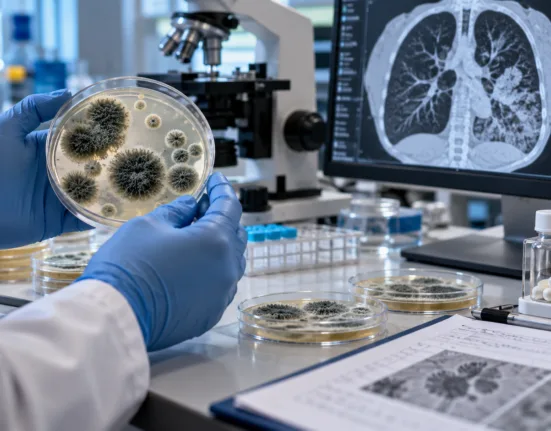
The platform is also being designed for microorganisms requiring anaerobic cultivation. These organisms can be sensitive to oxygen exposure, creating additional requirements for equipment, process control and material handling.
Biocodex intends to use its existing manufacturing experience to address these challenges while developing capabilities suited to new microbial medicines.
However, the announcement does not identify installed fermentation volumes, validated production lines or specific equipment qualifications. The project remains in development, with its first clinical manufacturing milestone scheduled for 2028.
Why is producing living microorganisms more complicated than manufacturing conventional medicines?
The defining manufacturing challenge for live biotherapeutics is that the active material must retain specified biological characteristics throughout production and storage.
A conventional chemical medicine can often be characterised through established analytical measurements of molecular identity, purity and concentration. Living microorganisms require additional consideration of viability, strain identity, physiological characteristics and biological activity.
For a product containing a single microbial strain, manufacturers must establish that the correct organism is present and that its relevant properties are maintained across production batches.
The challenge becomes more complicated when a treatment contains several microbial strains intended to function together. Different organisms may grow at different rates or respond differently to fermentation, drying and storage.
A process that preserves one strain effectively may reduce the viability of another. Manufacturers therefore need product-specific methods rather than assuming that a common production procedure will work for every microbiome therapy.
Microbial contamination introduces another quality concern. A manufacturer must distinguish the intended therapeutic organisms from unwanted microorganisms while maintaining appropriate control over the production environment.
The United States Food and Drug Administration’s guidance for early clinical trials involving live biotherapeutic products addresses the importance of strain identity, product strength, purity, manufacturing controls and appropriate analytical testing.
Regulators may require evidence that each microbial component is adequately characterised and that manufacturing processes consistently produce material meeting predefined specifications.
Potency assessment can be particularly challenging because the number of viable cells may not fully capture a product’s proposed biological activity.
A preparation could contain the intended quantity of microorganisms while exhibiting differences in metabolic activity or other functional characteristics relevant to its mechanism of action.
For complex microbial consortia, manufacturers may need additional analytical strategies to demonstrate that the final product maintains the composition and characteristics required by its development programme.
Biocodex’s new platform is intended to accommodate these requirements, but each partner programme will still need its own manufacturing controls, analytical methods and regulatory documentation.
What do the 2028 and 2030 production timelines mean for biotechnology partners?
Biocodex began deploying the platform during 2026 and expects the first clinical batches to be manufactured in the first half of 2028.
The company then plans to develop commercial manufacturing capacity by 2030, creating a staged industrial development schedule rather than an immediately operational commercial production facility.
The distinction is important because clinical batch production and commercial manufacturing involve different scale, validation and quality assurance requirements.
Early clinical development generally requires material manufactured under controls appropriate to the trial phase and applicable regulatory framework. As a programme advances, manufacturing processes must become more robust and capable of producing consistent batches at larger volumes.
A biotechnology company may also need to demonstrate that material manufactured for later-stage clinical trials is sufficiently comparable to earlier batches.
Changes in fermentation conditions, equipment, formulation or processing can affect the characteristics of a living microbial product. These changes may require additional analytical studies or other comparability evidence before the material can support subsequent development.
Biocodex’s proposed progression from clinical production to commercial scale could help partners manage this transition within one manufacturing organisation.
That continuity may reduce some technology transfer complexity, although it does not eliminate the need to validate manufacturing processes or demonstrate product-specific quality.
The 2030 target also indicates that the company is investing ahead of proven commercial demand from the two partners currently involved.
Whether the planned facility reaches commercial-scale utilisation will depend partly on the progress of external clinical programmes and their eventual regulatory outcomes.
Biocodex has not announced that the platform has secured commercial manufacturing contracts or identified products expected to reach market by 2030.
The schedule should therefore be treated as a planned capacity-development pathway rather than a confirmed commercial production commitment.
How does Biocodex’s investment compare with the evolving market for approved microbiome medicines?
The regulatory landscape for microbiome-based therapies has developed considerably in recent years.
The FDA approved Ferring Pharmaceuticals’ Rebyota in November 2022 for the prevention of recurrent Clostridioides difficile infection in adults following antibiotic treatment for recurrent disease.
In April 2023, the agency approved Vowst, a live microbiota-based oral product for the same broad recurrence-prevention setting in eligible adults.
These approvals established important regulatory precedents for therapeutic products derived from living microbial communities.
However, they do not establish that microbiome interventions are effective across unrelated diseases or that every manufacturing process used for one approved product can be transferred directly to another.
Different microbial products may involve distinct source materials, strain compositions, production methods and mechanisms of action.
For companies developing defined microbial consortia, the industrial requirements can differ from those associated with products prepared using donor-derived microbiota.
Biocodex’s proposed platform is intended to support selected living microorganisms, including bacteria and yeasts, used individually or in combinations.
This provides a potentially different manufacturing proposition from facilities specialised in one particular microbial formulation or therapeutic programme.
The broader sector continues to investigate whether microbiome-based medicines can deliver clinical benefits in conditions beyond recurrent Clostridioides difficile infection.
However, scientific interest should not be confused with established commercial demand. Many investigational products remain in early-stage development, and their eventual manufacturing requirements will depend on clinical outcomes and regulatory decisions.
Biocodex’s investment provides infrastructure for potential future products rather than evidence that those therapies will ultimately succeed.
Could the Beauvais platform strengthen European pharmaceutical manufacturing independence?
Biocodex has positioned the investment as a contribution to French and European industrial capabilities in advanced microbiome therapeutics.
The strategy reflects a broader concern among pharmaceutical manufacturers and policymakers about the geographical concentration of specialised production capabilities.
Developing live biotherapeutics requires access to facilities capable of handling living microorganisms under appropriate pharmaceutical conditions. If only a limited number of manufacturers possess these capabilities, biotechnology developers may face constraints when seeking clinical or commercial supply.
A dedicated European manufacturing platform could give regional developers an additional option for outsourcing specialised production activities.
The location within an established pharmaceutical facility may also provide operational advantages. Existing quality systems, experienced personnel and pharmaceutical logistics infrastructure can potentially support development of new capabilities.
However, the platform will still need to demonstrate that it meets the specific requirements of the products it manufactures. The presence of an established pharmaceutical operation does not automatically qualify every new process or production line.
The investment may also support domestic expertise in anaerobic fermentation, microbial characterisation and pharmaceutical-grade processing.
These capabilities could become valuable if additional microbiome therapies advance into later-stage clinical development.
Nevertheless, a single €15 million investment does not establish European manufacturing independence or eliminate reliance on international suppliers.
The strategic contribution will be determined by the platform’s technical capabilities, customer adoption and ability to support manufacturing across multiple development stages.
What commercial opportunity does the new platform create for Biocodex?
Biocodex is an independent, privately held French pharmaceutical company with an international presence extending across more than 100 countries through subsidiaries and partners.
Its established activities include pharmaceutical products and microbiota-related health solutions, supported by decades of experience working with living microorganisms.
The new platform potentially creates an additional business activity centred on supplying manufacturing services to biotechnology developers.
Commercial opportunities may include process development, clinical batch production, manufacturing scale-up and longer-term supply agreements.
However, the November announcement does not disclose contracted revenue, manufacturing fees or expected investment returns.
The involvement of two initial partners indicates early engagement with external developers, but Biocodex has not identified those companies or described the development stages of their products.
Consequently, it would be premature to estimate revenue per customer or assume that the investment will generate meaningful commercial income immediately after clinical manufacturing begins.
The platform’s economics will depend partly on utilisation. Specialist fermentation and quality control infrastructure may require substantial fixed expenditure, making production volumes and the number of supported programmes important determinants of financial performance.
Live biotherapeutic manufacturing can also be resource-intensive because product-specific processes may require dedicated equipment, development work or manufacturing campaigns.
A flexible platform capable of handling multiple strains and microbial consortia may offer commercial advantages, but flexibility must be balanced against the costs of changing processes between products.
Biocodex may also benefit from developing its own investigational live biotherapeutic programmes using the new infrastructure.
The company has described that objective as a longer-term possibility rather than announcing a new drug candidate entering clinical trials.
As a privately held business, Biocodex does not have a directly observable public-market share-price reaction to the investment.
The project is therefore best understood as a long-term industrial expansion intended to support future biotechnology development and potentially create specialised manufacturing revenue.
What must Biocodex achieve before the €15 million investment becomes a commercial manufacturing business?
The first measurable milestone will be the readiness of the Beauvais platform to produce clinical batches during the first half of 2028.
That will require installation and qualification of the necessary manufacturing equipment, appropriate quality systems and validated procedures suited to the particular microorganisms being processed.
The company must also demonstrate that its production methods can preserve product identity, viability and other required characteristics across batches.
For biotechnology partners, successful early production could provide a basis for later process optimisation and clinical scale-up.
The next challenge will be building sufficient demand to justify commercial manufacturing capacity by 2030.
That depends not only on Biocodex completing its industrial programme but also on the progress of customer drug development projects.
If investigational therapies fail clinical trials or encounter regulatory difficulties, planned manufacturing demand may be delayed or eliminated.
Conversely, successful programmes could require greater production volumes and more sophisticated supply arrangements than those needed during early clinical development.
Biocodex’s ability to accommodate these changing requirements will be important for establishing the platform as a credible long-term manufacturing partner.
The €15 million investment represents a practical response to an industrial constraint facing microbiome therapeutics. Its significance will become measurable when the company demonstrates reproducible clinical batch production, secures sustained partner demand and establishes validated commercial-scale capabilities.
For the wider microbiome sector, the Beauvais project tests whether specialised pharmaceutical manufacturing infrastructure can help promising biological research progress towards products capable of meeting regulatory, clinical and commercial requirements.