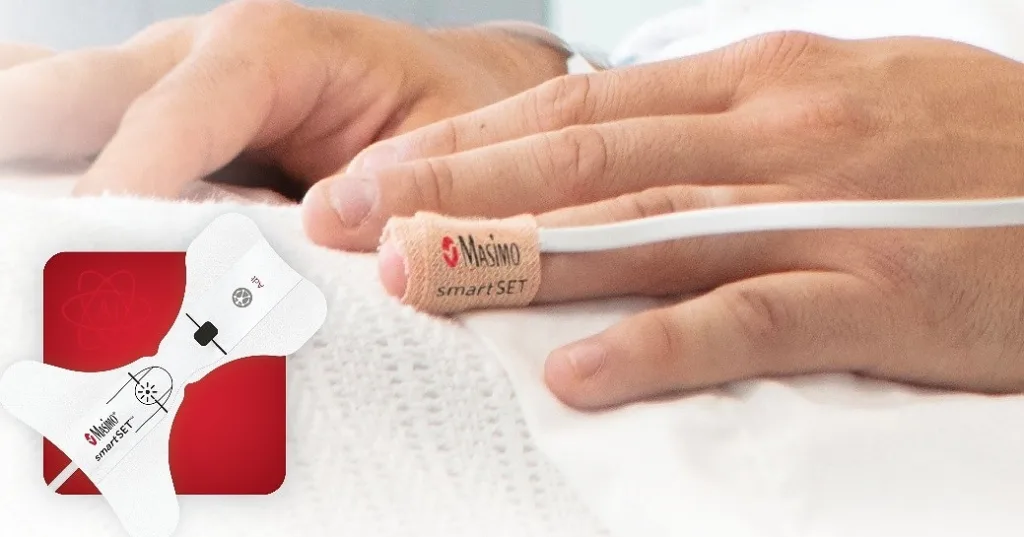
Masimo, the Irvine, California-based patient monitoring technology company owned by Danaher Corporation (NYSE: DHR), announced on October 17, 2026, that the United States Food and Drug Administration has granted 510(k) clearance for atrial fibrillation detection on its Radius VSM wearable patient monitor. The capability uses photoplethysmography waveform analysis to identify pulse patterns suggesting atrial fibrillation, commonly abbreviated AFib, without requiring continuous electrocardiographic electrodes solely for that screening function. In clinical validation, Masimo reported sensitivity of 97% and specificity of 100% against rhythm classifications established through concurrently recorded ECG strips reviewed by three clinicians. The feature is part of its smartSET platform, which also supports a previously cleared algorithm designed to identify patterns associated with opioid-induced respiratory depression.
The latest clearance extends Masimo’s traditional strength in pulse oximetry into automated recognition of physiological patterns that may require clinical attention. Rather than limiting monitoring to oxygen saturation and pulse rate, smartSET analyzes changes in pulse waveforms and related measurements to support detection of potential cardiac rhythm abnormalities and respiratory compromise. The objective is to provide additional information between routine clinical assessments, particularly in hospitalized patients whose condition may deteriorate without obvious symptoms.
However, the AFib capability is a screening and notification function rather than a definitive diagnostic replacement for an electrocardiogram. The reported 97% sensitivity and 100% specificity describe performance within the company’s validation study, whose complete participant numbers and statistical confidence intervals were not disclosed in the October announcement. The clearance also does not establish that deployment reduces stroke, prevents respiratory failure or improves hospital survival.
The development is commercially relevant because Danaher completed its acquisition of Masimo in June 2026, adding the patient monitoring business to its Diagnostics segment. The smartSET platform offers an opportunity to combine established sensing technology with software-based clinical capabilities. Its eventual value will depend on reliability in routine use, appropriate clinical responses to notifications and integration into hospital workflows.
How does Masimo’s smartSET technology identify atrial fibrillation?
Traditional pulse oximeters use light-based measurements to estimate arterial oxygen saturation and derive pulse-related information. Photoplethysmography, or PPG, detects changes in blood volume within tissue as the heart pumps blood through the circulation. The resulting waveform contains information about pulse timing and characteristics that can be analyzed computationally.
Atrial fibrillation is characterized by irregular electrical activity in the upper chambers of the heart. This can produce irregular timing between heartbeats, which may also appear as variation in peripheral pulse waveforms. Masimo’s newly cleared capability uses pattern recognition to identify pulse characteristics suggestive of this rhythm disturbance.
The technology does not directly record the heart’s electrical activity. It therefore differs from electrocardiography, which measures electrical signals through electrodes and remains essential for confirming an AFib diagnosis. Other arrhythmias, movement artifacts and physiological conditions can also influence peripheral pulse patterns.
The smartSET AFib algorithm is intended to signal when further assessment may be appropriate. A notification could prompt a clinician to obtain an ECG or initiate telemetry monitoring, depending on the patient’s condition. The device does not independently determine whether anticoagulation or another treatment should begin.
This distinction matters because false-positive findings can lead to unnecessary investigations, while missed episodes may delay detection. The clinical value of an automated screening capability depends on both its analytical performance and the diagnostic pathway that follows an alert.
What does the reported 97% sensitivity and 100% specificity actually mean?
Masimo reported that the AFib detection feature achieved 97% sensitivity and 100% specificity during clinical validation. Sensitivity measures the proportion of true AFib cases correctly identified, while specificity measures the proportion of cases without AFib correctly classified as negative. These are measures of classification performance rather than direct estimates of prevented adverse events.
The validation included participants with AFib and without AFib, including some individuals with other cardiac arrhythmias. The device’s PPG classifications were compared against concurrent ECG strips reviewed by three clinicians. Using ECG interpretation as the reference standard provides an appropriate clinical basis for examining whether peripheral pulse measurements can identify relevant rhythm patterns.
The specificity result is notable because other arrhythmias may also cause irregular pulse timing. However, a reported specificity of 100% does not establish that the device will never produce a false-positive result. The precision of that estimate depends on the number and characteristics of participants evaluated.
The October announcement does not disclose the complete cohort size, the exact number of AFib events or confidence intervals around the reported results. Without those details, it is difficult to determine how precisely performance has been estimated across different patient groups. Hospital populations may also differ from those included in a controlled validation.
Another consideration is the prevalence of AFib in the monitored population. Even a highly specific screening test may generate different positive predictive values depending on how frequently the condition occurs. Hospitals therefore need to consider where screening adds the greatest practical benefit.
Why is atrial fibrillation detection important in hospitalized patients?
Atrial fibrillation is a common cardiac rhythm disorder associated with an increased risk of stroke and other complications. Some patients experience palpitations, breathlessness or fatigue, while others may have no obvious symptoms. Episodes can also occur intermittently, making them difficult to identify through occasional clinical assessments.
In hospitalized patients, new or previously unrecognized AFib may arise alongside infection, surgery, cardiovascular disease or other medical conditions. Continuous monitoring may identify irregular rhythms between scheduled observations. Earlier recognition can provide an opportunity for clinical evaluation and appropriate management.
However, the presence of AFib does not automatically mean that a particular patient requires the same treatment as another. Clinicians must consider episode duration, medical history, stroke risk, bleeding risk and the underlying cause of the rhythm abnormality. Automated detection cannot replace those decisions.
Continuous ECG telemetry can identify arrhythmias directly but may not be used for every hospitalized patient. Applying and maintaining additional electrodes also creates operational demands. Masimo’s strategy is to extract useful rhythm information from pulse monitoring already performed for other clinical reasons.
The potential advantage is therefore related partly to workflow. If patients are already wearing a compatible monitor, additional waveform analysis may provide information without requiring another dedicated sensing system. Whether this leads to more appropriate diagnosis and treatment remains a question for real-world implementation studies.
How does the earlier respiratory depression algorithm complement AFib detection?
The smartSET platform also includes an AI-enabled function designed to identify physiological patterns associated with opioid-induced respiratory depression. Masimo announced FDA clearance for this capability in June 2026, several months before the latest AFib announcement. The two clearances therefore represent separate regulatory milestones within a developing monitoring platform.
Opioid-induced respiratory depression can occur when opioid medicines impair the body’s normal breathing response. Patients may develop reduced respiratory activity and falling oxygen levels, sometimes before the severity of the condition becomes obvious during a routine bedside check. Continuous monitoring may help clinicians recognize concerning changes earlier.
Masimo’s OIRD algorithm analyzes oxygen saturation, pulse rate and perfusion index. These measurements provide information about oxygenation, cardiac pulse characteristics and the strength of the peripheral signal. The software examines patterns across the available data and generates escalating notifications on Radius VSM when relevant risk characteristics are identified.
This is not equivalent to directly measuring opioid concentrations or confirming respiratory depression through a blood test. Physiological changes can have several causes, and clinicians must interpret notifications according to medication exposure, respiratory status and the broader clinical picture. The device is intended to support recognition of risk rather than make an independent diagnosis of opioid overdose.
The combination of AFib and OIRD capabilities creates a broader monitoring proposition. Both functions use continuous physiological measurements to identify patterns that might otherwise require separate assessments. Their clinical usefulness will depend on maintaining accurate notifications without overwhelming care teams with unnecessary alarms.
What distinguishes smartSET from conventional pulse oximetry?
Masimo’s established Signal Extraction Technology, known as SET, was developed to improve pulse oximetry performance in challenging conditions such as patient movement and low peripheral perfusion. The technology uses signal-processing approaches to separate clinically relevant information from noise. Its use has helped establish Masimo as a major supplier of hospital oxygen monitoring equipment.
smartSET builds on that foundation by using waveform-derived information for more than conventional oxygen saturation and pulse rate reporting. The addition of pattern recognition allows the system to identify combinations of physiological characteristics associated with particular clinical conditions. Masimo describes this transition as moving from measurement toward detection.
This approach is part of a wider shift in medical monitoring toward software that extracts additional clinical information from existing sensors. Increasing the usefulness of a familiar device may reduce some barriers associated with adding separate monitoring systems. However, more functions also create additional validation, training and workflow requirements.
Each algorithm must be assessed according to its intended use and supporting evidence. Performance established for oxygen saturation measurement does not automatically demonstrate accurate AFib detection, and successful AFib classification does not validate respiratory depression risk scoring. The functions share a technological platform but have different clinical objectives.
The latest FDA clearance supports the specific AFib capability on Radius VSM. It should not be interpreted as unrestricted authorization for every potential condition that might eventually be assessed through smartSET.
What limitations remain when using pulse waveform analysis instead of ECG?
PPG measures the peripheral consequences of cardiac activity rather than electrical conduction through the heart. This creates practical advantages but also introduces sources of variability. Poor peripheral perfusion, movement and irregular pulse transmission can affect waveform quality.
Some patients with AFib may have pulse patterns that are difficult to classify accurately under particular conditions. Other rhythm abnormalities may resemble AFib in certain waveform characteristics. The ability to distinguish these situations consistently is important for maintaining useful screening performance.
An ECG provides information about electrical features such as atrial activity and the timing of conduction. Those measurements are required for formal rhythm assessment and can help distinguish AFib from other arrhythmias. A pulse-based notification therefore needs an appropriate confirmation process.
Hospitals will also need to determine how clinicians should respond when smartSET identifies a suspicious rhythm. An effective protocol could involve reviewing the patient’s symptoms, obtaining confirmatory monitoring and documenting the event. Without defined follow-up, additional notifications may not translate into better care.
The October validation results are encouraging, but the absence of disclosed confidence intervals and complete study details limits independent assessment of performance across different patient populations. Real-world evidence will help clarify the frequency of alerts, their clinical significance and the resources required to investigate them.
Why does smartSET matter to Danaher’s diagnostics strategy?
Danaher Corporation completed its acquisition of Masimo on June 10, 2026, bringing the company into its Diagnostics business. The transaction involved an approximately $9.8 billion cash purchase price, net of acquired cash, under the terms disclosed in Danaher’s financial reporting. Masimo became a wholly owned subsidiary, and its common shares ceased trading independently on Nasdaq.
Danaher said the acquisition would expand its exposure to acute-care patient monitoring and complementary diagnostics technologies. Masimo brought a recognized hospital monitoring brand, sensor technology and an installed base of clinical equipment. The addition also diversified Danaher’s diagnostics activities beyond laboratory-focused products.
smartSET provides an example of how the acquired business may develop software-enabled capabilities around its existing sensing technology. Cardiac rhythm and respiratory risk monitoring could create opportunities for enhanced device functionality and ongoing technology upgrades. However, the companies have not disclosed product-specific financial forecasts for the newly cleared AFib feature.
The economic contribution will depend on compatible monitor availability, hospital purchasing decisions, implementation costs and the way advanced functionality is commercialized. A cleared algorithm does not automatically produce a new revenue stream of a particular size. Hospitals will also evaluate whether clinical benefits justify adoption expenses.
The product’s relevance to Danaher is therefore strategic rather than immediately quantifiable. It demonstrates a path toward expanding the clinical uses of continuous patient monitoring within a larger diagnostics organization.
What must hospitals establish before adopting the new capabilities?
Healthcare organizations considering smartSET need to assess which patients would benefit most from continuous rhythm and respiratory risk monitoring. The appropriate population may include selected patients receiving opioids, patients with elevated arrhythmia risk or individuals requiring closer observation outside intensive care. The decision should depend on clinical need rather than treating every available algorithm as necessary for every patient.
Training will be particularly important because the system provides notifications suggesting possible clinical conditions. Staff must understand what each alert means, what it does not establish and how promptly further evaluation is required. Misinterpreting a notification as a definitive diagnosis could lead to inappropriate treatment decisions.
Alarm management presents another challenge. Excessive false alarms may contribute to alarm fatigue, potentially reducing attention to important events. Conversely, thresholds that suppress too many notifications could reduce sensitivity to clinically relevant deterioration.
Implementation studies should therefore measure outcomes beyond algorithm accuracy. These could include the number of confirmatory ECGs obtained, clinically important arrhythmias identified, time to intervention and the frequency of unnecessary investigations. For respiratory monitoring, studies could evaluate whether notifications improve recognition and management of deterioration.
The latest clearance is a meaningful medical device milestone because it adds AFib detection to a platform already supporting opioid-related respiratory risk monitoring. Masimo’s reported 97% sensitivity and 100% specificity provide encouraging validation evidence, but the results are not proof that the system independently prevents clinical complications.
For Danaher and Masimo, the opportunity is to establish continuous pulse oximetry as a more informative patient monitoring tool while retaining the reliability expected of conventional oxygen measurement. The next test will be whether smartSET’s additional capabilities help clinicians make better decisions in routine hospital practice.