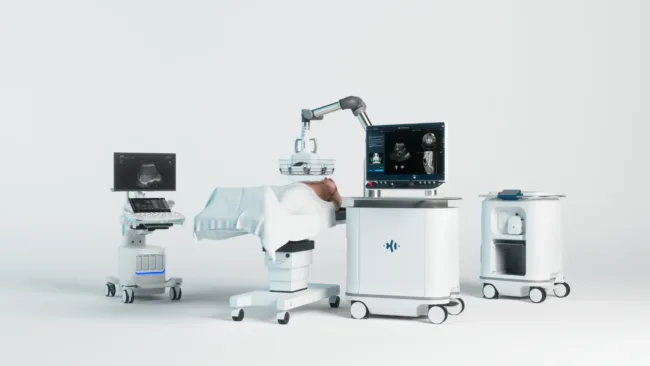
AcroCyte Therapeutics has secured an Advanced Research Projects Agency for Health award of up to $4.3 million for a preclinical project intended to develop scalable autologous kidney organoids for chronic kidney disease. The programme, known as RACE, will use the company’s R3CE three-dimensional cell expansion platform to screen and expand functional renal progenitor cells, establish a mass-production process and evaluate organoid therapy in animal models.
The July 23, 2026 announcement gives AcroCyte a high-profile source of non-dilutive funding and places its technology inside a government-backed effort targeting one of regenerative medicine’s hardest manufacturing problems. It does not, however, indicate that AcroCyte has produced a transplant-ready kidney, begun a human clinical trial or established that its organoids can restore kidney function in patients.
The official ARPA-H award record shows that the project began on March 19, 2026, several months before AcroCyte publicly announced the funding. Its milestones begin with obtaining viable kidney tissue samples and establishing reliable renal organoid production before progressing to characterisation and animal testing. That sequence matters because it places the project at the enabling-platform and preclinical validation stage, rather than near regulatory submission or commercial deployment.
What does the $4.3 million ARPA-H RACE award actually fund, and how ambitious is its goal?
RACE stands for Rapid and Reliable Autologous Cell Screening and Expansion for Organoid Therapy and Bioartificial Kidney Construction. Its formal title is deliberately ambitious, but the disclosed work programme is more measured: identify functional renal progenitor cells, expand them reproducibly, produce renal organoids at greater scale and determine how those organoids behave in animal models.
AcroCyte has said that kidney cells obtained from patients through minimally invasive procedures could be expanded within weeks into physiologically relevant renal organoid modules. The proposed autologous approach is strategically important because tissue derived from the intended recipient could, in principle, reduce some of the immune-compatibility problems associated with donor-derived material. Whether the resulting cells remain functional, genetically stable and sufficiently representative of healthy renal tissue after expansion will require systematic testing.
The phrase “bioartificial kidney construction” should therefore be understood as a long-term direction rather than a description of a product already built by AcroCyte. A complete functional kidney requires coordinated filtration, vascular perfusion, tubular transport, fluid regulation and integration with the recipient’s circulation. Producing a large number of renal cell clusters is only one part of that challenge.
The immediate value of the ARPA-H funding is that it gives AcroCyte an opportunity to demonstrate whether its platform can convert a technically interesting cell-culture method into a controlled manufacturing process. In regenerative medicine, that transition is often where promising laboratory concepts begin to stumble.
Why is scalable autologous renal organoid manufacturing the project’s central technical test?
Organoids are three-dimensional cell structures designed to reproduce selected features of human tissues. They can provide more physiologically relevant research models than conventional flat cell cultures, but they are not miniature organs in the full clinical sense. Their cellular composition, maturity, architecture and functional consistency can vary considerably depending on the source material and culture process.
Kidney organoids present additional difficulties because mature kidney function depends heavily on vascularisation. Research has shown that kidney organoids produced under conventional static conditions can remain immature and poorly vascularised, limiting both their biological performance and their suitability for transplantation. Flow-based culture and transplantation experiments have improved vascular development, but much of that work remains at the laboratory or animal-model stage.
A 2026 peer-reviewed study illustrated both the opportunity and the competitive bar facing AcroCyte. Researchers reported a stirred-bioreactor method that improved kidney organoid production efficiency by more than 50 times and enabled the creation of vascularised nephron sheets that demonstrated size-selective filtration after implantation in mice. The study was an important engineering advance, but it still did not establish a clinically usable replacement kidney in humans.
AcroCyte must therefore show more than rapid cell proliferation. The expanded cells will need to preserve the right identity, organise into appropriate renal structures and perform relevant functions without developing problematic off-target characteristics.
Manufacturing controls will be equally important. A future therapeutic process would need defined starting material, release specifications, contamination controls, potency assays, batch-consistency measurements and validated storage and transport procedures. Autologous production adds another layer of complexity because every patient effectively becomes a separate manufacturing batch.
The $4.3 million award can finance meaningful platform development and preclinical work, but regenerative therapy programmes generally require substantially more capital as they move toward process validation, toxicology, regulatory submissions and human studies. AcroCyte’s ability to generate data that attract further government, strategic or private funding could become as important as the initial technical milestones.

What evidence supports the R3CE platform, and what kidney-specific evidence is still missing?
R3CE stands for Rapid, Reproducible, Rare Cell 3D Expansion. AcroCyte describes the platform as a scaffold-free system intended to expand rare cells into reproducible spheroids and organoid-like structures without depending on traditional animal-derived hydrogels. The company markets associated culture plates and media for organoid growth, drug screening and other three-dimensional cell workflows.
There is peer-reviewed evidence supporting elements of the underlying three-dimensional culture approach. A 2026 Biomaterials paper involving AcroCyte-affiliated researchers reported that a scaffold-free polypeptide coating promoted spheroid formation from individual cancer cells and enabled rapid expansion for high-throughput ex vivo applications. The researchers found that the process depended on epithelial cell adhesion molecule expression and was associated with changes in stemness and epithelial-mesenchymal markers.
A separate Translational Oncology study examined circulating tumour cell-derived spheroids in breast cancer. Researchers generated spheroids in all 13 patients included in the ex vivo drug-screening component and reported that drug sensitivity findings correlated with clinical outcomes in the small assessed cohort. The study involved 34 patients overall, was not a randomised validation trial and addressed oncology drug testing rather than kidney regeneration.
These publications provide support for AcroCyte’s ability to work with rare cells and generate three-dimensional cultures. They do not yet show that R3CE can consistently isolate functional renal progenitor cells, manufacture therapeutically relevant kidney organoids or produce tissue that safely improves kidney function after implantation.
That distinction is central to evaluating the ARPA-H award. A platform can be useful in oncology research and still require extensive redesign, qualification and biological validation before it becomes suitable for renal regenerative medicine. Cell source, culture conditions, desired tissue architecture and functional endpoints differ substantially between a tumour spheroid used for drug screening and an organoid intended for implantation.
The RACE programme should begin closing that evidence gap. The most informative results will be kidney-specific data showing cell identity, structural organisation, vascularisation, functional activity, reproducibility and performance in appropriate disease models.
Why does FDA registration of the R3CE system not mean the kidney therapy is approved?
AcroCyte has described the R3CE platform as FDA-registered as a Class I medical device. That statement requires careful regulatory interpretation because registration and device listing are not the same as FDA clearance, approval or authorisation.
The United States Food and Drug Administration explicitly states that registering an establishment and listing a medical device does not indicate that the agency has reviewed, cleared, approved or authorised the product. Many Class I devices are exempt from the 510(k) premarket notification process, although they remain subject to applicable regulatory controls.
Registration may be relevant to the commercial supply of the culture system as laboratory equipment. It does not validate AcroCyte’s kidney organoids as a therapy, establish clinical utility or permit the company to administer regenerative kidney tissue to patients.
A future organoid therapy would face a more complex regulatory pathway than the laboratory culture plate used to produce it. Regulators would need to consider the biological starting material, manipulation process, manufacturing consistency, implantation procedure, biodistribution, tumourigenicity, immune response and long-term function.
The final classification could depend on how the therapeutic product is manufactured and used. It may involve biological-product, cell-therapy, tissue-engineering, device or combination-product considerations. The ARPA-H award does not determine that regulatory pathway, but it could help AcroCyte generate the evidence needed for productive discussions with regulators.
How could the United States and Taiwan collaboration strengthen the translational programme?
AcroCyte has said the RACE project will involve University of Chicago Medicine, National Taiwan University Hospital and Taiwan’s National Center for Biomodels. The partners are expected to support parallel clinical and translational work across the United States and Taiwan, although the disclosed programme remains preclinical and no human intervention study has been announced.
National Taiwan University Hospital has separately confirmed its participation and described the initiative as an international research network focused on autologous kidney cell therapy. Its involvement could provide access to nephrology, transplantation and tissue-sampling expertise, while United States participation could help align the programme with FDA expectations and American translational research infrastructure.
A binational structure also creates operational challenges. Tissue collection, sample handling, laboratory procedures and analytical measurements will need to be harmonised so that results generated in different locations are genuinely comparable. Differences in patient populations, clinical practice, ethics approvals and regulatory requirements could otherwise introduce variability.
The National Center for Biomodels may be especially relevant as the programme moves into animal studies. Those experiments will need to examine not only whether renal organoids survive after implantation, but whether they vascularise, remain in the intended location and produce measurable biological effects without unacceptable complications.
The collaboration therefore strengthens the project’s access to clinical and translational capabilities, but the quality of the network will ultimately be judged by standardised data rather than the number or prestige of participating institutions.
Which milestones will determine whether AcroCyte can move beyond a promising organoid platform?
The first decisive milestone will be whether AcroCyte can consistently recover viable renal progenitor cells from clinically realistic tissue samples. A process that works only with unusually healthy specimens, large biopsies or carefully selected donors would have limited applicability in patients with advanced chronic kidney disease.
The second test will be expansion quality. AcroCyte must demonstrate that rapid growth does not come at the expense of cell identity, genomic stability or functional potential. Regulators and development partners will be interested in how many passages the cells can undergo, how variable the output is between donors and whether the process introduces unwanted cell populations.
The third milestone will be reproducible organoid manufacturing. Batch size, yield, morphology, cellular composition and potency will need to remain within predefined limits. Manufacturing data showing that the process can be transferred between sites would provide especially strong support for the company’s broader platform claims.
Animal-model results will then determine whether the organoids survive, integrate and produce clinically relevant renal activity. Improvements in laboratory biomarkers alone may not be enough. The programme will need to connect structural and molecular findings with meaningful functional outcomes while assessing potential risks such as abnormal growth, fibrosis, immune reactions and ectopic tissue formation.
AcroCyte should also clarify the intended therapeutic format. Small organoid modules designed to supplement residual kidney function could follow a different development path from an implanted tissue sheet or a full bioartificial kidney construct. Product definition affects manufacturing, surgery, dosing, safety testing and the eventual clinical trial design.
The ARPA-H award is therefore better viewed as a funded test of AcroCyte’s platform thesis than as validation of a finished therapy. Success would mean proving that R3CE can produce standardised, functional renal organoids at a scale and quality suitable for serious preclinical development.
That would be an important achievement in a field where biological promise has repeatedly run ahead of manufacturing readiness. The harder questions, including whether the organoids can safely restore meaningful kidney function and whether the process can become economically viable, will remain unanswered until AcroCyte completes the milestones now financed by the RACE programme.