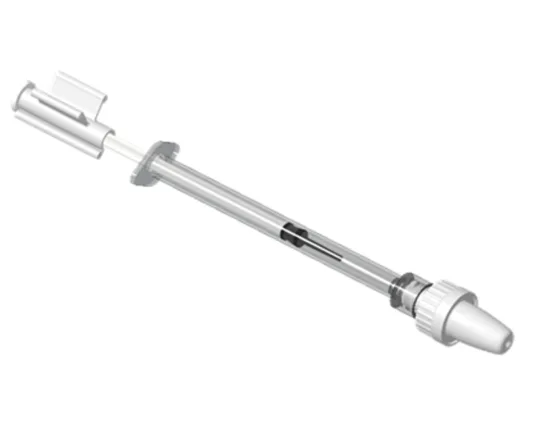
Aptar Pharma has reported continued progress on its multi-year U.S. Food and Drug Administration-funded research contract focused on metered-dose inhalers and next-generation propellants. The work is aimed at improving scientific understanding of how lower-global-warming-potential propellants could affect inhaler formulation, device performance, critical quality attributes and bioequivalence assessment in a respiratory drug delivery market under growing sustainability and regulatory pressure.
Why Aptar Pharma’s FDA-funded inhaler research matters for the next-generation propellant transition
The real significance of Aptar Pharma’s update is not that another inhaler sustainability project has moved forward. The more important point is that the transition from established hydrofluoroalkane propellants to next-generation propellants is becoming a regulatory science problem, not just a manufacturing substitution exercise. For pressurised metered-dose inhalers, the propellant is not a passive ingredient. It shapes aerosol formation, plume behaviour, delivered dose, particle size distribution, formulation stability and ultimately the confidence regulators can place in comparability.
That is why the U.S. Food and Drug Administration’s interest in this area carries weight. The agency’s own generic drug research priorities have recognised the need to understand how alternative low-global-warming-potential propellants such as HFA 152a and HFO 1234ze could influence product quality and performance attributes in metered-dose inhalers. That places Aptar Pharma’s work inside a larger question now facing the respiratory device sector: can the industry lower the environmental burden of inhalers without creating uncertainty around dose delivery, substitution, bioequivalence or patient confidence?

The answer will not come from climate positioning alone. It will come from hard analytical work linking formulation composition, valve and actuator design, aerosol physics, in vitro performance and, potentially, in vivo pharmacokinetic observations. That makes this contract more strategically relevant than a narrow research milestone. It sits close to the technical fault line that will determine how quickly next-generation metered-dose inhalers can move from laboratory feasibility to regulatory acceptance.
How next-generation propellants could reshape metered-dose inhaler development
The transition to next-generation propellants is often framed as a sustainability upgrade, but for developers it behaves more like a platform redevelopment cycle. Existing metered-dose inhalers were built around propellant systems with known performance characteristics. Changing the propellant can alter vapour pressure, evaporation behaviour, droplet dynamics, spray morphology and interactions with drug substance, excipients and device materials. In practical terms, that means a product can appear familiar to the patient while becoming scientifically different under the hood.
This creates a major challenge for respiratory drug developers. If a next-generation propellant changes how the aerosol cloud forms or how particles deposit across the respiratory tract, regulators may need more than conventional equivalence arguments. In vitro methods such as delivered dose uniformity, aerodynamic particle size distribution, spray pattern and plume geometry remain central to inhaled product evaluation, but the propellant transition raises the question of whether existing tools are sensitive enough to detect clinically relevant differences.
Aptar Pharma’s work is therefore important because it appears to focus on the bridge between device engineering and regulatory confidence. Pilot-scale filling, evaluation of valve variants, realistic in vitro testing and computational modelling all point to a layered approach. That is exactly the type of evidence-building likely to matter if regulators are asked to judge whether a lower-carbon metered-dose inhaler can be considered comparable to an established product without unnecessary clinical duplication.
Why bioequivalence remains the hardest question in greener inhaler development
Bioequivalence is the centre of gravity in this story. For orally inhaled products, especially locally acting respiratory therapies, demonstrating equivalence is already more complicated than it is for many systemic oral drugs. The dose must leave the device consistently, form an aerosol with the right particle characteristics, survive patient-relevant use conditions and deposit in a way that supports therapeutic performance. A propellant switch can touch multiple parts of that chain.
That is why Aptar Pharma’s focus on sensitive in vitro methods matters. The industry does not simply need greener inhalers. It needs testing strategies capable of showing whether greener inhalers behave closely enough to existing products in ways that matter clinically. The U.S. Food and Drug Administration has previously used a weight-of-evidence approach for inhalation products, combining in vitro studies, pharmacokinetic work and, where needed, pharmacodynamic or clinical evidence. Recent U.S. regulatory research discussions have also highlighted the potential role of computational models in supporting the evaluation of new-generation metered-dose inhalers.
The unresolved issue is how far modelling and advanced in vitro testing can go before in vivo studies become necessary. Aptar Pharma’s announcement notes that future contract options may include an exploratory pharmacokinetic study. That is a telling detail. It suggests the field is still trying to connect laboratory and computational outputs with biological observations. For regulators, that link will be crucial. For manufacturers, it could determine whether next-generation propellant programmes become manageable lifecycle transitions or expensive redevelopment projects.
What Aptar Pharma gains from being close to the regulatory science conversation
For Aptar Pharma, the strategic advantage is not a direct product claim. The research is explicitly not intended to support specific products, regulatory filings or commercial claims. The commercial relevance is more subtle. Aptar Pharma is positioning itself at the intersection of metered-dose inhaler device design, formulation science, analytical testing and regulatory expectations during a period when respiratory drug developers may need more integrated support than usual.
That matters because inhaler redevelopment is rarely a single-vendor problem. A sponsor moving from an established propellant to a next-generation system must think about valve compatibility, canister performance, actuator geometry, formulation stability, extractables and leachables, filling processes, aerosol behaviour and regulatory documentation. Aptar Pharma’s broader inhalation business, including its services and Nanopharm capabilities, gives the group a credible role in that systems-level discussion. Aptar Pharma already positions itself as a supplier of inhalation drug delivery devices and regulatory support for orally inhaled and nasal drug products.
The risk is that industry leadership in research does not automatically translate into uniform customer adoption. Pharmaceutical sponsors will still need product-specific evidence. Regulators will still evaluate applications on their own merits. Competitors across the inhalation device and testing ecosystem are also working on low-global-warming-potential propellant solutions. Aptar Pharma may benefit from being visible in the regulatory science conversation, but the market will reward validated execution, not conference presence alone.
How sustainability pressure is changing the respiratory drug delivery market
The environmental argument behind next-generation propellants is powerful because pressurised metered-dose inhalers have a visible carbon footprint compared with many dry powder inhalers or soft mist devices. However, respiratory medicine cannot treat sustainability as a simple device swap. Metered-dose inhalers remain important for many patients, indications and healthcare settings because they offer portability, fast actuation, established familiarity and broad therapeutic use across asthma and chronic obstructive pulmonary disease.
That creates a policy and market tension. Healthcare systems want lower-carbon care. Regulators want evidence that reformulated inhalers remain safe, effective and comparable. Clinicians want device choices that preserve adherence and disease control. Manufacturers want transition pathways that are scientifically robust but commercially feasible. The push toward low-global-warming-potential propellants sits precisely at that intersection.
Scientific literature on the transition has repeatedly pointed to the need for deeper investigation into the physicochemical behaviour of new propellants, including their effect on atomisation and plume geometry. That supports the view that the industry is not merely replacing one ingredient with another. It is redesigning a mature respiratory delivery format while trying to avoid disruption to patients, prescribers and payers.
Why the Respiratory Drug Delivery 2026 presentation could be more than a conference update
Aptar Pharma’s planned presentation at the Respiratory Drug Delivery conference in May 2026 will be watched because RDD is one of the main technical forums for pulmonary and nasal drug delivery. The conference is being held in Phoenix, Arizona, from May 10 to May 14, 2026, and the programme includes work across inhaler testing, formulation, device performance and development strategy.
The presentation could matter if it gives industry participants more visibility into which analytical methods are proving most sensitive during the propellant transition. Developers will be looking for practical signals. Which valve or formulation variables appear most influential? How do suspension and solution formulations behave differently? Can computational models predict aerosol performance across propellant systems? Are laboratory methods beginning to map more convincingly to potential in vivo outcomes?
The limitation is that conference dissemination, while useful, does not itself settle regulatory pathways. Peer-reviewed publications expected later in 2026 may carry more durable value if they provide sufficient methodological detail. For a field trying to build consensus, transparency around negative findings may be just as important as positive results. If certain tests prove insufficiently sensitive, that knowledge can still help prevent wasted development cycles.
What regulators, device makers and pharmaceutical sponsors are likely to watch next
The next phase of the next-generation propellant transition will likely be shaped by three practical questions. First, regulators will need confidence that altered propellant systems do not mask clinically relevant performance differences. Second, device makers will need to show that valves, actuators and materials can remain reliable under new chemical and pressure conditions. Third, pharmaceutical sponsors will need commercially workable evidence packages that satisfy regulators without forcing unnecessary delays.
AptarGroup, Inc., the parent of Aptar Pharma, also has a financial market angle because its pharma business sits within a broader drug delivery and dispensing portfolio. AptarGroup shares were recently trading at $125.11, with a market capitalisation of about $8.11 billion, giving the group a mid-cap public-market profile where sustained pharma innovation can influence investor perception over time. The near-term stock reaction is unlikely to be driven by this research update alone, but the longer-term sentiment question is whether AptarGroup can convert regulatory science credibility into customer wins as inhaler portfolios transition.
For now, the cleanest interpretation is that Aptar Pharma has moved deeper into one of the respiratory device sector’s most technically demanding transitions. The announcement does not imply product approval, commercial superiority or a completed regulatory pathway. It does, however, signal that the metered-dose inhaler market is moving from sustainability ambition into the harder phase of evidence generation. That is where the winners will be decided.
Why this is an enabling step rather than a breakthrough
This is best viewed as an enabling development, not a breakthrough. Aptar Pharma is not announcing a new approved inhaler, a pivotal clinical readout or a product-specific regulatory filing. The value lies in the infrastructure of knowledge being built around next-generation propellant systems. In a mature device category, that kind of enabling science can be more important than it looks because it reduces ambiguity for everyone downstream.
The respiratory drug delivery market has already learned that device changes can create regulatory complexity even when the therapeutic molecule remains the same. The next-generation propellant shift raises that complexity further because it combines environmental policy, materials science, aerosol physics and bioequivalence assessment. Aptar Pharma’s FDA-funded research therefore deserves attention because it addresses the practical question behind the green inhaler narrative: how can the industry prove that lower-carbon inhalers are not only better for the planet, but also technically comparable where it matters for patients?