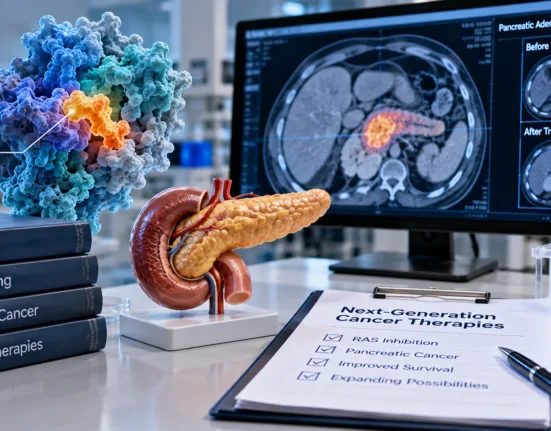
Elephas Biosciences Corporation has presented new American Association for Cancer Research Drug Discovery and Development conference data indicating that its elive live-tumor profiling platform can incorporate a cytotoxicity endpoint for targeted therapies, extending a system previously built around cytokine responses to immune checkpoint inhibitors. The July 24, 2026 announcement centred on ex vivo testing with daraxonrasib and suggested that the platform may eventually support a broader range of oncology treatment-selection and drug-development questions.
The development is strategically meaningful because immunotherapy and targeted therapy create different biological readouts. Elephas has primarily positioned elive as a functional assay that preserves living tumour tissue and its microenvironment long enough to observe immune signalling after checkpoint-inhibitor exposure. A cytotoxicity endpoint adds a more direct measure of whether tumour cells remain viable after exposure to a targeted agent, potentially giving Elephas a route beyond its initial immuno-oncology focus.
The evidence, however, remains at an early feasibility stage for targeted therapies. The conference abstract did not report patient outcomes linked to a targeted-therapy prediction, a prospective clinical validation cohort, sensitivity and specificity, or evidence that an elive cytotoxicity result improved treatment selection. The most important conclusion is therefore not that elive can already guide targeted therapy decisions, but that Elephas has demonstrated a technical pathway for expanding the platform and now needs to validate that pathway in clinically representative human specimens.
What exactly did Elephas show at AACR D3, and how far does the targeted therapy claim extend?
The AACR D3 abstract described a platform workflow in which live tumour fragments are prepared from biopsies or resections, encapsulated in a hydrogel and exposed to therapy while cytokine production, immune-cell activity and tissue viability are measured. For the targeted-therapy component, researchers used commercially available cytotoxicity assays to assess cell viability after treatment with KRAS inhibitors in a human pancreatic cancer cell line-derived xenograft model and a syngeneic mouse tumour model.
Elephas said ex vivo exposure to daraxonrasib produced similar cytotoxic effects across the models and argued that this supported the use of a cytotoxicity endpoint alongside the platform’s established cytokine readouts. The company announcement also referred to live tumour fragments from a human specimen, while the published abstract described the targeted-therapy feasibility work through the MIA PaCa-2 cell line-derived xenograft and CT26 mouse model. That distinction matters because tissue originating from a human cancer cell line and grown in a mouse does not carry the same clinical evidentiary weight as a fresh biopsy from a treated patient whose subsequent response can be followed.
Daraxonrasib, also known as RMC-6236, is an investigational RAS(ON) inhibitor developed by Revolution Medicines, Inc. It is being studied in Phase 3 programmes across pancreatic ductal adenocarcinoma and RAS-mutated non-small cell lung cancer, but the Elephas experiment was a platform assessment rather than a trial of daraxonrasib efficacy. The data therefore say more about whether elive can detect drug-associated loss of tumour-cell viability than about whether the drug will benefit a particular patient.
Why could a cytotoxicity endpoint materially broaden the elive platform’s commercial scope?
Elephas built elive around a difficult problem in immuno-oncology: static biomarkers such as PD-L1 expression, microsatellite instability and tumour mutational burden do not fully capture the dynamic interaction between a patient’s tumour, immune cells and a checkpoint inhibitor. The company’s approach is to keep native tumour tissue alive ex vivo, expose it to a therapy and measure functional changes rather than relying only on molecular features that suggest a response may occur.
Targeted therapies create a broader opportunity because many drug-development and clinical questions are not primarily about immune-cell activation. Developers may want to know whether a RAS inhibitor, antibody-drug conjugate, small molecule or combination produces cell death in a specific tumour context. If elive can support reproducible cytotoxicity, immune-signalling and imaging endpoints from the same limited biopsy, it could become relevant to translational research, biomarker discovery, combination prioritisation and eventually treatment decision support across more therapeutic classes.

That expansion could also diversify Elephas commercially. The company markets platform access to pharmaceutical researchers through instrument licensing, consumables and laboratory services, while Elephas Laboratories offers the elive Test as a laboratory developed test for predicting likely response to immune checkpoint inhibitors. A validated targeted-therapy module could create additional pharma-service revenue and, over a longer horizon, support new clinical laboratory offerings. The targeted-therapy work is not yet part of the established clinical test, so the commercial upside remains contingent on validation, standardisation and appropriate regulatory positioning.
How mature is the immunotherapy evidence compared with the new targeted therapy findings?
The immunotherapy evidence package is substantially more developed. The AACR abstract reported a 28-sample validation cohort involving patients who subsequently received immune checkpoint inhibitors. The elive Index classified 17 of 19 patients who experienced clinical benefit as responders and all nine patients with progressive disease as non-responders, while the platform characterised cytokine responses across seven checkpoint-inhibitor regimens and more than 10 solid tumour types.
Those figures are encouraging, but the sample size remains small and the abstract does not establish broad generalisability across tumour types, treatment lines, patient populations or combination regimens. The result also depends on how clinical benefit, non-response, assay thresholds and evaluable samples were defined. Before the test can be treated as a widely reliable predictive biomarker, larger prospective studies will need to confirm performance in independent cohorts and show that the information changes clinical decisions in ways that improve outcomes.
The underlying platform biology has stronger peer-reviewed support than the targeted-therapy extension. A January 2026 Journal of Translational Medicine paper described live tumour fragments from 59 human resections and 31 core needle biopsies, showing that the platform could maintain tissue viability, preserve important tumour-microenvironment components and measure cytokine responses after checkpoint-inhibitor exposure. That publication supports the technical foundation of live-tissue preparation and immune-response measurement, but it was not a definitive clinical-utility study proving that elive-guided care outperforms standard biomarker-guided treatment.
Why does the targeted therapy work need patient-linked validation rather than model concordance alone?
A functional assay becomes clinically persuasive when its laboratory result predicts what happens after a patient receives treatment. Similar cytotoxicity patterns across experimental models can demonstrate assay feasibility and reproducibility, but they cannot establish sensitivity, specificity, positive predictive value, negative predictive value or clinical utility in patients. Tumours in clinical practice are shaped by prior therapies, clonal heterogeneity, stromal interactions, drug exposure, metabolism and resistance mechanisms that laboratory models may only partly reproduce.
The next evidence step should therefore include fresh human tumour specimens from patients receiving targeted therapies, prespecified assay thresholds and blinded comparison with clinical outcomes. Ideally, development would progress from retrospective or observational concordance into a prospective study that tests whether physicians can use the result within a clinically relevant turnaround time and whether the information improves treatment selection beyond genomic testing and conventional pathology. Elephas already has observational studies designed to compare its immune checkpoint inhibitor predictions with subsequent clinical response, providing a potential framework for a targeted-therapy validation programme.
Targeted therapies also require indication-specific validation. A cytotoxicity signal observed with a RAS inhibitor in a pancreatic cancer model cannot automatically be transferred to lung cancer, colorectal cancer or unrelated drug classes. Each tumour type, molecular context, specimen source and therapeutic mechanism may affect assay performance, making a broad modality-agnostic claim commercially attractive but scientifically demanding to prove.
What does the current elive Test status mean for clinicians and hospital adoption?
Elephas Laboratories currently describes the elive Test as a laboratory developed test available to licensed United States healthcare providers. The test uses cytokine profiling from a live tumour biopsy to predict the likelihood of response to an immune checkpoint inhibitor and provides a report with pathologist interpretation, with the company advertising a turnaround of up to 14 days. Its service terms also state that the result should not be used as the sole basis for clinical decisions.
The new cytotoxicity data do not automatically expand that clinical intended use. A research platform may support exploratory testing across multiple therapeutic classes, while a clinical laboratory service requires defined performance characteristics, controlled specimen handling, validated reporting rules and clear statements about how the result should be interpreted. Elephas will need to keep the research-service proposition separate from any patient-facing targeted-therapy claim until the evidence and laboratory validation support a new test configuration.
Operationally, the assay depends on obtaining viable tissue, following a dedicated collection protocol and rapidly shipping the specimen to a laboratory while preserving the native tumour microenvironment. That creates practical barriers not faced by tests that use fixed tissue or blood. Hospital adoption will depend on biopsy scheduling, tissue sufficiency, logistics, turnaround, cost, reimbursement and confidence that the result arrives before a treatment decision must be made.
Does the recent ASCO clarification amount to an endorsement of routine functional precision medicine?
Elephas linked its AACR D3 presentation to a recent American Society of Clinical Oncology notice on functional precision medicine. The company framed the notice as evidence of growing momentum, but public descriptions of the clarification indicate that American Society of Clinical Oncology archived older guidance on chemotherapy sensitivity and resistance assays and did not issue a recommendation either for or against routine use of modern functional precision medicine assays while the evidence continues to mature.
That is an important distinction. The notice appears to reduce the risk that contemporary platforms will be judged solely through the lens of assay technologies assessed more than a decade ago, while supporting continued evidence generation. It does not mean that every functional assay has been clinically endorsed, that payers must reimburse testing, or that oncologists should replace established molecular and pathological assessment with ex vivo drug-response results.
For Elephas, the clarification is commercially helpful because it gives the field a more current policy context. The company will still have to demonstrate analytical validity, clinical validity, reproducibility, workflow feasibility and clinical utility for each intended use. In precision oncology, professional acceptance usually follows evidence that a test changes management and improves outcomes, not merely evidence that tumour tissue reacts to a drug in the laboratory.
What milestones will determine whether Elephas can turn cytotoxicity feasibility into a broader oncology platform?
The most informative next milestone would be a patient-linked targeted-therapy dataset showing that an elive cytotoxicity score predicts response or resistance across a clearly defined tumour type and drug regimen. Pharmaceutical partners and clinicians will also look for external validation, prespecified performance thresholds, assay failure rates, reproducibility across sites and evidence that small core needle biopsies provide sufficient viable material.
Commercial execution is advancing in parallel. Elephas raised $40 million in late 2025 to support commercialisation, has made its immune checkpoint inhibitor-focused laboratory developed test available through Elephas Laboratories and has begun expanding internationally through partnerships, including an agreement with Invitrocue covering Singapore and Malaysia. These steps give the company infrastructure through which a broader platform could eventually be deployed, but geographic expansion does not substitute for indication-specific clinical validation.
The AACR D3 data therefore represent a credible platform-development signal rather than a finished clinical breakthrough. Elephas has shown that elive may be capable of measuring more than immune cytokine activity, which is strategically important for a company seeking relevance across oncology drug classes. The decisive test will be whether cytotoxicity measurements from fresh human tumours can predict targeted-therapy outcomes reliably enough, quickly enough and consistently enough to influence drug development or patient care.