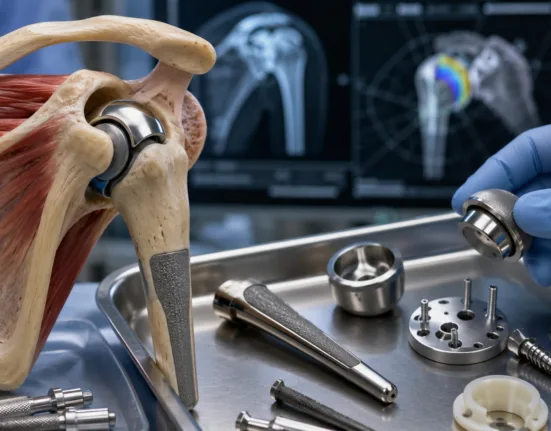
Advita Ortho has announced the first clinical use of Activit-E highly crosslinked polyethylene humeral liners within the Equinoxe Reverse Shoulder System, moving the new material from regulatory clearance into a limited commercial pilot. Thomas Wright, an orthopaedic surgeon at the University of Florida, performed the initial procedures during the week of July 20, 2026.
The launch introduces vitamin E-containing polyethylene across Equinoxe configurations involving the platform stem, small reverse baseplates and fracture stem. Advita Ortho said limited quantities are initially available in the United States, with broader availability planned during the fourth quarter of 2026 and an international limited launch expected to follow.
The development is clinically and commercially relevant because polyethylene wear remains an important long-term consideration in reverse total shoulder arthroplasty. However, the announcement represents the beginning of clinical use rather than clinical proof that the new liners will reduce revision rates, osteolysis, loosening or other complications in patients.
The central question is therefore not whether vitamin E-enhanced polyethylene has a credible engineering rationale. Laboratory evidence and experience from other joint-replacement categories support that rationale. The real test is whether those material properties produce measurable, durable advantages within the distinctive biomechanics of reverse shoulder replacement.
Why is the Activit-E humeral liner more than a routine material substitution?
In reverse shoulder arthroplasty, the polyethylene humeral liner forms part of the articulation with the metallic glenosphere. Repeated movement, loading, impingement and edge contact can generate polyethylene wear particles over time. Those particles may contribute to inflammatory responses, osteolysis and implant loosening, although patient outcomes also depend on component positioning, implant geometry, surgical technique, patient anatomy and activity.
Activit-E is manufactured from highly crosslinked ultra-high molecular weight polyethylene containing vitamin E. Crosslinking is used to improve resistance to wear, while vitamin E serves as an antioxidant intended to limit oxidative degradation associated with residual free radicals created during irradiation.
Advita Ortho said vitamin E is incorporated into the polyethylene before processing. The material is subsequently compression moulded, annealed to relieve stress, gamma irradiated and machined into the final humeral liner. This differs from a superficial coating because the antioxidant is integrated into the polyethylene material.
The engineering proposition involves balancing two objectives that do not always move neatly together. Greater crosslinking can improve wear resistance, but processing decisions can affect oxidation resistance, fatigue behaviour and mechanical properties. Vitamin E stabilisation is intended to preserve the wear advantages of crosslinking while protecting the material against oxidation over its service life.
That still does not establish that the liner will extend implant survival in real-world reverse shoulder arthroplasty. A material can perform favourably in wear simulators and mechanical testing without producing a detectable difference in revision rates, patient-reported outcomes or radiographic findings. Those clinical questions require longer follow-up and comparative data.
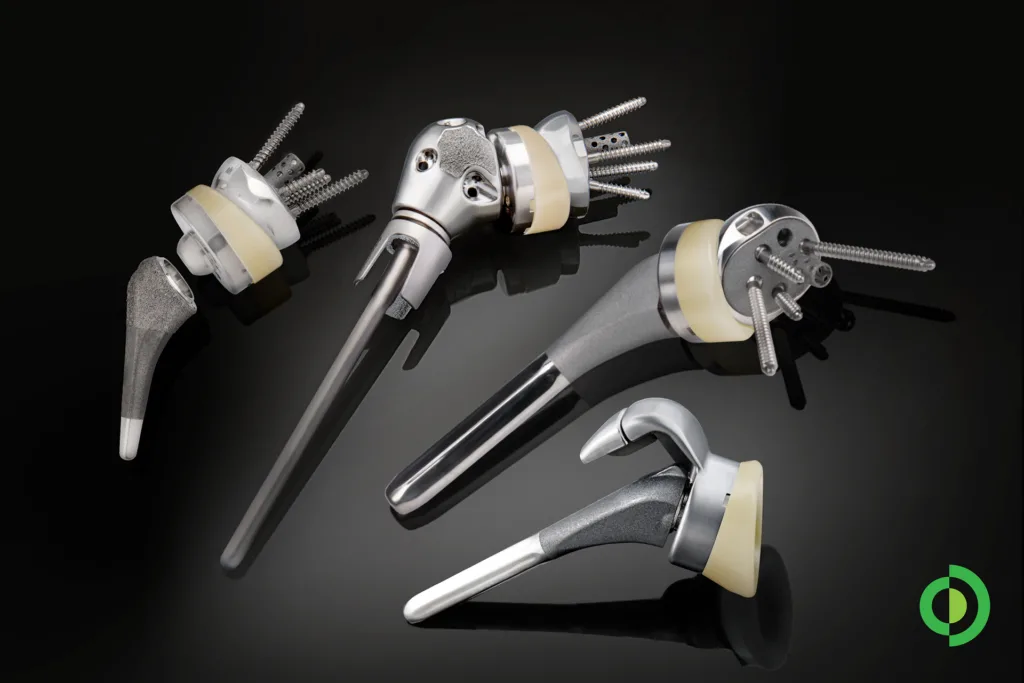
What does the FDA clearance reveal about the maturity of the Equinoxe Activit-E evidence?
The United States Food and Drug Administration cleared the modified Equinoxe Shoulder System through the 510(k) pathway on April 14, 2026. The Class II device was found substantially equivalent to legally marketed predicate devices rather than evaluated through the Premarket Approval pathway used for certain higher-risk products.
The regulatory record identifies the proposed products as Equinoxe Activit-E humeral liners for reverse total shoulder arthroplasty. It states that the new liners retain the geometry, design features and compatibility of previously cleared Equinoxe humeral liners. The principal technological difference is the use of highly crosslinked vitamin E-containing polyethylene instead of conventional ultra-high molecular weight polyethylene.
That distinction matters. The clearance was not based on evidence that the new liner produced better patient outcomes than the predicate product. Instead, the submission used non-clinical testing to demonstrate that the material change did not introduce new questions of safety or effectiveness that prevented a substantial-equivalence determination.
The disclosed testing included liner-tray fatigue testing, disassembly testing, wear testing, wear-particle analysis, biocompatibility assessment and bacterial endotoxin testing. The United States Food and Drug Administration record concluded that the material differences did not adversely affect the device’s safety or effectiveness requirements for the purposes of 510(k) clearance.
The authorised indications continue to include skeletally mature individuals with degenerative glenohumeral disease and a grossly deficient, irreparable rotator cuff. The reverse system is also indicated in certain failed shoulder replacements involving loss of rotator cuff function and superior migration of the humeral head. Specific fracture-stem indications apply to acute proximal humeral fractures and defined combinations of fracture, joint degeneration and rotator cuff deficiency.
For clinicians and hospital committees, the evidence should therefore be classified correctly. The product is FDA-cleared, commercially entering use and supported by preclinical verification. It does not yet have a dedicated long-term clinical dataset demonstrating superiority over conventional Equinoxe liners.
Can lower laboratory wear translate into improved reverse shoulder outcomes?
The scientific basis for highly crosslinked polyethylene in shoulder arthroplasty is stronger than a purely theoretical materials argument. Published biomechanical studies have reported lower wear for vitamin E-enhanced highly crosslinked polyethylene than for conventional polyethylene under shoulder-simulator conditions.
A 2019 shoulder simulator study reported lower wear rates for vitamin E-enhanced polyethylene glenoid components than for conventional polyethylene in both unaged and artificially aged testing. A separate biomechanical study published in 2024 similarly assessed vitamin E-enhanced highly crosslinked polyethylene against conventional material in an anatomic shoulder model.
The distinction between anatomic and reverse shoulder designs remains important. In anatomic shoulder replacement, polyethylene is typically located on the glenoid side. In reverse shoulder arthroplasty, the bearing arrangement is reversed, placing the polyethylene liner on the humeral side and changing loading, contact mechanics and potential impingement patterns.
A 2025 systematic review of reverse total shoulder arthroplasty wear studies found that highly crosslinked polyethylene produced significantly lower laboratory wear than conventional polyethylene in the available biomechanical evidence. The review also stressed that it remained unknown whether this advantage translated into improved clinical outcomes because clinical data in reverse shoulder arthroplasty were limited.
That is the correct evidence boundary for the Activit-E launch. Reduced simulator wear is valuable because it supports the design rationale and may reduce the amount of polyethylene debris generated under tested conditions. It cannot independently prove lower revision rates, improved function or longer implant survival.
Clinical performance will need to be assessed through post-market surveillance, registry analysis, radiographic follow-up and, ideally, comparative studies involving conventional and Activit-E liners. Relevant endpoints could include osteolysis, scapular notching, liner damage, component loosening, revision rates, range of motion, patient-reported outcomes and device-related adverse events.
Meaningful conclusions are likely to take years rather than months. Shoulder implants are intended to function over long periods, while many wear-related complications develop gradually. Early procedural success can confirm usability and compatibility, but it provides little information about long-term polyethylene behaviour.
How could compatibility with the existing Equinoxe platform influence hospital adoption?
Advita Ortho has preserved the geometry and component compatibility of the predicate Equinoxe liners, which may reduce adoption friction for hospitals and surgeons already using the platform. The Activit-E option is being introduced for the platform stem, small reverse baseplates and fracture stem rather than as an isolated implant requiring an entirely separate shoulder system.
For existing Equinoxe customers, this could simplify training and surgical workflow. Surgeons may be able to introduce the material without changing their broader implant philosophy, instrumentation or preferred component relationships. Hospital procurement teams may also find an incremental material upgrade easier to evaluate than a completely new platform requiring additional capital equipment, inventory and staff education.
The commercial advantage should not be overstated. Adding another liner family can increase inventory complexity, particularly during a pilot launch with limited quantities. Hospitals will need clarity on available sizes, catalog numbers, compatibility, sterilisation, shelf management and supply reliability before incorporating the liners into routine purchasing.
Pricing will also influence adoption. A premium material may be commercially defensible when it offers a credible durability rationale, but hospitals increasingly expect evidence connecting higher implant costs with fewer complications, reduced revision risk or improved total episode economics. Preclinical wear performance alone may not support a substantial premium across all patient groups.
Surgeons could initially concentrate use among patients considered more likely to outlive conventional polyethylene components, including younger or more active candidates. Such selection would remain a clinical judgement rather than an outcome established by the current evidence.
Why does the launch carry strategic significance for the newly established Advita Ortho business?
Advita Ortho officially launched in November 2025 after acquiring established orthopaedic product lines, related data, manufacturing expertise and employees through the restructuring of Exactech. The acquired portfolio included Equinoxe shoulder, Vantage ankle, Alteon hip, Truliant knee, Newton balancing technology and GPS navigation.
Activit-E is now available across the company’s shoulder, knee and ankle portfolios, giving Advita Ortho a common advanced-polyethylene narrative across several joint-replacement categories. That portfolio approach may create manufacturing, surgeon-education and commercial efficiencies while helping the company position material science as part of a broader orthopaedic platform.
The shoulder launch is also a test of Advita Ortho’s ability to move beyond inherited products and deliver new regulatory and commercial milestones under its current identity. The underlying Equinoxe platform has an established clinical history, but the new company must demonstrate that it can support product development, manufacturing quality, supply continuity and post-market monitoring at scale.
Because Advita Ortho is privately held, there is no public share-price reaction through which to measure investor sentiment. Its progress will instead be judged through product-launch execution, surgeon retention, hospital account stability, international expansion and evidence that the reorganised business can sustain dependable quality systems.
Why will the Equinoxe quality history remain relevant to procurement decisions?
The introduction of a new Equinoxe liner occurs against a device-quality history that hospital committees are likely to review. In 2024, the United States Food and Drug Administration issued a safety communication concerning certain Equinoxe shoulder components manufactured between 2004 and August 2021 that had been packaged in bags lacking an intended oxygen-barrier layer. The concern was that increased oxygen exposure could contribute to oxidation of plastic components.
Separately, the United States Food and Drug Administration classified a 2025 recall involving specific Equinoxe reverse shoulder humeral liner catalog numbers after the manufacturer identified an articular-surface position outside the dimensional specification described in the labelling. The public recall record associates those products with earlier conventional Equinoxe liner clearances and does not identify the newly cleared Activit-E liner family as the recalled product.
The distinction should be maintained. The historic packaging issue involved devices manufactured years before the Activit-E launch, while the 2025 dimensional recall identified particular reference numbers. Neither record independently establishes a problem with the new Activit-E material or the newly cleared liners.
However, procurement teams may still request product-specific documentation, catalog-number confirmation, manufacturing information and quality assurances before adopting the new components. Advita Ortho’s commercial execution will depend not merely on separating the new devices from historic issues, but on demonstrating consistent supply and transparent post-market oversight.
What should clinicians and hospitals watch as availability expands in late 2026?
The immediate milestone will be the transition from limited pilot quantities to the broader United States release planned for the fourth quarter of 2026. Pilot use should provide Advita Ortho with information on inventory requirements, surgical handling, component selection and training needs, even though it will not resolve long-term durability questions.
International availability will introduce additional regulatory and logistical variables. Launch timing may differ by jurisdiction, and United States 510(k) clearance does not automatically authorise marketing elsewhere. Local registrations, labelling, distribution readiness and hospital procurement requirements will determine the pace of expansion.
Clinicians will watch whether the material behaves predictably during implantation and whether the company establishes structured clinical follow-up. Hospitals will focus on pricing, supply reliability and compatibility. Researchers will look for comparative wear, radiographic and outcome data. Advita Ortho will need to show that Activit-E is not merely available across three joint portfolios, but supported by evidence appropriate to each anatomical application.
The first clinical use therefore represents a credible product-development milestone rather than the final answer to polyethylene wear in reverse shoulder arthroplasty. Activit-E enters the market with FDA clearance, a plausible materials-science rationale and supportive laboratory evidence. Its clinical value will ultimately be determined by what happens after thousands of procedures and years of follow-up, when durability claims can be tested against revision records, imaging findings and patient outcomes.