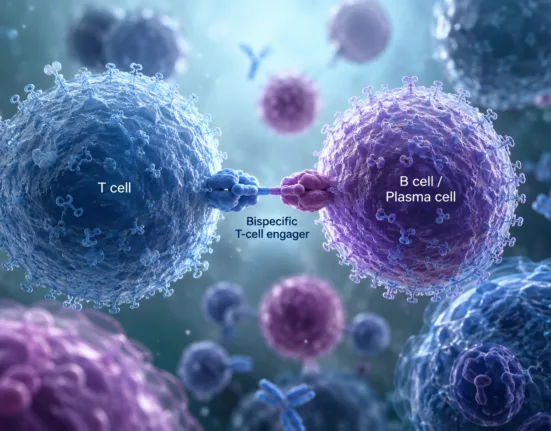
Hemab Therapeutics has received Breakthrough Therapy Designation from the United States Food and Drug Administration for sutacimig, a subcutaneously administered bispecific antibody being developed to prevent bleeding episodes in patients with Glanzmann thrombasthenia, a rare inherited platelet disorder. The designation follows encouraging results from the Phase 2 multiple ascending dose portion of the company’s ongoing Phase 1/2 clinical trial and signals regulatory recognition that the therapy may represent a substantial improvement over existing approaches for this underserved patient population.
How breakthrough therapy designation for sutacimig signals regulatory urgency in Glanzmann thrombasthenia and highlights the lack of preventive therapies
The announcement itself is straightforward regulatory news, but its significance lies in what it suggests about the evolving treatment paradigm for rare coagulation disorders. Glanzmann thrombasthenia is one of the most difficult bleeding disorders to manage clinically because the condition arises from platelet dysfunction rather than a simple deficiency in coagulation factors. Existing interventions are reactive rather than preventive, typically involving recombinant Factor VIIa, platelet transfusions, or other acute treatments once bleeding begins.
For clinicians treating this disorder, the absence of preventive therapy has long shaped clinical strategy. Patients frequently require emergency care during bleeding episodes, and disease management revolves around controlling hemorrhage rather than preventing it. A therapy capable of reducing bleeding frequency could therefore alter the daily clinical burden associated with this condition.
Why preventive treatment strategies could transform the clinical management of Glanzmann thrombasthenia and reduce reliance on acute rescue therapies
The importance of prophylactic therapy becomes clearer when considering the disease’s natural history. Studies tracking individuals with Glanzmann thrombasthenia have shown that bleeding episodes occur frequently and often unpredictably. Many patients experience mucosal bleeding, gastrointestinal bleeding, or surgical complications that require immediate treatment.
Natural history research indicates that the burden of the disease extends well beyond physical symptoms. Many individuals with the condition miss school or work and experience psychological stress associated with unpredictable bleeding episodes. Hospital visits are common and may involve high intensity interventions such as platelet transfusions or recombinant clotting factor administration.
A therapy designed to prevent bleeding rather than treat it after onset could therefore shift the care model from crisis management to long term disease control.
How sutacimig’s bispecific antibody mechanism attempts to bypass platelet dysfunction in rare bleeding disorders
Sutacimig attempts to address the underlying challenge of platelet dysfunction through a novel bispecific antibody design. One arm of the antibody binds endogenous Factor VIIa while the other binds TLT-1 on activated platelets. This dual interaction is designed to concentrate Factor VIIa at the surface of activated platelets where clot formation occurs.
The strategy reflects a broader shift in hematology toward targeted modulation of the coagulation cascade. Rather than replacing a missing factor or correcting a platelet defect directly, the therapy attempts to enhance the efficiency of clot formation at critical points in the hemostatic process.
Industry observers often compare such approaches to earlier innovations in hemophilia therapy, where engineered antibodies demonstrated that manipulating interactions between coagulation proteins could compensate for deficiencies elsewhere in the pathway.
Why antibody engineered hemostasis platforms are emerging as a new category of hematology therapeutics
The development of sutacimig also illustrates a broader trend toward antibody based coagulation therapies. The success of previous antibody engineered treatments in hemophilia has demonstrated that biologics can be used to rebalance the coagulation system in ways that traditional factor replacement therapies cannot achieve.
For biotechnology companies, bispecific antibodies offer a flexible design platform that can potentially connect multiple components of the coagulation cascade. By targeting interactions between proteins involved in clot formation, these therapies can amplify or stabilize natural hemostatic processes.
If this approach proves successful in platelet related disorders, it could open the door to new therapies for a range of rare bleeding diseases where conventional approaches have struggled to deliver preventive benefit.
What early clinical evidence suggests about sutacimig’s potential to reduce severe bleeding events
The regulatory designation was granted based on early clinical evidence demonstrating reductions in bleeding events among patients receiving sutacimig in the Phase 1/2 clinical trial. Investigators reported clinically meaningful reductions in both overall bleeding episodes and severe bleeding events requiring high intensity treatments.
Such treatments typically include recombinant Factor VIIa, platelet transfusions, plasma therapy, cryoprecipitate, or invasive medical procedures. Reducing the need for these interventions would represent a substantial improvement in clinical management if confirmed in larger trials.
However, early stage clinical results must be interpreted carefully. Rare disease trials often involve limited patient populations, and bleeding frequency can vary significantly between individuals. Regulators will therefore evaluate whether the observed reductions remain consistent across larger study cohorts.
Why trial design and endpoint selection will determine whether sutacimig can reach regulatory approval
Rare disease drug development frequently presents challenges related to trial design. Glanzmann thrombasthenia affects a very small patient population worldwide, making recruitment for large randomized studies difficult.
Investigators must therefore rely on endpoints such as bleeding frequency reduction, severity of bleeding episodes, or reduction in the need for emergency treatment. Regulators will likely scrutinize the statistical robustness of these endpoints and examine whether improvements translate into clinically meaningful benefits.
Another key factor will be the durability of response. If sutacimig can provide sustained protection against bleeding over extended dosing intervals, its value as a prophylactic therapy would become significantly clearer.
What safety, thrombosis risk, and dosing durability questions regulators will examine next
Any therapy designed to enhance clot formation inevitably raises safety questions. Although Glanzmann thrombasthenia patients typically experience bleeding rather than clotting complications, therapies that strengthen the coagulation cascade must be evaluated carefully to ensure they do not introduce thrombosis risk.
Long term safety monitoring will therefore play a central role in future trials. Researchers will examine whether sustained enhancement of Factor VIIa activity could increase the risk of unwanted clot formation in certain patient populations.
Dosing frequency will also influence adoption. Because sutacimig is administered subcutaneously, clinicians and patients will be watching closely to see whether dosing intervals are practical for long term preventive use.
Why rare disease reimbursement and biologic manufacturing economics may influence sutacimig adoption
Beyond clinical performance, economic considerations may also shape the therapy’s eventual impact. Bispecific antibodies are complex biologic molecules that require sophisticated manufacturing infrastructure.
Rare disease therapies often command high prices because development costs must be recovered from relatively small patient populations. Health systems and insurers increasingly examine the cost effectiveness of such treatments, particularly when they involve lifelong administration.
If sutacimig demonstrates strong clinical benefit by preventing bleeding events and reducing hospital visits, its economic value proposition could become clearer despite potentially high pricing.
What Hemab Therapeutics’ broader pipeline strategy reveals about the future of antibody based coagulation therapies
The development of sutacimig reflects Hemab Therapeutics’ broader strategy of building a portfolio of therapies targeting rare bleeding and thrombotic disorders. The biotechnology company is exploring multiple approaches designed to address coagulation pathways where existing therapies remain limited.
Industry analysts often view rare disease hematology as an area where innovative biologics can deliver outsized clinical impact. Because many of these conditions lack effective therapies, regulators are often willing to support accelerated development pathways when early clinical evidence appears promising.
The breakthrough therapy designation therefore represents both a regulatory milestone and a signal that new approaches to coagulation biology are gaining traction.
Whether sutacimig ultimately becomes the first prophylactic therapy for Glanzmann thrombasthenia will depend on the results of future clinical trials. For clinicians, regulators, and biotechnology investors tracking the field, the next phase of development will determine whether this antibody based strategy can deliver on its promise of transforming care for one of the rarest and most difficult bleeding disorders.