Northwell Health’s North Shore University Hospital has used Lungpacer Medical’s AeroPace System to help a critically ill patient recover from prolonged mechanical ventilation, marking one of the first U.S. uses of the FDA approved diaphragm neurostimulation device and the first such deployment on the East Coast. The device is indicated for adults on mechanical ventilation for at least 96 hours who have not weaned, placing the announcement squarely in the clinical and commercial debate over how hospitals can reduce ventilator dependence in complex intensive care patients.
The significance is not that another hospital has added a new ICU tool. The more important shift is that ventilator weaning, historically managed through respiratory therapy, sedation practices, spontaneous breathing trials and clinician judgment, is now becoming a direct target for implantable or catheter based neurostimulation technology. That changes the clinical conversation from supporting breathing to actively preserving or rebuilding the muscle function needed for independent breathing. For hospitals, the question is not simply whether AeroPace System can help some patients leave mechanical ventilation earlier. The harder question is whether a device based intervention can be integrated reliably into ICU workflows without creating new procedural, safety, reimbursement or training burdens.
Why diaphragm weakness remains one of the hardest problems in prolonged ventilation care
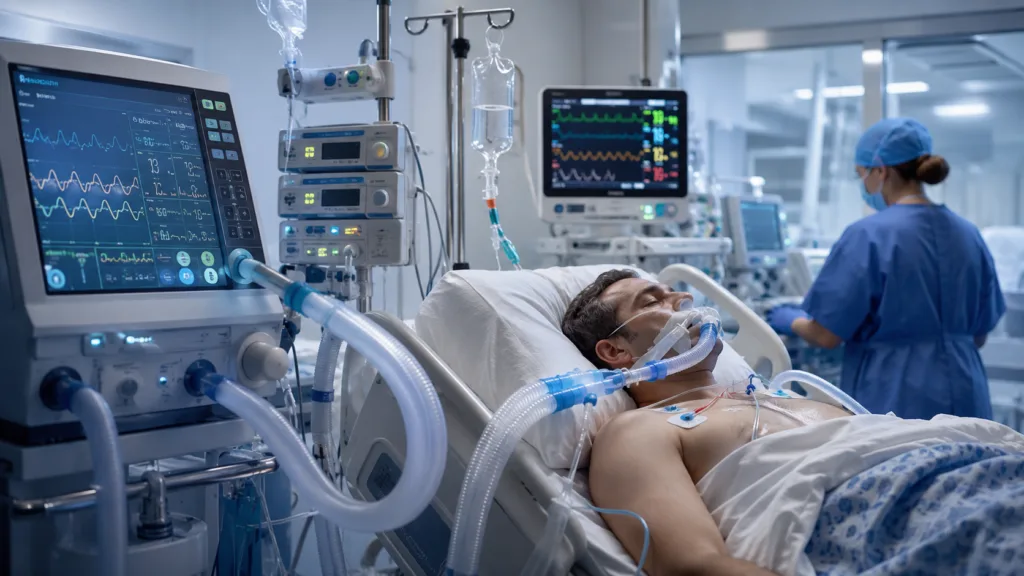
Mechanical ventilation saves lives, but it can also create a recovery bottleneck. When a ventilator takes over much of the work of breathing, the diaphragm can weaken during the very period when a patient most needs respiratory strength to return. That makes prolonged ventilation a paradox for intensive care teams. The support that keeps a patient alive can also contribute to the deconditioning that makes liberation from support harder.
AeroPace System addresses that problem by stimulating the phrenic nerves through a temporary transvenous catheter, causing diaphragm contractions intended to preserve or improve respiratory muscle function. This is clinically meaningful because difficult weaning is not just an inconvenience for ICU teams. It can prolong hospital stays, increase exposure to complications, raise resource use and make recovery more uncertain for patients already dealing with severe illness. A therapy that targets the diaphragm directly therefore speaks to a major unmet need in critical care medicine.
However, the clinical logic does not remove the adoption challenge. ICU patients who remain ventilated beyond 96 hours are often heterogeneous, medically unstable and exposed to multiple competing causes of weaning failure, including infection, cardiac dysfunction, sedation burden, weakness, delirium and underlying lung disease. A device that improves diaphragm activation may not solve all those factors. That is why clinicians are likely to view AeroPace System as a targeted adjunct for selected patients rather than a broad replacement for established ventilator liberation protocols.
What AeroPace System changes for hospitals managing difficult to wean patients
The most practical change is that AeroPace System gives hospitals a device based option for a group of patients with few direct therapies for diaphragm dysfunction. Standard care can include spontaneous breathing trials, ventilator setting adjustments, mobilization, nutrition optimization, secretion management and sedation reduction. These interventions remain essential, but they do not directly exercise the diaphragm in a controlled, nonvolitional way while a patient is still dependent on ventilatory support.
This makes AeroPace System different from conventional respiratory therapy strategies. It is not asking a critically ill patient to perform effortful breathing exercises. It uses neurostimulation to activate the diaphragm even when a patient is weak, sedated or unable to participate fully. That could be particularly relevant in high acuity ICUs where patients may be too fragile for aggressive rehabilitation early in their course.
The unresolved issue is operational consistency. Placement of a transvenous catheter, coordination between intensivists and respiratory therapists, stimulation scheduling, monitoring for adverse events and decisions about when to stop therapy all require disciplined workflows. Hospitals that already have advanced critical care teams may be better positioned to adopt the technology than smaller centers with limited specialist bandwidth. North Shore University Hospital’s status as a major trauma and teaching hospital makes the deployment notable, but it may not fully predict how adoption would look in less resourced settings.
How the clinical evidence supports the device while still leaving questions for ICU teams
The clinical case for AeroPace System rests on the idea that temporary transvenous diaphragm neurostimulation can improve weaning outcomes in patients who have already struggled to come off mechanical ventilation. The pivotal evidence base included difficult to wean adult patients and evaluated outcomes such as successful weaning, duration of ventilation, respiratory muscle strength, ventilator free days and safety events. That gives the device a stronger evidence footing than purely observational ICU innovation.
The important strength of the evidence is that it targets a clinically meaningful endpoint. Successful weaning is not a surrogate that only matters to device developers. It matters to patients, hospitals and payers because each additional ventilator day can carry clinical risk and economic cost. A reduction of even a few days on mechanical ventilation, if reproduced in real world practice, could have meaningful implications for ICU throughput and hospital resource allocation.
The limitation is equally important. The pivotal study was open label, used a Bayesian design that incorporated prior trial information, and reported a possible increase in serious adverse events in the treatment group even though mortality was not higher. For ICU clinicians, that means the evidence should be interpreted as promising but not frictionless. A therapy can show a high probability of benefit and still require careful patient selection, procedural caution and post market surveillance before becoming routine practice.
Why the safety profile will matter as much as the ventilator reduction claim
The safety discussion around AeroPace System is central because the device involves vascular access in critically ill patients. These patients are already vulnerable to bleeding, infection, arrhythmias, hemodynamic instability and catheter related complications. Adding a transvenous neurostimulation catheter may be clinically justified if the benefit is strong, but the risk profile must remain acceptable across real world use, not only in experienced trial centers.
This is where the post approval study becomes important. Continued evaluation in the post market setting can clarify whether the balance between faster weaning and procedural risk remains favorable as more hospitals use the technology. A technology that performs well in selected centers can face more variable outcomes when adopted across broader clinical environments with different staffing models, training depth and patient complexity.
Regulatory watchers are likely to focus on whether serious adverse events remain manageable, whether catheter placement success is high, and whether the observed benefit is maintained outside controlled study conditions. Clinicians will also want clarity on which patient phenotypes benefit most. Patients with primary diaphragm weakness may respond differently from those whose weaning failure is driven mainly by fluid overload, severe lung mechanics, neurological impairment or unresolved sepsis.
What reimbursement changes could mean for adoption of diaphragm neurostimulation
Reimbursement may be one of the most important commercial variables for AeroPace System. ICU devices that require procedural placement, staff training and capital or consumable costs can face slow adoption even when the clinical rationale is strong. Hospitals need a credible path to payment, especially for technologies used in high cost inpatient settings where margins and coding rules are already complex.
The availability of New Technology Add On Payment support under Medicare changes the adoption conversation by reducing some of the financial hesitation around early use. That does not guarantee broad uptake, but it gives hospitals a stronger reason to evaluate the device within existing ICU economics. If hospitals can link AeroPace System use to fewer ventilator days, shorter ICU stays or lower reintubation burden, the value case becomes more compelling.
The risk is that reimbursement support can create early momentum without resolving long term budget integration. Hospitals still need to build internal protocols, educate billing teams, document eligible cases and justify use to clinical committees. Once temporary reimbursement support evolves or expires, adoption will depend more heavily on local outcomes, cost effectiveness evidence and whether the device becomes embedded in critical care pathways.
Why North Shore University Hospital’s use matters for Lungpacer Medical’s commercial story
For Lungpacer Medical, the North Shore University Hospital deployment offers more than a single hospital milestone. It gives the U.S.-based medical device manufacturer a high visibility East Coast reference point as it moves from regulatory approval into commercial execution. That transition is often the hardest phase for medtech companies because approval establishes permission to sell, while adoption requires hospitals to change behavior.
This is especially true in critical care, where clinicians are cautious by design. ICUs are high stakes environments, and new devices must prove that they fit into urgent workflows without adding avoidable complexity. A therapy that requires interdisciplinary coordination must win confidence from intensivists, respiratory therapists, nurses, vascular access teams, hospital administrators and coding personnel. Each group looks at value through a different lens.
The commercial opportunity therefore depends less on the headline claim of faster ventilator weaning and more on repeatability. Lungpacer Medical will need to show that hospitals can deploy AeroPace System consistently, train teams efficiently, manage safety monitoring and capture reimbursement without slowing ICU care. Early adopter hospitals can help create that playbook, but scale will depend on whether the workflow can travel.
How AeroPace System compares with existing approaches to ventilator liberation
Existing ventilator liberation strategies generally focus on readiness assessment, spontaneous breathing trials, ventilator mode optimization, sedation management, early mobilization and respiratory therapist led care pathways. These approaches remain the backbone of ICU practice because they are familiar, protocol driven and broadly applicable. AeroPace System does not replace them. It adds a device based mechanism intended to address the specific problem of diaphragm inactivity and weakness.
That distinction matters because device adoption in critical care often fails when products appear to compete with established protocols rather than strengthen them. AeroPace System is more likely to gain acceptance if clinicians see it as part of a bundled weaning strategy for patients who have already failed conventional efforts. In that framing, the device is not a shortcut. It is a targeted intervention for a subgroup at risk of prolonged dependence.
The comparison also highlights a limitation. Standard weaning practices are inexpensive relative to device based therapy, even if they are labor intensive. AeroPace System will need to justify its incremental cost through measurable clinical outcomes. Fewer ventilator days, lower reintubation rates, reduced tracheostomy burden or shorter ICU stays could support that argument, but hospitals will want real world evidence from their own patient populations before making it routine.
What regulators, clinicians and industry observers are likely to watch next
The next phase will be shaped by post market evidence, implementation experience and hospital economics. Regulators will watch safety and effectiveness in broader use. Clinicians will watch which patients benefit most and whether the device meaningfully changes the difficult to wean pathway. Hospital executives will watch whether the technology reduces downstream costs enough to offset procedural and acquisition expenses.
Industry observers will also track whether diaphragm neurostimulation becomes a category rather than a single product story. If AeroPace System establishes a credible clinical and reimbursement model, it could encourage more investment in ICU neuromodulation, respiratory muscle preservation and device assisted rehabilitation for critically ill patients. That would expand the competitive field, but it would also validate the underlying concept that ventilator recovery can be treated more actively.
For now, Northwell Health’s deployment should be read as an early commercial signal, not a final verdict. The technology is new in routine practice, the patient population is complex, and the balance between benefit and risk will need continued scrutiny. Still, the direction of travel is clear. Ventilator weaning is no longer only a matter of waiting for patients to regain strength. It is becoming a field where medical device makers, hospitals and critical care teams are testing whether targeted stimulation can accelerate recovery without adding unacceptable risk.
Why the real test is whether ICU innovation can move from breakthrough to standard workflow
AeroPace System’s broader importance lies in the pressure it places on the ICU medtech adoption model. Many hospitals want technologies that improve outcomes, but they also need tools that are practical, reimbursable and compatible with strained staffing realities. A device that requires specialized placement and monitoring must prove that its clinical benefit is strong enough to justify new workflow steps.
That makes the North Shore University Hospital case a useful early signal. It shows that a major health system is willing to test diaphragm neurostimulation in a real ICU setting after FDA approval. It also underscores how much work remains before such therapy becomes a standard option for mechanically ventilated patients. Hospitals will need evidence, training, payment clarity and patient selection criteria that are clear enough for everyday use.
The most realistic outlook is neither hype nor dismissal. AeroPace System represents a genuinely new way to address a stubborn problem in prolonged mechanical ventilation, but its future will depend on execution. If real world results continue to show faster weaning with acceptable safety and workable economics, diaphragm neurostimulation could become an important addition to critical care. If adoption proves too complex or benefits appear inconsistent across patient groups, it may remain a specialized tool for advanced centers. The next few years of post market use will decide which path dominates.