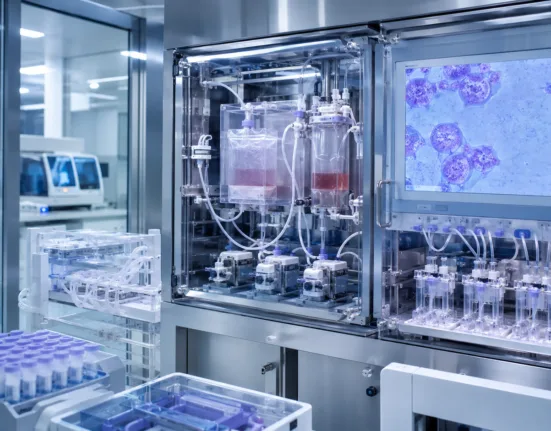
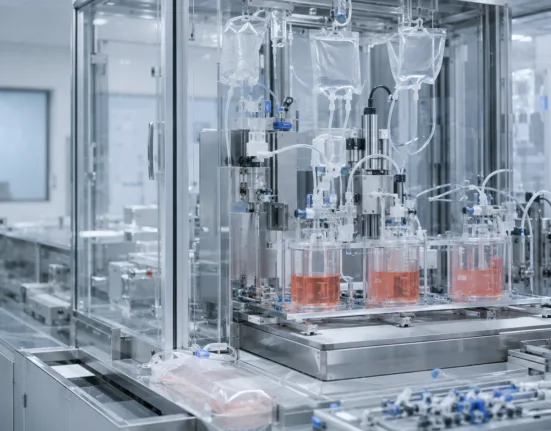
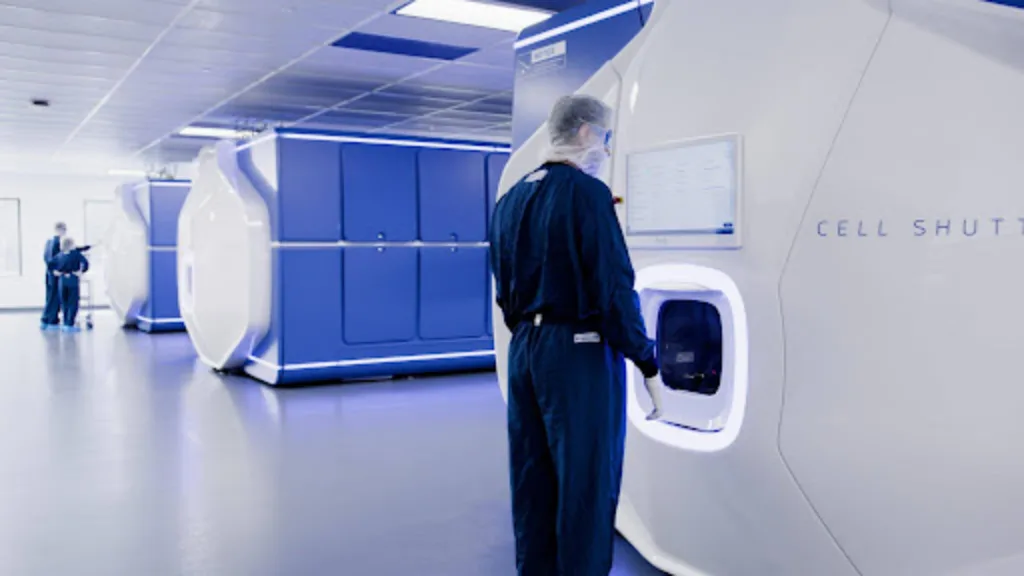
Cellares Corp. has been selected for the U.S. Food and Drug Administration’s inaugural FDA PreCheck Pilot Program for its Bridgewater, New Jersey, Smart Factory, where the Cell Shuttle automated manufacturing platform and Cell Q quality control system are intended to support cell-based gene therapies for oncology and hematology. The selection creates an early facility-focused regulatory channel as Cellares moves toward commercial-scale production, but it does not approve any therapy, guarantee an inspection outcome or remove product-specific clinical and manufacturing requirements.
Why FDA PreCheck changes the timing of manufacturing scrutiny without guaranteeing approval
The most important change is not that Cellares has received a regulatory shortcut. It is that regulatory scrutiny of the Bridgewater facility can begin much earlier than it ordinarily would. The FDA selected seven participants from more than 80 requests, with the programme designed to bring facility design, equipment qualification, pharmaceutical quality systems and manufacturing-readiness questions into discussions before a product application reaches the agency.
That timing could be particularly valuable in cell therapy, where a sponsor may accumulate encouraging clinical data while manufacturing infrastructure remains insufficiently mature for a Biologics License Application. Facility deficiencies discovered during application review or a pre-approval inspection can require remediation, additional documentation or process changes at a point when clinical, commercial and investor expectations are already elevated. Resolving design and quality-system questions before the facility becomes operational may reduce the risk of expensive redesigns or delayed inspections.
However, FDA PreCheck does not pre-clear the Bridgewater Smart Factory. Participation is voluntary, and the FDA has explicitly separated early facility alignment from decisions on product approval, application review and inspection outcomes. Clinical efficacy, safety, potency, comparability, stability and product-specific manufacturing controls will still determine whether an individual therapy can be approved.
For Cellares, the selection therefore represents regulatory access rather than regulatory validation. The automated manufacturing specialist already holds an FDA Advanced Manufacturing Technology designation for Cell Shuttle. PreCheck adds a facility-level engagement pathway to that technology-level recognition, potentially creating a more coordinated regulatory dialogue. It does not convert either designation into evidence that every cell therapy transferred onto the platform will meet approval standards.
How Bridgewater could become a reusable regulatory foundation for multiple cell therapy sponsors
Cellares’ Bridgewater site is central to the significance of the selection. The 118,000-square-foot facility was designed as a commercial-scale Smart Factory with space for as many as 50 Cell Shuttle systems. Cellares has projected capacity of up to 40,000 conventional cell therapy batches annually, with higher theoretical output possible for shorter manufacturing processes.
Those numbers illustrate the scale Cellares is targeting, but theoretical capacity is not the same as validated commercial output. The more immediate regulatory advantage may come from the facility-specific Type V Drug Master File being developed through the PreCheck programme. This file is intended to hold detailed information about the facility, installed equipment, quality systems and other manufacturing infrastructure that can later be referenced by product applications.
For a multi-product manufacturing organisation, that approach could reduce repetitive reviews of common facility information. Instead of reconstructing the same site description, equipment qualification history and quality-system documentation for every sponsor, Cellares may be able to establish a reusable regulatory knowledge base. This is especially relevant for an integrated development and manufacturing organisation serving multiple biotechnology and pharmaceutical partners.
The limitation is that the reusable elements are principally facility-related. Each sponsor will still need to establish that its particular process is controlled and that the resulting cell therapy possesses the required identity, purity, potency, viability and safety characteristics. A common building and common automation platform do not make different CAR T, TCR T, stem cell or progenitor T cell therapies biologically interchangeable.
Bridgewater must also demonstrate that a high-throughput, multi-product operation can maintain segregation, chain of identity and chain of custody without compromising scheduling flexibility. In autologous manufacturing, each batch is linked to a particular patient. A documentation error, material mix-up or delayed release may therefore have a direct clinical consequence rather than merely creating an inventory problem.
Why Cell Shuttle automation may reduce manual variability while creating new platform-level risks
Cell therapy manufacturing has historically depended on labour-intensive workflows involving multiple instruments, manual transfers, cleanroom operations and specialist operators. Each intervention can introduce variability, scheduling constraints and opportunities for contamination or documentation errors. Cellares is attempting to integrate cell selection, activation, genetic modification, expansion, formulation and other operations within the Cell Shuttle, while Cell Q is intended to automate in-process and release quality control.
A more integrated workflow could reduce operator touchpoints, standardise manufacturing execution and generate more consistent electronic records. It could also allow manufacturing capacity to be expanded by deploying additional systems rather than building a separate cleanroom suite for every programme. For sponsors expecting demand across multiple indications or geographic markets, repeatable equipment and software configurations may make technology transfer more predictable.
Automation nevertheless changes the nature of the risk rather than eliminating it. Manual errors may decline, but software validation, sensor calibration, user-access controls, data integrity, equipment maintenance and cybersecurity become more important. A failure in a shared software component or commonly used consumable could affect several batches or programmes rather than remaining isolated to one operator or manufacturing suite.
The FDA will also need confidence that automated decisions remain transparent and traceable. Deviations must be detectable, electronic records must be reviewable and human operators must retain the ability to respond appropriately when a process moves outside predefined limits. Regulators are unlikely to accept a black-box model in which automation produces a result without sufficient visibility into the underlying process data.
The platform model creates another strategic question. Standardisation can accelerate manufacturing only when a sponsor’s process can be translated without materially altering the final product. Cell therapies are highly sensitive to starting material, culture conditions, activation methods, gene-transfer steps and process duration. A successful automation project must preserve the critical quality attributes associated with the therapy’s clinical performance.
What Cellares still must prove beyond early clinical manufacturing and regulatory recognition
Cellares has progressed beyond a purely engineering-stage platform. FDA clearance of an investigational new drug amendment allowed clinical manufacturing of Cabaletta Bio Inc.’s resecabtagene autoleucel, also known as rese-cel, on the Cell Shuttle. Initial good manufacturing practice doses met release specifications and were administered to patients, while the two organisations subsequently entered a 10-year commercial supply agreement.
These milestones provide important evidence that Cell Shuttle can produce material suitable for clinical use. They also show that a sponsor was prepared to extend the relationship from technology adoption into long-term manufacturing planning. That is more meaningful than a laboratory demonstration because the platform must operate within documented controls, release testing and clinical delivery schedules.
Early patient dosing, however, remains a limited validation set. Commercial manufacturing requires reliable performance across hundreds or thousands of batches, including starting material collected from patients with varying health status, treatment histories and cellular characteristics. Success with initial batches cannot by itself establish long-term process capability, equipment uptime or release reliability.
Cellares must also demonstrate that automation can accommodate different manufacturing processes without turning the platform into a series of heavily customised systems. Excessive programme-specific modification could weaken the economic argument for standardisation, increase validation work and complicate change control. Conversely, forcing diverse therapies into an overly rigid process could affect product characteristics.
The next level of proof will therefore come from repeated clinical manufacturing across multiple sponsors and modalities. Batch success rates, deviation frequency, turnaround times, out-of-specification results and consistency across Cell Shuttle units will be more informative than theoretical factory capacity. Regulatory recognition creates an opportunity to generate that evidence under closer FDA engagement, but it cannot replace the evidence itself.
How the PreCheck pathway could affect CMC strategy, technology transfer and sponsor economics
For biotechnology sponsors, the potential value of FDA PreCheck lies in greater predictability around chemistry, manufacturing and controls planning. Early familiarity with the Bridgewater facility could allow product developers to identify documentation gaps, qualification requirements and inspection risks before a late-stage application is assembled. That may help sponsors plan comparability studies and process validation with a clearer understanding of the facility framework.
A reusable Type V Drug Master File could also make Cellares more attractive to smaller biotechnology firms that lack the capital or expertise to build dedicated commercial facilities. Instead of financing an internal manufacturing network before clinical success is certain, a sponsor could access an existing automated infrastructure and reserve capacity as its programme advances.
That model still requires careful timing. Moving a therapy from an academic or manually operated process to Cell Shuttle late in development may trigger extensive analytical comparability work. Sponsors must demonstrate that the manufacturing change has not altered clinically relevant product attributes. A facility may be well understood by the FDA while the transferred process remains insufficiently characterised.
Manufacturing cost reductions should also be separated from assumptions about therapy pricing. Lower labour requirements, higher facility productivity and automated quality control could improve the cost of goods. They do not guarantee lower list prices, broader reimbursement or faster treatment-centre adoption. Commercial pricing will still reflect clinical value, development expenses, competitive positioning and payer negotiations.
The strongest economic benefit may initially be risk reduction rather than dramatic cost reduction. Predictable technology transfer, reserved capacity and fewer facility-related delays can protect development timelines and reduce the probability that a promising programme encounters a preventable manufacturing bottleneck near approval.
Why commercial-scale capacity claims will be judged by reliability rather than theoretical throughput
Cellares has attracted substantial financial and commercial backing for its manufacturing model. The U.S.-based cell therapy manufacturer expanded its Series D financing to $327 million in June 2026. It also has a global capacity reservation and supply agreement with Bristol Myers Squibb valued at up to $380 million, alongside the long-term rese-cel arrangement with Cabaletta Bio.
These commitments indicate that major sponsors and institutional investors see a genuine need for scalable cell therapy manufacturing. They also give Cellares capital to install equipment, qualify facilities, build quality systems and expand internationally. The funding reduces near-term infrastructure risk, but it does not remove utilisation risk.
A factory designed for tens of thousands of batches needs a substantial pipeline of successful therapies to support its economics. Many cell therapy candidates will not progress to approval, while approved therapies can face slower-than-expected adoption because of eligibility restrictions, treatment-centre capacity, reimbursement challenges or competing products. Manufacturing reservations can provide revenue visibility, but sustainable utilisation depends on clinical and commercial demand.
High throughput must also be accompanied by dependable release testing. Manufacturing a large number of batches provides limited value when quality control becomes the bottleneck. Cell Q is therefore strategically important to the Cellares model, since automation of production without corresponding automation of analytical testing could simply move the queue from the factory floor to the quality laboratory.
International expansion introduces further complexity. Facilities in Europe and Japan may use similar equipment and software, but the U.S. PreCheck selection applies to the Bridgewater site. Regulatory expectations, inspection histories and product submissions will still need to be managed across jurisdictions. Global replication will require evidence that the process remains comparable across sites rather than an assumption that identical machines automatically produce an identical regulatory outcome.
What regulators, clinicians and cell therapy developers are likely to watch next
The first test will be how effectively Cellares uses the facility-readiness phase of FDA PreCheck. Regulators may review Bridgewater’s design, equipment installation and qualification strategy, pharmaceutical quality system and pre-production readiness. A possible site visit would not constitute an inspection, but it could reveal whether the facility is positioned to support future application-specific assessments.
The second test will come when a sponsor submits a Biologics License Application or supplement that relies on Bridgewater. At that point, the value of early facility engagement can be measured through the efficiency of the assessment, the timing of any inspection and the number or severity of manufacturing questions raised during review.
Cell therapy developers will focus on practical metrics including technology-transfer duration, batch success, manufacturing turnaround time, on-time delivery and release-testing performance. Clinicians will be less concerned with factory terminology than with whether eligible patients can receive therapy without avoidable delays or manufacturing failures. Regulators will examine whether the automated system maintains control as production volume and process diversity increase.
Industry observers will also watch whether Cellares can convert one-site regulatory learning into a replicable manufacturing network. If Bridgewater establishes a credible template for automated, multi-product cell therapy production, the PreCheck process could strengthen Cellares’ position as a manufacturing partner. If facility qualification, process comparability or high-throughput operations prove more difficult than expected, the programme will expose those limitations earlier.
The FDA PreCheck selection is therefore a meaningful milestone, but not a verdict on the commercial success of Cell Shuttle or the therapies manufactured on it. It gives Cellares an opportunity to address facility risk before it reaches the critical path of a product review. The outcome will depend on whether the Bridgewater Smart Factory can translate automation, regulatory engagement and theoretical capacity into repeatable clinical and commercial manufacturing performance.