Cellares and Papillon Therapeutics Inc. said on July 21, 2026, that they will collaborate to automate manufacturing of PPL-001, Papillon’s investigational gene-corrected hematopoietic stem and progenitor cell therapy for Friedreich’s ataxia. Cellares will transfer the manufacturing process onto its Cell Shuttle platform and support in-process and release testing through Cell Q, although the companies did not disclose financial terms, a completed technology-transfer timeline or a date for beginning a first-in-human trial.
The collaboration addresses one of the less visible but decisive obstacles confronting personalized cell therapies. PPL-001 remains in preclinical, Investigational New Drug-enabling development, meaning that the manufacturing agreement does not provide human evidence of safety or efficacy and does not indicate that the United States Food and Drug Administration has authorized clinical testing.
What it could provide is a more standardized route from patient cell collection to a clinical-grade investigational product. That matters because manufacturing consistency, gene-editing control, analytical testing and reliable lot release can determine whether a scientifically promising autologous therapy is practical enough to enter clinical development.
What does the Cellares agreement change for PPL-001 before a first-in-human study can begin?
Papillon Therapeutics is developing PPL-001 as an autologous therapy made using a patient’s own CD34-positive hematopoietic stem and progenitor cells. The development strategy involves collecting those cells, editing them outside the body to correct the disease-associated genetic defect, processing and testing the resulting cell product, and eventually returning the corrected cells to the same patient.
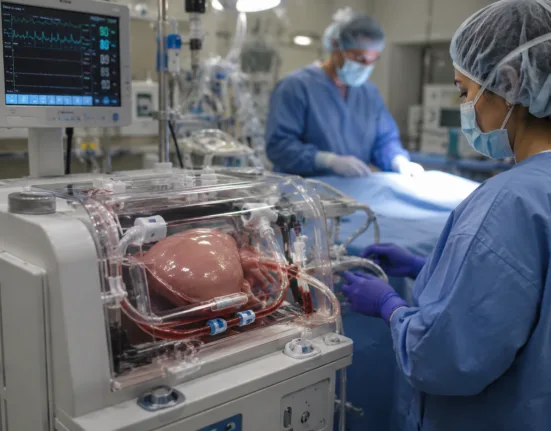
Under the collaboration, Cellares will translate that process onto Cell Shuttle, its closed, automated cell-therapy manufacturing platform. Cell Q is intended to automate parts of the quality-control and release-testing workflow. Together, the platforms are designed to reduce manual interventions and make different production runs more reproducible.
The operative word, however, is “translate.” Papillon has not announced that the PPL-001 process is already running at clinical scale on Cell Shuttle. Process transfer normally requires engineering work, optimization, analytical-method transfer, repeated manufacturing runs and evidence that automation does not adversely alter the characteristics of the cells.
The immediate value of the agreement is therefore developmental rather than clinical. Papillon gains access to infrastructure that could support manufacturing for an initial trial and, if the therapy eventually succeeds, provide a possible path toward broader production. Cellares gains another genetically modified cell-therapy program for its manufacturing network, this time in an inherited neurological and multisystem disorder rather than a more established oncology setting.
Neither outcome establishes that PPL-001 is ready for patients. The next meaningful evidence will come from successful process-transfer work, production of representative clinical-grade batches and a regulatory package demonstrating that the automated process is adequately controlled.
Why is manufacturing unusually consequential for a gene-corrected autologous HSPC therapy?
Autologous therapies do not use a standardized vial produced in large batches for thousands of patients. Each patient’s starting material becomes the basis for an individual manufacturing lot, creating variability in cell numbers, cellular composition and processing performance before gene editing even begins.
For PPL-001, the manufacturing process must produce enough appropriately edited stem and progenitor cells while preserving the properties required for long-term engraftment. The product will also require controls for identity, purity, viability, gene-editing efficiency, potency and microbiological quality. Regulators will expect the developer to characterize unwanted genomic changes and establish a strategy for assessing risks associated with editing cells capable of long-term persistence.
Automation may reduce operator-dependent variation and the number of open handling steps. A closed workflow could also help control contamination risk, documentation and process timing. Automated release testing may become particularly valuable if it reduces the interval between manufacturing completion and a decision on whether a patient-specific product can be administered.
Those advantages remain platform objectives until they are demonstrated for the specific PPL-001 process. Cell quality can still be affected by the incoming patient material, collection procedures, transport conditions, editing performance and delays between process stages. Automation cannot eliminate the need for trained clinical centers, chain-of-identity controls or contingency plans for failed or out-of-specification batches.
The companies have not disclosed the expected manufacturing duration, number of concurrent PPL-001 batches, proposed release specifications or anticipated batch-success rate. They have also not provided a comparison between the existing research process and the planned automated process. Those details will become more important as the program approaches regulatory submission.

How mature is the evidence that correcting the FXN mutation can address multisystem Friedreich’s ataxia?
Friedreich’s ataxia is usually caused by expanded GAA repeats within the first intron of the FXN gene, which reduce production of frataxin. The resulting cellular dysfunction affects the nervous system and can also involve the heart, skeletal muscle and pancreas. Symptoms commonly begin during childhood or adolescence and progress over time.
Papillon said PPL-001 uses targeted gene editing to correct the repeat expansion responsible for more than 95% of Friedreich’s ataxia cases. The intended biological strategy is different from repeatedly administering a medicine that acts on a downstream disease pathway. PPL-001 is designed to create a population of corrected, patient-derived blood-forming stem cells capable of persisting and distributing functional frataxin across affected tissues.
The scientific rationale is supported by preclinical work, including experiments involving hematopoietic stem and progenitor cells from people with Friedreich’s ataxia and studies in disease models. Researchers have reported restoration of frataxin expression and improvement in measures of mitochondrial activity after removal of the expanded repeats in experimental systems. Transplantation studies in animal models have also supported further investigation of a stem-cell-based delivery strategy.
These findings remain preclinical. PPL-001 has not yet produced human evidence showing that edited cells engraft reliably, reach clinically relevant tissues, restore sufficient frataxin or slow neurological and cardiac deterioration. It is also unknown whether any biological effect would be durable enough to justify the complexity and potential risks of an autologous cell-therapy procedure.
A first-in-human trial would initially need to establish much more than whether the manufacturing process can produce an edited product. Investigators would need to assess treatment-emergent adverse events, engraftment, persistence, editing outcomes, changes in frataxin and possible early clinical signals. Longer follow-up would be necessary to evaluate durability and delayed risks.
Where could PPL-001 fit when omaveloxolone already treats some Friedreich’s ataxia patients?
Friedreich’s ataxia is no longer a field with no approved therapy. The United States Food and Drug Administration approved omaveloxolone, marketed as Skyclarys, for adults and adolescents aged 16 years and older in 2023. The medicine is taken orally and was supported by a randomized, double-blind, placebo-controlled study that evaluated changes in the modified Friedreich’s Ataxia Rating Scale over 48 weeks.
Skyclarys does not constitute a curative treatment, and its approved indication does not cover younger children. PPL-001 is being developed with a different objective, namely correcting the underlying genetic defect in patient-derived cells and potentially creating a durable, multisystem source of functional frataxin after a single treatment procedure.
That proposed distinction should not be interpreted as demonstrated superiority. PPL-001 has not entered human testing, while omaveloxolone has completed controlled clinical development and regulatory review. Differences in modality, patient selection, treatment burden, endpoints and follow-up would also make any future comparison more complicated than placing separate efficacy figures side by side.
If PPL-001 advances, its potential place in treatment would depend on the balance between durability and procedural burden. A one-time autologous therapy could be attractive if it produces sustained clinical benefit, but patients and physicians would also need to consider cell collection, manufacturing time, the treatment protocol, specialized-center requirements and short-term and long-term safety.
Papillon has received Orphan Drug Designation and Rare Pediatric Disease Designation from the United States Food and Drug Administration for PPL-001. These designations recognize the disease context and can provide development incentives, but they are not marketing approvals, do not establish efficacy and do not mean the candidate is ready for pediatric use.
What must Papillon demonstrate before Cellares manufacturing can support an IND submission?
The next regulatory challenge is to connect the biological hypothesis to a repeatable clinical manufacturing process. Papillon will need an adequate nonclinical safety package, genomic off-target assessments, information about the edited cells’ behavior and a chemistry, manufacturing and controls package describing how every clinical lot will be produced, tested, released and tracked.
Process comparability will be particularly important. Moving from a research or manually operated process to an automated platform can change mixing, timing, cell exposure, recovery, editing efficiency and final-product characteristics. Papillon and Cellares will need to show that the transferred process produces a product consistent with the candidate supported by the preclinical package.
The Cell Shuttle has received the United States Food and Drug Administration’s Advanced Manufacturing Technology designation. That status may facilitate regulatory engagement concerning use of the manufacturing platform, but it does not confer approval on PPL-001 or remove the need for product-specific evidence.
Cell Q could help create more consistent in-process and release testing, yet regulators will still examine whether the selected assays measure attributes that matter clinically. A rapid automated result is useful only if the method is sufficiently sensitive, specific, validated and relevant to product quality.
Development of PPL-001 has also received support from rare-disease and public research organizations. A $7.4 million California Institute for Regenerative Medicine award to a University of California San Diego team is supporting safety studies, manufacturing work and clinical planning needed before an Investigational New Drug application. Friedreich’s Ataxia Research Alliance and the National Institutes of Health have also supported research associated with the program.
The funding and manufacturing collaboration indicate that the program is moving through practical IND-enabling work. They do not resolve the scientific questions that can be answered only through a carefully designed clinical trial.
Can automation make a rare-disease autologous therapy commercially workable at small volumes?
Rare-disease cell therapies pose an unusual economic challenge. Patient numbers may be modest, but the manufacturing requirements for each individual dose can remain complex and expensive. A developer may need specialized production suites, trained operators, quality systems and validated assays even when annual volumes are far below those of a conventional medicine.
Cellares argues that its automated model can increase the number of batches produced with a comparable facility footprint and workforce. For Papillon, outsourcing the process could reduce the need to construct dedicated manufacturing infrastructure before PPL-001 has generated human proof of concept.
The arrangement may also offer continuity between early clinical supply and eventual commercial manufacturing. Avoiding a major late-stage process change can be valuable because manufacturing changes may require additional comparability work and regulatory review.
Commercial feasibility will nevertheless depend on more than factory throughput. The total treatment pathway would involve identifying eligible patients, collecting suitable cells, coordinating transportation, completing manufacturing and release testing, and returning the therapy to an appropriately equipped center. Batch failures or long turnaround times could have disproportionate consequences in a progressive rare disease.
No manufacturing price, capacity commitment or commercial-supply obligation was disclosed. It is therefore too early to determine whether automation will produce a meaningful reduction in cost per patient or merely improve the technical manageability of the process.
Which milestones will show whether the PPL-001 manufacturing collaboration has reduced risk?
The first useful milestones will be operational. These may include completion of technology transfer, successful engineering runs, establishment of analytical methods and production of clinical-grade material meeting predefined specifications. Regulatory feedback on the manufacturing package would provide a stronger indication that the process is suitable for an Investigational New Drug submission.
An accepted Investigational New Drug application would permit clinical testing, but it would not validate the therapy’s safety or therapeutic value. First-patient dosing would mark the transition into human development, after which attention would shift toward manufacturing reliability, acute tolerability, engraftment, gene-editing durability and early pharmacodynamic findings.
Cellares has given Papillon a potentially more industrialized route for producing PPL-001, which is a meaningful step for a technically demanding, patient-specific candidate. The decisive test is whether the partners can convert that platform promise into a reproducible product that satisfies regulators and then generates credible human evidence in Friedreich’s ataxia.