
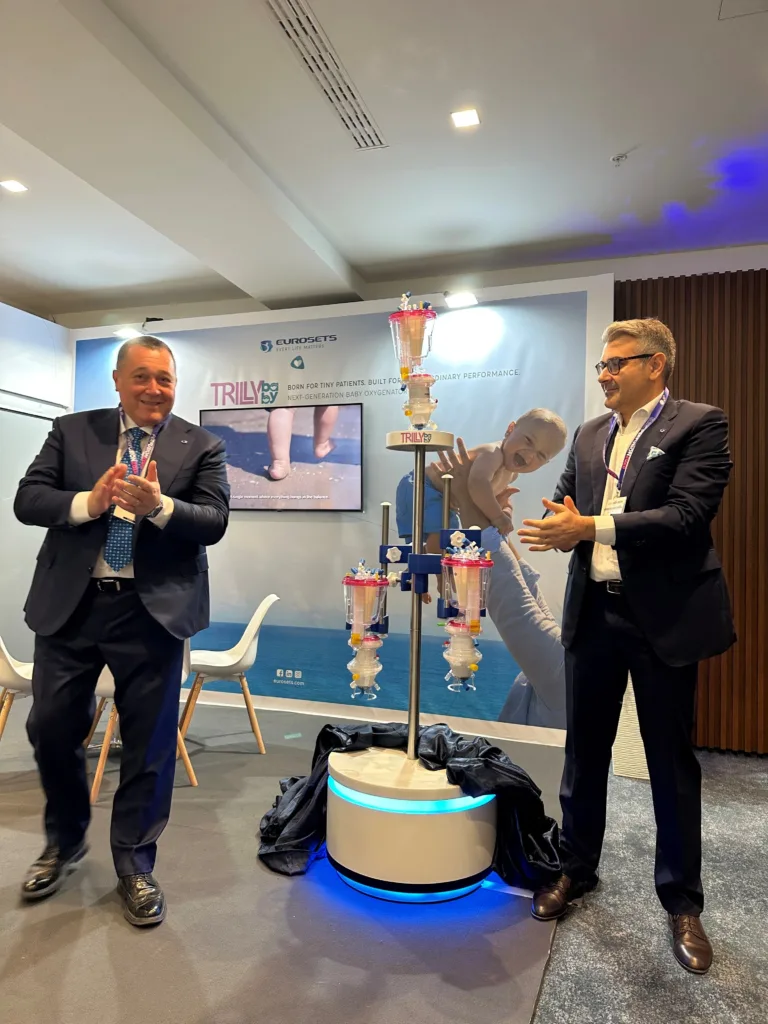
Eurosets has introduced Trilly Baby, a new oxygenator designed for cardiopulmonary bypass procedures in infants and other very small patients undergoing open-heart surgery. Presented at Europerfusion 2026 in Belgrade, Serbia, on October 30, the device is engineered to support blood flow rates ranging from 0.1 to 1.8 litres per minute, addressing the specialised perfusion requirements of paediatric cardiac surgery.
The Italian medical technology manufacturer plans to introduce Trilly Baby through a controlled release involving 14 specialist European paediatric cardiac surgery centres beginning in January 2027. However, the rollout remains conditional on obtaining CE marking, which Eurosets expects by the end of 2026. The announcement therefore represents a product introduction and planned market entry rather than confirmation that the device has already completed European regulatory conformity assessment.
The commercial opportunity lies in a specialised but clinically demanding segment of extracorporeal circulation. Cardiopulmonary bypass in very small infants requires careful control of blood flow, oxygen delivery, circuit volume and blood-material interactions because the patient’s total circulating blood volume can be comparable to the volume required to fill the extracorporeal circuit. Trilly Baby’s success will depend on whether its design characteristics translate into reliable clinical performance and practical advantages over established paediatric oxygenators.
Why has Eurosets developed Trilly Baby specifically for the smallest patients undergoing open-heart surgery?
Cardiopulmonary bypass temporarily takes over the functions of the heart and lungs during selected cardiac procedures. Blood is diverted from the patient’s circulation into an extracorporeal circuit, where an oxygenator supplies oxygen and removes carbon dioxide before the blood is returned to the body. This allows surgeons to operate on the heart under controlled conditions.
In neonates and small infants, the physiological margin for error is considerably narrower than in adults. Their circulating blood volume is much smaller, and changes in circuit volume or pump flow can have a proportionately greater effect on haemodynamics. Perfusion teams must also account for differences in oxygen requirements, temperature management and responses to extracorporeal circulation.
Eurosets developed Trilly Baby to address this specialised environment rather than simply adapt an adult oxygenator to a smaller flow rate. The device is intended for cardiopulmonary bypass procedures requiring flows between 0.1 and 1.8 litres per minute. This range provides the principal publicly disclosed technical specification supporting its positioning within paediatric cardiac surgery.
However, the announcement does not provide a complete technical data sheet. Oxygenator priming volume, membrane surface area, pressure-drop characteristics and measured gas-transfer performance were not disclosed. Those specifications will be important for assessing exactly how the new device differs from established alternatives.
How could Trilly Baby’s 0.1 to 1.8 litres per minute blood flow range support neonatal perfusion?
Blood flow is a central parameter in cardiopulmonary bypass because the extracorporeal circuit must deliver sufficient oxygenated blood to support the patient’s tissues. In paediatric procedures, the appropriate flow depends on factors including body size, temperature, metabolic demand and the clinical strategy selected by the perfusion team. A device intended for very small patients must therefore perform reliably over a comparatively low flow range.
Trilly Baby’s stated operating range begins at 0.1 litres per minute and extends to 1.8 litres per minute. This indicates that Eurosets has engineered the oxygenator for applications involving substantially smaller flows than those commonly encountered during adult cardiac surgery. The range may support different patient sizes and procedural circumstances within the intended paediatric population.
However, the flow specification should not be interpreted as a guarantee of appropriate oxygen delivery in every infant. Actual performance depends on the relationship between blood flow, oxygenator membrane characteristics, gas flow, haemoglobin concentration and the patient’s physiological requirements. The perfusion team must also consider pressure gradients and the performance of other circuit components.
The commercial relevance of the operating range will depend on how effectively the device performs across its full intended use. A low minimum flow could be attractive for particularly small patients, but clinical teams will need supporting data showing adequate gas exchange and manageable resistance at relevant settings. Eurosets has not yet published comparative clinical results establishing a performance advantage.
Why does extracorporeal circuit priming volume matter so much in neonatal cardiac surgery?
Priming volume is the amount of fluid required to fill the extracorporeal circuit before bypass begins. This includes the oxygenator and associated tubing and components. In adult patients, circuit volume generally represents a relatively small proportion of total circulating blood volume, but in neonates it can approach or exceed a substantial proportion of the patient’s own blood volume.
This creates a risk of haemodilution, where the patient’s blood is diluted by the fluid used to prepare the circuit. Excessive dilution can reduce haemoglobin concentration and influence oxygen-carrying capacity. Depending on the clinical circumstances, blood products may be required to maintain appropriate oxygen delivery and other physiological parameters.
Reducing circuit volume is therefore an important objective in paediatric perfusion technology. Smaller components and carefully designed circuit layouts can potentially reduce the amount of priming fluid required. However, improvements must be balanced against gas-transfer capacity, pressure resistance and other technical requirements.
Eurosets has identified the special perfusion needs of small infants as a reason for developing Trilly Baby, but it has not disclosed the device’s priming volume in the October announcement. Consequently, no claim can yet be made that Trilly Baby requires less priming fluid than specific competing oxygenators. That comparison would require verified product specifications and appropriate performance testing.
The distinction matters because low-flow capability and low priming volume are related but separate design characteristics. A device may support low blood flows without necessarily offering the lowest circuit volume. Hospitals considering adoption will need to evaluate both characteristics within their established bypass systems.
How do biocompatibility and blood-material interactions influence paediatric oxygenator safety?
Blood flowing through an extracorporeal circuit comes into contact with artificial surfaces that differ substantially from the lining of natural blood vessels. This contact can activate inflammatory, coagulation and other biological responses. The effects are particularly relevant during complex cardiac surgery, where patients may already be exposed to substantial physiological stress.
Small infants can be especially vulnerable because the surface area of the extracorporeal circuit is large relative to their blood volume. Perfusion teams must manage anticoagulation, temperature changes and blood-component preservation while maintaining sufficient circulation. Oxygenator materials and surface characteristics can influence these processes.
Eurosets has positioned biocompatibility as one of the central design considerations for Trilly Baby. However, the company has not disclosed detailed coating chemistry, comparative inflammatory-marker data or clinical haemolysis findings for the new product. Its description therefore establishes a design priority rather than a validated reduction in complications.
For clinical adoption, hospitals will want evidence that the oxygenator performs consistently during procedures of relevant duration and complexity. Laboratory testing may characterise haemolysis, pressure changes and gas exchange, while clinical experience can identify issues that are difficult to reproduce experimentally. Both types of evidence contribute to evaluating an extracorporeal device.
The need for careful safety assessment also extends to the full bypass circuit. Even a well-performing oxygenator cannot eliminate risks associated with cannulation, pumps, tubing, anticoagulation or the underlying cardiac procedure. Any eventual improvement in patient outcomes would need to be demonstrated through appropriate clinical evidence.
What does pending CE marking mean for the planned January 2027 Trilly Baby rollout?
Eurosets expects Trilly Baby to obtain CE marking by the end of 2026. Under the European medical device regulatory framework, CE marking follows the applicable conformity assessment process, which evaluates whether the device meets relevant safety and performance requirements. The assessment may involve a notified body depending on the device classification and applicable rules.
The October announcement does not confirm that Trilly Baby has completed this process. The company has presented the device at a professional congress and outlined its intended introduction, but these activities are distinct from authorisation to place the product on the European market under the applicable framework. Its planned launch therefore depends on successful completion of the remaining regulatory requirements.
This distinction is particularly important for devices used during cardiopulmonary bypass because their performance directly affects critical physiological functions during surgery. Manufacturers must provide appropriate technical documentation, risk management information and evidence supporting the intended use. Clinical evaluation is also relevant to the conformity assessment process.
Eurosets has not disclosed the notified body involved, the device’s regulatory classification or the precise date on which certification is expected to be completed. Although the company has expressed confidence in its year-end timetable, that target remains prospective. Any delay could affect the announced January 2027 controlled market release.
The next confirmed regulatory milestone will therefore be the actual completion of conformity assessment and the relevant CE-marking process. Until then, Trilly Baby should be described as a newly presented device awaiting its expected European regulatory milestone.
Why is Eurosets planning a controlled rollout across 14 European paediatric cardiac surgery centres?
Eurosets plans to introduce Trilly Baby initially through 14 specialist European centres rather than begin with an unrestricted commercial expansion. The company says these institutions were selected because of their experience treating very small cardiac surgery patients and conducting advanced extracorporeal perfusion procedures. Their involvement could provide valuable practical information about the new device in specialised clinical environments.
A controlled introduction can support structured training and collection of early operational feedback. Perfusion teams may need to assess circuit configuration, device handling, monitoring requirements and compatibility with existing equipment. These considerations can influence whether a new oxygenator can be integrated efficiently into established cardiac surgery workflows.
The company has not identified the participating centres or disclosed the number of procedures planned during the initial release. It has also not announced a formal comparative clinical study associated with the rollout. Consequently, the programme should not be described as a randomised clinical trial or as evidence that clinical superiority will be established.
A controlled rollout may nevertheless be commercially useful. Experienced centres can help identify practical issues before wider expansion and provide feedback relevant to training and device refinement. However, any product modifications would need to remain consistent with applicable regulatory and quality requirements.
The commercial outcome will depend on whether participating hospitals continue using the device and whether other institutions subsequently adopt it. Eurosets has not disclosed pricing, contracted purchasing volumes or anticipated revenue from the 14-centre programme. The announcement therefore establishes an initial access strategy rather than a quantified sales opportunity.
How does Trilly Baby fit into Eurosets’ wider cardiopulmonary and extracorporeal life support business?
Eurosets was founded in 1991 in Medolla, Italy, within the country’s established biomedical manufacturing region. The business was acquired by GVM Care & Research in 1998 and subsequently expanded from component manufacturing into the development of branded medical devices. It entered the cardiopulmonary oxygenator market in 2007 with the Admiral system.
The company has since built a portfolio covering cardiopulmonary bypass and extracorporeal life support technologies. These markets serve related clinical needs but involve different procedures, operating durations and device requirements. Cardiopulmonary bypass is typically used during cardiac surgery, while extracorporeal life support may sustain circulation or gas exchange over longer periods.
Trilly Baby extends the company’s offering into a more narrowly defined paediatric application. This could strengthen its relationships with hospitals that require different oxygenators for adult, paediatric and neonatal procedures. However, the announcement does not establish that the new device shares all components or operating characteristics with Eurosets’ existing product lines.
Antonio Petralia, chief executive officer of Eurosets, has presented the development as part of the company’s effort to address specialised clinical requirements through product engineering and collaboration with healthcare professionals. He has also identified international expansion as an important strategic objective. The planned European release provides an initial step towards that goal.
The business opportunity is likely to depend on specialist hospital purchasing rather than high-volume consumer-style distribution. Product reliability, training, perfusion team familiarity and clinical support will all influence customer decisions. An established cardiovascular device portfolio may help Eurosets engage prospective buyers, but adoption of Trilly Baby will require product-specific evaluation.
What challenges could limit the commercial adoption of a new neonatal cardiopulmonary bypass oxygenator?
The paediatric cardiac surgery market is highly specialised, and hospitals generally use equipment that has undergone extensive internal evaluation. Perfusion teams must be confident that a new oxygenator can meet the requirements of complex procedures across different patient sizes. Switching suppliers may involve protocol changes, staff training and adjustments to existing circuits.
Competing oxygenator technologies already serve neonatal and paediatric cardiac surgery. Eurosets will therefore need to establish why hospitals should adopt Trilly Baby in place of, or alongside, existing products. The October announcement does not provide the comparative data required to determine whether it offers advantages in priming volume, gas exchange, haemolysis or handling.
Procurement decisions may also reflect price and supply reliability. Paediatric heart surgery centres need consistent access to essential disposable devices, and interruptions can affect clinical operations. Manufacturers must therefore demonstrate dependable production, distribution and technical support.
The planned controlled release could help address some of these concerns by generating experience among highly specialised users. However, widespread commercial adoption may require a longer period of evaluation, particularly if hospitals demand comparative performance evidence. The number of procedures conducted during the initial rollout will influence how quickly practical feedback accumulates.
International expansion outside Europe would introduce additional regulatory considerations. CE marking does not automatically permit commercial sale in jurisdictions requiring separate authorisation, including the United States. Eurosets has not disclosed a US regulatory submission or launch timetable for Trilly Baby.
What will determine whether Trilly Baby becomes an established product in paediatric cardiac surgery?
The first requirement is completion of the expected European conformity assessment process. Without that milestone, the planned January 2027 market release cannot proceed as announced. Confirmation of CE marking will therefore provide a clearer indication of near-term commercial readiness than the initial congress presentation.
The second requirement is product-specific performance evidence. Hospitals will need information about gas exchange, pressure resistance, priming volume, blood compatibility and integration with existing circuits. These data will be essential for evaluating the device against established paediatric oxygenators.
The third requirement is successful implementation across the 14 planned European centres. The programme may provide information about clinical usability, training and the suitability of the device across different infant cardiac procedures. However, any conclusions about patient outcomes must be based on actual clinical findings rather than assumed from product specifications.
Longer-term commercial success will depend on repeat hospital purchasing, regulatory access to additional markets and reliable manufacturing. Eurosets will also need to demonstrate that Trilly Baby provides sufficient clinical or operational value to justify adoption within established cardiac surgery programmes.
The launch highlights a genuine engineering challenge in paediatric cardiac care, where small changes in circuit design can have proportionately important physiological consequences. Trilly Baby’s disclosed flow range positions it for very small patients, but its full performance profile remains to be established publicly. The next decisive milestones will be CE marking, introduction at specialist centres and evidence demonstrating how the oxygenator performs in routine paediatric practice.