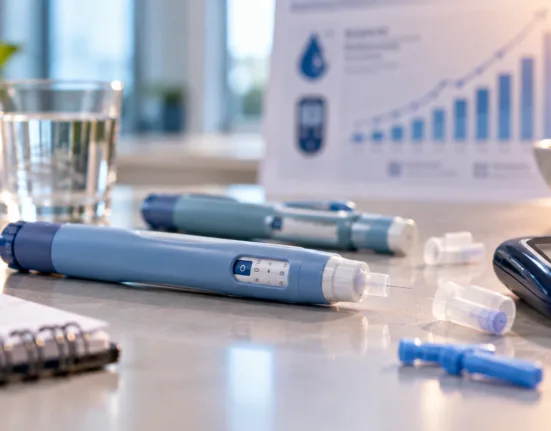
PharmaEssentia Corporation has secured U.S. Food and Drug Administration approval for the BESREMi Pen, a prefilled presentation of ropeginterferon alfa-2b-njft for adults with polycythemia vera. The device is intended to offer a more convenient self-administration option than the existing prefilled syringe and is expected to become commercially available in the United States within weeks.
Why the BESREMi Pen matters even though it does not change ropeginterferon’s indication
The approval is clinically incremental but commercially and operationally meaningful. It does not add a new indication, establish superior efficacy or alter the underlying pharmacology of ropeginterferon alfa-2b-njft. Instead, it changes how an established treatment can be prepared and administered by patients managing a chronic myeloproliferative neoplasm over many years.
That distinction matters because delivery improvements are sometimes treated as secondary to efficacy, particularly in oncology and haematology. In long-duration treatment, however, the practical demands of preparing an injection, handling a syringe, measuring or confirming a dose and following administration instructions can influence whether therapy is used consistently. Patients with impaired dexterity, visual limitations, injection anxiety or limited confidence with syringes may view a pen presentation differently even when the active medicine remains unchanged.
The commercial opportunity therefore depends on whether the pen removes enough friction to influence treatment initiation, persistence and switching decisions. A more intuitive device could make physicians more comfortable offering ropeginterferon earlier, while existing BESREMi users may prefer the pen if it reduces the number of steps involved in self-administration. However, convenience is not automatically equivalent to improved adherence, and the approval itself does not prove that patients will remain on treatment longer or achieve better clinical outcomes.
How a simpler injection format could influence persistence in a lifelong blood cancer
Polycythemia vera is a chronic blood cancer in which excessive blood-cell production can increase blood viscosity and contribute to thrombosis, cardiovascular complications, symptom burden and eventual disease progression. Treatment is therefore not a brief intervention. It requires sustained blood-count control, repeated laboratory testing and long-term engagement between patients and specialist care teams.
This is where the BESREMi Pen could have its greatest practical effect. Ropeginterferon alfa-2b-njft is administered subcutaneously and requires individualised dose titration before patients reach a stable regimen. Any device that makes repeated administration easier may reduce avoidable handling errors and make the treatment routine feel less burdensome. The potential value is not dramatic on any single injection day, but it can accumulate across months and years.
Earlier clinical development work assessed the ability of patients to move from healthcare professional administered treatment to self-administration with a prefilled pen. Haematological responses were maintained during that assessment and no new safety issue emerged from the pen itself. That provides a reasonable regulatory bridge, but the study period was relatively short and does not settle the broader adherence question.
Post-launch evidence will be important because device performance in controlled studies may not capture the range of patients treated in everyday practice. Older adults, people living alone and patients managing multiple medicines may experience the pen differently from experienced clinical-trial participants. Real-world evaluation should therefore look beyond successful injection and examine persistence, medication errors, training time, patient satisfaction, missed doses and requests to return to the syringe.
Why the clinical value still depends on ropeginterferon’s existing evidence base
The new pen does not create a separate efficacy story. Its clinical relevance remains tied to the evidence supporting ropeginterferon alfa-2b-njft, including its ability to control haematocrit, platelet and white blood cell levels and produce molecular responses in some patients with polycythemia vera.

The PROUD-PV programme compared ropeginterferon with hydroxyurea, followed by the long-term CONTINUATION-PV extension. The initial study did not deliver an uncomplicated victory across every composite endpoint, partly because interferon responses can develop gradually. Longer follow-up subsequently showed that haematological control could strengthen and remain durable, while reductions in the JAK2 V617F mutant allele burden supported interest in ropeginterferon as more than a short-term blood-count management tool.
That molecular effect has helped position interferon as a potential disease-modifying strategy. A treatment that acts on the abnormal clone driving polycythemia vera could theoretically influence the disease more deeply than one that primarily controls circulating blood counts. The unresolved question is whether molecular responses reliably translate into fewer thrombotic events, less progression to myelofibrosis or acute leukaemia and longer survival.
Those outcomes are difficult to establish in a slowly progressing disease requiring extended follow-up. Molecular response is scientifically encouraging, but it is not yet a universally accepted substitute for hard clinical outcomes. The pen may support more consistent exposure to ropeginterferon, but it cannot by itself resolve the uncertainty surrounding the degree of long-term disease modification.
How BESREMi compares with hydroxyurea, phlebotomy and ruxolitinib in polycythemia vera
The BESREMi Pen enters a treatment environment shaped by established, relatively inexpensive interventions and increasingly differentiated therapeutic goals. Phlebotomy and low-dose aspirin remain foundational components of care for many patients, particularly those considered at lower thrombotic risk. Their familiarity and accessibility are major advantages, although repeated phlebotomy can be burdensome and may not adequately control elevated platelets, white blood cells or broader disease symptoms.
Hydroxyurea remains a widely used cytoreductive medicine, particularly in higher-risk patients. It is oral, familiar to clinicians and generally less operationally complex than an injectable biologic. Its position means PharmaEssentia must demonstrate value beyond simple blood-count reduction. BESREMi must justify its higher treatment complexity through durable control, tolerability, potential molecular benefit and suitability for patients in whom long-term disease modification is an important objective.
Ruxolitinib provides another alternative, particularly when hydroxyurea is ineffective or poorly tolerated. The oral JAK1 and JAK2 inhibitor can improve haematocrit control, spleen enlargement and disease-related symptoms in appropriately selected patients. Its role is therefore different from that of ropeginterferon, even though the two treatments compete for attention within the same specialist clinics.
The pen may improve BESREMi’s position in these comparisons by narrowing the convenience gap between an injectable interferon and oral therapies. It does not eliminate that gap, because patients must still accept injections, refrigeration requirements, laboratory monitoring and the adverse-effect profile of interferon. The device may make the practical conversation easier, but treatment selection will continue to depend on age, thrombotic risk, symptoms, previous therapy, comorbidities, reproductive considerations and individual tolerance.
Which safety and monitoring burdens remain unchanged after the device approval
The most important limitation is that a user-friendly device does not make the active therapy biologically safer. BESREMi carries a boxed warning because interferon alfa products can cause or worsen serious neuropsychiatric, autoimmune, ischaemic and infectious disorders. Depression, endocrine toxicity, cardiovascular complications, liver abnormalities, reduced blood counts, renal effects, eye disorders and other toxicities require careful patient selection and monitoring.
The pen may reduce administration complexity, but it cannot reduce these pharmacological risks unless improved consistency somehow allows more predictable dosing and earlier identification of problems. Even then, the underlying adverse-effect profile remains. Clinicians will still need baseline evaluations, repeated blood tests, symptom review and dose adjustments, while some patients will require treatment interruption or discontinuation.
This creates a potential communication challenge. Patients may interpret a new delivery system as evidence that the treatment has become simpler in every respect. PharmaEssentia and prescribing centres will need to separate ease of injection from ease of clinical management. The device can be more convenient while the medicine remains a specialist therapy with substantial monitoring requirements.
Training will also remain essential. Pen devices can reduce certain preparation steps, but they introduce their own risks, including incomplete injections, incorrect dose selection, failure to hold the device in place for the required time and uncertainty about whether a dose was delivered. Clear instructions, demonstration, follow-up support and accessible replacement procedures will influence whether the launch produces a genuine improvement rather than merely a different set of administration questions.
Why reimbursement, training and device execution will determine commercial uptake
The commercial launch will test whether U.S. insurers and specialty pharmacies treat the pen as a straightforward replacement for the syringe or as a separate presentation requiring new coverage decisions. Even modest administrative barriers could slow adoption if physicians must complete additional authorisations or if patients face different out-of-pocket costs.
Formulary parity will be particularly important. A pen that is clinically preferred but financially less accessible may struggle to change treatment behaviour. Conversely, equivalent coverage combined with simple switching procedures could encourage current users to migrate quickly, especially when physicians believe the device can improve confidence with self-administration.
Distribution execution will matter because BESREMi is not a mass-market primary care medicine. The treatment moves through specialist haematology practices, specialty pharmacies and patient-support systems. Device availability, cold-chain handling, replacement logistics and training materials must work consistently across this network. A delayed shipment or unclear switching process can undermine the convenience argument at the point where patients are deciding whether the new presentation is genuinely easier.
PharmaEssentia will also need to determine whether the pen expands the overall treated population or mainly shifts existing BESREMi users from one presentation to another. Conversion may strengthen retention and patient experience without producing a large immediate increase in new prescriptions. The greater commercial upside would come from physicians choosing ropeginterferon for patients who might previously have rejected or postponed interferon treatment because of injection complexity.
How the pen approval strengthens PharmaEssentia’s wider myeloproliferative neoplasm strategy
BESREMi remains the commercial anchor of PharmaEssentia’s portfolio, making lifecycle improvements strategically important. The pen adds another layer of differentiation around the franchise without requiring a new therapeutic mechanism. It may support revenue durability in polycythemia vera while giving the Taiwanese biopharmaceutical group a more practical delivery platform for potential expansion into other myeloproliferative neoplasms.
The timing is significant because PharmaEssentia is seeking to expand ropeginterferon alfa-2b-njft into essential thrombocythaemia. A U.S. regulatory decision on that indication is expected later in 2026. An established pen platform could simplify the commercial introduction of the medicine to another chronic patient population if the label expansion is approved.
However, success in polycythemia vera does not guarantee comparable uptake in essential thrombocythaemia. The competitive environment, treatment habits, evidence requirements and tolerance for injectable therapy differ between indications. The device strengthens the commercial infrastructure, but clinical differentiation will still depend on the strength of the essential thrombocythaemia data and how regulators define the eventual label.
The pen also signals that PharmaEssentia is moving from the initial launch phase of BESREMi toward active franchise management. That transition requires more than regulatory milestones. It demands reliable manufacturing, payer access, specialist education, patient retention and evidence that delivery improvements create measurable value.
What clinicians and industry observers are likely to watch after the U.S. launch
The first question will be how quickly existing patients move from the prefilled syringe to the BESREMi Pen. A rapid conversion would indicate strong demand for a simpler format, but it would not necessarily show that the device is expanding the market. New-patient initiation rates will provide a clearer test of whether the pen changes prescribing behaviour.
The second question will concern persistence. PharmaEssentia will need evidence showing whether pen users miss fewer doses, remain on therapy longer or report greater confidence than syringe users. These measures would turn a convenience claim into a clinically and commercially relevant outcome.
The third issue will be whether the device affects the competitive position of ropeginterferon against oral cytoreductive therapies. Some patients will continue to prioritise the simplicity of a tablet, while others may accept injections in exchange for the possibility of deeper molecular control. The pen makes that trade-off less severe, but does not remove it.
The approval should therefore be viewed as a meaningful lifecycle development rather than a therapeutic breakthrough. It addresses a practical weakness of long-term injectable treatment and could improve the experience of appropriate patients. Its ultimate importance will be determined not by the regulatory label alone, but by whether easier administration produces better persistence, broader uptake and more reliable long-term disease control in routine practice.