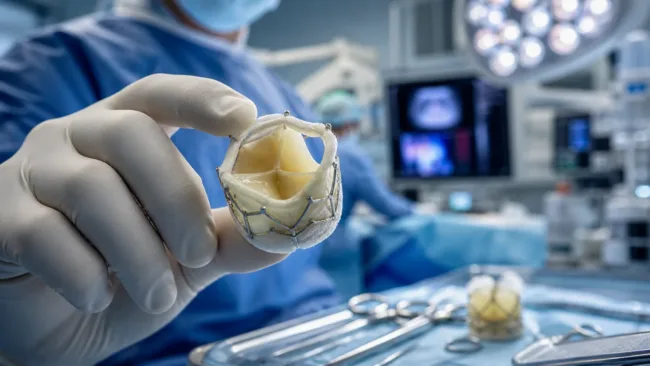
Thubrikar Aortic Valve has partnered with MAC’s MEDICAL Group under an exclusive European distribution agreement that will help finance up to 50 implants in the TAVI-1 CE Mark trial of the Optimum TAVI System. The arrangement also gives MAC’s MEDICAL Group and its affiliates an option to invest an additional $2 million and is expected to expand the investigational program from Poland into Croatia, Serbia and other European markets.
Why does combining European trial financing with distribution rights materially change Thubrikar’s strategy?
The partnership addresses two development barriers that commonly delay small medical device manufacturers: the cost of generating regulatory evidence and the difficulty of building a commercial infrastructure before approval. Instead of raising capital for the clinical program and separately negotiating country-level distribution after obtaining a CE Mark, Thubrikar Aortic Valve has brought those activities into a single relationship with a regional cardiovascular device distributor.
That structure could allow the medical device manufacturer to add clinical sites, recruit patients and develop relationships with interventional cardiologists while the Optimum TAVI System remains investigational. MAC’s MEDICAL Group operates through local businesses across Central, Eastern and Southeastern Europe, giving Thubrikar access to markets where the distributor already understands hospital procurement processes, physician training requirements and local regulatory practices.
The arrangement is therefore more consequential than a conventional distribution appointment. MAC’s MEDICAL Group is sharing part of the clinical development risk before the device can be sold, while securing exclusive European rights that could become more valuable if the trial supports approval. Thubrikar Aortic Valve, meanwhile, gains a partner with a direct interest in accelerating enrolment and preparing the market.
This alignment also creates concentration risk. The same partner will influence trial expansion, financing and eventual commercial access. Delays in funding, slower recruitment, inconsistent execution across countries or disagreements over the commercial strategy could affect several stages of the program simultaneously. Exclusive rights may also reduce Thubrikar’s flexibility to pursue alternative distributors in strategically important European markets unless the agreement contains performance requirements and territorial safeguards.
Can the Optimum TAVI System’s short self-expanding frame create a meaningful clinical difference?
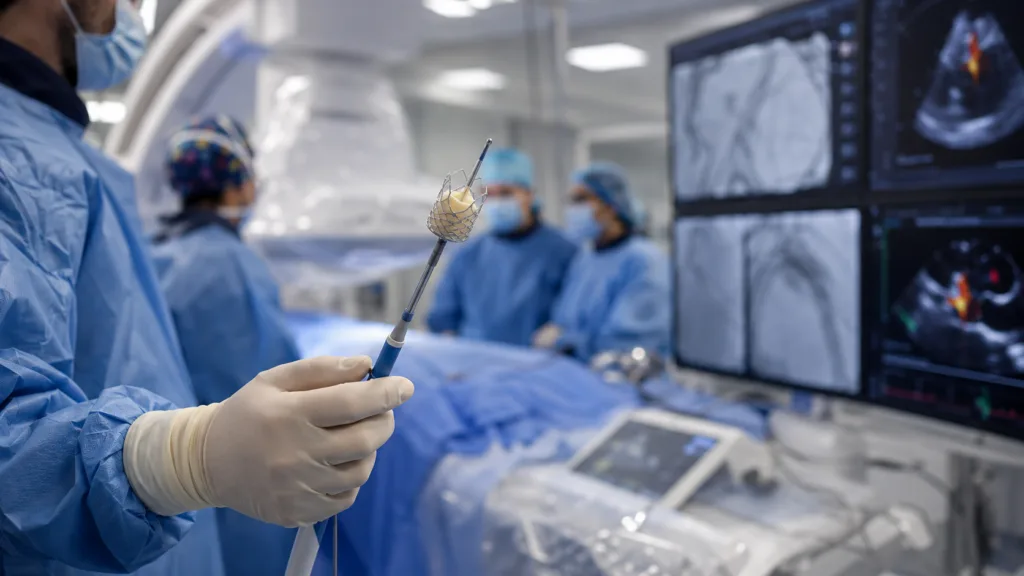
The Optimum TAVI System combines the Optimum transcatheter aortic valve with the Precision 2 delivery catheter. Its central design proposition is a short self-expanding nitinol frame intended to preserve access to the coronary arteries while reducing the amount of permanent material extending into the aortic root.
That feature is relevant because coronary access after transcatheter aortic valve implantation is becoming an increasingly important component of lifetime treatment planning. Patients may subsequently require coronary angiography, percutaneous coronary intervention or another structural heart procedure. Taller valve frames can complicate catheter access to the coronary arteries, depending on the patient’s anatomy, valve orientation and implantation depth.
Thubrikar Aortic Valve is also positioning the short frame as a possible way to reduce interaction with the cardiac conduction system. Conduction disturbances and permanent pacemaker implantation remain important differentiators between transcatheter valve platforms, particularly as the procedure expands into younger and lower-risk patients. A shorter frame could theoretically reduce pressure on vulnerable anatomy, but that benefit must be demonstrated through clinical outcomes rather than inferred from device geometry.
The valve uses intra-annular leaflets made from a single piece of bovine pericardial tissue, together with a porcine pericardial sealing skirt positioned behind the leaflets. The intended benefits include fewer leaflet attachment points, a larger sealing surface and more natural leaflet movement. These design choices address durability, paravalvular leakage and hemodynamic performance, three areas in which incremental improvements can influence device selection.
However, no individual design feature guarantees better clinical outcomes. A shorter frame must still provide stable anchoring in heavily calcified or irregular anatomy. A sealing skirt intended to reduce leakage must not interfere with valve expansion or increase delivery complexity. Intra-annular leaflet placement must deliver acceptable gradients across different valve sizes, especially in patients with small aortic annuli.
The Precision 2 delivery catheter is therefore an equally important component of the platform. A differentiated valve has limited value if the delivery system is difficult to navigate, position or retrieve. As the trial expands beyond its experienced Polish investigators, consistency across operators and hospitals will become a more demanding test of the system’s usability.
How much confidence can a 16-patient, single-arm clinical program support at this stage?
The disclosed clinical experience remains small. The Optimum transcatheter aortic valve has been implanted in 16 patients, including a first-in-human patient with approximately seven years of follow-up. The TAVI-1 program is prospective, open-label and single-arm, meaning that every enrolled patient receives the investigational device and there is no randomized control group receiving an established alternative.
The follow-up from the first patient is encouraging because long-term observation is unusually valuable for a development-stage valve. It provides evidence that the device can continue functioning years after implantation in at least one individual. It cannot, however, establish a population-level durability advantage or predict structural valve deterioration across patients with different ages, anatomies, comorbidities and calcification patterns.
The broader program has reported successful implantation, favourable pressure gradients and sustained clinical improvement. Those signals can justify continued development and a larger trial, particularly when procedural success remains consistent after the introduction of a second-generation delivery catheter. They are not sufficient to establish superiority over commercially available valves that have been studied in randomized trials and large international registries.
A 16-patient dataset is especially vulnerable to selection effects and rare-event uncertainty. Complications such as stroke, coronary obstruction, major vascular injury, permanent pacemaker implantation, valve thrombosis or clinically significant paravalvular leakage may occur too infrequently to appear in a small study. The absence of an event in 16 patients should not be interpreted as proof that the risk has been eliminated.
The expansion toward as many as 50 additional implants can materially improve the evidence base, but the value of that expansion will depend on trial governance. Regulators and clinicians will look for clearly defined endpoints, independent imaging assessment, consistent follow-up, transparent adverse-event reporting and adjudication of major clinical outcomes. A larger number alone will not resolve uncertainty if the data remain difficult to compare with established studies.
A peer-reviewed full clinical dataset is not yet publicly available. Publication would allow specialists to evaluate patient selection, baseline anatomy, implantation technique, valve sizing, pressure gradients, effective orifice areas and clinical outcomes in greater detail. Until that occurs, the strongest claims surrounding performance and durability remain hypotheses supported by early clinical and preclinical evidence rather than conclusions established across a broad population.
Why are durability and small-annulus performance becoming decisive TAVI battlegrounds?
Transcatheter aortic valve implantation was initially concentrated among older patients who faced high or prohibitive surgical risk. The procedure has since moved into intermediate-risk and low-risk populations, increasing the importance of how a valve performs over ten years or longer.
This shift changes the competitive standard. Early procedural safety remains essential, but younger patients also need treatment strategies that preserve future options. Structural valve deterioration, coronary reaccess, redo transcatheter implantation and the feasibility of eventual surgery must be considered before the first valve is implanted.
Thubrikar Aortic Valve has designed the Optimum transcatheter aortic valve around this lifetime-management problem. The single-piece leaflet construction, tissue treatments and reduced number of sutures are intended to limit stress and calcification. The short frame is also designed to facilitate future coronary access and valve-in-valve procedures.
These objectives are commercially relevant because established manufacturers are already improving their platforms in the same areas. Medtronic, Edwards Lifesciences, Abbott and Boston Scientific have large clinical programs, experienced physician networks and hospital relationships. A new entrant cannot compete merely by producing acceptable short-term outcomes. It must demonstrate a clinically important advantage that justifies training teams, changing procurement arrangements and introducing another valve into hospital inventories.
Patients with small aortic annuli may provide one route to differentiation. Smaller annuli increase the risk that an implanted valve will leave a relatively restricted opening, producing higher residual gradients or patient-prosthesis mismatch. The Optimum TAVI System’s early results have highlighted hemodynamic performance in this anatomically challenging population.
That signal deserves further study, but comparisons with other valves will require equivalent patient populations and independently assessed measurements. Pressure gradients can be influenced by valve size, implantation depth, imaging methodology, flow conditions and patient anatomy. A favourable result from a small cohort cannot be directly treated as evidence of superiority over devices evaluated in larger and differently designed studies.
What must Thubrikar prove to turn a CE Mark pathway into routine hospital adoption?
CE Mark approval would be a critical regulatory milestone, but it would not guarantee meaningful commercial adoption. European hospitals already have access to established transcatheter valve systems supported by extensive clinical evidence, trained implantation teams and mature supply chains.
Thubrikar Aortic Valve will first need to demonstrate that the expanded TAVI-1 trial satisfies the European Union Medical Device Regulation requirements for a high-risk implantable device. The evidence package must show that the complete system performs safely and consistently, including the valve, delivery catheter, loading process, implantation workflow and long-term follow-up plan.
The transition to additional countries introduces useful evidence about generalisability. Successful procedures in Poland demonstrate that a specialist team can use the system, but expansion into Croatia, Serbia and other markets will test whether comparable results can be reproduced by different operators and hospital environments. Reproducibility is essential for both regulatory confidence and commercial scalability.
Manufacturing will become another major consideration. Transcatheter heart valves depend on tightly controlled biological tissue preparation, frame production, assembly, sterilisation and quality testing. Increasing implant volume while maintaining consistent leaflet properties and device dimensions can be difficult for a privately held manufacturer moving from limited clinical production toward commercial scale.
Hospitals will also evaluate the overall economic case. A new valve may offer attractive hemodynamics or coronary access, but procurement committees will consider pricing, training costs, delivery-system reliability, inventory requirements and post-procedure support. MAC’s MEDICAL Group can help navigate these processes, although reimbursement and hospital purchasing conditions vary across European countries.
Physician adoption is likely to begin selectively. Structural heart teams may initially use the Optimum TAVI System in patients whose anatomy matches its proposed strengths, such as those with small annuli or a high probability of requiring future coronary intervention. Broader use would depend on larger studies showing that those design advantages translate into lower complication rates, better functional outcomes or improved durability.
What should clinicians and regulators watch as the expanded Optimum TAVI trial proceeds?
The next phase should clarify whether the platform’s early performance can be maintained as patient numbers and participating centres increase. Procedural success across less familiar operators will provide a stronger test of the Precision 2 delivery catheter than additional implants at a single experienced institution.
Hemodynamic outcomes will remain central, particularly mean pressure gradients and effective orifice area across different valve sizes. The durability thesis will require serial echocardiography, assessment of leaflet function and transparent reporting of structural valve deterioration. One long-followed patient is valuable, but a durability claim ultimately needs consistent results across a meaningful cohort.
Safety events will become more informative as enrolment grows. Regulators and clinicians will examine stroke, mortality, major bleeding, vascular complications, paravalvular leakage, coronary obstruction, permanent pacemaker implantation and hospital readmission. Attention should also extend to valve thrombosis and the feasibility of coronary access after implantation.
The expanded program will reveal whether the MAC’s MEDICAL Group relationship can convert regional reach into disciplined clinical execution. Opening sites is not the same as recruiting appropriate patients, training operators and producing regulatory-grade evidence. The partnership’s success will be measured by data quality and reproducibility rather than the number of countries added to the study.
The Optimum TAVI System has a coherent engineering proposition built around durability, low frame height, coronary access and performance in smaller anatomies. The European agreement gives Thubrikar Aortic Valve a more credible route to fund and operationalise the next stage of development. The remaining challenge is substantial: the manufacturer must show that attractive engineering and encouraging early outcomes can withstand larger-scale clinical testing in a field where competitors already possess extensive evidence.
The partnership represents a pragmatic development model for a privately held medical device manufacturer. By linking trial financing with future distribution, Thubrikar Aortic Valve has reduced the separation between regulatory development and commercial preparation. That could improve efficiency, but it also raises the consequences of execution problems because clinical progress and European market access now depend heavily on the same commercial relationship.
The most important milestone will not be the addition of another country or another implant. It will be the production of independently assessable evidence showing that the Optimum TAVI System’s short self-expanding design delivers reproducible hemodynamics, acceptable pacemaker and leakage rates, reliable coronary access and durable performance. Until those data mature, the platform should be viewed as a differentiated and promising investigational system rather than a proven challenger to established transcatheter heart valves.