The United States Food and Drug Administration has cleared Dyne Therapeutics, Inc. to begin a Phase 1 trial of DYNE-302 in ambulatory adults with facioscapulohumeral muscular dystrophy. The experimental intravenous therapy combines a muscle-targeting antibody fragment with small interfering RNA designed to reduce harmful DUX4 expression, which is considered a central driver of muscle damage in the disease. The clearance moves Dyne’s third FORCE-platform program into clinical development, but all reported DYNE-302 efficacy remains preclinical and the initial study will focus primarily on safety, tolerability and biological activity rather than proving functional benefit.
How DYNE-302 is designed to suppress the genetic driver of muscle damage in FSHD
Facioscapulohumeral muscular dystrophy is a progressive genetic muscle disorder associated with inappropriate expression of DUX4 in skeletal muscle. The disease is not simply caused by a conventional mutation within the DUX4 coding sequence. In FSHD1, contraction of the D4Z4 repeat region on chromosome 4 permits abnormal DUX4 expression, while FSHD2 can result from changes that reduce repression of the same region. The resulting DUX4 activity is toxic to muscle cells and contributes to progressive muscle weakness and loss.

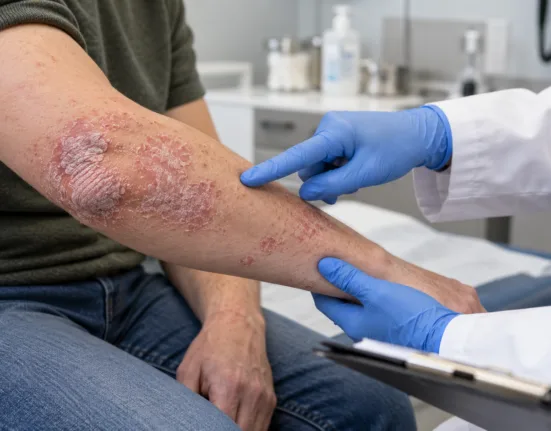
Symptoms often begin in the muscles of the face and shoulder blades and can later affect the upper arms, abdomen, hips and lower legs. Severity varies substantially between individuals. Some people remain independently mobile for decades, while approximately 20% eventually require a wheelchair. Current management is supportive and may include physical therapy, assistive devices, pain management, respiratory monitoring and surgery to stabilize the shoulder blades in selected patients.
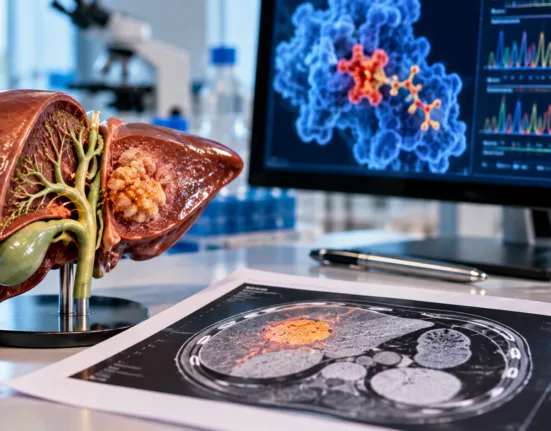
DYNE-302 is designed to intervene closer to the underlying disease mechanism. The candidate contains a small interfering RNA molecule intended to bind and reduce DUX4 messenger RNA. That RNA payload is attached to an antigen-binding fragment that targets transferrin receptor 1, a protein found at high levels on muscle cells. Dyne’s FORCE platform uses the transferrin receptor interaction to deliver genetic medicines more broadly into skeletal muscle than unconjugated oligonucleotides may achieve on their own.
Reducing DUX4 messenger RNA is intended to decrease production of the toxic DUX4 protein and suppress the wider group of genes activated by it. The strategy aims to slow or potentially reverse disease-related muscle damage rather than increasing muscle strength without addressing the genetic process causing that damage.
DYNE-302 is the third clinical program built with Dyne’s FORCE platform. The company is already using related muscle-delivery technology in zeleciment rostudirsen for exon 51-amenable Duchenne muscular dystrophy and zeleciment basivarsen for myotonic dystrophy type 1. Clinical experience from those programs provides information about the platform and transferrin receptor targeting, but it does not establish that the different siRNA payload used in DYNE-302 will be safe or effective in FSHD.
The first DYNE-302 cohort will test three intravenous doses in nine adults
Dyne plans to conduct a randomized, placebo-controlled, double-blind, multiple-ascending-dose Phase 1 trial in ambulatory adults aged 18 to 65 with FSHD. The study’s primary objective will be to assess safety and tolerability. Additional assessments will examine pharmacokinetics, pharmacodynamic activity and whether the therapy produces measurable changes in DUX4-related biomarkers.
The first cohort will include nine participants. They will be randomized in a two-to-one ratio to receive DYNE-302 or placebo, meaning six participants are expected to receive the experimental treatment and three are expected to receive placebo. Each participant will receive three intravenous doses administered once every four weeks. The initial DYNE-302 dose will contain approximately 1.5 milligrams per kilogram of the siRNA component.
After reviewing the first cohort, Dyne intends to evaluate higher doses and less frequent administration. That approach should help investigators identify whether increasing exposure produces stronger DUX4 suppression and whether the treatment effect lasts long enough to support intervals longer than four weeks.
Participants who complete the placebo-controlled portion may enter an open-label extension in which everyone receives DYNE-302 for as long as an additional 96 weeks. The extension could provide information about longer-term safety, repeated dosing and the durability of biological changes, although open-label data will be more difficult to interpret for efficacy because patients and investigators will know that active therapy is being administered.
The study will measure changes in the DUX4 transcriptome in muscle tissue and plasma levels of KHDC1L, a protein Dyne has identified as being regulated by DUX4. These biomarkers may show whether DYNE-302 reaches skeletal muscle and reduces the biological activity it is designed to target. Muscle biopsies can provide direct tissue evidence but are invasive, while a reliable blood biomarker could eventually make repeated monitoring easier.
Biomarker movement alone will not demonstrate that patients become stronger or retain function for longer. FSHD often progresses slowly and unevenly, creating challenges for early clinical development. Later trials may need longer follow-up and validated measures of arm movement, mobility, muscle strength, patient-reported function and muscle composition on imaging.
Dyne has stated that it intends to pursue a traditional United States approval pathway for DYNE-302. That indicates the company expects to generate clinical evidence supporting benefit rather than relying solely on an accelerated pathway based on a surrogate biomarker. The Phase 1 study may identify target engagement and dose selection, but it is unlikely by itself to provide the substantial evidence required for approval.
Preclinical DUX4 suppression supports human testing but cannot predict patient benefit
Dyne developed a mouse model that expresses human transferrin receptor 1 and allows DUX4 activity to be induced in skeletal muscle. In this model, a single intravenous dose of DYNE-302 produced dose-dependent suppression of the DUX4 transcriptome that persisted for as long as three months. The company also reported improvements in muscle structure and function.
Later experiments used a severe disease model with established muscle injury. Dyne reported significant reversal of muscle-fiber damage and functional improvement after treatment, supporting the possibility that suppressing DUX4 may benefit muscle that has already been affected rather than only preventing new injury. DYNE-302 also showed activity in muscle cells derived from patients with FSHD.
Those findings provide the biological justification for beginning the Phase 1 trial, but animal models cannot reproduce the full variability, duration and distribution of human FSHD. DUX4 is expressed intermittently in a small proportion of muscle cells, which makes both measurement and treatment-response assessment difficult. An exposure level that suppresses DUX4 in mice may not produce the same result throughout human skeletal muscle.
The preclinical studies also cannot establish whether suppressing DUX4 after years of disease will restore clinically meaningful strength. Muscle tissue that has been replaced by fat or fibrosis may have less capacity to recover than muscle with active but potentially reversible injury. The trial’s restriction to ambulatory adults may help researchers study patients with enough preserved muscle to demonstrate biological activity, but it leaves questions about younger patients and people with more advanced disease.
Safety is another unresolved issue. DYNE-302 combines a transferrin receptor-targeting antibody fragment with an siRNA payload and is administered systemically. Investigators will need to monitor infusion reactions, immune responses, laboratory abnormalities, effects related to transferrin receptor binding and potential unintended gene suppression. The safety profile of Dyne’s other FORCE candidates may inform monitoring, but each payload and disease population must be assessed independently.
DYNE-302 enters a competitive race to develop the first targeted FSHD therapy
There are currently no approved disease-modifying treatments for FSHD. Supportive care can help preserve mobility and manage complications, but it does not prevent the abnormal DUX4 expression believed to drive continued muscle injury.
Dyne is not the only company directly targeting DUX4. Avidity Biosciences is evaluating delpacibart braxlosiran, previously called AOC 1020, in the Phase 1/2 FORTITUDE trial. That candidate also uses an antibody-oligonucleotide conjugate to deliver an RNA-silencing therapy into muscle and reduce DUX4 messenger RNA. The trial includes adults with FSHD and remains active, giving the competing program a clinical-development lead over DYNE-302.
The existence of another DUX4-targeting program provides validation for the therapeutic strategy but increases the importance of differentiation. Future comparisons may involve the depth and duration of DUX4 suppression, dosing frequency, safety, muscle distribution, biomarker consistency and evidence of functional improvement.
Dyne’s use of KHDC1L as a blood biomarker could become helpful if it accurately reflects changes occurring across skeletal muscle. A blood-based marker may reduce dependence on repeated biopsies, although the relationship between KHDC1L reduction and clinical improvement must still be demonstrated.
FSHD affects an estimated 15,000 to 40,000 people in the United States and approximately 20,000 to 50,000 in Europe, according to Dyne. The ranges reflect diagnostic uncertainty, variable disease expression and the possibility that some mildly affected individuals remain undiagnosed.
The FDA clearance is therefore an important transition for DYNE-302, but not evidence of therapeutic success. The first cohort will establish whether the candidate can be administered safely and whether its muscle-targeting design produces the expected biological effect in people.
The most consequential early result would be consistent suppression of the DUX4 transcriptome accompanied by supportive changes in a blood biomarker. Functional improvement will probably require more participants and longer observation. Until human data are available, DYNE-302 remains a promising mechanistically targeted therapy supported primarily by animal and laboratory evidence.