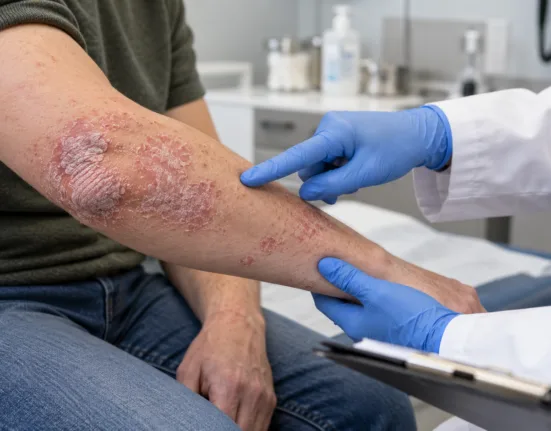
The United States Food and Drug Administration has authorized Medicus Pharma Ltd. to begin SKNJCT-005, an NDA-enabling Phase 2b study of its dissolvable SkinJect microneedle patch in people with Gorlin syndrome who develop multiple basal cell carcinomas. The open-label study is expected to enroll up to 50 patients and will test a 200-microgram doxorubicin patch designed to treat tumors locally while limiting systemic drug exposure. The clearance allows the trial to proceed, but the FDA has required a more rigorous response definition and longer follow-up before Medicus Pharma can determine whether the study can support a future New Drug Application.
How SkinJect delivers doxorubicin directly into basal cell carcinoma lesions
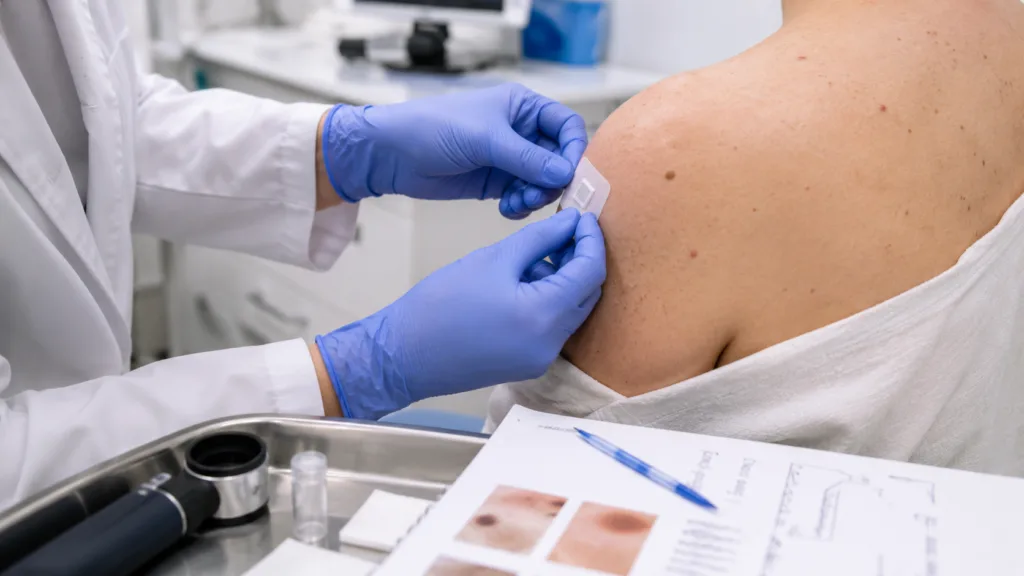
SkinJect is a drug-device combination consisting of a dissolvable microneedle array containing doxorubicin. The patch is placed directly over a basal cell carcinoma, allowing the microneedles to enter the lesion and release chemotherapy locally rather than delivering doxorubicin throughout the body.
Doxorubicin is an established chemotherapy medicine, but SkinJect uses a much smaller, lesion-directed dose. Medicus Pharma is developing the approach to destroy tumor cells while reducing the systemic exposure associated with intravenous chemotherapy.
The candidate is particularly relevant to Gorlin syndrome, also called nevoid basal cell carcinoma syndrome. The inherited disorder is commonly associated with pathogenic variants affecting PTCH1 and dysregulation of the Hedgehog signaling pathway. Patients have a high lifetime risk of developing recurrent basal cell carcinomas, often beginning during adolescence or early adulthood.
Gorlin syndrome can also cause jaw cysts, pits on the palms and soles, skeletal abnormalities and an increased risk of other tumors. Its burden can be especially severe because some patients develop dozens, hundreds or more than 1,000 basal cell carcinomas over their lifetime.
Individual tumors are commonly treated through surgical excision or Mohs surgery. Systemic Hedgehog-pathway inhibitors may be considered in selected patients with extensive disease, but tolerability and tumor recurrence after treatment discontinuation can limit long-term use. A repeatable local therapy could therefore reduce the number of surgeries required without exposing the entire body to continued systemic treatment.
SkinJect remains investigational. Medicus Pharma has not established that the microneedle patch will reduce lifetime surgical burden, prevent new tumors or provide durable control across the diverse lesions experienced by people with Gorlin syndrome.
FDA recommendations make SKNJCT-005 more rigorous than the original trial design
SKNJCT-005 is planned as an open-label, multicenter Phase 2b study evaluating SkinJect 200 micrograms in up to 50 patients. Participants must have Gorlin syndrome and multiple basal cell carcinomas that would otherwise require repeated treatment.
Medicus Pharma initially proposed a study centered primarily on visible tumor clearance. Patients were expected to have two to four target lesions treated simultaneously, with applications on Days 1, 8 and 15 and an optional fourth application on Day 22. The original design called for assessment through Week 24.
Following its review, the FDA recommended several important changes. Baseline biopsies will be required to confirm that each treated target lesion is nodular basal cell carcinoma. The primary efficacy endpoint will require both clinical clearance and histological clearance at a prespecified time rather than relying on visual disappearance alone.
Clinical clearance must be evaluated in person by an investigator and supported by pathological confirmation. Medicus Pharma also agreed to extend follow-up from 24 weeks to at least two years so investigators can assess whether cleared lesions remain controlled or later recur.
This composite endpoint should produce a more clinically meaningful result. A lesion can look resolved at the skin surface while residual cancer cells remain detectable in tissue. Requiring both visible and biopsy-confirmed clearance reduces the risk of classifying an incompletely treated tumor as a complete response.
The FDA also recommended genetic confirmation of Gorlin syndrome, additional pharmacokinetic assessments, examination of used microneedle arrays, an independent Data Safety Monitoring Board and a standalone statistical analysis plan. These comments were not clinical-hold issues, meaning the trial is permitted to proceed while Medicus Pharma incorporates the recommendations through an amended protocol.
The agency additionally advised future use of randomized, blinded and comparator-controlled study designs to support substantial evidence of effectiveness. This recommendation suggests that the open-label SKNJCT-005 study may become an important part of the registration package without necessarily resolving every efficacy requirement by itself. The FDA has not promised that positive results from this trial will be sufficient for approval.
Earlier SkinJect results support the dose but do not prove efficacy in Gorlin syndrome
The 200-microgram dose was selected partly from the completed SKNJCT-003 Phase 2 study in patients with nodular basal cell carcinoma. That randomized, double-blind study enrolled 90 participants and compared 100-microgram and 200-microgram doxorubicin microneedle arrays with a device-only control.
According to the protocol information cited by Medicus Pharma, three applications of the 200-microgram dose produced 64% clinical clearance and 55% histological clearance at Day 57. No treatment-related serious adverse events were reported in the company’s earlier summary.
Those results provide evidence of local antitumor activity, but SKNJCT-003 was exploratory and was not powered for formal hypothesis testing. ClinicalTrials.gov describes its efficacy analyses as descriptive and based on the totality of evidence rather than a strictly hierarchical statistical framework.
The earlier trial also studied individual nodular basal cell carcinomas rather than establishing long-term effectiveness specifically in people with Gorlin syndrome. Patients with the inherited condition repeatedly develop new lesions, making durability, retreatment feasibility and cumulative skin effects particularly important.
SKNJCT-005 will therefore need to answer a different clinical question. It must show whether multiple lesions can be treated reliably in the same patient and whether complete responses remain durable over a substantially longer observation period.
Safety monitoring will include local skin reactions and the possibility of systemic doxorubicin exposure. Although the dose delivered into each lesion is small, patients may receive treatment across several tumors and could eventually require repeated treatment courses as new cancers appear.
Why a study-may-proceed letter is not an FDA endorsement of SkinJect efficacy
The FDA issued its study-may-proceed letter after reviewing the Investigational New Drug application and Medicus Pharma’s response to information requests dated June 18, 2026. The determination means the agency did not identify a safety or protocol deficiency requiring the trial to be placed on clinical hold.
It does not mean the FDA has approved SkinJect, validated the company’s previous response rates or agreed in advance to accept a future New Drug Application. Trial activation, patient enrollment, treatment and data collection must still occur before regulators can assess whether the benefit-risk profile supports commercial use.
Medicus Pharma has not yet provided a firm date for opening sites or enrolling the first participant. The company said further updates on study initiation and enrollment timing will be released as development progresses.
The company is also pursuing regulatory incentives associated with the rarity and early manifestation of Gorlin syndrome. Medicus Pharma has applied for Orphan Drug Designation and submitted a request for Rare Pediatric Disease Designation. These applications do not affect whether the clinical trial can proceed, and neither designation establishes that SkinJect is effective.
A successful lesion-directed therapy could offer a meaningful alternative for patients who repeatedly undergo surgery, particularly when tumors arise in cosmetically or functionally sensitive areas. The strongest evidence would combine biopsy-confirmed clearance, durable control, acceptable local safety and a measurable reduction in surgical procedures.
The FDA clearance moves SkinJect into a more consequential stage of development, but it also raises the evidentiary standard. Medicus Pharma must now demonstrate that the response seen in an exploratory basal cell carcinoma study can translate into durable, repeatable benefit for people living with a lifelong genetic tumor syndrome.