
CordenPharma has agreed to acquire AmbioPharm, a U.S.-headquartered peptide active pharmaceutical ingredient contract development and manufacturing organization with facilities in North Augusta, South Carolina, and Shanghai, China. The transaction expands CordenPharma’s peptide API development and manufacturing network at a time when complex peptide-based medicines are moving deeper into clinical and commercial pipelines.
The deal is not just another capacity bolt-on. It gives CordenPharma a broader manufacturing base across the United States, Europe, and Asia, while strengthening its ability to support increasingly complex peptide programs that require flexible synthesis technologies, purification capability, lyophilization capacity, and regional supply optionality. Financial terms were not disclosed, and the transaction remains subject to customary closing conditions, but the strategic direction is clear. Peptide manufacturing is becoming one of the sharper battlegrounds in outsourced pharmaceutical development.
Why CordenPharma’s AmbioPharm acquisition matters as peptide API demand becomes more technically demanding
The most important signal from the AmbioPharm acquisition is that peptide outsourcing is shifting from simple capacity expansion to capability depth. CordenPharma already had an established peptide platform, including CordenPharma Colorado in the United States and a broader network across Europe and North America. By adding AmbioPharm’s South Carolina and Shanghai operations, the Swiss-headquartered contract development and manufacturing organization is widening both its geographic reach and its technical toolkit.
That matters because peptide programs are no longer limited to relatively straightforward molecules moving through predictable development paths. Drug developers are increasingly working with longer, more complex, higher-purity peptide APIs, where route selection, synthesis strategy, impurity control, purification, and scale-up execution can determine whether a program remains commercially viable. In that context, the ability to offer solid-phase peptide synthesis, liquid-phase peptide synthesis, hybrid synthesis, fragment-based peptide approaches, and tag-assisted peptide synthesis becomes more than a menu of technologies. It becomes a competitive filter.
For biotech and pharmaceutical customers, the practical question is whether a CDMO can handle complexity without forcing a program into a narrow manufacturing route too early. AmbioPharm brings complementary capabilities that could allow CordenPharma to match programs to different synthesis and scale-up approaches, rather than relying on a single production philosophy. That flexibility could become especially relevant for peptide drugs that face purity, yield, cost-of-goods, or late-stage process robustness challenges.
The risk is integration. Acquiring technical capacity is easier than harmonising quality systems, development workflows, regulatory expectations, and customer-facing project execution across multiple regions. CordenPharma will need to show that the combined peptide platform can operate as a coordinated network, not simply as a larger collection of sites.
How the North Augusta facility could strengthen U.S.-based peptide API supply options
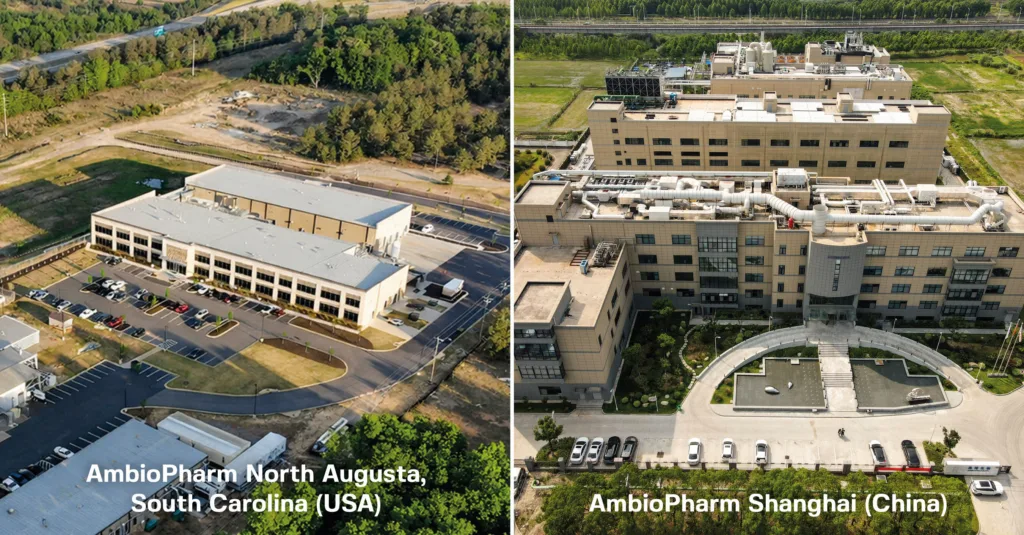
AmbioPharm’s North Augusta site is strategically important because it gives CordenPharma a second U.S. peptide facility and strengthens domestic peptide API supply options. The South Carolina operation is expected to add meaningful capacity focused on purification and lyophilization of peptide APIs, complementing the existing capabilities at CordenPharma Colorado.
That U.S. footprint matters for customers seeking regional resilience, especially for large-scale commercial peptide projects. Pharmaceutical supply chains have been under sustained pressure from geopolitical uncertainty, inspection risk, transport disruption, and the increasing preference for dual sourcing or regionally diversified manufacturing. For peptide APIs, where manufacturing can be technically demanding and where late-stage changes may be costly, having more U.S.-based capacity can reduce strategic friction for sponsors planning clinical expansion or commercial launch.
The deal also positions CordenPharma to address customers that may prefer U.S. manufacturing for supply assurance, regulatory familiarity, or market access considerations. This does not mean global networks become less relevant. In fact, the value of the acquisition lies partly in giving customers more routes through the network. A sponsor may want early development flexibility, U.S. downstream processing, or a regional pathway that supports commercial risk management.
The unresolved question is how quickly CordenPharma can translate this added capacity into customer wins. CDMO demand is not just about having facilities. It is about technical transfer speed, batch reliability, regulatory readiness, and the ability to absorb programs without compromising timelines. North Augusta gives CordenPharma a stronger hand, but execution will determine whether the added footprint becomes a genuine commercial accelerator.
Why Shanghai gives CordenPharma a broader global peptide manufacturing platform
AmbioPharm’s Shanghai campus gives CordenPharma an Asian manufacturing base for peptide APIs, including upstream capacity across solid-phase peptide synthesis, liquid-phase peptide synthesis, and hybrid synthesis, along with selected downstream capabilities. This adds a different strategic dimension to the transaction because it allows CordenPharma to support global peptide supply across three continents.
For multinational drug developers, a broader regional network can be valuable when programs require flexible sourcing, clinical supply support, or commercial manufacturing models that balance cost, speed, and resilience. Shanghai-based manufacturing may also provide capacity for customers with global development programs or regional market strategies that require proximity to Asian supply chains and regulatory ecosystems.
This does not remove the complexity of operating across jurisdictions. Cross-border pharmaceutical manufacturing comes with regulatory, quality, intellectual property, inspection, logistics, and geopolitical considerations. For some customers, China-based manufacturing can be commercially attractive. For others, it may require additional risk assessment depending on the molecule, stage of development, target markets, and internal sourcing policies.
That is why the Shanghai addition is best viewed as optionality rather than a simple capacity story. CordenPharma is not just adding manufacturing volume. It is adding network flexibility. The strategic benefit will depend on how effectively the company can offer customers a choice between U.S.-based, European, and Shanghai-linked pathways while maintaining consistent quality standards and programme governance.
What the acquisition reveals about the peptide CDMO market and the pressure to scale
The transaction reflects a wider industry pattern. Peptide therapeutics have become increasingly important across metabolic disease, oncology, endocrinology, rare disease, and other therapeutic areas, creating stronger demand for specialised development and manufacturing partners. As more peptide candidates move through clinical pipelines, CDMOs with deep peptide experience are being pushed to scale both capacity and technical capability.
CordenPharma’s expansion also shows how private equity-backed CDMO platforms are being built around complex modalities. Astorg acquired CordenPharma in 2022, and the AmbioPharm acquisition continues that buildout strategy. AmbioPharm’s shareholders are expected to reinvest into the combined business, which suggests continued confidence in the long-term peptide outsourcing opportunity.
For customers, the upside is access to larger integrated platforms that can support development, scale-up, and commercial production under one umbrella. That could reduce handoff risk between early development and late-stage manufacturing. It may also simplify vendor management for companies that want a single partner across multiple stages of the product lifecycle.
The downside is that consolidation can reduce the number of independent specialist CDMOs available to sponsors. While larger platforms may bring resilience and capital investment, they can also create capacity allocation pressure if demand accelerates faster than expected. Smaller biotech firms may need to compete for attention with larger pharmaceutical customers, especially if commercial peptide projects absorb more facility time and technical resources.
Why the deal could change the competitive positioning of CordenPharma in complex peptide APIs
CordenPharma’s competitive positioning improves because the AmbioPharm acquisition adds both scale and differentiated technical capability. The combined platform is expected to support advanced linear and fragment-based peptide approaches, solid-phase peptide synthesis, liquid-phase peptide synthesis, hybrid synthesis, and tag-assisted peptide synthesis. That breadth could allow CordenPharma to compete more effectively for complex peptide programs where sponsors need more than standard manufacturing capacity.
In a market where peptide APIs can present difficult scale-up and purification challenges, CDMOs that can provide route selection support and downstream manufacturing strength may stand out. The acquisition also gives CordenPharma a clearer story for customers seeking end-to-end peptide support from development through commercialisation. That could be particularly useful in competitive bids for larger or later-stage programs.
However, the integration burden should not be underestimated. Technical breadth only creates value if it is accessible through a coherent customer experience. Sponsors will watch whether CordenPharma can standardise project management, align regulatory documentation, retain AmbioPharm’s scientific talent, and preserve the responsiveness that often makes specialist CDMOs attractive in the first place.
The acquisition also places pressure on CordenPharma to demonstrate that a larger peptide platform can remain scientifically agile. In complex modalities, scale alone is not enough. The strongest CDMO partners are those that combine infrastructure with problem-solving depth. That is the bar CordenPharma is now setting for itself.
What customers, regulators, and industry observers are likely to watch after closing
After closing, the first area to watch will be operational integration. Customers will want clarity on how CordenPharma manages programme transfers, quality oversight, capacity allocation, and commercial manufacturing commitments across North Augusta, Shanghai, Colorado, and the broader network. Any disruption during integration could weaken the near-term value of the deal, particularly for customers running time-sensitive clinical or commercial programs.
The second area is regulatory alignment. AmbioPharm has positioned both its South Carolina and Shanghai facilities as experienced in regulated peptide API manufacturing, including prior inspections by global regulatory bodies. CordenPharma will need to maintain that track record while integrating the sites into its own quality and compliance systems. In peptide APIs, where impurity profiles and process controls can be central to regulatory confidence, consistency across sites will matter.
The third area is customer mix. If CordenPharma uses the expanded platform to win larger commercial peptide contracts, the acquisition could become a meaningful growth engine. If capacity becomes heavily committed to a few large programs, smaller clinical-stage customers may face longer timelines or reduced flexibility. Balancing major accounts with emerging biotech demand will be a key commercial challenge.
The fourth area is whether CordenPharma continues to invest in peptide-related technologies beyond traditional capacity expansion. As peptide drugs become more complex, manufacturing innovation could become a differentiator. Yield improvement, purification efficiency, conjugation expertise, and scalable synthesis strategies may matter as much as site count.
Why this acquisition is strategically important rather than merely incremental
A neutral reading suggests the AmbioPharm acquisition is strategically important because it strengthens three areas at once: technical capability, geographic reach, and commercial scale. Incremental CDMO deals usually add capacity in a single region or expand a known service line. This transaction gives CordenPharma a larger U.S. peptide base, an Asian manufacturing presence, approximately 400 additional employees, and complementary expertise across upstream and downstream peptide API manufacturing.
The timing also matters. Peptide therapeutics are attracting greater attention because they sit between small molecules and biologics in a way that can offer targeted pharmacology, established manufacturing routes in some cases, and growing clinical relevance across multiple diseases. Yet the manufacturing side remains specialised. That creates room for CDMOs that can handle complexity at scale.
For CordenPharma, the deal strengthens its claim to be a major partner for peptide development and manufacturing. For AmbioPharm, joining a larger platform could provide greater commercial reach and investment capacity. For customers, the combined network may provide more ways to manage complexity, geography, and scale-up risk.
The big caveat is that CDMO consolidation is only as valuable as post-deal execution. The peptide market may be growing, but customers will judge CordenPharma on delivery, reliability, quality, and flexibility. If the integration works, the AmbioPharm acquisition could give CordenPharma a stronger position in one of the more attractive segments of outsourced pharmaceutical manufacturing. If integration proves uneven, the deal could become another reminder that buying capacity is not the same as building a seamless development and manufacturing platform.

