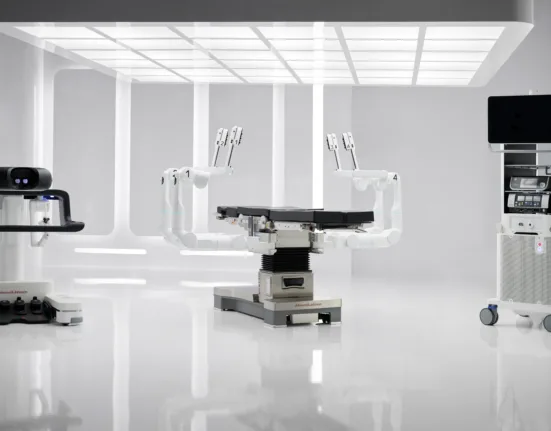
RefleXion Medical has submitted a 510(k) premarket notification to the U.S. Food and Drug Administration for Anchor Point Tracking, a next-generation tumor-tracking capability designed for the RefleXion X2 platform and SCINTIX autonomous radiotherapy. The medical device manufacturer is seeking clearance to use richer positron emission tomography data to identify a stable biological reference within a tumor signal and direct radiation delivery across a wider range of tumor sizes, shapes, and motion characteristics.
The strategic importance of the filing lies less in the submission itself than in the transition it represents. RefleXion Medical is attempting to convert the X2 platform’s greater imaging sensitivity into a clinically usable tracking capability, moving SCINTIX from a distinctive radiotherapy concept toward a potentially more versatile treatment platform. However, the filing does not yet establish broader indications, superior patient outcomes, or routine clinical applicability across different tumor types.
Why Anchor Point Tracking could matter more than an incremental SCINTIX software update
Anchor Point Tracking appears to address one of the central engineering challenges in biology-guided radiotherapy: how to extract a sufficiently stable and reliable tracking signal from biological activity that may vary across a tumor and throughout treatment. Rather than treating all detected positron emission tomography activity as equally informative, the technology is designed to identify a consistent biological anchor that can help guide the radiation beam in real time.
This could be meaningful because tumors rarely present as uniform, perfectly defined objects. Lesions can have irregular shapes, heterogeneous metabolic activity, changing signal intensity, and respiratory or other physiological motion. A tracking algorithm capable of selecting and maintaining a dependable reference could make treatment delivery more robust when the overall signal is complicated or constantly shifting.
The development nevertheless remains an incremental extension of the existing SCINTIX architecture rather than a completely new treatment modality. RefleXion Medical already uses radiotracer uptake within cancer cells as an endogenous biological beacon. Anchor Point Tracking seeks to improve how that beacon is interpreted and followed. Its value will therefore depend on whether the algorithm delivers consistent advantages beyond those already available through the cleared platform.
A technically sophisticated tracking method can also introduce new failure modes. The biological anchor must remain representative of the intended target, avoid confusion with nearby physiological uptake, and perform reliably when signal quality changes. Regulators will therefore be interested not only in average tracking performance but also in edge cases, error detection, safety interlocks, and the system’s response when an acceptable anchor cannot be established.
How does the X2 platform raise the technical ceiling for biology-guided radiotherapy?
The RefleXion X2 platform provides the hardware foundation for Anchor Point Tracking through a substantially expanded positron emission tomography detection system. The platform was designed with four times the onboard detector coverage of the earlier configuration, increasing the imaging field of view from approximately 5 centimetres to 20 centimetres and delivering a reported 20-fold improvement in positron emission tomography sensitivity.
Greater sensitivity can provide the algorithm with more biological data over a larger region of the patient’s anatomy. This should reduce image noise, improve visualization of moving targets, and give the tracking system more information from which to distinguish the tumor signal from its surroundings. In principle, the combination could be especially relevant for lesions with larger motion envelopes or complex movement patterns.
The relationship between sensitivity and clinical performance is not automatic, however. More detected events do not necessarily guarantee that the resulting information is sufficiently specific, stable, or clinically meaningful. The system must still differentiate tumor-associated uptake from background activity and nearby organs that naturally accumulate fluorodeoxyglucose.
The larger field of view may also improve the platform’s ability to observe motion, but observation is only the first step. Radiation delivery must respond with adequate speed, geometric accuracy, and dose conformity while maintaining protection for surrounding organs. Anchor Point Tracking will therefore be judged as part of an integrated imaging, planning, software, and radiation-delivery system rather than as an isolated algorithm.

Why improved PET sensitivity may not automatically expand SCINTIX patient eligibility
SCINTIX autonomous radiotherapy currently uses fluorodeoxyglucose uptake to guide external-beam radiation treatment for primary and metastatic lung and bone tumors. This approach differentiates the platform from conventional image-guided radiotherapy because the tumor’s biological activity contributes directly to treatment guidance rather than merely supporting diagnosis or pre-treatment planning.
The approach also creates biological eligibility requirements. A candidate lesion must produce a sufficiently strong and distinguishable fluorodeoxyglucose signal. Tumors with low tracer avidity, small or poorly defined lesions, and targets located close to organs with substantial physiological uptake may remain difficult to treat even with more sensitive detection.
Anchor Point Tracking could improve the system’s ability to work with less uniform or more complex signals. It may also reduce the number of cases excluded because the original tracking data are considered insufficiently robust. Yet it cannot eliminate the biological variability inherent in fluorodeoxyglucose-based imaging.
The technology’s eventual reach will therefore depend on the proportion of real-world patients whose tumors generate an appropriate tracking signal under routine treatment conditions. A performance improvement demonstrated in controlled phantom testing may not fully capture variability associated with tumor metabolism, patient anatomy, prior treatments, blood glucose, inflammation, or changing tracer distribution.
RefleXion Medical could eventually seek to extend the platform to other radiotracers or additional tumor indications. Anchor Point Tracking may provide part of the technical foundation for such expansion, but the current filing should not be interpreted as regulatory clearance for those uses. Each expansion would require supporting evidence and an appropriate regulatory strategy.
Could biological tracking strengthen motion management without replacing existing techniques?
Tumor motion remains a major challenge in radiation oncology, particularly for lesions affected by breathing. Conventional strategies include treating the full expected motion envelope, respiratory gating, breath-hold protocols, abdominal compression, implanted markers, image-based tracking, and adaptive radiotherapy.
These methods can be effective, but each carries trade-offs. Expanding the treatment volume to cover the tumor’s complete motion path can expose more normal tissue to radiation. Breath-hold and gating techniques require patient cooperation and can lengthen procedures. Implanted fiducials introduce an additional intervention, while adaptive platforms may require significant imaging, staffing, and planning resources.
SCINTIX offers a different proposition by using the tumor’s own radiotracer emissions as a biological fiducial. Anchor Point Tracking could strengthen that proposition by providing a more stable reference within the emission data, potentially allowing the system to follow motion while preserving tighter treatment margins.
This does not mean established motion-management methods will suddenly become unnecessary. Cancer centres are likely to use biological tracking selectively, based on tumor location, tracer avidity, patient suitability, treatment objectives, and available infrastructure. Conventional imaging and physician-defined anatomical boundaries will continue to play important safety roles.
The most realistic near-term outcome is therefore complementarity rather than replacement. Anchor Point Tracking could give radiation oncologists another option for difficult moving targets, but adoption will depend on whether the technology demonstrates a meaningful clinical or operational advantage over familiar workflows.
What does the 510(k) pathway reveal about RefleXion Medical’s regulatory strategy?
A 510(k) submission seeks to demonstrate that a medical device is substantially equivalent to an appropriate legally marketed device with respect to intended use, technological characteristics, safety, and performance. The pathway is different from a premarket approval process and does not require the same type of evidence used for a new high-risk device without a suitable predicate.
For RefleXion Medical, the filing suggests that Anchor Point Tracking is being positioned as an evolution of an already cleared radiotherapy platform. This may provide greater regulatory clarity than attempting to introduce the technology through an entirely new classification pathway.
Submission does not guarantee clearance. The U.S. Food and Drug Administration could request additional information relating to software validation, dose delivery, tracking accuracy, system reliability, risk controls, failure detection, human factors, or performance under challenging motion and signal conditions.
The regulator will also need confidence that the algorithm does not create new safety questions that cannot be addressed through comparison with the existing platform. Because the system contributes to real-time radiation guidance, errors could have consequences for both target coverage and normal-tissue exposure.
The eventual cleared labeling will be particularly important. RefleXion Medical has described the technology as capable of supporting a broader range of tumor sizes, shapes, and motion characteristics, but the precise commercial claims will depend on the language authorized by the regulator. Clearance may improve the platform’s versatility without immediately expanding its currently cleared tumor indications.
Why technical validation cannot yet prove better local control or reduced toxicity
The Anchor Point Tracking submission is supported by system validation and phantom testing intended to measure factors such as tracking performance, motion management, dose conformity, and organ-at-risk sparing. These evaluations are appropriate for establishing whether a radiotherapy system performs as designed under controlled conditions.
They do not, however, demonstrate that the technology improves survival, local tumor control, toxicity, quality of life, or other patient-level outcomes. Dosimetric advantages may support a credible clinical hypothesis, but the relationship between improved tracking and better outcomes must still be confirmed through prospective clinical use.
The distinction is especially important in high-dose radiotherapy. A system that reduces treatment margins or improves dose conformity could theoretically spare surrounding tissue, but a narrower margin also leaves less room for tracking error. Reliability across repeated fractions, different anatomical sites, variable breathing patterns, and changing tumor biology will therefore matter as much as peak technical performance.
Post-clearance clinical evidence will be necessary to establish whether Anchor Point Tracking expands treatment eligibility, reduces interruptions, improves workflow, or enables treatment of targets that centres would otherwise consider unsuitable for SCINTIX therapy. Comparative data will also help determine whether the technology offers advantages over modern stereotactic body radiotherapy and other real-time guidance systems.
Until those data mature, the filing should be viewed as a potentially important platform-development milestone rather than evidence of clinical superiority.
How could reimbursement and treatment-centre workflow determine commercial uptake?
Regulatory clearance would remove only one barrier to commercialization. SCINTIX requires coordination between radiation oncology, medical physics, nuclear medicine, and radiopharmacy operations because fluorodeoxyglucose must be administered and its biological signal incorporated into planning and treatment delivery.
Radiotracer supply, patient preparation, uptake timing, scheduling reliability, treatment-room availability, and staff training could all influence throughput. A centre may recognise the clinical potential of autonomous radiotherapy but still hesitate if implementation complicates existing workflows or reduces the number of patients that can be treated each day.
Recent Medicare payment developments for SCINTIX in freestanding cancer centres have improved the commercial environment across multiple U.S. regions. Adequate reimbursement is essential because providers must recover the costs of modelling, radiotracer use, additional clinical work, and specialised capital equipment.
Coverage and payment may nevertheless vary by jurisdiction, site of service, patient population, and payer. Commercial adoption will depend on whether reimbursement consistently reflects the cost of treatment and whether the clinical benefits justify the additional operational demands.
Compatibility with the RefleXion X2 platform could support adoption if existing users can add Anchor Point Tracking without extensive equipment replacement or prolonged downtime. A manageable upgrade path would help RefleXion Medical generate more value from its installed base while giving customers access to new capabilities. The practical economics of installation, service, software upgrades, and staff retraining will remain decisive.
What will clinicians and regulators watch as Anchor Point Tracking moves through review?
The first near-term question is whether the U.S. Food and Drug Administration considers the submitted validation package sufficient or requests further testing. The review could clarify how regulators assess increasingly autonomous radiation-delivery algorithms that combine real-time biological imaging with therapeutic decision execution.
Clinicians will focus on the reliability of target identification, the frequency with which an acceptable anchor can be established, treatment interruptions, motion tolerance, dose conformity, and protection of nearby organs. They will also want to know whether the system performs consistently in patients whose breathing patterns or tracer signals differ from controlled test conditions.
Hospital administrators and freestanding centre operators will examine a different set of measures. These include treatment time, staffing requirements, radiotracer logistics, reimbursement, training, service support, upgrade costs, and the number of patients who become eligible for SCINTIX because of the new capability.
The expert view is that Anchor Point Tracking represents a strategically logical next step for RefleXion Medical. The X2 platform created a larger and more sensitive biological imaging window, while the new algorithm is intended to translate that additional information into more dependable real-time guidance. The technology could strengthen SCINTIX’s differentiation in a competitive radiotherapy market, but its lasting value will depend on clinical generalisability rather than technical sophistication alone.
FDA clearance would validate the regulatory case for the feature. Wider commercial adoption will require RefleXion Medical to show that Anchor Point Tracking can improve treatment confidence, expand practical patient eligibility, and deliver those benefits without creating disproportionate workflow or economic burdens.