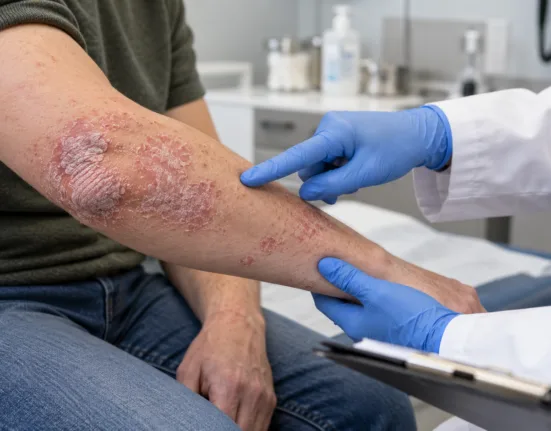
Organon & Co. has reported a new post hoc analysis of pooled Phase 3 data showing that VTAMA, or tapinarof cream, 1%, produced statistically significant improvements in atopic dermatitis skin-clearance measures across young children, school-age children, adolescents and adults. The analysis, presented at the 2026 Society for Pediatric Dermatology Annual Meeting, divided participants from the ADORING 1 and ADORING 2 trials into four age groups to examine whether the treatment effect seen in the pivotal studies remained evident at different stages of life.
The results strengthen the clinical context surrounding VTAMA, which is already approved in the United States for the topical treatment of atopic dermatitis in adults and pediatric patients aged two years and older. They do not represent a new pivotal trial, a label expansion or a fresh regulatory decision. Instead, the analysis provides a more detailed view of an existing Phase 3 dataset and addresses an important practical question for dermatologists and caregivers: whether the overall efficacy signal was concentrated in a particular age group or remained broadly consistent across the studied population.
That distinction matters because age-stratified evidence can improve clinical confidence without carrying the same evidentiary weight as a prospectively designed, independently powered age-group comparison. Organon’s results are encouraging, particularly for younger children, but the post hoc nature of the analysis means that it should be interpreted as supportive evidence around an approved treatment rather than a separate confirmation of efficacy in every subgroup.
What is genuinely new in Organon’s age-stratified VTAMA Phase 3 analysis?
ADORING 1 and ADORING 2 were two randomized, double-blind, vehicle-controlled Phase 3 trials involving 813 adults and children aged two years and older with moderate to severe atopic dermatitis. Participants were randomized in a two-to-one ratio to receive VTAMA cream or vehicle once daily for eight weeks, and approximately 80% of the pooled population was pediatric. The pivotal trials had already demonstrated statistically significant improvements in their primary and major secondary efficacy endpoints, and those results were published in the Journal of the American Academy of Dermatology in 2024.
The July 2026 disclosure adds granularity by separating the pooled population into patients aged two to six, seven to 11, 12 to 17, and 18 years or older. Organon said this was the first presentation of the pooled vIGA-AD and EASI75 response data over time divided into these pediatric and adult subsets. Responses in the pediatric groups were visible by week two, the first disclosed post-treatment assessment for those age strata, and continued through week eight.
This is incremental rather than foundational evidence, but it is clinically relevant incremental evidence. Atopic dermatitis presentation, treatment routines, caregiver involvement, application burden and tolerance can differ considerably between toddlers, school-age children, adolescents and adults. A treatment that produces a pooled benefit may still raise questions if the response is weaker or inconsistent within a specific age bracket, particularly when most of the enrolled population is pediatric.

How persuasive were the week 8 skin-clearance results across children and adults?
At week eight, 56.3% of VTAMA-treated patients aged two to six achieved a vIGA-AD response, compared with 11.8% receiving vehicle. The corresponding figures were 44.9% versus 23.8% among children aged seven to 11, 48.8% versus 13.4% among adolescents aged 12 to 17, and 38.0% versus 18.1% among adults. Each comparison was reported as statistically significant, although the size of the treatment effect varied between groups.
The EASI75 results followed a broadly similar pattern. At least a 75% improvement in the Eczema Area and Severity Index was achieved by 70.2% of VTAMA-treated patients aged two to six, compared with 20.5% receiving vehicle. Response rates were 53.6% versus 31.3% among those aged seven to 11, 62.2% versus 18.3% among adolescents and 50.8% versus 20.6% among adults.
The findings are notable because the active-treatment advantage remained statistically significant in all four groups and across both clinician-assessed endpoints. The youngest age group produced the largest numerical VTAMA response rates, while adults recorded the lowest vIGA-AD response among the active-treatment groups. Those percentages should not be used to conclude that younger children respond better than adults, however, because this was not described as a head-to-head comparison between independently randomized age groups.
Differences in subgroup size, baseline severity, affected body surface area, disease duration, adherence, vehicle response and other patient characteristics can influence age-specific percentages. The adult population also represented a minority of the pooled trial sample. Without the complete poster, confidence intervals and subgroup baseline tables, the safest interpretation is that the treatment effect remained present across the examined age brackets, not that one age group definitively derived greater benefit than another.
Why does the post hoc design limit what can be concluded from the new VTAMA data?
Post hoc analyses can answer useful questions that were not the primary focus of the original statistical plan, but they generally carry a greater risk of chance findings and overinterpretation. Pooling ADORING 1 and ADORING 2 increases the number of available patients and makes age-group exploration more practical, yet it does not automatically transform every subgroup comparison into a separately confirmatory result.
The reassuring aspect is that the new analysis does not stand alone. The two underlying Phase 3 trials were prospectively designed, randomized and vehicle-controlled, and both met their primary endpoint. In the original studies, 45.4% and 46.4% of VTAMA-treated patients achieved a clear or almost-clear vIGA-AD score with at least a two-grade improvement at week eight, compared with 13.9% and 18.0% in the respective vehicle groups.
The age breakdown therefore supports an efficacy result that was already established in the overall trial populations and incorporated into the approved prescribing information. It would be less convincing if Organon were attempting to rescue an unsuccessful primary study by highlighting isolated subgroup results. That is not the situation here.
The remaining limitation is evidence maturity. The new results were disclosed through a conference poster and company announcement, rather than through a dedicated peer-reviewed publication containing the complete age-stratified methodology and statistical analysis. Publication of the full analysis would allow clinicians and researchers to examine patient numbers, confidence intervals, missing-data handling and whether treatment interactions across age groups were formally tested.
How does VTAMA’s approved label and safety profile shape its pediatric positioning?
The United States prescribing information indicates VTAMA cream for once-daily topical treatment of atopic dermatitis in adults and pediatric patients aged two years and older. The label does not restrict the indication to moderate or severe disease, even though ADORING 1 and ADORING 2 enrolled patients with moderate to severe atopic dermatitis. It also lists no contraindications, while specifying that the cream is not for oral, ophthalmic or intravaginal use.
The approved label lists upper respiratory tract infection, folliculitis, lower respiratory tract infection, headache, asthma, vomiting, ear infection, pain in an extremity and abdominal pain among adverse reactions occurring in at least 1% of VTAMA-treated atopic dermatitis patients and more frequently than with vehicle. In the pivotal studies, upper respiratory tract infection occurred in 12% of VTAMA recipients compared with 6% receiving vehicle, while folliculitis occurred in 9% compared with 1%.
The newly presented age-stratified analysis summarized folliculitis, headache and nasopharyngitis as the most common treatment-emergent adverse events and described them as generally mild or moderate. Organon also reported that discontinuations attributed to treatment-related adverse events occurred less frequently with VTAMA than with vehicle in the pooled analysis. The announcement did not disclose a complete age-specific adverse-event table, so the efficacy breakdown is more detailed than the corresponding pediatric safety breakdown.
Longer-term information is available from ADORING 3, an open-label extension in which 728 adults and children received treatment for up to 48 weeks. The prescribing information states that the long-term safety profile was generally consistent with that observed during the initial eight-week trials. An open-label extension can reveal events occurring with longer exposure, but the absence of a concurrent control group means it is less suitable for estimating comparative long-term risk.
VTAMA is classified as an aryl hydrocarbon receptor agonist. Although preclinical and translational literature has associated this pathway with inflammatory signalling, oxidative stress and skin-barrier regulation, the prescribing information states that the specific mechanisms through which the cream produces its therapeutic effects remain unknown. That label language is an important brake on overly simplified mechanism-based claims.
Why could consistent pediatric results matter in a crowded atopic dermatitis market?
The pediatric atopic dermatitis treatment market is no longer defined only by moisturizers and topical corticosteroids. The American Academy of Dermatology’s 2026 pediatric guidelines issued strong recommendations for several topical options, including corticosteroids, topical calcineurin inhibitors, crisaborole, roflumilast, ruxolitinib and tapinarof, alongside systemic treatments for appropriate patients.
This broader treatment landscape means VTAMA does not need to replace every existing therapy to become commercially meaningful. Its opportunity lies in establishing a practical role within individualized treatment sequences, particularly where clinicians or caregivers are seeking a once-daily nonsteroidal topical option for a patient aged two years or older. Prescribing decisions will still be influenced by disease severity, lesion location, previous treatment response, tolerability, insurance coverage, out-of-pocket cost and caregiver capacity to maintain topical application.
The new age-stratified results can help Organon address one part of that adoption equation by showing that the pivotal efficacy signal was not confined to adolescents or adults. The strongest commercial evidence, however, will come from prescription growth, treatment persistence, payer access and real-world outcomes rather than additional slicing of the same eight-week dataset.
The guidelines themselves also highlight a broader evidence limitation across the field. Most randomized trials of pediatric atopic dermatitis treatments are relatively short, restricting conclusions about long-term efficacy and safety in a chronic, relapsing disease. VTAMA’s extension data provide useful longer-duration exposure, but comparative real-world studies and independent post-marketing evidence would further clarify how the product performs when adherence, concomitant treatments and disease fluctuations are less controlled.
What does the VTAMA update mean commercially as Organon’s Sun Pharma merger advances?
VTAMA generated $128 million in sales during 2025 following Organon’s acquisition of Dermavant Sciences, the United States atopic dermatitis launch and the Canadian plaque psoriasis launch. Organon later described VTAMA revenue as growing modestly during the first quarter of 2026, without disclosing a separate quarterly sales figure. The company reported total first-quarter revenue of $1.46 billion, down 4% as reported and 9% excluding currency effects.
The product therefore represents a credible growth asset within Organon’s established medicines portfolio, but it has not yet reached a scale that can materially offset broader portfolio pressure by itself. Its strategic value is more forward-looking: additional penetration of the United States atopic dermatitis market, potential international expansion and the opportunity to build a larger dermatology presence around an approved, differentiated topical product.
That value is now being assessed within a takeover rather than a conventional standalone equity story. Sun Pharmaceutical Industries Limited agreed in April 2026 to acquire Organon for $14 per share in cash, valuing the transaction at approximately $11.75 billion on an enterprise-value basis. Organon shareholders approved the merger agreement at a special meeting on July 23, leaving regulatory approvals and other closing conditions among the remaining hurdles.
Organon shares closed at approximately $13.54 on July 24, only about 3.4% below the proposed cash consideration and close to the upper end of their $5.69 to $13.60 52-week range. The stock was nearly flat over both five-day and one-month periods, suggesting that merger completion risk and the time value of the pending cash payment are currently more influential than individual VTAMA data presentations.
For Sun Pharmaceutical Industries, VTAMA could add an already commercialized dermatology product with pediatric and adult indications to a much larger specialty-pharmaceutical platform. The strategic test will be whether greater commercial scale, international infrastructure and payer capabilities can accelerate uptake without disrupting Organon’s existing launch activities during an extended merger process.
What evidence and commercial milestones will determine VTAMA’s next stage?
The age-stratified analysis makes a useful contribution to VTAMA’s evidence package. It shows statistically significant week-eight advantages over vehicle across four age groups and provides reassurance that the pivotal efficacy signal extended from early childhood into adulthood. The finding is particularly relevant because children made up most of the original Phase 3 population.
The analysis does not materially change VTAMA’s regulatory status or resolve every question about long-term treatment. Full publication of the subgroup data, additional real-world evidence, age-specific safety reporting, treatment-persistence data and payer-access progress would each add information that a conference poster cannot provide.
Commercially, the next stage will be measured less by another positive subgroup presentation and more by sustained prescription growth, repeat use, reimbursement breadth and international execution. The product’s approved age range, once-daily application and nonsteroidal positioning give Organon a credible foundation, while the American Academy of Dermatology recommendation provides independent guideline support within a market containing several strongly recommended alternatives.
The July analysis strengthens the case that VTAMA can produce clinically relevant responses across life stages. Whether that clinical consistency becomes durable commercial momentum will depend on access, treatment experience and execution through Organon’s pending transition into Sun Pharmaceutical Industries Limited.