Pharvaris N.V. has reached a key regulatory milestone after the United States Food and Drug Administration accepted the New Drug Application for deucrictibant immediate-release 20 mg capsules as an on-demand treatment for hereditary angioedema attacks. The agency has set a Prescription Drug User Fee Act target action date of April 23, 2027, putting the late-stage biopharmaceutical company on a defined review timeline for a potential United States approval.
Deucrictibant is an investigational oral bradykinin B2 receptor antagonist designed to block the pathway that drives swelling attacks in hereditary angioedema. If approved, it would become the first oral bradykinin B2 receptor antagonist for treating hereditary angioedema attacks, although it would enter a market that already includes the first oral on-demand hereditary angioedema therapy, KalVista Pharmaceuticals’ sebetralstat.
The application is supported by data from more than 1,300 treated hereditary angioedema attacks and includes the pivotal Phase 3 RAPIDe-3 study, which met its primary endpoint and all 11 secondary efficacy endpoints with statistical significance. Pharvaris said the trial showed a median time to onset of symptom relief of 1.28 hours, a median time to end of symptom progression of 17.48 minutes and a median time to complete symptom resolution of 11.95 hours.
What does FDA acceptance of the deucrictibant immediate-release NDA mean for Pharvaris?
FDA acceptance of a New Drug Application means the agency has determined that the submission is sufficiently complete for substantive review. It does not mean the medicine is approved, nor does it guarantee that the regulator will ultimately find the benefit-risk profile acceptable.
For Pharvaris, the acceptance moves deucrictibant immediate-release from the filing stage into formal regulatory review. The April 23, 2027 PDUFA date now becomes the central catalyst for the programme, giving patients, clinicians, investors and competitors a clear date by which the FDA is expected to act on the application.
The regulatory milestone also reduces one near-term execution risk because the FDA did not reject the application at the filing stage. However, the deeper review will still cover efficacy, safety, clinical trial conduct, statistical robustness, chemistry, manufacturing controls, labelling and post-marketing requirements.
That distinction matters because hereditary angioedema is a rare but high-impact disease in which treatment decisions depend on reliability, speed, portability and patient confidence. A new oral medicine must prove that it can deliver meaningful attack control while maintaining a safety profile appropriate for repeated real-world use.
Why is hereditary angioedema such a demanding condition for on-demand treatment?
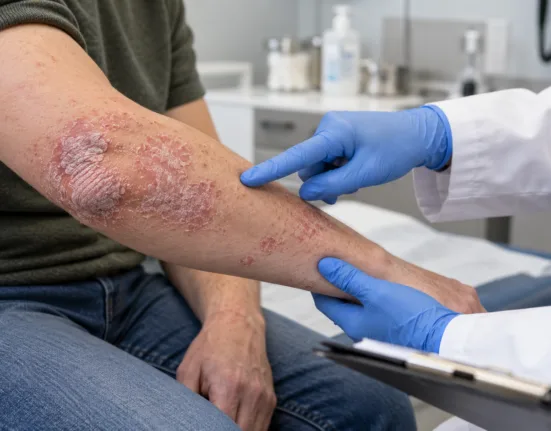
Hereditary angioedema is a rare genetic disorder that can cause recurrent swelling of the skin, gastrointestinal tract and upper airway. The disease is commonly linked to deficient or dysfunctional C1-inhibitor protein, which can lead to excessive bradykinin activity and unpredictable swelling attacks.
Attacks can involve the face, hands, feet, abdomen, genitals or throat. Abdominal attacks can cause severe pain, vomiting and diarrhoea, while airway attacks can become life-threatening if swelling compromises breathing. The unpredictability of attacks creates a major quality-of-life burden even when patients are not actively symptomatic.
On-demand therapy must therefore work quickly, consistently and conveniently. Patients may need to treat an attack at home, at work, while travelling or during sleep. Delayed treatment can allow symptoms to progress, increase anxiety and raise the likelihood of emergency medical care.
Historically, many on-demand hereditary angioedema therapies required injections or infusions. Those products can be effective, but needle-based administration can create hesitation, logistical friction and treatment delays. Oral medicines are attractive because they can be carried more easily and taken earlier in the attack cycle.
How does deucrictibant target the bradykinin pathway in hereditary angioedema attacks?
Deucrictibant is designed to block the bradykinin B2 receptor. Bradykinin is a key mediator of swelling in hereditary angioedema. When bradykinin signalling is excessive, blood vessels become more permeable, allowing fluid to leak into tissues and produce swelling.
By antagonising the B2 receptor, deucrictibant is intended to interrupt the downstream effects of bradykinin during an attack. This mechanism is clinically validated in hereditary angioedema through injectable bradykinin B2 receptor antagonism, but Pharvaris is seeking to deliver that approach through an oral small-molecule formulation.
The immediate-release capsule is designed for on-demand treatment, meaning it is taken when an attack occurs. Pharvaris is also developing an extended-release formulation of deucrictibant as a preventive therapy, which would aim to reduce the frequency of attacks rather than treat symptoms after they begin.
This dual-formulation strategy is important because hereditary angioedema care often requires both acute and preventive thinking. Some patients mainly need fast treatment for occasional attacks, while others may need long-term prophylaxis because attacks are frequent, severe or disruptive.
What did the RAPIDe-3 Phase 3 trial show about symptom relief and attack resolution?
RAPIDe-3 was a global, pivotal, placebo-controlled Phase 3 study evaluating deucrictibant immediate-release for on-demand treatment of attacks in patients aged 12 years and older with hereditary angioedema. The study included patients with hereditary angioedema with normal C1 inhibitor, broadening the relevance of the dataset beyond classic C1-inhibitor deficiency.
The pivotal trial met its primary endpoint and all 11 secondary endpoints with statistical significance. Pharvaris reported a median time to onset of symptom relief of 1.28 hours. The company also reported a median time to end of symptom progression of 17.48 minutes and a median time to complete symptom resolution of 11.95 hours.
These measures matter because hereditary angioedema patients and physicians care about several different dimensions of response. The first is when the patient begins to feel better. The second is whether the attack stops worsening. The third is how long it takes for symptoms to resolve completely.
A therapy that stops progression quickly could reduce the fear that an attack will intensify after dosing. A therapy that produces full resolution faster could reduce time lost from work, school, sleep and daily activity. The overall value proposition depends on whether these benefits hold across different attack locations, severities and patient subgroups.
The clinical programme supporting the New Drug Application includes data from more than 1,300 treated attacks, which gives the FDA a larger evidence base than a single isolated response dataset. Still, regulators will evaluate not only headline medians but also variability, rescue medication use, adverse events and consistency across trial conditions.
How could deucrictibant compete in the changing oral hereditary angioedema market?
The hereditary angioedema market has shifted significantly because oral on-demand treatment is no longer just a theoretical convenience. KalVista Pharmaceuticals’ sebetralstat was approved by the FDA in July 2025 as the first oral on-demand treatment for hereditary angioedema attacks, creating a new commercial benchmark for patient-friendly acute care.
That creates both opportunity and pressure for Pharvaris. On one hand, the approval of another oral on-demand therapy validates the patient need for easier attack treatment and may make physicians more receptive to oral options. On the other hand, Pharvaris will need to demonstrate why deucrictibant deserves share in a market where an oral competitor has already reached patients.
The mechanism is one differentiator. Sebetralstat is an oral plasma kallikrein inhibitor, while deucrictibant is an oral bradykinin B2 receptor antagonist. Both approaches aim to interfere with the bradykinin-driven swelling cascade, but they act at different points in the pathway.
Clinical profile will be another differentiator. Physicians will compare speed of symptom relief, time to attack progression control, full resolution, rescue medication use, safety, dosing convenience, packaging, age indication, payer access and patient preference.
Commercial execution will matter as much as clinical positioning. Hereditary angioedema is a rare disease market where patient services, reimbursement support, specialist relationships and education can shape adoption. Pharvaris has indicated that commercial infrastructure is already being built, but launch readiness will only become relevant if the FDA approves the medicine.
Why could an oral bradykinin B2 receptor antagonist still matter after the first oral HAE therapy?
The presence of a first oral on-demand treatment does not eliminate the need for additional options. Hereditary angioedema is heterogeneous, and patients can differ in attack pattern, treatment response, tolerability, insurance coverage and preference.
Some patients may prefer a therapy that targets the bradykinin receptor directly, especially if they or their physicians are familiar with the mechanism through existing injectable treatment. Others may prioritise onset, durability, portability or ease of repeated use.
Additional oral entrants could also increase competitive pressure in pricing, access and patient support. In rare diseases, payer decisions can strongly influence which therapy patients actually receive. More competition may strengthen negotiating dynamics, although it may also lead to step therapy, prior authorisation and formulary restrictions.
From a clinical standpoint, the most useful market would be one where physicians can match therapy to patient needs rather than forcing all patients into one preferred mechanism. Deucrictibant’s success will therefore depend on whether the FDA-approved label, if granted, supports a differentiated and practical role.
What safety questions will regulators consider during the deucrictibant review?
Pharvaris said deucrictibant immediate-release demonstrated a well-tolerated safety profile in the clinical programme. The pivotal RAPIDe-3 results also supported the company’s claim of rapid and sustained efficacy across treated attacks.
The FDA review will still examine safety in detail. On-demand hereditary angioedema medicines may be used repeatedly over time, including by adolescents and adults who self-administer therapy outside direct medical supervision. Regulators will therefore consider adverse events, discontinuations, laboratory findings, drug interactions and safety across demographic and disease subgroups.
Because hereditary angioedema attacks can occur unpredictably, a therapy must be safe enough for use in urgent situations where patients may be anxious, symptomatic or away from a healthcare facility. Clear labelling, simple dosing and manageable contraindications are important for real-world adoption.
The agency may also evaluate whether additional post-marketing studies or risk-management measures are needed. Rare adverse events can be difficult to detect before approval, particularly in rare-disease populations where trial sizes are necessarily limited compared with common chronic diseases.
How does Pharvaris’ extended-release programme strengthen the broader deucrictibant strategy?
Pharvaris is not developing deucrictibant only as an acute attack therapy. The company is also advancing an extended-release tablet intended for prophylactic treatment, with sustained absorption designed to help prevent attacks before they occur.
This matters because a company with both on-demand and preventive formulations could potentially build a broader hereditary angioedema franchise. Patients often need an acute therapy even when they are using long-term prophylaxis, because breakthrough attacks can still occur. A shared molecule across two dosing strategies could create physician familiarity and patient continuity.
The extended-release programme also gives Pharvaris another way to compete if the immediate-release capsule is approved. Preventive hereditary angioedema treatment is a substantial market with established biologics and oral therapies, but patients continue to seek greater convenience, fewer attacks and fewer treatment burdens.
The risk is that success in on-demand therapy does not automatically translate into success in prophylaxis. Prevention requires different exposure, different efficacy thresholds and different long-term safety expectations. A patient taking a medicine chronically faces a different benefit-risk calculation than a patient using it only during attacks.
What are the main regulatory and commercial risks before the April 2027 decision?
The most immediate risk is that the FDA could identify deficiencies during review. These could involve clinical data interpretation, statistical questions, manufacturing controls, labelling disagreements or requests for additional analyses. A complete response letter would delay launch and could require new work before approval.
Competition is another major risk. If sebetralstat gains strong early traction before deucrictibant reaches the market, Pharvaris may face a more difficult launch environment. Physicians and payers may already have established habits, contracts and workflows around the first oral on-demand product.
Pricing and reimbursement will be central. Hereditary angioedema therapies can be expensive, and payers are likely to scrutinise new entrants closely. Even a clinically attractive medicine can struggle if access barriers delay treatment or create patient affordability problems.
Patient behaviour also matters. The value of an oral attack therapy depends partly on whether patients dose early enough. Education will be needed to encourage timely treatment, especially among patients accustomed to waiting before using injections or seeking care.
Finally, Pharvaris must execute as a commercial rare-disease company. That includes building field teams, patient support services, supply reliability, physician education and reimbursement infrastructure before any launch.
What is the expert assessment of Pharvaris’ deucrictibant NDA acceptance?
The FDA acceptance of the deucrictibant immediate-release New Drug Application is a significant milestone for Pharvaris because it confirms that the company’s pivotal hereditary angioedema attack programme has entered formal regulatory review. The April 23, 2027 PDUFA date gives the programme a defined path toward a potential United States launch.
The clinical profile looks commercially relevant. Rapid symptom relief, early end of attack progression and complete symptom resolution in the pivotal programme address the outcomes that matter most to patients dealing with unpredictable swelling attacks. The dataset from more than 1,300 treated attacks gives the application meaningful breadth.
The competitive backdrop is tougher than it would have been two years ago. KalVista Pharmaceuticals has already established the first FDA-approved oral on-demand hereditary angioedema therapy, which means Pharvaris is not creating the oral market alone. Instead, it must win on mechanism, clinical profile, patient experience, access and launch execution.
Even so, a second oral option with a differentiated bradykinin B2 receptor mechanism could be valuable. Hereditary angioedema patients need fast, portable and reliable treatment choices, and rare-disease markets often benefit when physicians have multiple tools rather than one preferred product.
The key question now is whether the FDA review validates the efficacy, safety, manufacturing and labelling package. If approved, deucrictibant immediate-release could give Pharvaris a credible place in the evolving oral hereditary angioedema market and provide the foundation for a broader bradykinin-mediated disease franchise.