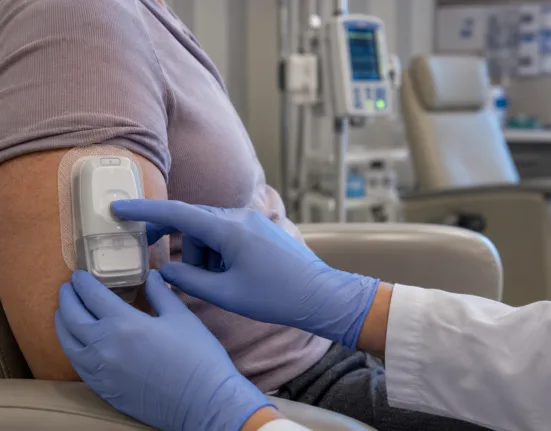
Kali Therapeutics has received U.S. Food and Drug Administration clearance for the Investigational New Drug application covering KT501, allowing the Sanofi-partnered trispecific T-cell engager to enter clinical evaluation in the United States. KT501 is designed to bind CD19 on broad B-cell populations, BCMA on plasma cells and CD3 on T cells, creating an off-the-shelf immune-resetting strategy intended to remove both conventional B cells and antibody-producing plasma cells. The clearance follows the start of a first-in-human Phase 1a rheumatoid arthritis study in Australia and is supported by emerging safety, tolerability, pharmacokinetic and pharmacodynamic information from that program.
The asset has already attracted major pharmaceutical interest. Sanofi licensed exclusive worldwide rights to KT501 in March 2026 under an agreement providing Kali with $180 million in upfront and near-term payments and eligibility for as much as $1.05 billion in additional development and commercial milestones, plus tiered royalties ranging from the high single digits into double digits. The FDA milestone therefore advances not only an experimental autoimmune therapy but one of the more substantial recent bets on adapting T-cell-engager biology from oncology to immune-mediated disease.
Why would researchers use a T-cell engager to treat rheumatoid arthritis rather than cancer?
T-cell engagers became prominent in oncology because they can physically connect cytotoxic T cells to malignant cells carrying a selected surface target. In autoimmune disease, the target is different: developers want to remove immune-cell populations responsible for producing pathogenic antibodies or sustaining abnormal immune activity. B-cell depletion has already demonstrated that eliminating selected B-cell populations can be clinically useful in several autoimmune diseases, but conventional antibodies may not eliminate all antibody-producing plasma cells.
KT501 is designed to broaden that depletion strategy by targeting both CD19 and BCMA. CD19 is expressed across many stages of B-cell development, while BCMA is strongly associated with plasma cells, including long-lived populations capable of continuing to produce autoantibodies even after many conventional B cells have been removed. By recruiting CD3-positive T cells against both compartments, Kali hopes KT501 can generate a deeper and more complete immune reset than therapies focused on only one B-cell marker.
What exactly makes KT501 a trispecific antibody rather than a conventional bispecific drug?
The molecule contains three functional binding specificities: CD19, BCMA and CD3. The CD19 and BCMA arms are intended to recognize different B-cell and plasma-cell populations, while the CD3 interaction recruits T cells capable of destroying the targeted cells. This differs from a simpler CD19xCD3 bispecific because KT501 is designed to reach antibody-producing plasma cells that may express BCMA even when CD19 expression is reduced or absent.
Kali has also incorporated a proprietary CD3 masking design. The company says this is intended to preserve strong cell-depletion activity while reducing uncontrolled T-cell activation and cytokine release, one of the central safety problems associated with potent T-cell engagers. Preclinical non-human-primate studies reportedly showed deep B-cell depletion in blood and tissues with reduced cytokine production, but the crucial question is whether that theoretical safety separation persists in people.
What does the ongoing rheumatoid arthritis Phase 1 trial tell us about KT501’s development strategy?
The first-in-human study is an open-label, sequential dose-escalation trial in adults with moderately to severely active rheumatoid arthritis. ClinicalTrials.gov lists up to approximately 24 participants across as many as five cohorts, with each patient receiving a single subcutaneous dose of KT501 and undergoing intensive assessment through 12 weeks. Participants whose B-cell levels remain suppressed can continue B-cell follow-up through week 48, reflecting the possibility that one exposure could produce a much longer biological effect than the drug remains measurable in circulation.
The study is primarily designed around safety, tolerability, pharmacokinetics and pharmacodynamics rather than formal proof of clinical efficacy. Researchers will want to know how completely B cells and plasma-cell-associated populations are depleted, how quickly they recover and whether suppression is accompanied by changes in autoantibodies or disease activity. Kali has not yet released detailed human response or safety data from the Australian cohorts, so FDA clearance should not be interpreted as evidence that KT501 has already demonstrated clinical benefit.
Why could targeting plasma cells matter in diseases driven by pathogenic autoantibodies?
Some autoimmune diseases can persist despite broad immunosuppression because long-lived plasma cells continue producing antibodies against the body’s own tissues. These cells can survive independently of many of the signals targeted by conventional B-cell therapies, which means reducing circulating CD19-positive B cells may not always eliminate the deepest source of autoantibody production. BCMA provides a way to reach more of the plasma-cell compartment.
The concept has gained additional credibility from highly intensive immune-resetting approaches, including CAR-T cell therapy, which have produced striking remissions in selected refractory autoimmune patients by profoundly depleting B-lineage cells. The problem is that autologous CAR-T requires patient-specific cell collection, manufacturing, conditioning and specialist infrastructure. An injectable off-the-shelf antibody capable of achieving part of the same biological reset could therefore be commercially and clinically attractive if its safety can be controlled.
What safety problems could limit T-cell engagers in patients with chronic autoimmune disease?
The benefit-risk threshold is very different from advanced cancer. Patients with refractory malignancy may accept considerable cytokine release, neurological toxicity and infection risk because the untreated disease is immediately life-threatening. Many rheumatoid arthritis patients have multiple effective approved alternatives, so a T-cell engager must demonstrate a substantially cleaner safety profile before physicians would consider profound immune depletion reasonable.
Potential class concerns include cytokine release syndrome, infection, prolonged B-cell depletion, low immunoglobulin levels and immune-system reconstitution issues. Kali’s masked CD3 architecture is specifically intended to reduce excessive cytokine release, and the company says its preclinical studies support that goal, but only larger human datasets can establish whether the platform truly separates deep depletion from acute T-cell toxicity.
Why did Sanofi commit substantial economics to KT501 before the program had mature human data?
Large pharmaceutical companies increasingly view immune resetting as a potentially transformative direction in autoimmune disease. Existing therapies often suppress one cytokine or signaling pathway continuously, requiring chronic dosing and leaving the underlying autoreactive immune architecture largely intact. A treatment that deeply depletes disease-driving cells and then allows a healthier immune repertoire to regenerate could theoretically produce longer periods of drug-free remission.
Sanofi’s agreement gives it worldwide rights while limiting some early discovery risk by partnering after KT501 had already reached the clinic. Kali receives $180 million in upfront and near-term payments and can earn up to $1.05 billion more if development and commercial milestones are achieved. Those numbers demonstrate the strategic value Sanofi places on the mechanism, but they do not predict clinical success because most milestone payments are contingent on KT501 advancing substantially further.
Could a single subcutaneous dose eventually replace chronic autoimmune therapy?
That is an attractive long-term vision, but the Phase 1 program is far too early to establish it. The study uses one subcutaneous dose partly because investigators need to understand the duration of B-cell depletion and immune recovery before designing repeat-treatment strategies. If one exposure produces months of disease control, developers could eventually test whether intermittent immune resetting offers advantages over continuous biologic or small-molecule therapy.
The opposite outcome is also possible. Profound depletion may prove too risky, B cells may recover too quickly, autoantibodies may persist despite BCMA targeting or disease activity may return before immune-cell counts normalize. Phase 1 therefore needs to characterize biology first, while later studies would determine whether that biology translates into durable symptom and disease-modification benefits.
What should the autoimmune field watch as KT501 enters U.S. development?
The first major information gap is human safety at increasing doses. Investigators will closely watch cytokine release, infection signals and immunoglobulin changes while measuring how effectively KT501 removes CD19- and BCMA-associated cell populations. The second question is whether early rheumatoid arthritis disease measures improve sufficiently to justify moving into larger randomized trials.
FDA IND clearance gives Kali and Sanofi permission to test the hypothesis in the United States, not regulatory endorsement of the hypothesis itself. Yet KT501 is worth watching because it condenses several of the most important themes in modern immunology into one program: cancer-derived T-cell-engager technology, deep immune resetting, plasma-cell targeting, off-the-shelf administration and a multibillion-dollar pharmaceutical partnership betting that autoimmune treatment could eventually become far more aggressive and far less continuous.